Product List Background C1s Functional Service
Background
Complement C1s, a highly specific SP (EC 3.4.21.42), mediates proteolytic activity of the C1 complex towards its complement substrates C4 and C2. C1s cleaves a single Arg-Ala bond in C4 and lead to the formation of C4a and C4b, it also results in a single Arg-Lys bond in C2 to produce C2a and C2b. Besides, the generation of the C3 convertase C4bC2a requires binding of C2 to C4b before cleavage by C1s. In addition, there are some noncomplement C1s protein substrates, such as heavy chain of the major histocompatibility complex class I antigens, β2-microglobulin, low-density lipoprotein receptor-related protein 6 (LRP6) and insulin-like growth factor-binding protein. C1s has also been proven to cleave the nuclear protein high-mobility group box 1, which is an alarmin released from apoptotic cells.
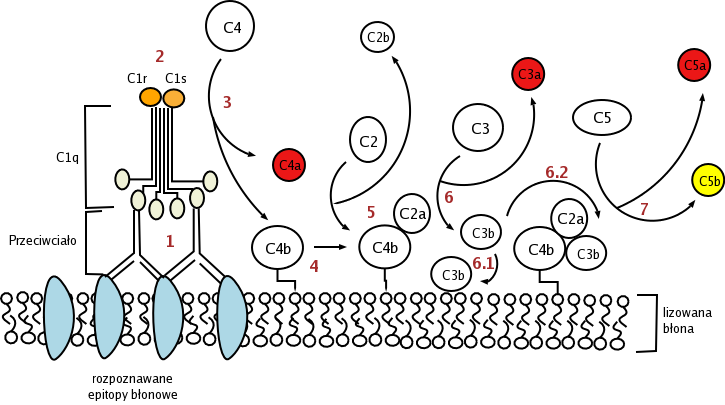 Distributed under CC BY-SA 3.0, from Wiki, without modification.
C1r binds to C1s and become the C1r2, C1s2 complex, which then binds to C1q. In the previous studies, it has demonstrated that patients with C1r or C1s deficiency have obviously decreased concentrations of the deficient protein (<1% of normal) and levels of the related protein that are 20% to 50% of normal. What’s more, C1r- or C1s-deficient patients are unable to activate C3 and C5 via C9 by the classical pathway therefore have decreased C3b-dependent opsonizing activity.
C1s Functional Service
Creative Biolabs offers an extensive selection of C1s-specific products, such as anti-C1s antibodies, ELISA kits, recombinant C1s proteins, and reporter vectors containing C1s clones. These meticulously designed reagents are essential for elucidating the interactions between C1s proteins and various molecular entities, thereby advancing research efforts in developing therapeutic strategies for numerous diseases.
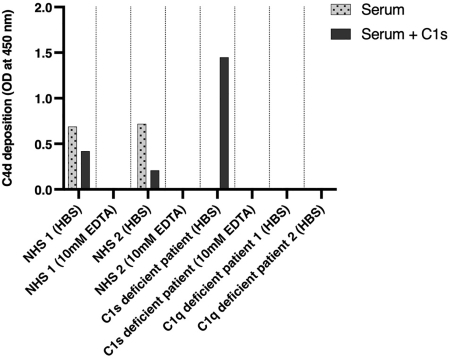 Fig.2 Functional assays of complement and c1s reconstitution.1
C1s, a crucial inflammatory effector implicated in SLE pathogenesis, has nine reported complete deficiencies. Analysis of complement factors revealed a lack of C1s, low C1q and C1r, and a modest increase in C4 and C2. Renal biopsy indicated class IV-G (A) lupus nephritis with C1q positivity in glomerular basement membranes, alongside weak IgG, IgM, and C3/C4 deposition in the mesangium and GBM. An ELISA-based functional assay revealed that adding C1s restored C4d deposition, confirming a suspected C1s deficiency. Gene sequencing and C1 reconstitution confirmed this isolated absence in the patient.
Creative Biolabs offers a wide spectrum of C1s-focused services, which encompass in-depth interaction analyses and a range of specialized assessments. These thoughtfully customized services are designed to support researchers in pushing the frontiers of their scientific research and clinical endeavors.
Reference
-
Kleer, Jessica S., et al. "Complement C1s deficiency in a male Caucasian patient with systemic lupus erythematosus: a case report." Frontiers in Immunology 14 (2024): 1257525. Distributed under Open Access license CC BY 4.0, without modification.


 INQUIRY
 Datasheet