Complement C1s Activity Assay
Creative Biolabs provides specialized complement C1s activity assay services to support complement biology research, therapeutic discovery, biologics characterization, inhibitor screening, and mechanism-of-action studies focused on the classical complement pathway.
Submit Your Request Now
Why C1s Activity Matters in Complement Research
The complement system is a highly coordinated immune network that contributes to host defense, immune complex clearance, inflammation, cell lysis, and tissue homeostasis. Among the three major activation routes, the classical pathway is typically initiated when C1q recognizes immune complexes, certain antibody arrangements, apoptotic structures, pathogen-associated surfaces, or other ligands. Once C1q engagement triggers structural rearrangement of the C1 complex, the associated serine proteases C1r and C1s become activated. C1r activates C1s, and active C1s then cleaves the downstream complement components C4 and C2, enabling assembly of the classical pathway C3 convertase.
Because C1s lies at this critical transition point between recognition and amplification, it is highly relevant to both biological research and therapeutic development. Excessive or misdirected C1s activity can contribute to inflammatory tissue injury, immune complex-mediated pathology, antibody-mediated cytotoxicity, and complement-driven disease mechanisms. Conversely, insufficient C1s function may compromise classical pathway activity and alter immune complex handling. For researchers developing complement inhibitors, antibody therapeutics, Fc-engineered biologics, plasma-derived products, or immune-modulating agents, measuring C1s activity provides direct insight into whether a candidate affects early classical pathway proteolysis.
Compared with downstream complement readouts alone, a C1s-focused assay can help answer more precise mechanistic questions. Creative Biolabs designs complement C1s activity assays to address these questions with biologically meaningful and analytically reliable readouts.
Great Minds Choose Creative Biolabs
Our Complement C1s Activity Assay Service
Creative Biolabs offers a comprehensive service package for detecting, quantifying, comparing, and interpreting C1s activity under customized experimental conditions. Our assays may evaluate C1s function directly through enzymatic substrate cleavage or indirectly through downstream classical pathway activation markers.
Purified C1s Enzymatic Activity Assay
The purified-protein assay is designed to evaluate C1s catalytic activity under defined biochemical conditions. This format is particularly useful for testing direct C1s inhibitors, comparing recombinant C1s variants, measuring enzyme kinetics, assessing substrate specificity, or validating assay conditions before moving into complex biological matrices.
C4 Cleavage-Based C1s Activity Assay
C1s physiologically cleaves complement C4 during classical pathway activation. A C4 cleavage-based assay provides a biologically relevant readout of C1s activity by detecting the conversion of C4 into activation fragments or downstream C4-derived products. This format is useful for evaluating whether C1s retains native substrate activity and whether a test article blocks C1s-mediated C4 processing.
C2 Cleavage-Based C1s Activity Assay
C1s also participates in C2 cleavage after C4 activation and contributes to classical pathway C3 convertase formation. A C2 cleavage assay can be used to evaluate C1s-dependent C2 processing and to confirm whether C1s activity leads to downstream convertase assembly. This format may be combined with C4 cleavage analysis to provide a more complete view of early classical pathway progression.
C1 Complex Activation Assay
For projects requiring a more physiological upstream context, Creative Biolabs can establish assays using reconstituted C1 complex or C1-containing serum systems. This approach enables evaluation of C1q recognition, C1r activation, C1s activation, and downstream substrate cleavage in a coordinated format.
Serum-Based Classical Pathway C1s Activity Assay
Serum-based assays preserve native complement components, regulators, cofactors, and pathway interactions. In this format, C1s activity is evaluated within a more complex biological environment, often by monitoring C1s-dependent downstream readouts after classical pathway activation. This assay can be performed using normal human serum, disease serum, animal serum, depleted serum, reconstituted serum, or serum treated with test inhibitors.
Inhibitor Screening and Potency Evaluation
Creative Biolabs offers C1s inhibitor screening assays for small molecules, monoclonal antibodies, peptides, engineered proteins, aptamers, natural compounds, or other candidate formats. Assays can be configured for primary screening, hit confirmation, concentration-response analysis, potency ranking, selectivity profiling, or mechanism exploration.
Discuss Your Needs
Sample Types and Test Articles Supported
Creative Biolabs supports a broad range of sample types for complement C1s activity assay projects. Feasibility depends on assay format, matrix complexity, species, sample stability, and detection requirements.

C1s proteins
Purified human C1s, recombinant C1s, C1s variants, purified C1 complex, reconstituted C1q/C1r/C1s systems

Serum
Human serum, animal serum, C1s-depleted or complement-depleted serum, reconstituted serum matrices

Antibodies
Therapeutic antibodies, Fc-engineered antibodies, bispecific antibodies, antibody-drug conjugates

Others
Disease-associated biological samples, cell culture supernatants, nanoparticles and biomaterials
Workflow of Complement C1s Activity Assay
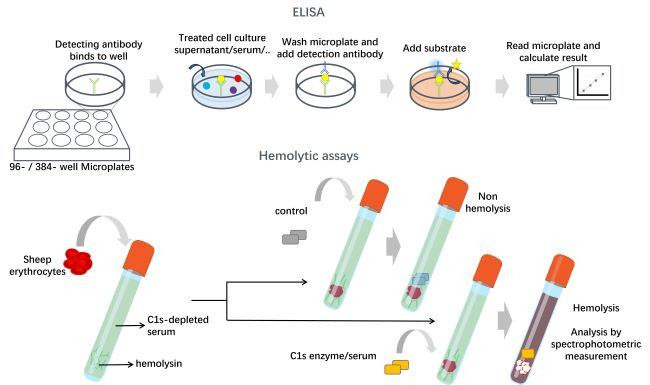 Fig. 1 Complement C1s activity assay workflow.
Design Your Workflow
Our Custom Assay Development Strategy
Creative Biolabs understands that complement assays are highly context-dependent. C1s activity may be influenced by enzyme source, activation state, substrate form, serum matrix, complement regulators, sample handling, temperature, incubation time, calcium concentration, and the presence of inhibitors or interfering substances. Therefore, our assay development strategy begins with a clear definition of the biological question.
Assay Format Selection
-
Based on the project goal, we recommend an appropriate assay format. For direct inhibition, purified enzyme assays may be most efficient. For physiological relevance, serum-based assays or C1 complex activation assays may be preferred. For antibody programs, cell-based or antigen-specific formats may provide more meaningful data.
Reagent and Control Design
-
Reliable complement activity testing requires well-designed controls. Depending on the assay, controls may include active C1s, inactive or inhibited C1s, no-enzyme controls, no-substrate controls, pathway activation controls, complement-depleted serum, reconstituted serum, positive inhibitors, negative compounds, heat-inactivated serum, isotype controls, or irrelevant antigen controls.
Assay Optimization
-
We optimize key assay variables, including enzyme and substrate concentrations, incubation time, buffer conditions, serum dilution, activation trigger, detection antibody concentration, plate coating condition, temperature, sample dilution, and signal detection parameters. Optimization is especially important when assays involve complex matrices or client-provided investigational materials.
Sample Testing
-
Client samples are tested according to the agreed study design. Replicates, dose ranges, time points, and control groups are incorporated based on statistical and project requirements. For inhibitor studies, concentration-response curves may be generated. For comparative studies, test samples can be ranked according to activity, inhibition, or activation level.
Quality Considerations in C1s Activity Testing
Complement assays can be sensitive to pre-analytical and analytical variables. Creative Biolabs incorporates quality-focused design principles to improve data reliability.
|
Consideration
|
Description
|
|
Sample Handling
|
Complement proteins can be affected by collection conditions, storage temperature, freeze-thaw cycles, anticoagulants, and prolonged handling. We provide sample preparation guidance when needed and evaluate matrix compatibility during assay planning.
|
|
Control Strategy
|
Appropriate positive, negative, and matrix controls are essential for interpreting C1s activity. Controls help distinguish true activity changes from nonspecific interference, assay drift, or matrix effects.
|
|
Pathway Specificity
|
Because downstream complement markers can be influenced by multiple pathways, pathway specificity must be considered carefully. Creative Biolabs can incorporate pathway-selective conditions, depleted serum, reconstitution controls, and targeted inhibitors to clarify the contribution of C1s and the classical pathway.
|
|
Assay Window and Sensitivity
|
Assay conditions are optimized to generate a robust signal window while maintaining biological relevance. For inhibitor testing, substrate and enzyme concentrations are selected to support meaningful potency evaluation.
|
|
Matrix Interference
|
Serum, plasma, biologics formulations, nanoparticles, and complex biological fluids may interfere with detection reagents or complement activity. Our team can recommend dilution strategies, orthogonal readouts, spike-recovery testing, or alternative assay formats when interference is suspected.
|
Design Your Customization
Case Studies
Case 1
Quantitative fluorescence resonance energy transfer-based immunoassay for activated complement C1s
The researchers established fluorescence resonance energy transfer (FRET)-based immunoassay for the quantitative detection of activated C1s in serum. FRET-based fluorogenic peptides, sensitive to the enzymatic activity of activated C1s, were prepared and labeled with the fluorophore ortho-aminobenzoic acid (Abz) and quencher 2,4-dinitrophenyl (Dnp), and then were further selected depending on its Kcat/Km value. C1s in the samples was captured and separated using anti-C1s-conjugated magnetic microbeads. Next, enzymatic activity of activated C1s in samples and standards was examined using fluorescent quenched substrate assays.
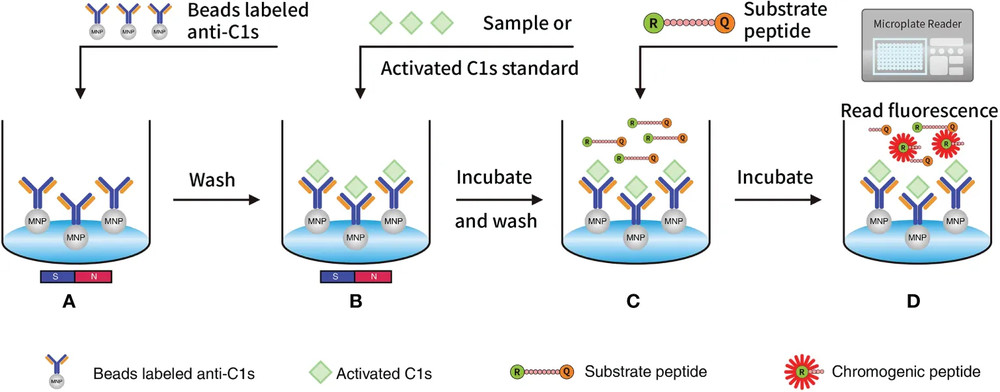 Fig. 2 Quantitative FRET immunoassay of the activated C1s based on the capture of anti-C1s antibody.1,2
References
-
Ye, Jun, et al. "Quantitative fluorescence resonance energy transfer-based immunoassay for activated complement C1s." Frontiers in Immunology 14 (2023): 1081793. https://doi.org/10.3389/fimmu.2023.1081793
-
Distributed under Open Access license CC BY 4.0, without modification.
What Our Clients Say
"Developing a suitable C1s functional assay internally would have required substantial optimization of reagents, controls, and detection conditions. Creative Biolabs provided a customized workflow that matched our experimental goals and sample characteristics. Their team was responsive throughout assay development and helped us establish a reproducible platform for evaluating multiple inhibitor candidates."
— Research Scientist, Pharmaceutical Biotechnology Company
"For our antibody engineering program, understanding complement activation behavior was an important part of functional characterization. Creative Biolabs helped us evaluate C1s-related classical pathway activation and integrate the results with additional complement assays. This provided a comprehensive view of how Fc modifications influenced complement engagement."
— Antibody Engineering Lead, Biopharmaceutical Company
"Our study involved
serum samples with variable complement activity, which created challenges for assay interpretation. Creative Biolabs provided guidance on sample handling, controls, and assay normalization strategies. The final dataset was clear and supported our investigation into classical pathway dysregulation in disease-related samples."
— Translational Immunology Researcher, Academic Institution
"We appreciated the flexibility of Creative Biolabs' C1s activity testing platform. The service supported both early exploratory experiments and later-stage confirmation studies. The ability to combine purified protein assays, serum-based testing, and pathway-level analysis made it easier for our team to investigate different hypotheses during development."
— Program Manager, Biotechnology Company
Frequently Asked Questions
How much sample is required for a complement C1s activity assay?
Sample requirements depend on the assay format, number of conditions, replicate design, and whether optimization is required. Purified protein assays generally require smaller quantities of material, while serum-based or multi-readout studies may require additional sample volume. Creative Biolabs evaluates sample availability during project planning and recommends an assay design that balances scientific objectives with sample limitations.
Can you customize the assay using client-provided reagents or samples?
Yes. Creative Biolabs supports customized assay development using client-provided proteins, antibodies, inhibitors, biological samples, or specialized reagents. Customized projects may involve adapting existing assay platforms, validating new detection methods, optimizing sample preparation conditions, or establishing unique complement activation models. Our scientific team works with clients to ensure that the final assay matches the intended research question.
Can C1s activity testing be combined with other complement assays?
Yes. Combining C1s analysis with additional complement assays often provides a more complete understanding of pathway regulation. Integrated assay panels can help identify where a candidate acts within the complement cascade.
Can Creative Biolabs evaluate direct C1s inhibition?
Yes. Creative Biolabs can design direct C1s inhibition assays using purified or recombinant C1s systems. These assays are suitable for evaluating small molecules, antibodies, peptides, engineered proteins, aptamers, and other candidate inhibitors. Direct C1s inhibition studies may include concentration-response analysis, inhibitor ranking, potency comparison, kinetic evaluation, and preliminary mechanism investigation. Additional assays, such as C4 or C2 cleavage analysis and serum-based classical pathway testing, can be performed to confirm whether inhibition remains effective under more biologically relevant conditions.
Can you measure C1s activity in human serum?
Yes. Serum-based C1s activity evaluation can be performed when the research objective requires a more physiologically relevant complement environment. Human serum contains multiple complement proteins, regulators, and interacting factors that influence classical pathway activation. Serum-based assays can therefore provide valuable information regarding whether a candidate maintains activity in a biological matrix.
Related Products & Services
Download
Complement Activity/Function Assay Products
Learn More
Complement Therapeutics Featured Products
Learn More
Complement Therapeutics Services Brochure
Learn More