Overview of CFI Activity Assay
Complement activation is designed to rapidly mark pathogens, immune complexes, damaged cells, and abnormal surfaces for elimination. However, because complement amplification can proceed quickly once C3b deposition begins, the system requires tightly coordinated regulatory mechanisms. CFI is one of the most important proteolytic regulators in this process. By cleaving C3b and C4b into inactive or further-degraded fragments, CFI helps limit convertase assembly, restrain alternative pathway amplification, and protect host tissues from uncontrolled complement-mediated damage.
Unlike many enzymes that act independently on a soluble substrate, Factor I is strongly cofactor dependent. This makes Factor I activity testing more complex but also more informative. A well-designed assay should consider not only the enzyme and substrate, but also the cofactor, the reaction matrix, the surface context, the detection method, and the biological question. For example, an assay built around CFI and Factor H may be useful for alternative pathway regulation, while an assay using C4b-binding protein may be more relevant for classical or lectin pathway control. A cell-surface assay involving CD46 or CR1 may better represent membrane-associated complement regulation.
Factor I functional testing is valuable in several major research areas:
-
Complement therapeutic development - to evaluate recombinant regulators, complement inhibitory biologics, engineered proteins, antibodies, peptides, small molecules, and gene therapy strategies.
-
Disease mechanism studies - to investigate altered complement regulation in atypical hemolytic uremic syndrome, C3 glomerulopathy, age-related macular degeneration, autoimmune disorders, inflammatory diseases, and complement-related susceptibility phenotypes.
-
Variant and mutation analysis - to compare activity of wild-type CFI with disease-associated or engineered variants.
-
Biologics characterization - to assess whether therapeutic antibodies, Fc-engineered molecules, nanoparticles, or biomaterials alter CFI-dependent complement regulation.
-
Cofactor dependency evaluation - to determine whether altered activity is caused by CFI itself, impaired cofactor binding, substrate availability, or interference within a complement regulatory complex.
-
Safety and mechanism-of-action studies - to identify unintended complement activation or insufficient complement control during drug development.
Creative Biolabs provides modular CFI activity assay design, allowing clients to select purified-protein, serum-based, cell-based, and customized formats according to the project stage and required depth of mechanistic interpretation.
Great Minds Choose Creative Biolabs
Service Options
Creative Biolabs offers multiple service options that can be selected individually or combined into an integrated CFI activity testing program.

Standard CFI Activity Testing

CFI Variant Functional Analysis

CFI Inhibitor or Enhancer Screening

Cofactor Interaction and Dependency Studies
Workflow of CFI Activity Assay
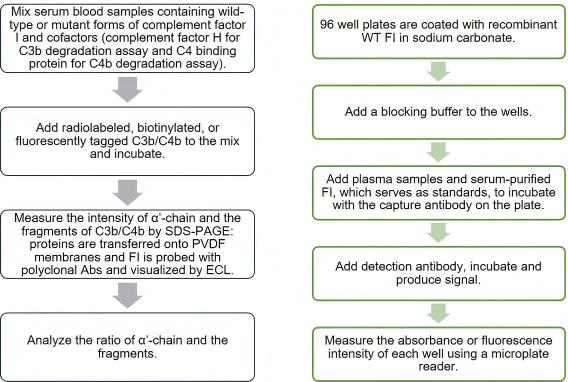 Fig. 1 CFH Western blotting workflow (left) and CFH ELISA workflow (right).
Design Your Workflow
Applications of CFI Activity Assay
|
Application
|
Description
|
|
Complement Drug Discovery
|
CFI activity assays can support the development of drugs that restore complement regulation, suppress excessive activation, or modulate complement amplification. Assays can be used for hit screening, lead optimization, mechanism-of-action studies, and candidate comparison.
|
|
Recombinant Complement Regulator Development
|
Recombinant CFI, engineered CFI variants, fusion proteins, and cofactor-based regulators require functional validation. Creative Biolabs can help determine whether engineered molecules retain or improve the desired regulatory activity.
|
|
Atypical Hemolytic Uremic Syndrome Research
|
Complement regulatory dysfunction is closely associated with atypical hemolytic uremic syndrome. CFI activity testing may help characterize functional defects, evaluate variants, and explore regulatory restoration strategies.
|
|
C3 Glomerulopathy and Renal Disease Research
|
Alternative pathway dysregulation is central to several complement-mediated renal disorders. CFI assays can be used to examine impaired C3b inactivation, serum-based complement overactivation, and response to complement-modulating candidates.
|
|
Age-Related Macular Degeneration Research
|
Complement regulatory genes, including CFI and other alternative pathway regulators, are relevant to AMD research. CFI activity assays can support the study of variant function, complement regulation, and therapeutic strategies aimed at restoring local complement control.
|
|
Autoimmune and Inflammatory Disease Studies
|
In autoimmune and inflammatory settings, complement activation may contribute to tissue injury, immune complex handling, and inflammatory amplification. CFI activity evaluation can help clarify whether insufficient regulation contributes to disease mechanisms.
|
|
Biologics and Antibody Safety Assessment
|
Therapeutic antibodies, Fc-engineered molecules, and cell-binding biologics may alter complement activation on target cells. CFI-related assays can be included in broader complement safety and mechanism studies.
|
|
Biomaterial and Nanomedicine Evaluation
|
Nanoparticles, delivery vehicles, and biomaterials may interact with complement proteins. CFI activity testing can help assess whether complement regulation is preserved or disrupted on artificial surfaces.
|
Design Your Customization
Case Studies
Case 1
Functional evaluation of CFI variants by immunoassays and SDS-PAGE
SDS-PAGE was applied to evaluate FI-mediated cleavage of the C3b α'-chain in the fluid phase in the presence of co-factors FH and sCR1. The eight recombinantly expressed FI-variants and the recombinantly expressed wild-type FI were evaluated in parallel to FI purified from human plasma. With FH as a co-factor, most FI mutants showed attenuated C3b degradation in comparison to both the recombinantly expressed wild type and the FI purified from plasma.
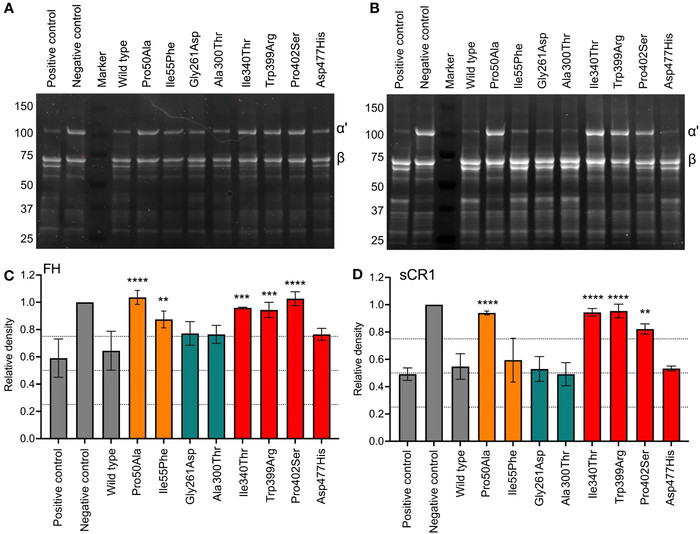 Fig. 2 Functional analysis of recombinant FI proteins with SDS-PAGE.1,2
References
-
Gerogianni, Alexandra, et al. "Functional evaluation of complement factor I variants by immunoassays and SDS-PAGE." Frontiers in Immunology 14 (2023): 1279612. https://doi.org/10.3389/fimmu.2023.1279612
-
Distributed under Open Access license CC BY 4.0, without modification.
Frequently Asked Questions
What substrates can be used in a Factor I activity assay?
The most common substrates are C3b and C4b. C3b cleavage is especially relevant to alternative pathway regulation because inactivation of C3b limits amplification and convertase formation. C4b cleavage is relevant to classical and lectin pathway regulation. Depending on the project, assays may focus on C3b alone, C4b alone, or both substrates. The substrate choice should reflect the pathway of interest, disease context, therapeutic mechanism, and cofactor system being evaluated.
Which cofactor should I choose for my assay?
The best cofactor depends on the biological question. Factor H is often selected for studies focused on alternative pathway regulation and C3b inactivation. C4b-binding protein is commonly used for C4b regulation in classical and lectin pathway contexts. CD46 and CR1 may be more relevant for cell-surface complement regulation. If the project involves disease-associated variants, engineered cofactors, or therapeutic candidates, a comparative cofactor panel may be recommended to determine whether the observed effect is cofactor-specific.
Can CFI variants associated with disease be tested?
Yes. Creative Biolabs can compare wild-type CFI with disease-associated or engineered variants under matched assay conditions. This may include C3b cleavage, C4b cleavage, cofactor dependency, serum reconstitution, dose-response behavior, stability-related activity, and downstream complement regulation. Such testing can help determine whether a variant shows loss of function, partial function, cofactor-specific impairment, substrate-specific impairment, or near-normal activity under the selected conditions.
What types of test articles can be evaluated?
Creative Biolabs can evaluate a wide range of test articles, including recombinant CFI, CFI variants, engineered complement regulators, antibodies, small molecules, peptides, aptamers, fusion proteins, Fc-engineered biologics, gene therapy-related products, nanoparticles, biomaterials, serum samples, cell culture supernatants, and client-provided experimental compounds. Feasibility depends on sample format, concentration, stability, matrix compatibility, and assay readout.
Can the assay be quantitative?
Yes. Depending on the detection method and assay format, CFI activity assays can be developed as qualitative, semi-quantitative, or quantitative assays. Quantitative formats may include standard curves, dose-response curves, kinetic analysis, relative activity calculations, percent inhibition, percent enhancement, or normalized substrate conversion. For discovery-stage projects, relative activity may be sufficient, while later-stage programs may require more rigorous quantification and assay performance evaluation.