Creative Biolabs is offering the most comprehensive services for antibody development projects. With strict regulation and effective execution, we are dedicated to providing the most valuable solutions to complete your projects.
HighlightsCreative Biolabs is offering the most comprehensive services for antibody development projects. With strict regulation and effective execution, we are dedicated to providing the most valuable solutions to complete your projects.
HighlightsCreative Biolabs has established a broad range of platforms for developing novel antibodies or equivalents. These cutting-edge technologies enable our scientists to meet your demands from different aspects and tailor the most appropriate solution that contributes to the success of your projects.
HighlightsWith deep understanding in antibody-related realms and extensive project experience, Creative Biolabs offers a variety of references to help you learn more about our capacities and achievements, including infographic, flyer, case study, peer-reviewed publications, and all kinds of knowledge that can assist your projects. You are also welcome to contact us directly for more specific solutions.
HighlightsGet a real taste of Creative Biolabs, one of the most professional custom service providers in the world. We are committed to providing highly customized comprehensive solutions with the best quality to advance your projects.
HighlightsFor over two decades, Creative Biolabs has stood at the forefront of biotechnology, empowering the development of next-generation therapeutics. Our Rodent Antibody Humanization services are designed to solve a critical challenge in drug development: the inherent immunogenicity of rodent-derived monoclonal antibodies (mAbs). While murine and other rodent models are exceptional for initial antibody discovery, their direct use in humans can trigger an undesirable anti-drug antibody (ADA) response, compromising both safety and efficacy.
Our mission is to seamlessly transform your promising rodent antibodies into clinically viable candidates. By meticulously grafting the essential antigen-binding regions (CDRs or SDRs) from your rodent antibody onto an optimal human antibody framework, we significantly reduce the risk of immunogenicity while preserving—and often enhancing—the antibody's original affinity and specificity.
Rodent monoclonal antibodies have been instrumental in diagnostics and research. However, for therapeutic applications, their foreign nature poses a significant hurdle. When administered to patients, the human immune system can recognize the rodent antibody as foreign, leading to:
To mitigate these risks, humanization is an essential step, creating chimeric or fully humanized antibodies that are better tolerated by the human immune system.
We offer a multi-tiered strategy, from traditional CDR grafting to more advanced, structure-guided methods, ensuring optimal results for every project.
| Humanization Strategy | Description | Key Advantages | Best Suited For |
| CDR Grafting | The classic and most widely used method. The six Complementarity-Determining Regions (CDRs) from the rodent antibody are transplanted onto a selected human germline framework. | Well-established, rapid, and cost-effective. | Standard humanization projects with well-defined CDRs. |
| SDR Grafting | A more refined approach focusing on the Specificity-Determining Residues (SDRs) – the key CDR residues that make direct contact with the antigen. | Potentially higher retention of affinity; allows more framework diversity. | Projects where initial CDR grafting results in affinity loss. |
| Veneer/Resurfacing | Involves mutating only the surface-exposed, potentially immunogenic framework residues of the rodent antibody to their human counterparts, leaving the core structure intact. | Preserves the native core packing and may better retain affinity. | Antibodies where the framework structure is critical for stability or function. |
| Human String Content Analysis | A proprietary computational method to maximize the "humanness" of the antibody by analyzing its sequence against a database of human antibody sequences. | Leads to lower predicted immunogenicity scores. | All humanization projects, especially those for chronic indications. |
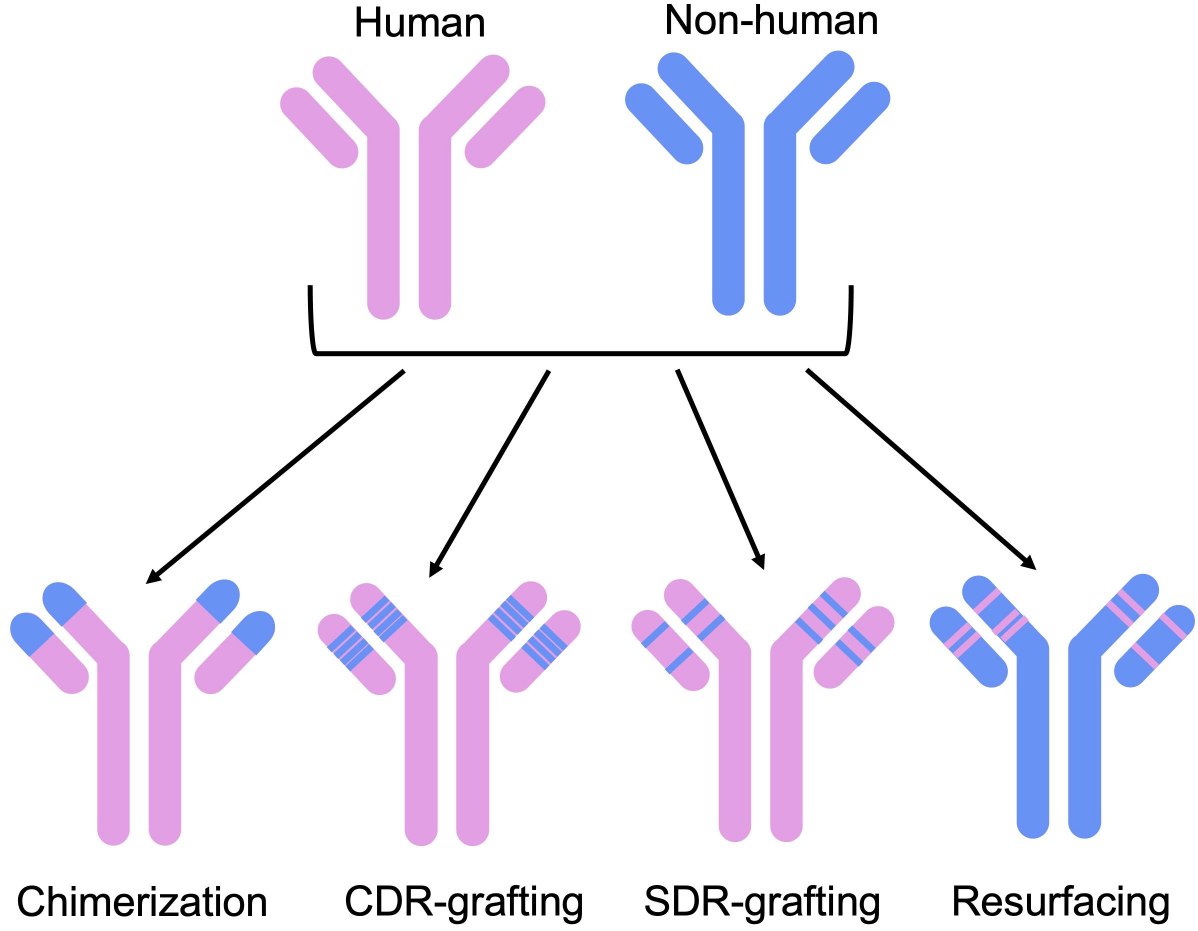 Fig. 1 Humanization methods have evolved from initial chimerization approaches, aiming to reduce non-humanness without compromising functionality.1,3
Our service is a seamless, end-to-end process designed for transparency, speed, and success.
We begin with the sequencing of your rodent hybridoma or antibody protein. Our team then performs comprehensive 3D homology modeling of the variable (V) regions to understand the precise conformation of the CDR loops and their interaction with the framework.
Using our extensive human germline framework database, we select the most appropriate human acceptor framework. This choice is based on multiple criteria, including high sequence homology to the rodent parent, structural compatibility of the CDRs, and known low immunogenicity profiles.
This is the core of the humanization process. We perform CDR or SDR grafting and utilize our structural models to identify critical framework residues from the original rodent antibody that may be essential for maintaining the CDR loop conformation. We then strategically perform "back-mutations" to reintroduce these key rodent residues, ensuring affinity is fully retained.
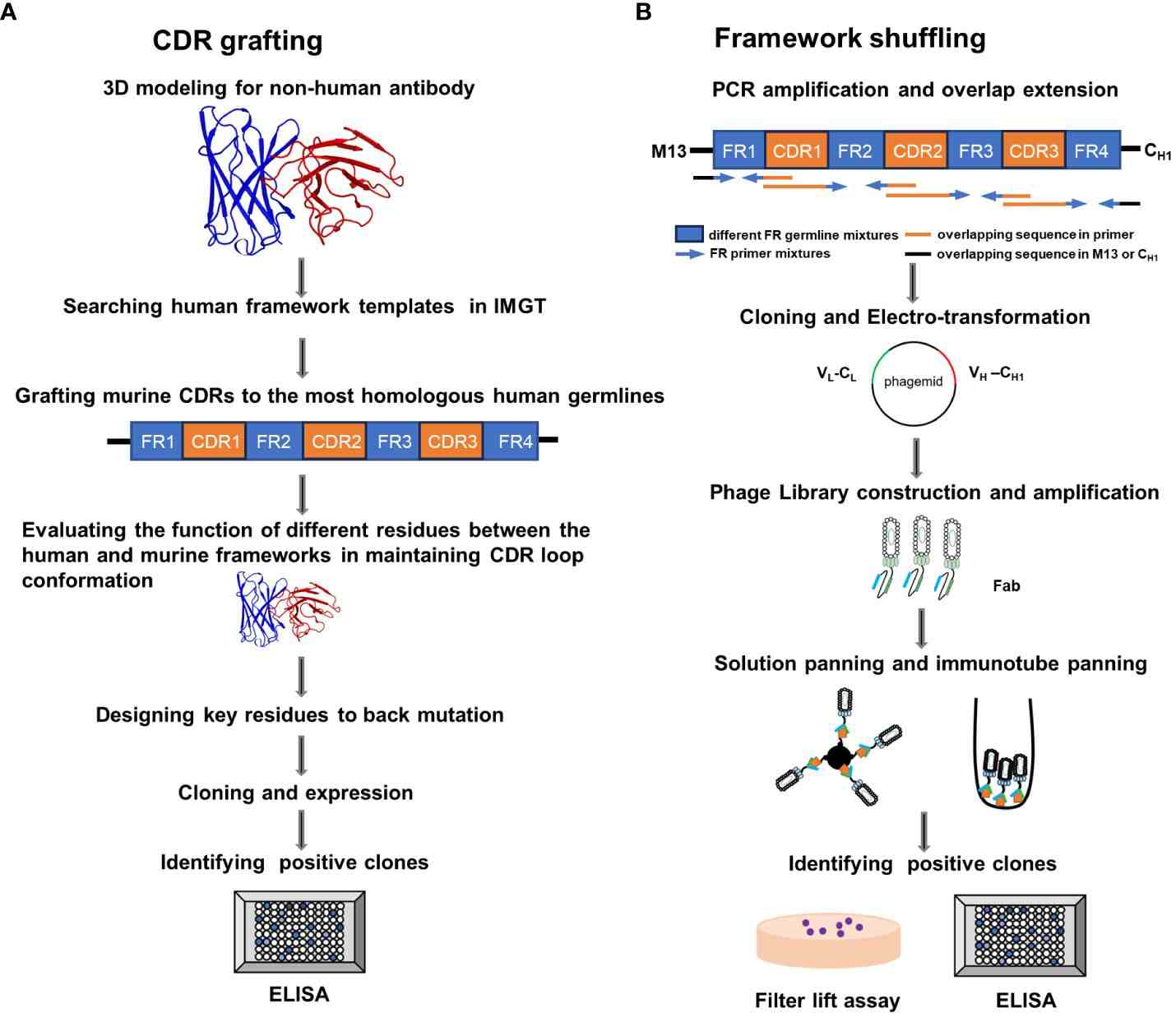 Fig. 2 Schematic illustration of the complementarity determining region (CDR) grafting and framework (FR) shuffling humanization strategies.2,3
Before synthesis, all our humanized antibody designs are subjected to rigorous computational immunogenicity screening. Our proprietary algorithms analyze the sequence for potential T-cell epitopes, providing an immunogenicity score that helps us select the lead candidates with the lowest risk profile.
The genes for the light chain and heavy chain of the top humanized candidates are synthesized and cloned into our high-yield mammalian expression vectors. We then express small-scale batches of each antibody variant in our optimized transient expression system.
The expressed and purified humanized antibodies are thoroughly validated. We perform binding assays (ELISA, SPR, BLI) to confirm that the affinity of the humanized antibody is equivalent to or even improved compared to the parent rodent antibody. Additional biophysical characterization can also be performed upon request.
With over 20 years of dedicated experience in antibody engineering, Creative Biolabs is your trusted partner for rodent antibody humanization.
Creative Biolabs offers a comprehensive portfolio of antibody engineering and development services to support every stage of your program.
Other optional characterization Services:
All listed services and products are For Research Use Only. Do Not use in any diagnostic or therapeutic applications.