
Click Chemistry Introduction
Click Chemistry
Click chemistry is a term used to describe a set of reactions that are fast, easy to use, easy to purify, versatile, regiospecific, and have high product yields. Although a number of reactions satisfy the definition, the Huisgen 1,3-dipolar cycloaddition of azides and terminal alkynes has become the clear front-runner. It has been used in a wide range of research areas from materials sciences to polymer chemistry to pharmaceutical sciences.
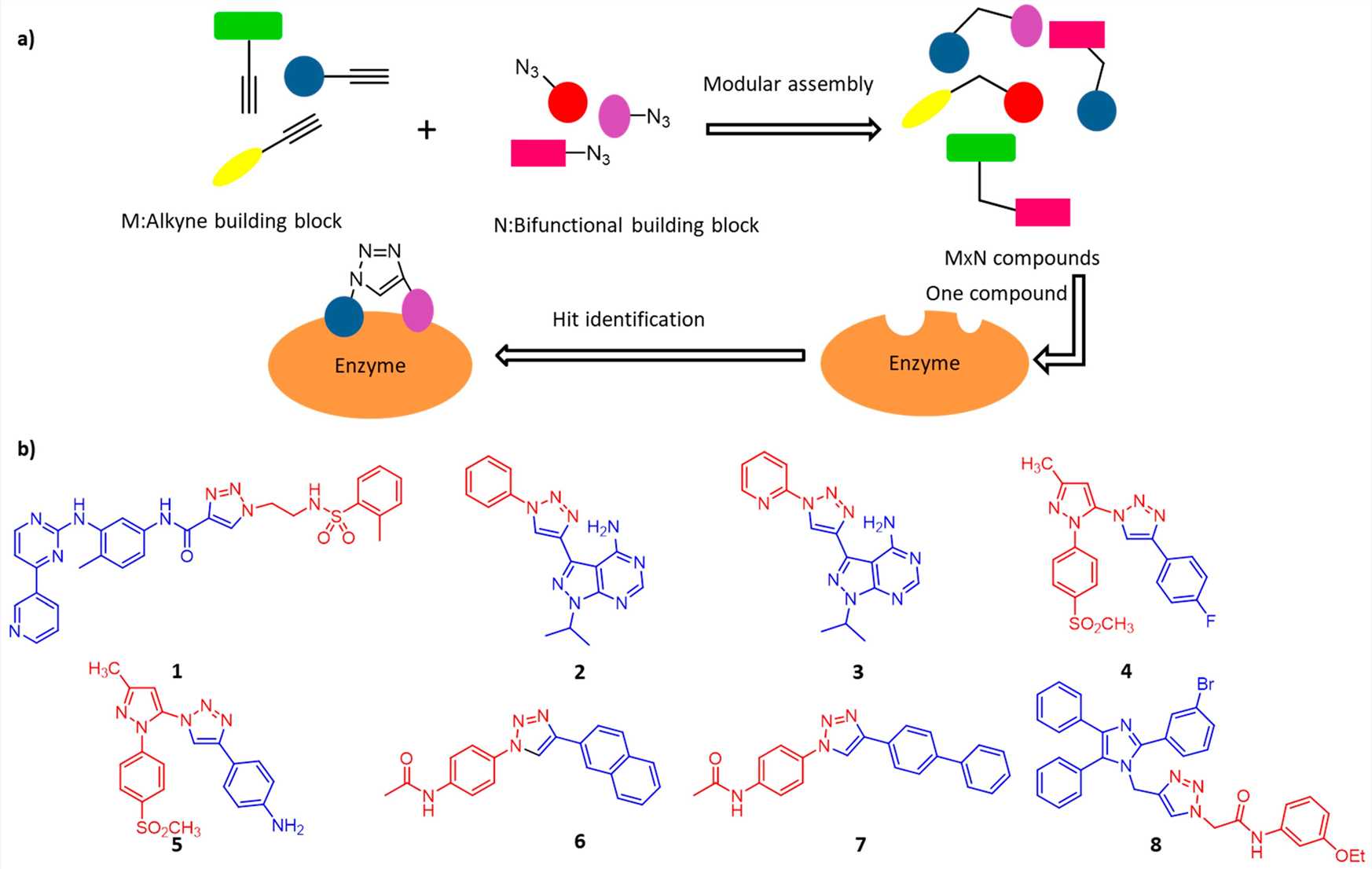 Figure 1 Illustration of in situ click chemistry.1
Classification of Click Reactions
Click chemistry involves a powerful set of linking reactions that are easy to carry out, have high yields, require little or no purification, and can link different structures without the need for protective steps. So far, four main categories of click response have been identified.
- Cycloaddition - These mainly refer to 1,3-dipolar cycloaddition, but also include hetero Diels Alder cycloaddition.
- Nucleophilic ring-openings - These refer to the openings of strained heterocyclic electrophilic reagents, such as aziridines, epoxides, cyclic sulfates, aziridine ions, cyclic sulfonic acid ions, etc.
- Carbonyl chemistry of the non-aldol type - Examples of non-aldehyde alcohol carbonyl chemistry include the formation of urea, thiourea, hydrazones, oxime ethers, amides, aromatic heterocycles, etc. Aldehyde alcohol carbonyl reactions typically have lower thermodynamic driving forces, resulting in longer reaction times and the production of by-products, and therefore cannot be considered as click reactions.
- Additions to carbon-carbon multiple bonds - Examples of the addition of carbon carbon multiple bonds include epoxidation, aziridination, dihydroxylation, sulfonyl halide addition, nitrosyl halide addition, and certain Michael additions.
Copper-Free Click Chemistry
Copper free click chemistry is an alternative method to click chemistry, which operates at lower activation barriers and does not contain cytotoxic transition metal catalysts. The absence of exogenous metal catalysts makes these reactions suitable for in vivo applications of bioorthogonal chemistry or bioorthogonal click chemistry. Copper-free click chemistry is extensively utilized in chemical biology, drug discovery and development, as well as molecular imaging.
Reagents for Click Chemistry
| Click Chemistry Application | Reagent Type | Examples / Description |
|---|---|---|
| Azide-Alkyne Cycloaddition (CuAAC and SPAAC) | Azides | Organic azides, e.g., azido-modified amino acids, sugars (Azido-Mannosamine, Azido-GalNAc), fatty acids, dyes. Stable, non-toxic, easily introduced into biomolecules. |
| Azide-Alkyne Cycloaddition (SPAAC) | Strained Cyclooctynes | DIBO (Dibenzocyclooctyne), BCN (Bicyclo [6.1.0] non-4-yn-9-ylmethanol), DBCO (Dibenzocyclooctyne), ADIBO (Azadibenzocyclooctyne). Critical for copper-free click chemistry due to ring strain. |
| Inverse Electron-Demand Diels-Alder (IEDDA) Cycloaddition | Tetrazines | Electron-deficient dienes, e.g., 3,6-di-2-pyridyl-s-tetrazine (DPTz), various methyl-tetrazines. React extremely rapidly with strained dienophiles. |
| Inverse Electron-Demand Diels-Alder (IEDDA) Cycloaddition | Strained Dienophiles | Trans-Cyclooctenes (TCOs) (highly reactive strained alkenes), Norbornenes (strained alkenes, generally less reactive than TCOs). |
| Thiol-Ene/Yne Reactions | Thiols | Molecules containing a sulfhydryl (-SH) group. |
| Thiol-Ene/Yne Reactions | Alkenes/Alkynes | Molecules containing carbon-carbon double or triple bonds. |
| Oxime/Hydrazone Ligation | Aldehydes/Ketones | Can be introduced into biomolecules through enzymatic or chemical methods. |
Click Chemistry Tools
Beyond the foundational CuAAC, the toolbox of click chemistry has expanded significantly to include a variety of reactions that meet the stringent criteria of efficiency, selectivity, and biocompatibility. These "click chemistry tools" offer diverse functionalities and allow for orthogonal labeling strategies, where multiple reactions can proceed simultaneously without interfering with each other.
- Efficiency—the click reaction is complete in less than 1 hour;
- Specificity—the reaction between the label and detection tag is selective and specific;
- Stability—the reaction product contains an irreversible, covalent bond;
- Biologically inert—the components of the reaction do not undergo any side reactions
Applications of Click Chemistry in Pharmaceutical Sciences
Since its first appearance in 1999, click chemistry has sparked great interest in many different research fields and has been applied in various fields ranging from microelectronics to viral labeling to cancer treatment. In the following section, we will delve into some of its applications in the field of pharmacy.
Polymer Therapeutics and Click Chemistry
Broadly investigated synthetic polymer-based non-viral gene therapy formulations are typically considered safer but have limited transfection efficiency as compared to gene vectors based on viruses. In the effort to address this shortcoming, click chemistry has found its use as well. When, for example, biocompatible polymers like polyethylene glycol (PEG) conjugated to therapeutic proteins and peptides (a strategy for which significant reduction in immunogenicity and enhancement of bioavailability have been demonstrated), are coupled through a click reaction, a highly specific and efficient conjugation can be achieved. With this, not only is the stability of the ensuing complexes improved, but the targeting efficiency of the therapeutic molecules as well, effectively increasing the performance of such polymer-based formulations indirectly.
Click Chemistry and Bioconjugation
The use of bio coupling and biopharmaceuticals is rapidly becoming a common practice. As of May 1, 2007, an estimated 30 biopharmaceuticals were undergoing clinical trials. This popularity stems from the fact that biological coupling reactions can be used for many purposes and meet many functional requirements. Click chemistry-driven bioconjugation can meet a wide range of desired functional needs. For instance, it can be used for effective enhancement of the water solubility of the drug. It is also used to improve biopharmaceuticals' safety profile by reducing their immunogenicity. In addition, click chemistry-based coupling is used to prolong their circulation time and improve the stability of the resulting bioconjugates.
Frequently Asked Questions
Q: What are some of the advantages of click chemistry compared to traditional bioconjugation techniques?
A: The advantages of click chemistry in bioconjugation include high efficiency and yield, excellent specificity and selectivity (orthogonality), mild reaction conditions (often aqueous, physiological temperature), and ease of product purification. These features limit side reactions and loss of biomolecule integrity and facilitate experimental procedures often difficult with traditional bioconjugation methods.
Q: Is it possible to use click chemistry for in vivo applications?
A: Yes. While CuAAC is limited to in vitro or ex vivo applications, due to the cytotoxicity of copper, all of the copper-free click chemistries, and especially SPAAC and IEDDA, are highly bioorthogonal and have been used for in vivo applications, including labeling, imaging, and drug delivery in living animals.
Q: What is the fastest click reaction?
A: The Inverse Electron-Demand Diels-Alder (IEDDA) reaction between tetrazines and strained trans-cyclooctenes (TCOs) is currently the fastest bioorthogonal click reaction, and its very fast kinetics have found applications in real-time imaging and other applications that require very fast labeling.
Overview of What Creative Biolabs Can Provide
Creative Biolabs is a biotechnology company focused on offering world-class solutions in click chemistry. With our technical expertise and robust facilities, we provide a variety of products and services that are sure to advance your research and development in chemical biology, drug discovery, diagnostics and materials science. If you are interested in our bioconjugation services, please feel free to contact us for more details.
Recommended products
Recommended Services
-
Protein & Antibody Related Conjugation
-
Nucleic Acids/Oligonucleotides Related Conjugation
-
Small Molecule Related Conjugation
-
Bacteria Related Conjugation
-
Click Chemistry based Conjugation
-
Custom Virus Conjugation
-
Custom Bacteriophage Conjugation
Reference
- Yao T, Xu X, Huang R. Recent advances about the applications of click reaction in chemical proteomics. Molecules, 2021, 26(17): 5368. https://doi.org/10.3390/molecules26175368Distributed under Open Access license CC BY 4.0, without modification.