Introduction Application What Can We Offer? Workflow Why Choose Us? FAQs Featured Services Feature Products
Aptamer Pair Development: Precision Binding to Accelerate Your Diagnostic and Therapeutic Breakthroughs!
Are you currently facing high batch-to-batch variation, limited target availability for non-immunogenic compounds, or steric hindrance in traditional sandwich ELISA development? Our Aptamer Pair Development Services help you obtain highly specific, matched pairs for robust dual-site recognition through our proprietary in vitro SELEX platforms and advanced bioinformatics-driven screening. By bypassing the limitations of animal-based immunization, we ensure high-affinity binders that streamline your transition from discovery to clinical application.
Contact our team to get an inquiry now!
Introduction of Aptamer Pair Development
Aptamers, often referred to as "chemical antibodies," are single-stranded oligonucleotides (DNA or RNA) that fold into complex three-dimensional structures through intramolecular interactions. These unique conformations allow them to bind their respective targets with high specificity and affinity, comparable to or exceeding that of traditional antibodies. Unlike monoclonal antibodies (mAbs), which rely on the biological immune response of an organism, aptamers are selected entirely in vitro using the Systematic Evolution of Ligands by Exponential Enrichment (SELEX) process. This synthetic approach allows for precise control over the selection environment, enabling the isolation of binders that function in specific buffers, temperatures, or pH levels tailored to the end-user's application.
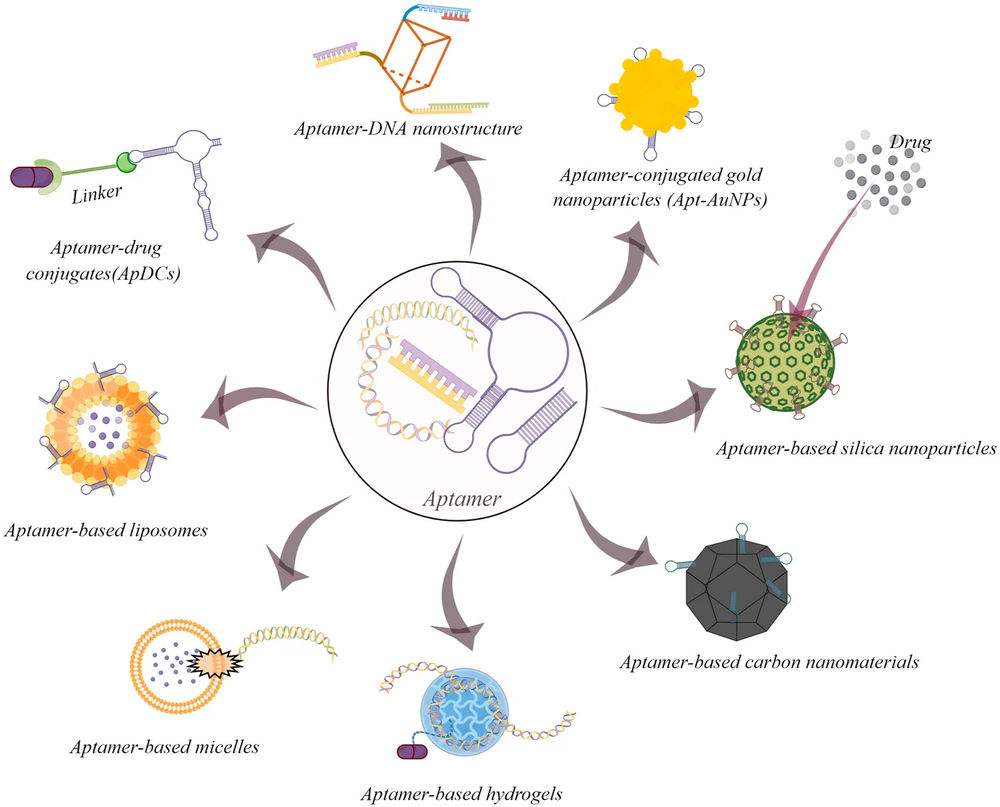 Fig.1 Some common examples of aptamer-based drug delivery systems for cancer therapy.1
The development of aptamer pairs represents a significant advancement over single-binder systems, as it facilitates the creation of dual-recognition assays. Literature indicates that sandwich-type biosensors utilizing matched pairs significantly enhance sensitivity and specificity by requiring two independent binding events for signal generation. This dual-check mechanism effectively filters out background noise and non-specific binding, which is particularly critical for quantifying targets like C-reactive protein (CRP), thrombin, or cardiac troponins where high-precision quantification is essential for clinical diagnosis and risk stratification. Furthermore, research demonstrates that aptamers can be selected for non-immunogenic, small-molecule, or highly toxic targets where animal-derived antibodies traditionally fail due to toxicity or lack of immune stimulation. The resulting aptamer pairs offer a robust, animal-free alternative for detecting hazardous agents and low-molecular-weight biomarkers.
Application
Aptamer pairs developed by Creative Biolabs are versatile tools utilized across various scientific and clinical domains:
Point-of-Care (POC) Diagnostics:
Integration into Lateral Flow Assays (LFA) for the rapid, decentralized detection of infectious diseases, cardiac markers, or pregnancy-related hormones. The inherent stability of aptamers allows these POC devices to maintain high performance in field conditions without the need for cold-chain logistics.
Sandwich ELISA & ELAAS:
Replacing one or both antibodies in enzyme-linked assays to reduce production costs and improve thermal stability. Aptamers provide a consistent chemical platform that minimizes the lot-to-lot variability often associated with polyclonal antibodies, ensuring more reproducible longitudinal studies.
Environmental Monitoring:
High-sensitivity detection of heavy metals, environmental toxins, or waterborne pathogens in complex samples. Aptamer pairs enable the development of portable biosensors capable of on-site testing for environmental pollutants with minimal sample pre-treatment.
Therapeutic Drug Monitoring (TDM):
Quantifying circulating drug levels in patients to optimize dosage and minimize adverse effects. This is particularly useful for narrow-therapeutic-index drugs where the ability of aptamer pairs to distinguish between a drug and its metabolites is a significant advantage.
High-Throughput Proteomics:
Implementation in multiplexed protein detection platforms where cross-reactivity must be eliminated. The small size and synthetic nature of aptamers allow for high-density immobilization on microarrays, facilitating the simultaneous analysis of hundreds of biomarkers within a single sample.
What Can We Offer?
We provide a comprehensive suite of products and services to support your aptamer-based projects:
-
Custom DNA/RNA Aptamer Selection: Tailored SELEX for any target class.
-
Aptamer-Antibody Hybrid Pair Development: Finding the perfect aptamer to complement your existing antibody.
-
Aptamer Characterization Services: SPR/BLI binding kinetic analysis and specificity testing.
-
Modified Aptamer Synthesis: Incorporating unnatural bases or protective groups for nuclease resistance.
-
Ready-to-Use Aptamer Kits: Catalog aptamers for common targets like Thrombin, VEGF, and PSA.
Workflow
01
Primary Aptamer Selection (SELEX): We perform iterative rounds of selection from a massive library (1014 to 1015 sequences) to identify high-affinity primary binders.
02
Epitope Mapping & Blocking: Once primary binders are identified, we use them to "mask" the initial epitope. This forces the selection of secondary aptamers toward a spatially distinct site on the target.
03
Pair Compatibility Screening: Potential candidates are screened in a sandwich format (Capture-Target-Detection) to identify pairs that exhibit minimal steric hindrance and maximal signal-to-noise ratio.
04
Affinity Maturation & Sequence Optimization: Successful pairs undergo in silico docking and sequence truncation to enhance stability and binding kinetics.
05
Assay Validation: The final pair is validated in the client's specific medium (e.g., human plasma or environmental water samples) to confirm real-world performance.
Why Choose Us?
Creative Biolabs stands at the forefront of aptamer technology, offering unmatched expertise in binder engineering.
-
Animal-Free Precision: Our in vitro selection eliminates the need for animal immunization, allowing for the targeting of toxins and poorly immunogenic proteins.
-
Overcoming Epitope Dominance: Using advanced masking techniques, we successfully identify "difficult" secondary epitopes that traditional antibody protocols often miss.
-
Enhanced Stability: Our aptamers are resistant to thermal denaturation and can be stored at room temperature, making them ideal for field-based applications.
-
Seamless Integration: We provide custom modifications (e.g., PEGylation, fluorophore labeling, or thiol groups) for immediate assay integration.
FAQs
Q: Do aptamers maintain structural integrity and binding specificity in complex biological matrices such as whole blood?
A: Aptamers exhibit robust performance in complex fluids when developed using rigorous negative selection and counter-SELEX strategies. By exposing the oligonucleotide library to the biological matrix (e.g., plasma or serum) in the absence of the target, sequences with non-specific affinities are removed, ensuring the final pair preferentially binds the target analyte even amidst high concentrations of background proteins.
Q: What methodologies ensure that two aptamers recognize non-overlapping epitopes for sandwich assay compatibility?
A: Sequential selection and competitive displacement assays are utilized to ensure dual-site recognition. By saturating the target analyte with a primary binder during the secondary selection phase (epitope masking), the selection pressure is redirected toward unoccupied, spatially distinct epitopes. Post-selection validation via sandwich-format screening further confirms the absence of steric hindrance.
Q: How do the thermodynamic and chemical stability profiles of aptamers compare to those of traditional antibodies?
A: Oligonucleotide aptamers generally possess superior thermal stability compared to proteinaceous antibodies. While antibodies undergo irreversible denaturation at elevated temperatures, aptamers can undergo reversible thermal denaturation and reliably refold into their biologically active tertiary structures upon cooling. Additionally, chemical modifications to the sugar-phosphate backbone enhance resistance against nuclease degradation in physiological environments.
Q: Are aptamers compatible with standardized immunoassay platforms such as ELISA?
A: Aptamers are highly compatible with established diagnostic workflows. Due to their synthetic nature, they can be precisely functionalized with biotin, digoxigenin, or fluorophores during synthesis. This allows for direct integration into Enzyme-Linked Aptamer Assays (ELAA) or sandwich ELISA formats, often requiring only minor optimizations in buffer composition and blocking agents.
Q: What scientific advantages are provided by integrating an aptamer into an antibody-based detection system?
A: Utilizing an aptamer-antibody hybrid pair addresses the "second binder" bottleneck often encountered in assay development. When a high-quality primary antibody is available but a matched monoclonal counterpart is difficult to produce, an aptamer can be selected to recognize a complementary epitope. This hybrid approach leverages the established affinity of the antibody while utilizing the high specificity and reproducibility of the synthetically derived aptamer.
Creative Biolabs provides world-class Aptamer Pair Development Services designed to overcome the hurdles of traditional immunoassay development. From initial SELEX selection to final validation in complex matrices, our team ensures your project is equipped with high-affinity, high-stability molecular tools.
Featured Services
Feature Products
Reference
-
Gao, Fei et al. "Recent advances in aptamer-based targeted drug delivery systems for cancer therapy." Frontiers in bioengineering and biotechnology vol. 10 972933. 16 Aug. 2022, Distributed under Open Access license CC BY 4.0, without modification. https://doi.org/10.3389/fbioe.2022.972933
For Research Use Only.
Related Sections: