Introduction Application What Can We Offer? Workflow Published Data Why Choose Us? FAQs Featured Services Feature Products
Whole Cell-based SELEX Services: Redefining Precision in Molecular Targeting!
Are you currently facing challenges in identifying high-affinity ligands for complex membrane proteins or dealing with the instability of purified protein targets? Our Whole Cell-based SELEX Service helps you discover highly specific aptamers that recognize targets in their native cellular environment through our advanced high-throughput screening platforms and iterative enrichment techniques.
Contact our team to get an inquiry now!
Introduction of Whole Cell-based SELEX
The "Systematic Evolution of Ligands by Exponential Enrichment" (SELEX) has revolutionized the field of molecular recognition by allowing the discovery of high-affinity ligands through iterative selection. While traditional SELEX utilizes purified proteins as targets, Cell-SELEX (Whole Cell-based SELEX) represents a sophisticated evolution of this technology, moving the laboratory bench closer to the biological reality of the human body. According to cited literature, aptamers selected against purified proteins often fail to bind their targets on live cells due to the absence of the lipid bilayer, which anchors proteins and dictates their orientation, as well as the lack of proper glycosylation and other post-translational modifications that define the cellular "identity."
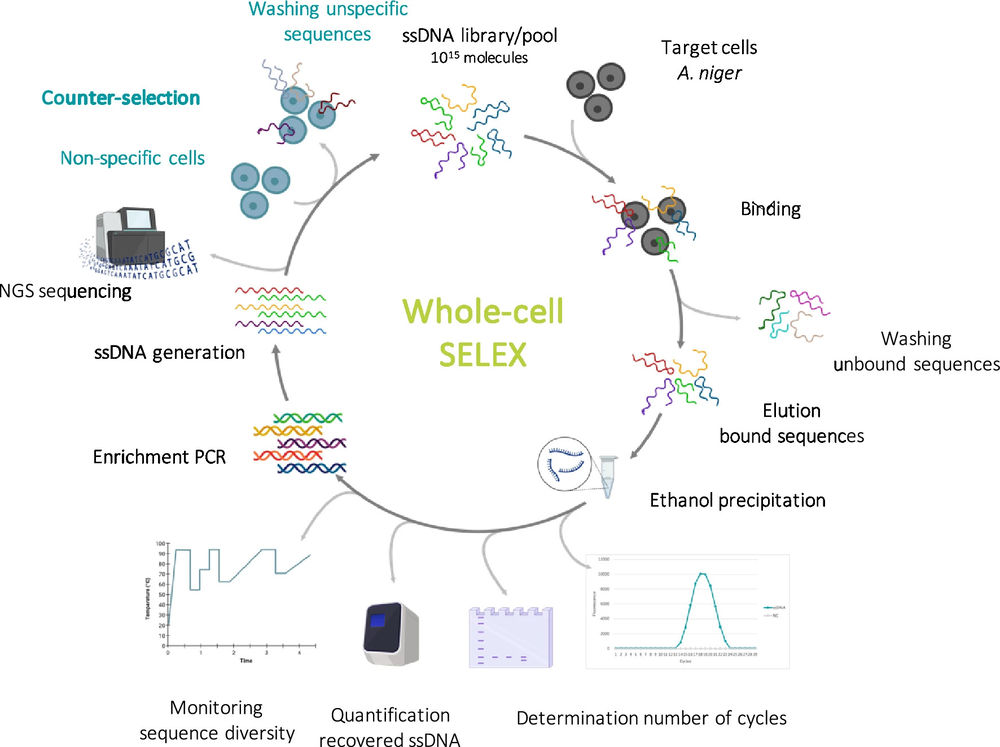 Fig.1 Schematic illustration of the whole-cell SELEX process.1,3
Cell-SELEX treats the entire cell as a dynamic "black box" target. This methodology allows for the selection of aptamers against proteins in their native 3D conformation, preserving the structural integrity that is often lost during the time-consuming and technically arduous task of protein purification. Furthermore, Cell-SELEX is an exceptionally powerful tool for Biomarker Discovery in oncology and immunology. Because the specific molecular target on the cell surface does not need to be predefined, the selected aptamers act as molecular "keys" that can later be used to pull down and identify previously unknown or poorly characterized disease-associated proteins. This "discovery-first" approach enables researchers to identify unique pathological signatures that traditional proteomics might overlook.
Application of Cell-Selected Aptamers
Aptamers generated through whole-cell selection have diverse and transformative applications across the biopharmaceutical landscape, offering a high degree of versatility:
Targeted Drug Delivery:
Aptamers that undergo receptor-mediated internalization upon binding can be selectively utilized as "smart" delivery vehicles. These can be conjugated to potent toxins, siRNAs, or chemotherapeutic agents, ensuring that the therapeutic cargo is delivered directly into the cytoplasm or nucleus of diseased cells while sparing healthy tissue from systemic toxicity.
Cancer Diagnostics & Imaging:
Due to their small size and rapid tissue penetration, highly specific aptamers can differentiate between cancerous and healthy cells with extreme precision. They can be engineered to recognize different stages of tumor progression or metastatic potential, serving as superior molecular probes for immunohistochemistry (IHC), flow cytometry, or non-invasive in vivo imaging such as PET and SPECT.
Infectious Disease Research:
The speed of Cell-SELEX allows for the rapid development of aptamers designed to detect and neutralize specific bacterial or viral pathogens. By targeting whole pathogens, researchers can identify conserved surface motifs that facilitate early diagnosis and provide a first line of defense against emerging infectious threats.
Immunomodulation:
Aptamers are increasingly used to manipulate the immune system. By selecting aptamers that act as potent agonists or antagonists for cell-surface receptors, such as those involved in immune checkpoints or cytokine signaling, researchers can fine-tune the immune response to treat chronic inflammation or enhance anti-tumor immunity.
What Can We Offer?
We provide a "one-stop" shop for your aptamer development needs:
-
ssDNA/RNA Library Synthesis (chemically modified for stability).
-
Comprehensive Cell-SELEX Screening (including internalizing SELEX).
-
Aptamer Characterization (Surface Plasmon Resonance (SPR) for KD determination).
-
Biomarker Identification (Aptamer-mediated target pull-down and Mass Spec).
-
Aptamer-Drug Conjugate (ADC) Development.
Workflow
01
Library Preparation & Folding: We synthesize a high-diversity ssDNA or RNA library (1014 to 1015 sequences) and subject it to thermal treatment to ensure optimal 3D structural folding.
02
Negative Selection (Counter-SELEX): The library is first incubated with non-target cells. Sequences that bind to common cell-surface components are removed, significantly reducing off-target binding.
03
Positive Selection: The remaining pool is incubated with the target cells. High-affinity sequences bind to the unique molecular signatures on the cell surface.
04
Partitioning & Elution: Unbound sequences are washed away, and the cell-bound aptamers are carefully eluted using heat or chemical buffers.
05
Amplification & Iteration: Eluted sequences are amplified via PCR (or RT-PCR for RNA) to create an enriched pool for the next round. This cycle is typically repeated for 10–20 rounds.
06
Next-Generation Sequencing (NGS) & Bioinformatics: The final enriched pool undergoes NGS. Our bioinformaticians analyze sequence frequency, family clustering, and secondary structure stability.
Published Data
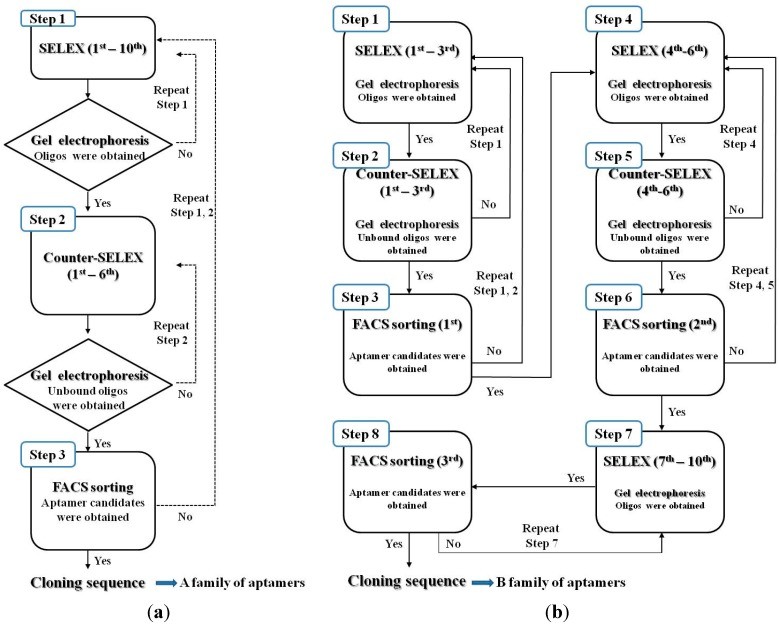 Fig.2 The basic whole-cell SELEX procedures and the modified whole-cell SELEX process.2,3,
The article describes a study that developed DNA aptamers specific to Staphylococcus aureus using two distinct whole-cell SELEX approaches. The researchers compared a basic SELEX method (flow cytometry sorting at the end) with a modified SELEX method (multiple FACS sorting steps throughout the process). By using live bacteria as targets, the study aimed to identify aptamers with high affinity for the natural surface molecules of pathogens. Surprisingly, the basic whole-cell SELEX yielded the most effective candidate, Aptamer A14, which outperformed candidates from the modified method in terms of binding affinity and specificity.
Scientific evaluation of the study identified Aptamer A14 as the leading candidate for S. aureus detection, possessing a high binding rate of 50.18% at a concentration of 10 nM. Quantitative analysis revealed an equilibrium dissociation constant (Kd) of 3.49 ± 1.43 nM, indicating a strong and stable binding affinity comparable to established gold-standard aptamers. Structural prediction shows that A14 forms a complex secondary configuration consisting of two stem-loop branches and a large central loop, which facilitates its interaction with bacterial surface proteins. These findings demonstrate that whole-cell SELEX is a robust platform for generating high-specificity bioreceptors for live pathogenic targets, providing a superior alternative to traditional antibody-based detection methods.
Why Choose Us?
Creative Biolabs stands at the forefront of aptamer technology, offering unparalleled expertise in handling complex cellular targets.
-
Native Conformation Advantage: We ensure your aptamers work in the real-world environment of a live cell.
-
Proprietary Counter-Selection Protocols: Our rigorous negative selection processes eliminate cross-reactivity with staggering efficiency.
-
High-Throughput Sequencing Integration: We don't just pick the most abundant sequence; we use "Published Data" and bioinformatics to identify the highest affinity binders that might be missed by traditional cloning.
-
Customized Modification Services: We offer post-SELEX modifications (e.g., PEGylation, fluoro-modifications) to enhance nuclease resistance and in vivo stability.
FAQs
Q: Can Cell-SELEX be performed on primary cells or only on immortalized cell lines?
A: Cell-SELEX is highly effective on both immortalized cell lines and primary cells. However, primary cells must maintain high viability throughout the incubation steps to ensure that the selection is targeting surface markers rather than intracellular components leaked from dead cells.
Q: What is the main difference between DNA and RNA aptamers in Cell-SELEX?
A: DNA aptamers are generally more stable and cost-effective to produce. RNA aptamers, while requiring more careful handling due to RNase sensitivity, often fold into more complex 3D structures, which can sometimes provide higher specificity for certain targets. We offer both platforms based on your project goals.
Q: How do you ensure the aptamer isn't binding to a common protein found on all cells?
A: Specificity is guaranteed through our "Counter-Selection" step. We incubate the library with a "control" cell line that is as biologically similar as possible to the target cell but lacks the specific marker. Sequences that bind to the control are discarded.
Q: Is it possible to select aptamers that only bind and then enter the cell?
A: Yes, this is known as Internalization SELEX. By recovering only the sequences that have entered the cell after incubation and washing the cell surface, we can specifically enrich for aptamers that act as delivery vehicles for intracellular therapy.
Q: Do I need to know the specific protein target on the cell surface?
A: No. One of the greatest strengths of Whole Cell-based SELEX is that it can be "target-blind." We can select aptamers that differentiate between two cell populations even if the molecular reason for that difference is not yet known.
Creative Biolabs' Whole Cell-based SELEX Services provide a sophisticated, reliable, and scientifically sound pathway for developing high-performance aptamers. By utilizing live cells in their native state, we ensure that your molecular probes and therapeutics possess the highest possible clinical relevance. From initial library design to final candidate validation, our team is dedicated to accelerating your drug discovery milestones.
Featured Services
Feature Products
References
-
Ellena, Valeria et al. "Development of a whole-cell SELEX process to select species-specific aptamers against Aspergillus niger." Fungal biology and biotechnology vol. 11,1 17. 5 Nov. 2024, https://doi.org/10.1186/s40694-024-00185-2
-
Moon, Jihea et al. "Comparison of whole-cell SELEX methods for the identification of Staphylococcus aureus-specific DNA aptamers." Sensors (Basel, Switzerland) vol. 15,4 8884-97. 15 Apr. 2015, https://doi.org/10.3390/s150408884
-
Distributed under Open Access license CC BY 4.0, without modification.
For Research Use Only.
Related Sections: