Introduction Application What Can We Offer? Workflow Published Data Why Choose Us? FAQs Featured Services Feature Products
Protein-based SELEX: Accelerate Your Drug Discovery Process!
Are you currently facing long drug development cycles, high production costs, or challenges in targeting non-immunogenic proteins? Our Protein-based SELEX Services help you obtain high-affinity, highly specific "chemical antibodies" through advanced in vitro selection technology and high-throughput screening platforms. By bypassing animal-based immune responses, we streamline your path from target identification to therapeutic lead, ensuring your project achieves precision and stability at every stage.
Contact our team to get an inquiry now!
Introduction to Protein-based SELEX
Systematic Evolution of Ligands by Exponential Enrichment (SELEX) is the gold-standard technology for isolating aptamers, short, single-stranded oligonucleotides (DNA or RNA) that fold into complex, unique 3-dimensional structures such as stem-loops, G-quadruplexes, and pseudoknots. Often termed "chemical antibodies," these precision-engineered molecules recognize their protein targets through intricate physical interactions, including van der Waals forces, hydrogen bonding, and electrostatic complementarity. This structural fit allows aptamers to occupy protein clefts or active sites with an affinity and specificity that often rivals, and in many cases exceeds, traditional monoclonal antibodies.
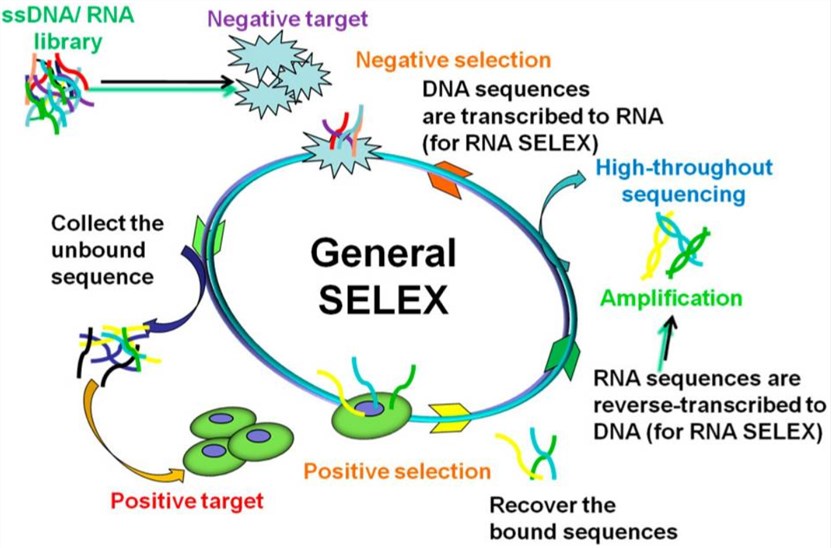 Fig. 1 General SELEX procedures.1,3
Unlike antibody production, which relies on the complex and sometimes unpredictable immune system of a host animal, Protein-based SELEX is an entirely in vitro process. This independence from biological constraints allows for the selection of aptamers against virtually any protein, including highly toxic molecules, intracellular domains, or proteins that do not elicit an immune response due to high sequence homology between species.
Furthermore, recent scientific advancements have revolutionized the field through the integration of modified nucleotides. By incorporating modifications like 2'-Fluoro (2'-F) or 2'-O-Methyl (2'-OMe) directly into the SELEX cycles, we can synthesize aptamers with significantly enhanced resistance to endogenous nucleases. These modifications prevent the rapid degradation typically associated with natural nucleic acids, rendering protein-selected aptamers highly viable for prolonged in vivo therapeutic applications and stable, long-term diagnostic biosensors.
Application
Protein-based aptamers are versatile, high-performance tools that have become indispensable across several key biopharmaceutical sectors:
Targeted Therapeutics:
Aptamers can be engineered to act as potent agonists or antagonists in complex signaling pathways, effectively blocking or stimulating protein-protein interactions. Additionally, they serve as highly efficient delivery vehicles for drug-conjugates (APDCs), where the aptamer guides a cytotoxic payload directly to a specific diseased cell while minimizing off-target effects.
Clinical Diagnostics:
Within the diagnostic landscape, aptamers are increasingly used as the primary recognition element in Enzyme-Linked Oligonucleotide Assays (ELONA). Their high thermal stability and ease of regeneration make them superior to antibodies in lateral flow assays and other point-of-care testing modules, providing consistent results even in non-temperate environments.
Biosensors:
The precision of protein-based SELEX allows aptamers to be integrated into advanced electronic platforms, such as Field-Effect Transistors (FET) or nanowire biosensors. This integration enables the real-time, label-free monitoring of biomarkers in blood or interstitial fluids, facilitating the development of wearable health-monitoring technology.
Protein Purification and Proteomics:
Aptamers are utilized in affinity chromatography to isolate specific target proteins from complex lysates with exceptionally high purity. Because aptamer-protein interactions are often dependent on specific ion concentrations or pH levels, they allow for gentle elution conditions that preserve the native structure and function of the purified protein, unlike the harsh conditions sometimes required for antibody-based resins.
What Can We Offer?
We provide a comprehensive suite of products and services to support your aptamer journey:
-
Custom Protein-SELEX Services: Complete development from target protein to optimized aptamer lead.
-
Aptamer Modification & Conjugation: Incorporation of modified bases, spacers, and therapeutic payloads.
-
Binding Affinity Characterization: Precision measurement of interaction kinetics using SPR and BLI platforms.
-
Ready-to-Use Aptamers: A catalog of pre-selected aptamers against popular biomarkers (e.g., VEGF, Thrombin, EpCAM).
-
Aptamer Optimization: Truncation and sequence maturation to enhance binding and stability.
Workflow
01
Initialization of Library: Selection starts with a diverse synthetic pool containing approximately 1014 to 1015 unique DNA or RNA oligonucleotides.
02
Binding & Separation: This library reacts with the protein of interest. Non-binders are eliminated through washing, while successful ligands are recovered using rigorous techniques like magnetic beads or nitrocellulose membranes.
03
Negative Selection Phase: To guarantee superior selectivity, the surviving pool undergoes screening against decoy proteins to prune any candidates with non-specific cross-reactivity.
04
Enrichment & Amplification: The isolated sequences undergo PCR (for DNA) or RT-PCR (for RNA) for expansion. This iterative cycle is repeated 8-15 times until the population is highly concentrated.
05
Next-Gen Sequencing & Analysis: We utilize HTS (High-Throughput Sequencing) to evaluate millions of sequences, followed by computational clustering to pinpoint the most effective binding motifs.
06
Performance Validation: Promising leads are chemically synthesized, and their Kd values are precisely measured through MST (Microscale Thermophoresis) or SPR (Surface Plasmon Resonance).
Published Data
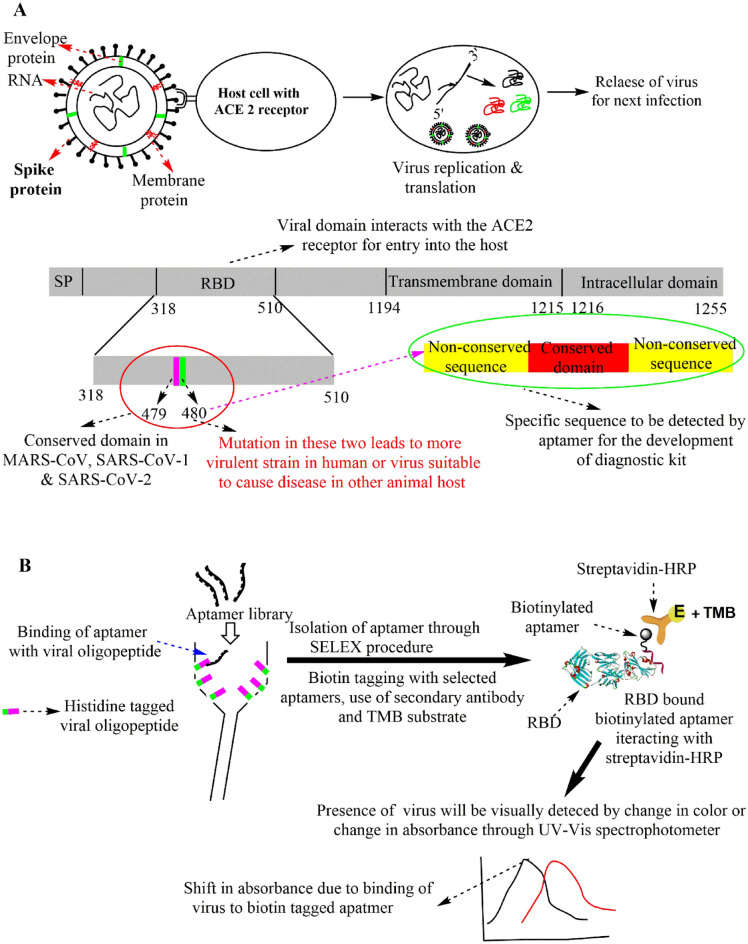 Fig.2 Select appropriate targets and use SELEX technology to separate and identify aptamers.2,3,
The study demonstrates the successful use of Systematic Evolution of Ligands by Exponential Enrichment (SELEX) to develop DNA aptamers targeting the SARS-CoV-2 spike protein's Receptor Binding Domain (RBD). By screening a massive random library of approximately 1017 molecules against a synthetic viral oligopeptide, researchers identified Aptamer R as a high-affinity binder. Through in vitro binding assays and pseudotyped viral entry assays, the study confirmed that these aptamers effectively block the interaction between the viral spike protein and the host ACE2 receptor. Notably, the lead aptamers exhibited up to 95.4% viral inhibition, proving their dual potential as both rapid diagnostic tools and therapeutic entry inhibitors.
Why Choose Us?
Creative Biolabs combines decades of biological expertise with a cutting-edge SELEX platform to ensure your project's success.
-
High Success Rate: Our "Visual Assessment" protocol allows us to troubleshoot and optimize each round of selection in real-time.
-
Unmatched Specificity: Advanced Counter-SELEX strategies effectively distinguish between proteins with single amino acid mutations.
-
Chemical Versatility: We offer extensive post-selection modifications, including PEGylation for half-life extension and fluorophore labeling for imaging.
-
No Batch-to-Batch Variation: As chemically synthesized molecules, our aptamers provide high reproducibility compared to biologically produced antibodies.
-
Animal-Free Production: Ideal for ethical research and the development of aptamers against toxins that are otherwise impossible to target via traditional immunization.
FAQs
Q: How does Protein-SELEX handle targets that are difficult to purify?
A: While high-purity protein is preferred, we can utilize specific tags for on-bead selection. If the protein cannot be purified in its native state, we may recommend our Cell-SELEX or VLP-based SELEX alternatives to ensure the aptamer recognizes the functional conformation.
Q: Can these aptamers work in serum or complex biological fluids?
A: Yes. We typically incorporate chemically modified nucleotides (such as 2'-F or 2'-OMe) during the selection process. These modifications protect the phosphodiester backbone from nuclease degradation, ensuring stability in human serum for several hours or even days.
Q: What is the typical affinity (d) I can expect?
A: Most protein-targeted aptamers we develop achieve Kd values in the nanomolar range (1–100 nM). For high-abundance or highly structured proteins, we frequently reach picomolar affinity.
Q: How do aptamers compare to antibodies in terms of tissue penetration?
A: Aptamers are approximately 1/10th to 1/15th the size of a standard IgG antibody (~15 kDa vs ~150 kDa). This significantly smaller size allows for much faster and deeper tissue penetration, making them superior for imaging and treating solid tumors.
Q: Is it possible to select aptamers that work at specific temperatures or pH levels?
A: Absolutely. Since SELEX is an in vitro process, we can tailor the "selection pressure" to match your final application environment, whether that is acidic tumor microenvironments or high-temperature industrial assays.
Creative Biolabs' Protein-based SELEX services provide a precise, scalable, and animal-free pathway to discovering high-affinity ligands. Whether you are developing a next-generation therapeutic, a sensitive diagnostic kit, or an innovative biosensor, our platform delivers the molecular precision required to advance your biopharmaceutical goals.
Featured Services
Feature Products
References
-
Wu, Xiaoqiu et al. "Potential Diagnostic and Therapeutic Applications of Oligonucleotide Aptamers in Breast Cancer." International journal of molecular sciences vol. 18,9 1851. 25 Aug. 2017, https://doi.org/10.3390/ijms18091851
-
Halder, Sayanti et al. "SELEX based aptamers with diagnostic and entry inhibitor therapeutic potential for SARS-CoV-2." Scientific Reports vol. 13,1 14560. 4 Sep. 2023, https://doi.org/10.1038/s41598-023-41885-w
-
Distributed under Open Access license CC BY 4.0, without modification.
For Research Use Only.
Related Sections: