Understanding Complement C1r Function in the Classical Pathway
Complement C1r is a highly specialized serine protease that forms part of the C1 complex together with C1q and C1s. In the resting state, C1 circulates as an inactive macromolecular complex. Upon recognition of immune complexes, pathogen-associated structures, or antibody-bound targets through C1q, conformational changes occur within the C1 complex, leading to sequential activation of C1r and C1s.
Activated C1r initiates a proteolytic cascade by cleaving and activating C1s, which subsequently processes downstream complement components including C4 and C2. This ultimately contributes to formation of the classical pathway C3 convertase and progression toward complement amplification and terminal pathway activation. Because C1r acts at an early checkpoint of classical pathway activation, changes in C1r activity can significantly influence the intensity and duration of complement responses. Therefore, accurate evaluation of C1r functional activity is essential for understanding complement biology and developing selective complement intervention strategies.
Functional evaluation provides additional information regarding:
-
Enzymatic activation capability
-
Substrate cleavage efficiency
-
Pathway initiation capacity
-
Response to inhibitors or regulators
-
Species-specific functional differences
-
Therapeutic modulation potential
A biologically inactive or partially impaired C1r protein may still be detectable using binding-based assays. Functional assays overcome this limitation by directly measuring enzymatic performance and biological consequences. Creative Biolabs' complement C1r activity assay platforms are designed to bridge this gap by providing quantitative measurements of C1r-mediated activity.
Great Minds Choose Creative Biolabs
Workflow of Complement C1r Activity Assay
Creative Biolabs follows a structured workflow to ensure that each C1r assay is aligned with client goals and delivers interpretable results.
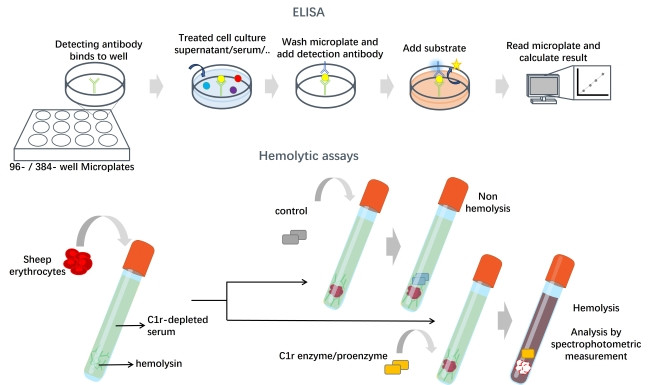 Fig. 1 Complement C1r activity assay workflow.
Design Your Workflow
Customized Assay Development Strategy
Because C1r functions as part of the C1 complex and classical pathway cascade, no single assay format is optimal for every project. Creative Biolabs emphasizes customized assay design based on the biological question being asked.
|
Consideration
|
Description
|
|
Defining the Main Research Question
|
Clarifying the primary question helps determine the most appropriate assay format and readout. Examples include:
-
Does a recombinant C1r protein show expected enzymatic activity?
-
Does a candidate inhibitor directly block C1r?
-
Does a therapeutic molecule suppress classical pathway activation upstream of C4?
-
Does a patient-derived sample show altered classical pathway initiation?
-
Does a C1r variant retain the ability to activate C1s?
-
Does an engineered molecule selectively inhibit C1r without broadly suppressing complement?
|
|
Selecting the Appropriate Biological System
|
Different systems provide different levels of mechanistic control and biological relevance. Creative Biolabs can help match the assay system to the project objective. For example:
-
Purified enzyme assays offer direct measurement of protease function.
-
Reconstitution assays provide controlled pathway context.
-
Serum-based assays reflect matrix and regulatory effects.
-
Cell-associated assays reveal biological consequences of complement activation.
|
|
Optimizing Reaction Conditions
|
Optimization is particularly important for enzyme assays because signal quality depends strongly on reaction linearity and substrate availability. Key parameters may include:
-
Protein concentration
-
Substrate concentration
-
Incubation time
-
Temperature
-
Buffer composition
-
Calcium dependency
-
Ionic strength
-
Serum dilution
-
Pathway activator concentration
-
Inhibitor pre-incubation time
-
Detection window
|
|
Establishing Controls
|
Appropriate controls improve data reliability and interpretation. Controls can be customized to distinguish C1r-specific activity from background protease activity or downstream complement effects. Potential controls include:
-
No-enzyme control
-
Heat-inactivated sample control
-
Positive C1r activity control
-
Negative inhibitor control
-
Known pathway inhibitor control
-
No-substrate control
-
C1r-deficient or depleted matrix
-
Reconstitution control
-
Vehicle control
-
Isotype control for antibody candidates
-
Non-specific protease control
|
|
Data Interpretation and Reporting
|
Creative Biolabs can provide quantitative and comparative data analysis depending on assay type. Reports may include:
-
Assay principle and workflow summary
-
Sample information
-
Experimental conditions
-
Raw and processed data
-
Standard curve or calibration information
-
Activity comparison
-
Dose-response curves
-
IC50 or EC50 estimation when applicable
-
Statistical analysis
-
Interpretation notes
-
Recommended next-step assays
|
Design Your Customization
Case Studies
Case 1
Initial Library Screening of C1r-Binding by Surface Plasmon Resonance
To identify compounds with non-specific binding behavior in SPR screening platform and/or low solubility in aqueous SPR buffers, each compound was initially subjected to a ‘clean screen'. A total of 381 compounds failed the clean screen. The remaining 1619 compounds that passed the clean screen were carried forward to direct C1r-binding assays. Each compound was injected over immobilized full-length human C1r.
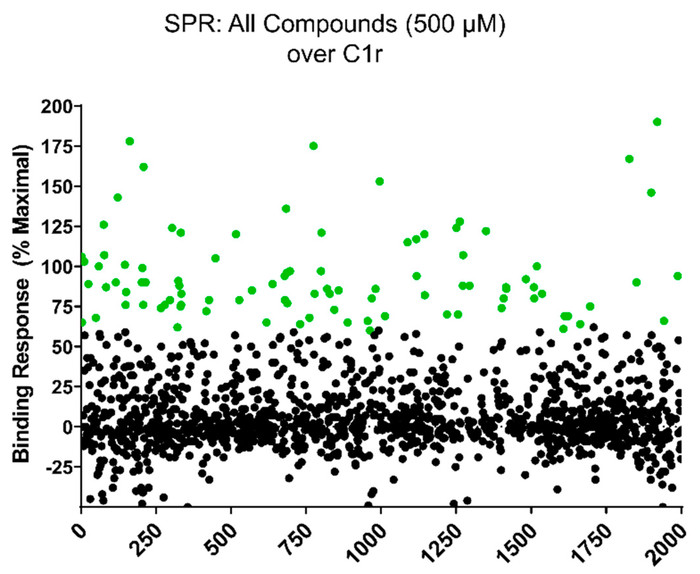 Fig. 2 Direct binding of compounds to full-length C1r by SPR.1,2
References
-
Rushing, Blake R., et al. "Targeting the initiator protease of the classical pathway of complement using fragment-based drug discovery." Molecules 25.17 (2020): 4016. https://doi.org/10.3390/molecules25174016
-
Distributed under Open Access license CC BY 4.0, without modification.
Frequently Asked Questions
Can the assay distinguish direct C1r inhibition from downstream complement inhibition?
Yes. Assay design can help distinguish whether a test molecule directly inhibits C1r or suppresses complement activation at another step. For example, a direct C1r enzymatic activity assay can evaluate whether the molecule blocks C1r protease activity itself. A C1r-mediated C1s activation assay can determine whether C1r-dependent activation of C1s is affected. Downstream assays measuring C4, C3, or C5b-9 activation can show whether classical pathway propagation is suppressed. By combining upstream purified-protein assays with serum-based pathway assays and appropriate controls, Creative Biolabs can help clarify the likely mechanism of inhibition.
What types of samples can be tested?
Potential sample types include purified C1r, recombinant C1r, native C1r preparations, engineered C1r variants, C1 complex preparations, purified complement component mixtures, human serum, animal serum, complement-depleted serum, reconstituted complement matrices, plasma-derived samples, biological fluids, cell culture supernatants, and candidate inhibitors. Test articles may include antibodies, small molecules, peptides, engineered proteins, fusion proteins, nanobodies, aptamers, biomaterials, nanoparticles, or other customized materials. Sample suitability depends on assay format, available detection reagents, matrix interference, species, and the specific functional question being addressed.
Can the assay be customized for different species?
Yes. Complement proteins and therapeutic candidates can show important species-dependent differences. Creative Biolabs can customize C1r activity assay strategies for human, mouse, rat, rabbit, cynomolgus monkey, non-human primate, or other client-defined species, depending on reagent availability and assay feasibility. Species-specific assay development may involve optimization of complement protein sources, serum matrices, detection antibodies, substrates, pathway activators, and controls. Cross-species testing is especially useful for preclinical programs that need to compare candidate activity in human and animal systems.
Can C1r activity assays be combined with other complement tests?
Yes. C1r activity assays can be integrated with a wide range of complement testing services to build a comprehensive pathway profile. Common companion assays include C1q binding assays, C1s activity assays, C4 activation assays, C2 activity assays, C3 activity assays, C5 activity assays, CH50 assays, C3b deposition assays, C5b-9 deposition assays, complement inhibition functional assays, and cell-based complement activity assays. Combining multiple assays can help distinguish upstream pathway initiation effects from downstream amplification, terminal pathway activation, or cell-surface complement injury.
What is the difference between C1r activity assays and C1q binding assays?
C1q binding assays evaluate recognition events at the beginning of classical pathway activation, such as whether C1q binds immune complexes, antibodies, surfaces, or candidate molecules. C1r activity assays evaluate a later functional step within the C1 complex, specifically whether C1r becomes enzymatically active and contributes to activation of C1s. A molecule may affect C1q binding without directly affecting C1r activity, or it may inhibit C1r after C1q recognition has occurred. Combining C1q binding assays with C1r activity assays can provide a more complete understanding of early classical pathway regulation.