Introduction What Can We Offer? Workflow Published Data Why Choose Us? FAQs Featured Services Featured Products
Serpins: Master Regulators of Proteolytic Cascades – Accelerate Your Drug Discovery Process!
Are you currently facing challenges in antibody development against metastable targets, difficulty in protein expression and purification, or complex clinical trials for inflammatory and thrombotic disorders? Our Serpin Research & Development Services help you develop highly specific antibodies and obtain high-quality recombinant proteins through advanced protein engineering, high-throughput screening platforms, and innovative "mousetrap" mechanism analysis.
Contact our team to get an inquiry now!
Introduction to Serpins
Serpins are the largest and most diverse superfamily of protease inhibitors, primarily known for their unique "suicide substrate" mechanism. Structurally, they consist of three β-sheets, 8-9 α-helices, and a highly flexible Reactive Center Loop (RCL) that serves as the bait for target proteases. This RCL is the defining functional feature, as its sequence determines the specific inhibitory profile of the protein.
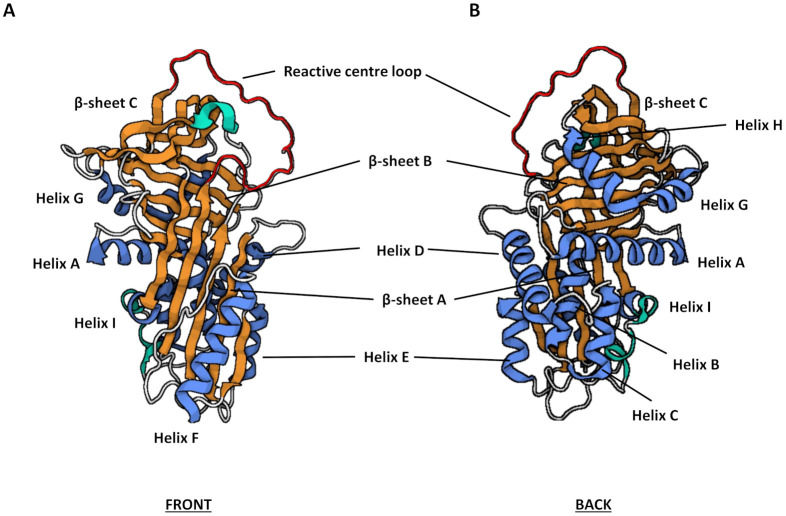 Fig.1 The canonical serpin tertiary structure.1
The "Molecular Mousetrap" Mechanism
Unlike the reversible "lock-and-key" mechanism observed in standard competitive inhibitors, a Serpin acts like a molecular mousetrap. When a target protease recognizes and cleaves the RCL at the P1-P1' scissile bond, the loop rapidly inserts itself into the central β-sheet A. This dramatic conformational overhaul involves a physical translocation of the protease over a distance of approximately 70 Å. The protease is essentially "slammed" into the opposite pole of the Serpin, distorting its active site and trapping it in a stable, covalent, and irreversible ester linkage.
Conformational States and Serpinopathies
This transition from a high-energy metastable (native) state to a low-energy relaxed (complexed) state is essential for biological control but presents significant manufacturing hurdles. This inherent instability makes Serpins prone to "serpinopathies", pathological conditions caused by misfolding and the subsequent formation of loop-sheet polymers. These aggregates can lead to toxic gain-of-function (e.g., Neuroserpin inclusion bodies in FENIB) or critical loss-of-function (e.g., liver Cirrhosis due to trapped α1-Antitrypsin).
Application
The versatility of Serpins allows for applications across multiple medical and biotechnological fields, where precise control of proteolytic activity is paramount:
Hemostasis & Thrombosis
Modern drug discovery focuses on the development of Antithrombin and Heparin Cofactor II variants. By engineering these Serpins to exhibit higher affinity for factor Xa or thrombin, researchers can create more potent agents for managing acute stroke, deep vein thrombosis, and hereditary antithrombin deficiency.
Inflammation Control
Serpins are vital in dampening the body's inflammatory responses. Utilizing α1-Antichymotrypsin and C1-Inhibitor (C1-INH) allows for the targeted treatment of conditions like hereditary angioedema (HAE) and systemic inflammatory response syndrome (SIRS). Fleshing out their role in the complement system, these inhibitors prevent the excessive activation of the C1 complex, thereby protecting host tissues from "friendly fire."
Cancer Metastasis & Invasion
Protease dysregulation is a hallmark of malignancy. Targeting PAI-1 (Serpin E1) and Maspin (Serpin B5) serves a dual purpose: they act as reliable diagnostic biomarkers and as potential therapeutic targets in oncology. Understanding the balance between Serpin activity and extracellular matrix degradation can lead to novel strategies to halt tumor cell migration.
Neuroprotection & Synaptic Health
Recent research into Neuroserpin (Serpin I1) has highlighted its critical roles in synaptic plasticity and the regulation of plasminogen activators within the central nervous system. Therapeutic modulation of Neuroserpin is currently being explored as a means to prevent neurodegenerative decay and mitigate tissue damage following ischemic events in the brain.
What Can We Offer?
To facilitate your breakthrough research, Creative Biolabs offers a robust portfolio of high-quality products and specialized services tailored specifically to Serpin analysis.
-
Recombinant Serpin Proteins: High-activity human, mouse, and rat Serpins (A1-A12, B1-B13, C1, D1, E1-E2, etc.).
-
Monoclonal & Polyclonal Antibodies: Validated for WB, IHC, IF, and Sandwich ELISA.
-
Inhibitor Screening Kits: Fluorescence-based assays to identify small molecules that modulate Serpin-protease interactions.
-
Custom Protein Engineering: Modification of the RCL to alter protease specificity or improve circulatory half-life.
Workflow
01
Gene Synthesis & Vector Construction: We optimize the codon usage for your specific Serpin to enhance expression levels while maintaining structural integrity.
02
Stable Cell Line Development: Utilizing high-performance mammalian platforms to ensure post-translational modifications (like glycosylation) are biologically accurate.
03
Advanced Purification: Specialized chromatography (Affinity, IEX, SEC) is used to separate active metastable Serpins from inactive, polymerized, or latent forms.
04
Conformational Characterization: We verify the "Stressed-to-Relaxed" (S to R) transition capability using circular dichroism and protease-inhibition stoichiometry.
05
Activity Assay Validation: Determining the ka (association rate constant) and SI (stoichiometry of inhibition) against target proteases.
Published Data
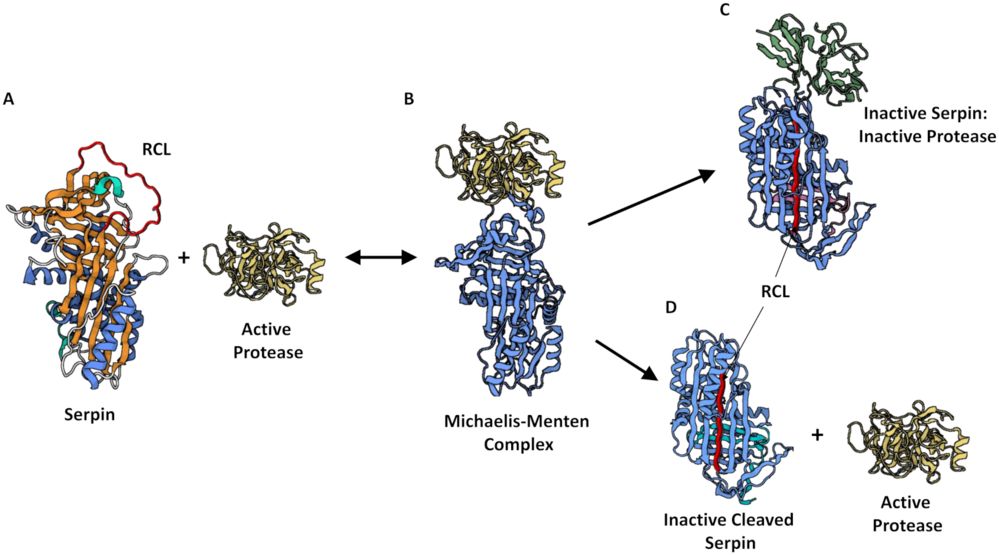 Fig.2 The inhibitory or alternative substrate mechanisms of serpin-protease interaction.1
The article explores the critical role of serine protease inhibitors (serpins) in maintaining lung homeostasis. It focuses on the protease-antiprotease imbalance, specifically between neutrophil elastase (NE) and alpha-1-antitrypsin (AAT), which drives the pathogenesis of Chronic Obstructive Pulmonary Disease (COPD). The authors highlight the "suicide-substrate" mechanism unique to serpins, where a conformational change irreversibly traps target proteases. The review emphasizes that while AAT is the most studied, other serpins (e.g., SERPINA3, SERPINB1) are also dysregulated in chronic lung diseases. The study concludes that understanding these pathways is vital for developing engineered serpin therapeutics to mitigate tissue destruction and inflammation.
Why Choose Us?
Creative Biolabs combines decades of expertise with cutting-edge technology to solve the "polymerization problem" inherent in Serpin production.
-
Proprietary Stabilization Technology: Our engineering platform identifies and mutates "shutter domain" residues to prevent premature latency or polymerization.
-
High Specificity Antibodies: We specialize in generating antibodies that can distinguish between the native (inhibitory), cleaved (non-inhibitory), and complexed states of Serpins.
-
Custom Assay Development: We don't just provide products; we build the kinetic models required to understand your drug's interaction with the Serpin-protease axis.
FAQs
Q: How is the functional integrity of a metastable Serpin distinguished from its inactive latent form?
A: Characterization is primarily achieved through thermal stability assays and Size-Exclusion High-Performance Liquid Chromatography (SEC-HPLC). Native, metastable Serpins exhibit a characteristic increase in thermal stability following protease cleavage (the S-to-R transition). In contrast, the latent form is characterized by the insertion of the RCL into the A-sheet without cleavage, resulting in a highly stable but inhibitory-inactive molecule.
Q: Is it possible to generate antibodies that specifically recognize the Serpin-Protease covalent complex?
A: Yes. During the suicide substrate mechanism, the Serpin undergoes a massive conformational shift that exposes neo-epitopes not present in the native or cleaved states. Techniques such as subtractive immunization or phage display can be utilized to isolate binders that exclusively target these complex-specific surfaces.
Q: Which expression systems are most effective for intracellular versus extracellular Serpins?
A: Intracellular Serpins (e.g., Serpin B family) often lack complex glycosylation and can be successfully expressed in prokaryotic systems like E. coli. Extracellular Serpins (e.g., Serpin A family), however, generally require mammalian expression systems (such as CHO or HEK293) to ensure appropriate post-translational modifications, which are critical for solubility and preventing premature polymerization in vivo.
Q: Can the specificity of a Serpin be altered through site-directed mutagenesis?
A: Structural studies indicate that the P1 residue within the Reactive Center Loop (RCL) is the primary determinant of protease specificity. By modifying the RCL sequence, it is possible to "re-target" a Serpin to inhibit a different protease, effectively creating a designer inhibitor for specific biological pathways.
Q: What molecular mechanisms lead to Serpin polymerization, and how is this avoided during storage?
A: Polymerization occurs when the RCL of one Serpin molecule inserts into the β-sheet of another, a process often triggered by thermal or chemical stress. To maintain monomers, proteins should be stored in buffers containing stabilizing agents (like glycerol) at 80℃. Minimizing freeze-thaw cycles is essential, as the energetic transition to a polymeric or latent state is irreversible once initiated.
Creative Biolabs is your premier partner for Serpin research, providing the structural biology expertise and high-quality reagents necessary to master these complex regulators. From uncovering signaling pathways to developing the next generation of serpin-based therapeutics, our team is dedicated to your success.
Featured Services
Featured Products
Reference
-
Kelly-Robinson, Gillian A et al. "The Serpin Superfamily and Their Role in the Regulation and Dysfunction of Serine Protease Activity in COPD and Other Chronic Lung Diseases." International Journal of Molecular Sciences vol. 22,12 6351. 14 Jun. 2021, Distributed under Open Access license CC BY 4.0, without modification. https://doi.org/10.3390/ijms22126351
For Research Use Only.
Related Sections: