Introduction What We Can Offer Workflow Published Data Why Choose Us? FAQs Featured Services Featured Products
Serine Protease Inhibitors Development: Accelerate Your Drug Discovery Process!
Are you currently facing high attrition rates in drug candidate screening or struggling with the complex specificity required for protease-targeted therapies? Our Serine Protease Inhibitors Development Service helps you obtain high-potency, selective inhibitors to modulate critical pathways in inflammation, coagulation, and oncology through our innovative protein engineering and high-throughput screening platforms.
Contact our team to get an inquiry now!
Introduction to Serine Protease Inhibitors
Serine proteases account for nearly one-third of all proteolytic enzymes in the human body, utilizing a highly conserved catalytic triad (consisting of His57, Asp102, and Ser195) to orchestrate the nucleophilic attack and cleavage of peptide bonds. These enzymes are indispensable for physiological regulation; however, their dysregulation, often characterized by an imbalance between protease activity and endogenous inhibition, is a hallmark of numerous severe pathologies. Uncontrolled proteolytic cascades drive the progression of thrombosis through excessive clotting, emphysema via the degradation of alveolar elastin, and cancer metastasis through the remodeling of the extracellular matrix. Serine protease inhibitors (SERPINs) serve as the natural safeguards of biological homeostasis, acting as molecular "brakes" that strictly titrate enzyme activity to prevent excessive, systemic proteolytic damage.
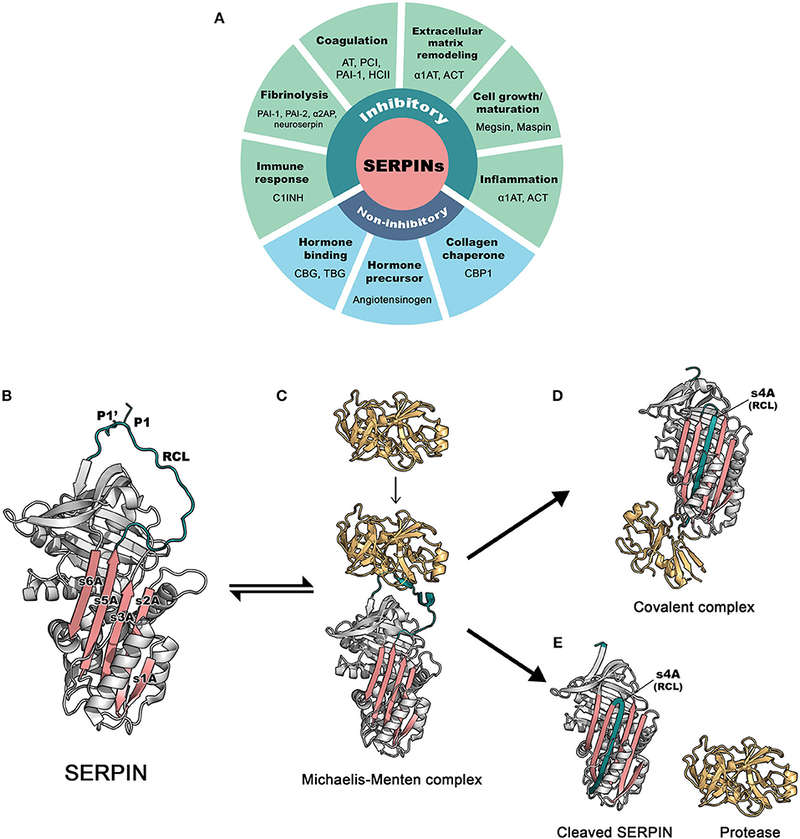 Fig.1 The basic functions and inhibitory mechanism of SERPINs.1
Key Inhibitor Classes
-
Serpins: These represent the largest and most architecturally complex family of SERPINs. They utilize a sophisticated, irreversible "suicide-cleavage" mechanism. Upon binding, the protease cleaves the Serpin's reactive center loop (RCL), triggering a massive conformational rearrangement that physically shunts the protease to the opposite pole of the inhibitor, permanently trapping it in a covalent acyl-enzyme complex.
-
Macroglobulins: These are high-molecular-weight, multi-domain proteins, exemplified by α2-macroglobulin. They operate via a unique steric "trap" mechanism. When a protease cleaves the bait region of the macroglobulin, it induces a structural collapse that physically encapsulates the enzyme. This prevents the protease from accessing large protein substrates while often maintaining its ability to hydrolyze small molecules.
-
Small Protein Inhibitors: This group includes the tightly folded Kunitz-type and Bowman-Birk inhibitors. Unlike the sacrificial mechanism of serpins, these inhibitors typically utilize a "lock-and-key" non-covalent binding mode. They insert a specialized loop into the protease active site with high geometrical complementarity, achieving nanomolar or picomolar affinity without undergoing significant structural degradation.
Application
The therapeutic potential of SERPINs is vast, offering precision modulation across diverse medical fields:
Cardiovascular Disease
SERPINs are critical in the development of next-generation anticoagulants. By creating high-affinity direct thrombin or Factor Xa inhibitors, researchers can more effectively manage acute thrombosis and prevent secondary stroke with a reduced risk of bleeding complications.
Respiratory Health
Therapeutic strategies focus on restoring the protease-antiprotease balance in the lungs. Engineering recombinant α1-antitrypsin analogs provides a robust defense against neutrophil elastase, offering a vital treatment route for hereditary emphysema and mitigating the chronic lung damage seen in Cystic Fibrosis patients.
Oncology
SERPINs are being leveraged to disrupt the "proteolytic landscape" of the tumor microenvironment. Targeting the urokinase-type plasminogen activator (uPA) system allows for the direct inhibition of tumor cell invasion, basement membrane degradation, and the signaling cascades that drive angiogenesis.
Infectious Disease
SERPIN development is a cornerstone of antiviral research. By designing inhibitors that block essential viral proteases (such as the 3CLpro of SARS-CoV-2 or the hemagglutinin-cleaving proteases of Influenza), we can effectively halt viral entry, polyprotein processing, and subsequent replication.
Inflammation & Critical Care
SERPINs provide a means to dampen the "cytokine storm" and systemic inflammatory responses. Modulating the activity of neutrophil elastase and cathepsin G is essential for controlling the hyper-inflammatory damage associated with acute respiratory distress syndrome (ARDS) and systemic sepsis.
What We Can Offer
We provide a comprehensive portfolio of products and services tailored to serine protease research:
-
Custom Serpin Engineering: Modification of the Reactive Center Loop (RCL) for target-specific inhibition.
-
Small Molecule & Peptide Screening: High-throughput identification of peptidomimetic inhibitors.
-
Enzymatic Activity Assays: Comprehensive kinetic profiling and mechanism-of-action (MOA) studies.
-
Recombinant Protease Production: High-purity targets for your internal screening programs.
-
Stability Optimization: PEGylation or fusion protein strategies to extend half-life in vivo.
Workflow
01
Target Analysis & Modeling: We perform 3D structural modeling of the protease active site and the S1-S4 pockets to predict optimal inhibitor binding.
02
Library Construction: Generation of high-diversity phage display or yeast display libraries based on specific scaffolds.
03
High-Throughput Screening: Multi-round biopanning against the target protease, followed by negative selection against off-targets to ensure specificity.
04
Lead Optimization: Fine-tuning the reactive center loop (RCL) or binding interface using site-directed mutagenesis to enhance kinetic constants.
05
Biophysical Characterization: Comprehensive validation using SPR, ITC, and enzymatic inhibition assays to confirm stoichiometry and affinity.
Published Data
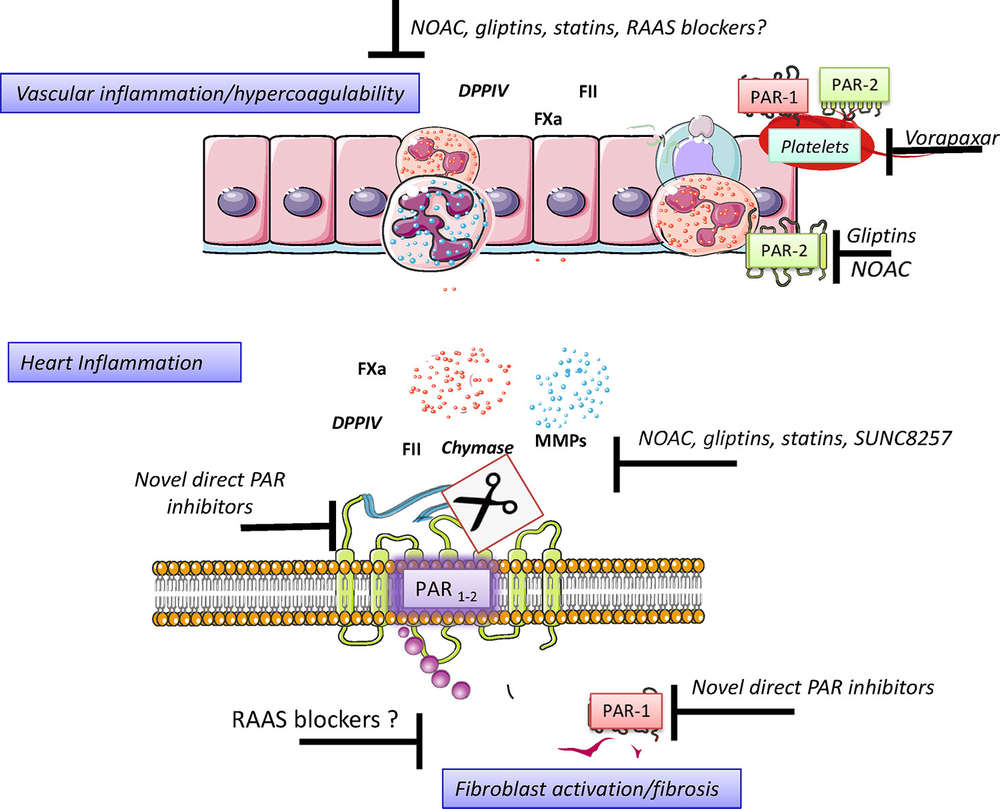 Fig.2 Serine proteases mechanisms of action.2,3
In a comprehensive review of pharmacological interventions, researchers evaluated the efficacy of serine protease inhibitors in mitigating cardiac remodeling associated with atrial fibrillation (AF). The study analyzed data from various animal models and clinical cohorts, focusing on the inhibition of thrombin and Factor Xa. Experimental results demonstrated that the administration of these inhibitors significantly reduced the expression of pro-inflammatory cytokines and attenuated the proliferation of myofibroblasts within atrial tissues. Notably, the inhibition of thrombin was shown to interrupt the protease-activated receptor (PAR) signaling pathways, which are critical drivers of atrial fibrosis. These findings suggest that targeting serine proteases not only prevents thrombogenesis but also provides a cardio-protective effect by decreasing the inflammatory and fibrotic burden that perpetuates arrhythmic conditions.
Why Choose Us?
Creative Biolabs stands at the forefront of protease research with a track record of solving complex protein engineering challenges.
-
Proprietary Scaffolding Technology: We utilize unique protein scaffolds that offer superior stability and half-life compared to traditional peptides.
-
Precision Specificity: Our screening platforms eliminate cross-reactivity with the hundreds of endogenous serine proteases, reducing potential clinical side effects.
-
Advanced Structural Biology: Direct access to high-resolution structural determination facilitates rapid SAR cycles.
-
Proven Success: We have successfully delivered high-potency Serpin-mimetics that demonstrated significantly enhanced stability.
FAQs
Q: What are the mechanistic differences between Serpins and Kunitz-type inhibitors?
A: Serpins function as irreversible "suicide" inhibitors by forming a covalent acyl-enzyme intermediate followed by a dramatic conformational change that distorts the protease active site. In contrast, Kunitz-type inhibitors are canonical, reversible binders that exhibit high structural complementarity to the active site, acting as a competitive "plug" without undergoing significant rearrangement.
Q: How can specificity be achieved for serine proteases with overlapping substrate preferences?
A: High specificity is achieved by targeting exosites (binding sites distal to the catalytic triad) or using allosteric modulation. Structural biology mapping of unique surface loops allows for the design of inhibitors that interact with non-conserved regions, ensuring selectivity even among closely related enzymes within the same family.
Q: What strategies enhance the pharmacokinetic profile of protein-based inhibitors?
A: The in vivo stability and half-life of proteinaceous inhibitors are typically improved through protein engineering techniques such as N-glycosylation, fusion to albumin-binding domains or Fc regions, and site-specific chemical modifications like PEGylation to reduce renal clearance and proteolytic degradation.
Q: Can serine protease inhibitors effectively target non-human proteases?
A: Yes. The conserved nature of the serine protease catalytic mechanism allows for the development of inhibitors against viral, bacterial, and parasitic enzymes. These often require targeting unique structural features of the microbial enzyme to avoid cross-reactivity with host proteases.
Q: How do divalent cations influence the activity and inhibition of certain serine proteases?
A: Many serine proteases, particularly those in the coagulation and complement cascades, possess calcium-binding sites (such as the Gla domain or conserved loops). Divalent cations often stabilize the active conformation or facilitate substrate orientation; consequently, inhibitor design must account for these metal-dependent structural states to ensure optimal binding affinity under physiological conditions.
Serine protease inhibitors represent a vital class of therapeutic agents capable of modulating critical physiological pathways. From the sophisticated "suicide" mechanism of Serpins to the broad-spectrum entrapment offered by Macroglobulins, understanding these biological regulators is essential for modern drug discovery. Creative Biolabs provides the integrated scientific expertise and technical platforms necessary to transform these complex biological mechanisms into precise, high-affinity lead candidates. Whether addressing systemic inflammation, thrombotic disorders, or viral maturation, our robust development pipeline is designed to meet the most rigorous scientific and clinical requirements.
Featured Services
Featured Products
References
-
Sanrattana, Wariya et al. "SERPINs-From Trap to Treatment." Frontiers in Medicine, Vol. 6 25. 12 Feb. 2019, https://doi.org/10.3389/fmed.2019.00025
-
Coppini, Raffaele et al. "Pharmacological Inhibition of Serine Proteases to Reduce Cardiac Inflammation and Fibrosis in Atrial Fibrillation." Frontiers in Pharmacology, Vol. 10 1420. 20 Dec. 2019, https://doi.org/10.3389/fphar.2019.01420
-
Distributed under Open Access license CC BY 4.0, without modification.
For Research Use Only.
Related Sections: