Introduction What We Can Offer Workflow Published Data Why Choose Us? FAQs Featured Services Featured Products
Small Protein Inhibitors: Accelerate Your Drug Discovery Process!
Are you currently facing challenges in blocking large protein-protein interfaces or achieving high specificity with traditional small molecules? Our Small Protein Inhibitor Development Service helps you obtain highly specific, stable, and potent modulators that bridge the gap between small molecules and monoclonal antibodies. Through our advanced phage display libraries and rational protein engineering, we overcome the limitations of traditional scaffolds to streamline your therapeutic pipeline.
Contact our team to get an inquiry now!
Introduction to Small Protein Inhibitors
Small protein inhibitors of serine proteases are among the most intensively studied protein complexes in structural biology, serving as essential tools for understanding enzymatic regulation. According to the literature, about 20 structurally diverse inhibitor families have been identified. These molecules are characterized by their compact architectures, which include α-helical bundles, β-sheet motifs, and various disulfide-rich folds that confer extreme metabolic stability.
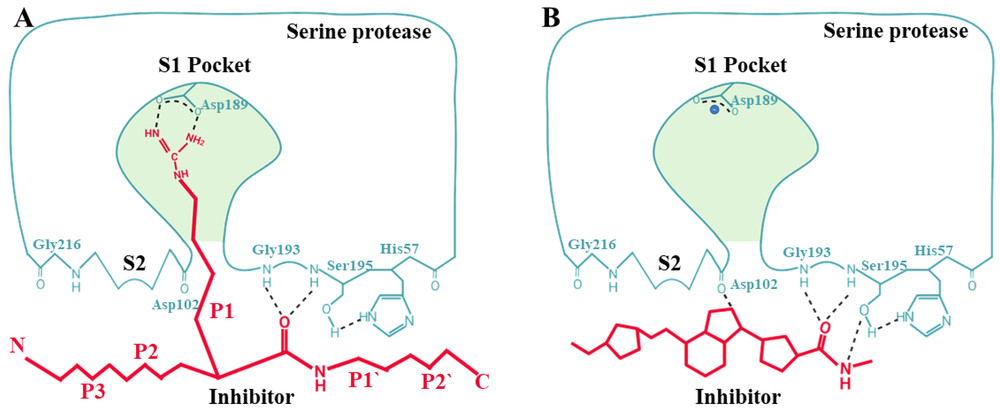 Fig.1 Mechanisms of action of serine protease inhibitors.1,3
These inhibitors are generally classified by their distinct inhibitory mechanisms, which dictate their binding kinetics and therapeutic potential:
-
Canonical Inhibitors: These follow the "standard mechanism" where an exposed, convex inhibitory loop fits into the enzyme's active site like a lock and key. The loop conformation is rigid and highly complementary to the enzyme's active site, effectively acting as a "pseudomechanism" substrate where the scissile bond is recognized but processed at an extremely slow rate. Examples include the well-known Kunitz and Kazal domains.
-
Non-canonical Inhibitors: Often found in specialized organisms like leeches (e.g., hirudin) or ticks, these use different structural elements, such as extended N-terminal segments or C-terminal tails, to bind the enzyme. They frequently interact with exosites, regions outside the primary active site, to achieve picomolar affinity and unparalleled selectivity.
-
Serpins (Serine Protease Inhibitors): These utilize a sophisticated and unique "suicide" mechanism. Upon binding, they undergo a massive conformational change, inserting a reactive center loop into a β-sheet, which physically moves the protease and disrupts its active site, irreversibly trapping the enzyme in an inactive complex.
Small protein inhibitors are crucial in regulating signaling pathways related to the complement system, blood coagulation, and viral replication. For instance, the therapeutic modulation of the NS2B-NS3 protease of Flaviviruses (such as Dengue or West Nile virus) is a primary focus. Research indicates that blocking this two-component protease with small protein scaffolds can halt viral polyprotein processing, effectively preventing subsequent replication and viral assembly.
Application
The versatility of small protein inhibitors allows for their application across various biomedical frontiers, providing solutions where traditional modalities fail:
Complement System Modulation
Precision targeting of enzymes like C1s, Factor D, or the C5 convertase. By inhibiting these specific nodes, researchers can treat complex diseases such as paroxysmal nocturnal hemoglobinuria (PNH) and atypical hemolytic uremic syndrome (aHUS) without broadly suppressing the entire innate immune system.
Oncology & Tumor Microenvironment
Inhibiting matrix metalloproteinases (MMPs) and membrane-anchored serine proteases (like MT-SP1/Matriptase) that are heavily involved in tumor metastasis and extracellular matrix degradation. Their superior tissue penetration allows them to neutralize these proteases deep within the tumor stroma.
Antiviral Therapy
Blocking essential viral proteases that act as "molecular scissors" for the maturation of viruses such as HCV, Zika, and Dengue. These inhibitors prevent the cleavage of viral precursor proteins, rendering the virus non-infectious.
Coagulation & Hematology
Developing highly selective inhibitors for thrombin or Factor Xa. Unlike traditional anticoagulants, protein-based inhibitors can be engineered to target specific zymogen forms or exosite interactions, potentially managing thrombosis with significantly reduced bleeding side effects.
Molecular Imaging & Diagnostics
Due to their small molecular weight (typically 3–15 kDa) and rapid systemic clearance, these proteins serve as excellent scaffolds for high-contrast PET/SPECT imaging. They provide rapid target localization and high target-to-background ratios for imaging specific cancer biomarkers or inflammatory sites.
What We Can Offer
To support your research and development, we offer a comprehensive suite of products and services:
-
Custom Inhibitor Discovery: End-to-end service from library screening to optimized lead.
-
Recombinant Inhibitor Catalog: Pre-validated inhibitors for common serine proteases and complement factors.
-
Kinetic Analysis Services: High-precision Ki and Kd measurements using state-of-the-art SPR technology.
-
Structure Determination: X-ray crystallography and NMR services to visualize the inhibitor-target complex.
-
Stability Optimization: Engineering for half-life extension, including PEGylation and Fc-fusion services
Workflow
01
Target Analysis & Strategy Design: We evaluate the target’s active site (canonical vs. non-canonical) and select the optimal protein scaffold, such as Kunitz-type, Kazal-type, or cystine knot (knottin) frameworks.
02
Library Construction & Screening: Utilizing high-diversity phage or yeast display libraries to identify high-affinity binders from billions of variants.
03
Protein Engineering & Optimization: Improving stability through disulfide mapping and enhancing affinity via site-directed mutagenesis or error-prone PCR.
04
In vitro Characterization: Comprehensive kinetic analysis including Ki determination, Kd measurement via SPR (Surface Plasmon Resonance) or BLI, and selectivity profiling against related protease families to ensure zero cross-reactivity.
05
Lead Validation: Functional biological assays in disease-relevant models to confirm the inhibitor's efficacy in a physiological context.
Published Data
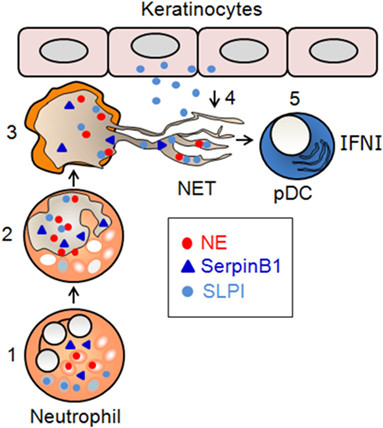 Fig.2 Proposed involvement of SerpinB1 and SLPI in NET formation and immunogenic function.2,3
Scientific research indicates that serine protease inhibitors are vital regulators of the complement-related proteolytic cascades and innate immune responses. Data show that SerpinB1 and SLPI effectively inhibit neutrophil elastase (NE) and cathepsin G (CatG), which are essential for the formation of neutrophil extracellular traps (NETs). Specifically, SLPI-competent DNA structures identified in psoriatic skin lesions have been shown to stimulate the production of Type I Interferon (IFNI) in plasmacytoid dendritic cells (pDCs). Furthermore, clinical data suggest that small protein inhibitors can rescue neutrophil maturation in cases of severe congenital neutropenia by neutralizing mislocalized NE. These findings support the development of small protein inhibitors as therapeutic agents to modulate inflammatory and complement-mediated pathways by controlling enzymatic overactivity.
Why Choose Us?
Collaborating with Creative Biolabs for your small protein inhibitor requirements offers a range of strategic advantages that can significantly influence the trajectory of your therapeutic development:
-
High-Resolution Selectivity: Our engineering approaches are designed to address the challenges of target specificity, potentially allowing for the modulation of specific enzymes while minimizing unintended interactions with closely related proteins.
-
Biophysical Robustness: We emphasize the development of inhibitors with inherent stability, which may facilitate easier handling during research and contribute to more favorable storage profiles.
-
Optimized Pharmacokinetics: The molecular scale of these inhibitors is intended to balance systemic half-life with the ability to penetrate dense biological environments, potentially offering a more versatile distribution than larger biologics.
-
Extensive Exploratory Capacity: Utilizing broad-scale screening platforms likely increases the possibility of identifying novel binding motifs that meet your project's specific affinity and functional criteria.
-
Established Expertise: Our history of addressing diverse molecular targets suggests a capacity to adapt to complex project needs, from initial concept through to the delivery of pre-validated leads.
FAQs
Q: How do small protein inhibitors fundamentally differ from monoclonal antibodies in a production context?
A: Small protein inhibitors typically lack post-translational modifications like glycosylation, allowing for efficient expression in microbial hosts such as E. coli. This contrasts with monoclonal antibodies, which generally require complex eukaryotic machinery for correct folding and assembly, potentially impacting scalability and manufacturing complexity.
Q: What is the scientific basis for using small proteins to target intracellular sites?
A: Due to their compact molecular volume and structural rigidity, small protein inhibitors may be more amenable to conjugation with translocation domains or delivery via lipid nanoparticles. Their ability to maintain a functional conformation in a reducing intracellular environment makes them viable candidates for disrupting internal protein-protein interactions or enzymatic activities.
Q: Why is the immunogenicity profile often favorable for small protein scaffolds?
A: Immunogenicity is frequently linked to the complexity and size of a protein. Small protein inhibitors derived from conserved human frameworks or consisting of minimal, highly stable motifs may present fewer epitopes to the immune system. Furthermore, their rapid systemic clearance reduces the window of exposure for an immune response to develop.
Q: What structural features contribute to the extreme thermal and proteolytic stability of these molecules?
A: The stability is primarily attributed to a high density of intramolecular disulfide bonds and a tightly packed hydrophobic core. In scaffolds like knottins or Kunitz domains, the rigid framework protects the scissile bonds from protease access and prevents thermal unfolding, even under physiological or acidic conditions.
Q: What factors determine the selection of a specific protein scaffold for a new target?
A: Selection is primarily governed by the topography of the target's binding site. Deep enzymatic clefts may require long, flexible loops for penetration, while flat protein-protein interfaces are often better addressed by rigid, multi-loop scaffolds that can cover a larger surface area to maximize van der Waals and electrostatic interactions.
Creative Biolabs provides a world-class platform for the discovery and development of small protein inhibitors. By combining structural biology expertise with high-throughput screening, we provide our clients with potent, specific, and stable leads that accelerate the transition from discovery to clinical application.
Featured Services
Featured Products
References
-
Wei, Yang, Mingdong Huang, and Longguang Jiang. 2024. "Advancements in Serine Protease Inhibitors: From Mechanistic Insights to Clinical Applications" Catalysts 14, no. 11: 787. https://doi.org/10.3390/catal14110787
-
Majewski, Pawel et al. "Inhibitors of Serine Proteases in Regulating the Production and Function of Neutrophil Extracellular Traps." Frontiers in immunology vol. 7 261. 30 Jun. 2016, https://doi.org/10.3389/fimmu.2016.00261
-
Distributed under Open Access license CC BY 4.0, without modification.
For Research Use Only.
Related Sections: