Why C1-INH Activity Matters
C1-INH functions as an important regulator of early classical and lectin complement pathways. In the classical pathway, activation begins when C1q recognizes immune complexes, apoptotic cells, pathogen-associated surfaces, or other activators, leading to activation of the C1r/C1s serine protease cascade. In the lectin pathway, recognition molecules such as mannose-binding lectin, ficolins, and collectins associate with MASPs to initiate complement activation. These early protease events lead to downstream cleavage of C4 and C2, formation of C3 convertase, amplification of complement activation, generation of opsonins, release of anaphylatoxins, and potential formation of terminal complement complexes.
C1-INH helps restrain these initiating events before they become excessive. By inhibiting activated C1r and C1s, C1-INH can suppress classical pathway initiation. By inhibiting MASP-1 and MASP-2, it can also influence lectin pathway activity. Research has shown that C1s/C1-INH and MASP-1/C1-INH complexes can serve as markers of early classical and lectin pathway activation, underscoring the mechanistic importance of C1-INH-protease interactions.
Functional assessment of C1-INH is valuable in multiple research contexts:
-
Determining whether a C1-INH sample has intact inhibitory function.
-
Comparing recombinant, plasma-derived, engineered, or modified C1-INH preparations.
-
Evaluating C1-INH stability after storage, formulation, stress, or manufacturing changes.
-
Screening candidate compounds that modulate C1-INH function or complement initiation.
-
Studying complement dysregulation in inflammatory, autoimmune, infectious, vascular, or rare-disease models.
-
Supporting development of biologics, cell therapies, nanoparticles, biomaterials, gene therapies, and other products where complement activation may affect safety or efficacy.
-
Distinguishing protein abundance from functional activity in complex biological samples.
Because C1-INH interacts with multiple protease systems, activity testing can be designed narrowly or broadly. A project may focus only on C1s inhibition, or it may compare C1r, C1s, MASP-1, MASP-2, kallikrein, and factor XIIa-related activity depending on the biological question.
Great Minds Choose Creative Biolabs
Key Readouts and Reporting Options
Creative Biolabs can provide a range of C1-INH activity readouts depending on the selected platform.

Enzymatic Readouts
Measure residual target protease activity after incubation with C1-INH or test samples

Immunoassay Readouts
Quantify C1-INH antigen, pathway activation markers, or C1-INH/protease complexes

Pathway-Level Functional Readouts
Evaluate the ability of C1-INH to regulate complement activation

Stability and Comparability Readouts
For therapeutic development or formulation projects
Workflow of Complement C1-INH Activity Assay
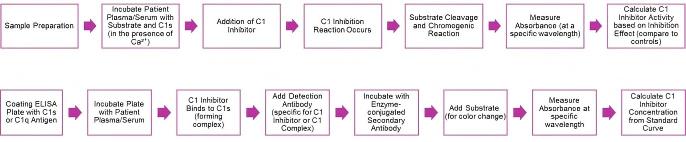 Fig. 1 Workflow of the complement C1-INH chromogenic assay (upper) and ELISA-based assay (lower).
Design Your Workflow
Applications of C1-INH Activity Assays
|
Application
|
Description
|
|
Complement Therapeutic Development
|
C1-INH has direct relevance to complement-directed therapeutic strategies. Functional assays can support discovery, optimization, and characterization of recombinant C1-INH, engineered variants, protein replacement candidates, gene therapy expression products, and pathway-selective complement modulators. These assays help determine whether a candidate has the desired inhibitory activity and whether its activity is preserved in biologically relevant matrices.
|
|
Hereditary Angioedema and C1-INH Dysfunction Research
|
C1-INH deficiency or dysfunction is associated with hereditary and acquired angioedema, where complement and contact-system dysregulation contribute to disease mechanisms. Hereditary and acquired C1-INH deficiency or dysfunction involves regulation of classical and lectin complement activation as well as kinin, clotting, and fibrinolytic pathways. Research-use C1-INH activity assays can help investigators study disease mechanisms, sample phenotypes, therapeutic response models, and functional differences between C1-INH variants.
|
|
Biologics Safety and Immunogenicity Assessment
|
Therapeutic antibodies, immune complexes, nanoparticles, viral vectors, cell therapies, and biomaterials can interact with complement pathways. C1-INH activity testing may be used to evaluate whether a product or formulation influences early classical or lectin pathway regulation. Such testing can be incorporated into broader complement activation panels that include C3a, C5a, C4d, Bb, C3b deposition, and terminal complement complex analysis.
|
|
Autoimmune and Inflammatory Disease Research
|
Classical pathway activation is closely linked to immune complexes, autoantibodies, apoptotic cell clearance, and tissue inflammation. C1-INH activity assays can support studies in autoimmune diseases, immune-complex disorders, inflammatory vascular injury, and complement-mediated tissue damage. By assessing C1-INH function alongside pathway activation markers, researchers can better understand whether early complement regulation is preserved, impaired, consumed, or overwhelmed.
|
|
Infectious Disease and Innate Immunity Research
|
The lectin pathway plays an important role in recognition of microbial carbohydrates and altered host surfaces. C1-INH activity assays focused on MASP regulation can support research into host-pathogen interactions, sepsis models, viral infections, bacterial recognition, fungal activation, and inflammatory responses. These assays can be paired with lectin pathway activation readouts to determine how C1-INH modifies early innate immune recognition.
|
|
Formulation and Manufacturing Support
|
C1-INH function may be affected by formulation conditions, storage, purification, glycosylation, aggregation, oxidation, and other product attributes. Creative Biolabs can develop activity assays to support formulation screening, process development, forced degradation studies, and comparability assessments. These services are particularly valuable for recombinant or engineered C1-INH products where structural changes may alter protease inhibition.
|
Design Your Customization
Case Studies
Case 1
Development and characterization of sandwich ELISAs measuring C1s/C1-INH complex and MASP-1/C1-INH complex
The aim of this study was to develop validated immunoassays detecting C1s/C1-INH and MASP-1/C1-INH complex levels. Measurement of the complexes reveals information about the involvement of the respective pathways in complement-mediated diseases. Two sandwich ELISAs detecting C1s/C1-INH and MASP-1/C1-INH complex were developed and tested thoroughly, and it was investigated whether C1s/C1-INH and MASP-1/C1-INH complexes could serve as markers for either early CP or LP activation.
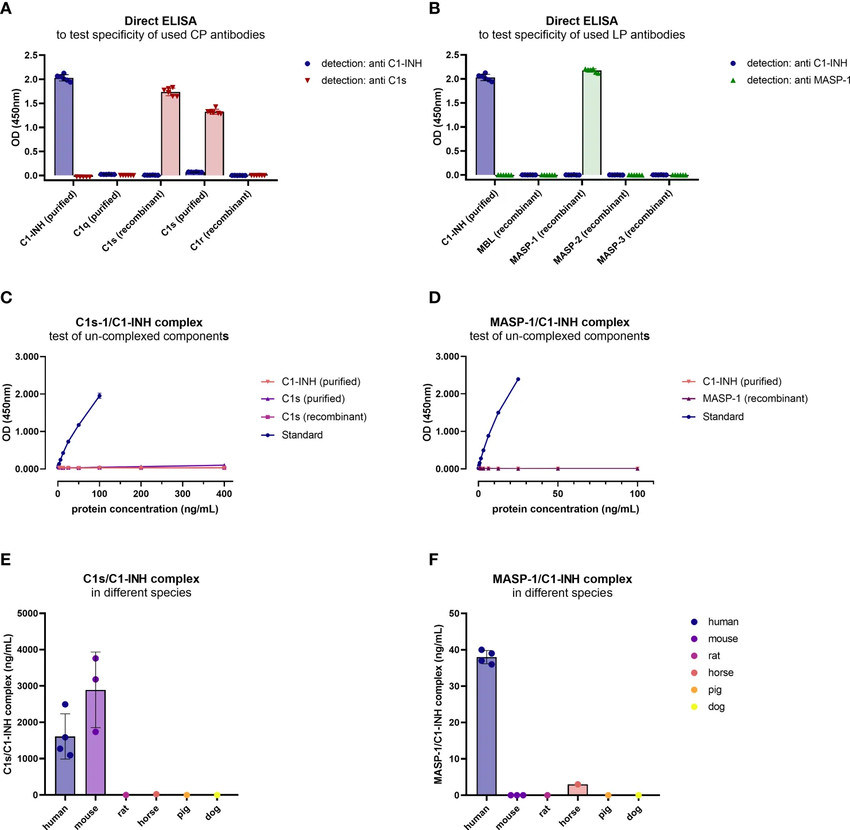 Fig. 2 Binding of antibodies to proteins of the respective pathways was tested in a direct ELISA.1,2
References
-
Hurler, Lisa, et al. "Distinction of early complement classical and lectin pathway activation via quantification of C1s/C1-INH and MASP-1/C1-INH complexes using novel ELISAs." Frontiers in immunology 13 (2022): 1039765. https://doi.org/10.3389/fimmu.2022.1039765
-
Distributed under Open Access license CC BY 4.0, without modification.
Frequently Asked Questions
Which proteases can be included in a C1-INH activity assay?
C1-INH activity assays can be designed around several target proteases, depending on the project objective. Common complement-related targets include activated C1r, activated C1s, MASP-1, and MASP-2. In broader plasma protease studies, kallikrein or factor XIIa-related assays may also be relevant. The best target selection depends on whether the project focuses on classical pathway regulation, lectin pathway regulation, contact-system biology, therapeutic characterization, or disease-mechanism research.
Can you test recombinant or engineered C1-INH proteins?
Yes. Creative Biolabs can test recombinant C1-INH, engineered SERPING1 variants, fusion proteins, plasma-derived C1-INH preparations, formulation-modified products, and other C1-INH-related candidates. Depending on the project, we can compare activity against a reference standard, evaluate dose-response behavior, assess protease selectivity, test serum-matrix performance, and determine stability after stress conditions.
Can C1-INH activity be measured in serum or plasma samples?
Yes, C1-INH activity can be assessed in serum or plasma-based matrices, although sample handling is important. Complement and plasma protease systems can be activated during collection, clotting, processing, storage, or repeated freeze-thaw cycles. Creative Biolabs can provide recommendations for sample collection and storage and can include matrix controls to improve data interpretation. Plasma anticoagulant selection should be discussed before sample submission.
What sample volume is required?
Sample volume depends on assay format, number of readouts, number of replicates, dilution requirements, and whether repeat testing is needed. Direct enzymatic assays may require relatively small volumes, while multi-readout pathway panels require more material. If sample volume is limited, Creative Biolabs can help design a low-volume feasibility study or prioritize the most informative readouts.
Can you evaluate C1-INH stability under formulation or storage conditions?
Yes. Creative Biolabs can design stability studies to evaluate C1-INH functional activity after storage, freeze-thaw cycles, thermal stress, pH exposure, buffer exchange, oxidative stress, agitation, or formulation changes. Activity data can be combined with antigen measurement, aggregation analysis, or pathway assays to determine whether observed changes affect functional performance.
Can the assay be combined with other complement activity assays?
Yes. C1-INH activity testing can be combined with classical pathway assays, lectin pathway assays, C3b deposition assays, C5b-9 deposition assays, hemolysis assays, complement activation fragment analysis, cytokine profiling, cell-based complement assays, and other functional readouts. A combined panel is often more informative than a single assay when studying complex complement regulation.