Why Complement Factor P Activity Matters in Complement Research
Complement activation is highly regulated because the same cascade that protects the host from pathogens can also damage host tissues if amplification is not properly controlled. The alternative pathway is particularly important because it can continuously amplify complement activation once C3b is deposited on a surface. Properdin contributes to this process by stabilizing the alternative pathway C3 convertase, C3bBb, and supporting more persistent convertase activity on target surfaces.
A properdin activity assay can provide functional information that cannot be obtained by concentration measurement alone. For example, an ELISA may show that properdin is present in serum, plasma, or a biological fluid, but it does not necessarily prove that the protein is functionally active, correctly oligomerized, capable of binding relevant surfaces, able to stabilize convertase complexes, or responsive to candidate inhibitors. Similarly, genetic analysis may identify variants in the CFP gene, but functional testing is often needed to understand whether those variants alter complement activity.
Properdin activity testing is valuable for many research and development questions, including:
-
Whether serum or plasma has sufficient properdin-dependent alternative pathway activity.
-
Whether a mutation, deficiency, or disease state reduces properdin function.
-
Whether a therapeutic candidate blocks properdin-mediated complement amplification.
-
Whether recombinant or purified properdin retains biological activity.
-
Whether complement activation on cells, microbes, nanoparticles, biomaterials, or immune complexes is properdin-dependent.
-
Whether downstream complement readouts such as C3b/iC3b, C5a, Bb, C5b-9, or hemolysis are influenced by properdin availability or inhibition.
-
Whether in vitro findings can be translated into species-specific preclinical models.
Creative Biolabs designs properdin activity assays according to the biological question, sample type, desired pathway specificity, required sensitivity, and downstream decision-making needs of each project.
Great Minds Choose Creative Biolabs
Key Readouts Available for Complement Factor P Activity Analysis
The best readout depends on whether the project is focused on upstream properdin function, convertase stabilization, pathway amplification, terminal pathway activation, therapeutic inhibition, or biological consequence. Creative Biolabs can develop single-readout or multi-readout panels to provide a comprehensive functional profile.

C3 Convertase-Related Readouts, C3 Fragment Deposition Readouts

Alternative/Terminal Pathway Biomarkers

Cell-Based Readouts

Drug Discovery Readouts
Workflow of Complement Factor P Activity Assay
Creative Biolabs provides a structured but flexible workflow for complement properdin activity assay projects. Each step can be adjusted according to the project stage, sample availability, regulatory expectations, and decision-making needs.
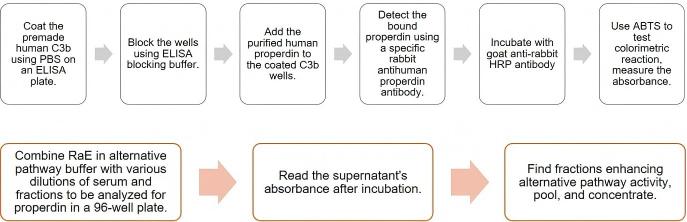 Fig. 1 Complement FP ELISA workflow (upper) and hemolytic assay of FP (lower).
Design Your Workflow
Why Choose Creative Biolabs?
|
Advantage
|
Description
|
|
Deep Complement Biology Expertise
|
Creative Biolabs has extensive experience in complement assay development, pathway-specific functional testing, complement component analysis, immune cell assays, antibody characterization, biologic evaluation, and therapeutic screening. This enables us to design assays that reflect both mechanistic complement biology and practical project goals.
|
|
Flexible Assay Customization
|
Complement properdin activity cannot be fully captured by a single universal assay. We customize assay format, matrix, species, target surface, readout, controls, and data analysis strategy according to the client's specific scientific question.
|
|
Multi-Readout Functional Assessment
|
We can combine upstream and downstream readouts, such as properdin binding, C3 convertase stabilization, C3b deposition, C5b-9 formation, and cell lysis, to provide a more complete picture of properdin activity.
|
|
Support for Therapeutic Development
|
Our properdin activity assays can support candidate screening, inhibitor potency testing, biologic characterization, mechanism-of-action analysis, and preclinical translational studies.
|
|
Integrated Complement Service Platform
|
Creative Biolabs offers a broad complement testing portfolio, allowing properdin activity testing to be integrated with C3, C5, Factor B, Factor D, Factor H, Factor I, CH50, AP50, C3b deposition, C5b-9 deposition, complement inhibition, and cell-based complement activity assays.
|
|
Client-Oriented Project Management
|
We work closely with clients from consultation through data delivery, providing clear communication, practical assay recommendations, and scientifically grounded interpretation.
|
Design Your Customization
Case Studies
Case 1
Enhanced Complement Activation by Structures of Properdin and Its Complex With the C-Terminal Domain of C3b
Properdin enhances complement-mediated opsonization of targeted cells and particles for immune clearance. Properdin occurs as dimers, trimers and tetramers in human plasma, which recognize C3b-deposited surfaces, promote formation, and prolong the lifetime of C3bBb-enzyme complexes that convert C3 into C3b, thereby enhancing the complement-amplification loop. The researchers reported crystal structures of monomerized properdin, which was produced by co-expression of separate N- and C-terminal constructs that yielded monomer-sized properdin complexes that stabilized C3bBb.
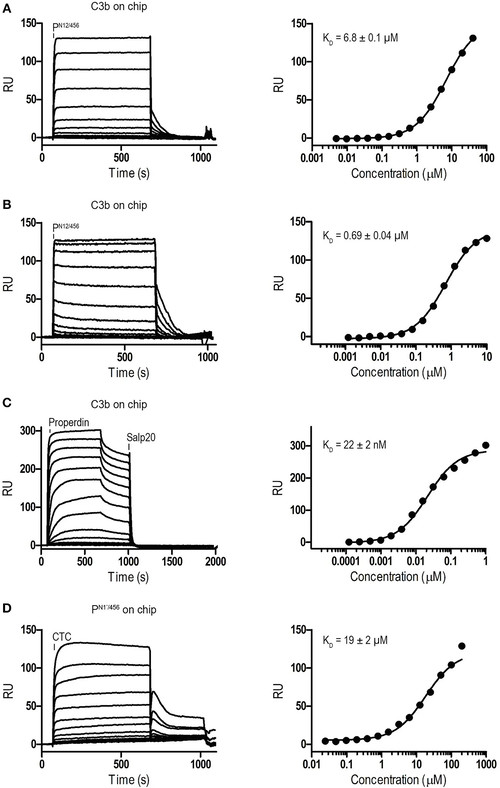 Fig. 2 SPR analysis showing interaction of properdin with C3b and the C3b/C3 CTC domain.1,2
References
-
Van den Bos, Ramon M., et al. "Insights into enhanced complement activation by structures of properdin and its complex with the C-terminal domain of C3b." Frontiers in immunology 10 (2019): 2097. https://doi.org/10.3389/fimmu.2019.02097
-
Distributed under Open Access license CC BY 4.0, without modification.
Frequently Asked Questions
When should I choose a Factor P activity assay instead of a properdin ELISA?
A properdin ELISA is useful when the main question is protein abundance. A Factor P activity assay is more appropriate when the question is functional, such as whether properdin supports alternative pathway amplification, whether a variant is functionally impaired, whether a candidate therapeutic blocks properdin function, or whether complement activation on a specific surface depends on properdin. In many projects, concentration and activity assays can be used together to distinguish low protein level from impaired protein function.
Can Creative Biolabs test properdin-depleted serum?
Yes. Properdin-depleted serum is a valuable matrix for confirming Factor P-dependent complement activity. Creative Biolabs can use depleted serum as a negative or mechanistic control and reconstitute it with purified or recombinant properdin to assess restoration of alternative pathway activity. This design is especially useful for demonstrating properdin dependency, testing recombinant properdin function, evaluating inhibitors, and interpreting suspected properdin deficiency.
Can Factor P variants or mutations be functionally analyzed?
Yes. Factor P variants can be evaluated using customized activity assays. Depending on the project, Creative Biolabs may compare wild-type and mutant properdin in a reconstituted system, measure restoration of alternative pathway activity, evaluate surface binding, monitor C3b deposition, or assess convertase stabilization. Functional analysis can help determine whether a variant affects properdin activity, even when protein expression or concentration data alone are inconclusive.
What cell types can be used in a cell-based Factor P activity assay?
Potential target cells may include endothelial cells, epithelial cells, tumor cells, immune cells, erythrocytes, engineered therapeutic cells, primary cells, immortalized cell lines, or disease-relevant cell models. The selection depends on the project goal, complement sensitivity of the cells, availability of detection reagents, and whether the assay is intended to measure deposition, lysis, inflammatory response, or another functional endpoint.
What samples are best for Factor P activity testing?
Serum is often preferred for complement functional assays because it preserves complement activity better than many other matrices. Properdin-depleted serum, reconstituted serum, purified properdin, recombinant properdin, biological fluids, cell culture supernatants, and therapeutic candidates can also be tested depending on assay format. The best sample type depends on whether the study is focused on endogenous activity, recombinant protein function, inhibitor activity, or complement activation on a target surface.