What is a Complement C2 Activity Assay?
A complement C2 activity assay is a laboratory test designed to evaluate the functional contribution of C2 to complement activation. Depending on project requirements, this assay can be used to determine whether C2 in a sample is present, active, depleted, inhibited, restored, consumed, or altered under specific experimental conditions.
The assay may be configured as a hemolytic assay, ELISA-based assay, pathway-specific functional assay, reconstitution assay, inhibitor screening assay, or customized format based on client needs. In a typical functional setting, C2 activity can be evaluated by measuring the ability of a test sample or purified C2 preparation to support classical pathway-mediated complement activation. When C2 activity is sufficient, downstream events such as C3 convertase formation, C3 cleavage, C3b deposition, C5 convertase formation, terminal complement complex generation, or complement-mediated lysis can occur. When C2 is deficient, inhibited, consumed, or functionally impaired, these downstream readouts are reduced or absent.
Creative Biolabs offers flexible C2 activity assay solutions suitable for serum, plasma, purified proteins, recombinant C2 variants, biological fluids, cell culture supernatants, animal model samples, drug-treated samples, and customized experimental matrices. Our experienced scientists can help select the proper assay type according to your sample format, expected activity range, research objective, required sensitivity, species origin, and downstream data application.
Great Minds Choose Creative Biolabs
Available Assay Platforms
Creative Biolabs has established multiple complement assay platforms that can be adapted for complement C2 activity assay development. The appropriate assay format will be selected according to sample properties, expected activity level, throughput needs, required endpoint, and project stage.

Hemolytic Assay Platform

ELISA-Based Assay Platform

Deposition Assay Platform
Service Workflow
Creative Biolabs follows a systematic workflow to ensure that every complement C2 activity assay project is designed appropriately and executed efficiently.
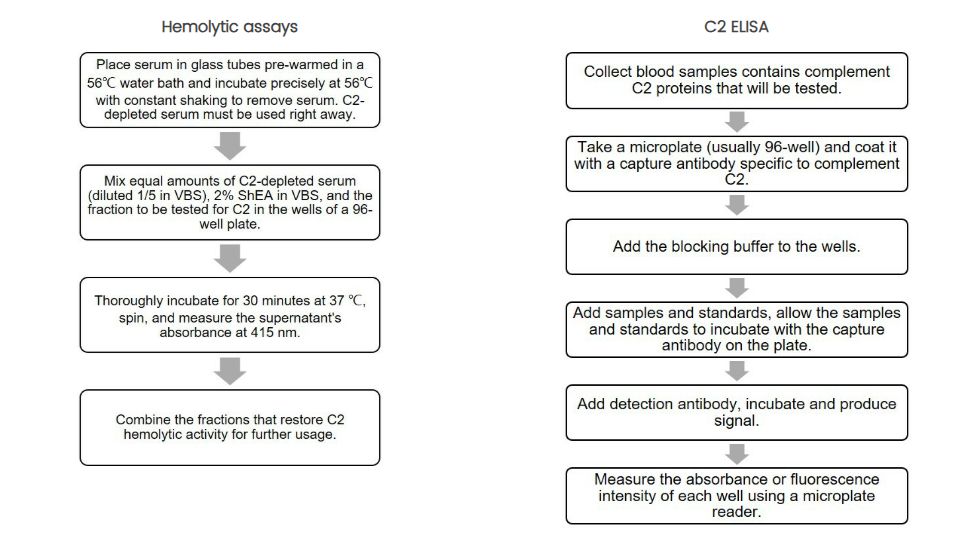 Fig. 1 Workflow of complement C2 functional test.
Design Your Workflow
Customization
Creative Biolabs understands that complement research projects often involve unique experimental designs. Standard assays may not fully address specialized questions, especially in drug discovery, rare disease research, engineered protein evaluation, or non-human model systems. Therefore, we offer customized complement C2 activity assay development for clients who require tailored conditions, special sample matrices, non-standard species, unique inhibitors, or integrated readout systems.
|
Customization Category
|
Descriptions
|
|
Assay Format Selection
|
Selection of hemolytic, ELISA, deposition, or cell-based assay formats
|
|
Species Adaptation
|
Human or animal sample adaptation
|
|
Reconstitution Systems
|
C2-depleted serum reconstitution systems
|
|
Recombinant Protein Evaluation
|
Recombinant C2 activity comparison
|
|
Inhibitor Assessment
|
Dose-response inhibitor testing
|
|
Pathway-Specific Design
|
Pathway-specific activation conditions
|
|
Multiplex Analysis
|
Multiplex complement marker measurement
|
|
Parallel Functional Testing
|
Parallel CH50 or pathway activity testing
|
|
Integrated Complement Readouts
|
Integration with C3/C4/C5 activation readouts
|
|
Reporting Customization
|
Customized reporting format
|
Design Your Customization
Case Studies
Case 1
Multiplex immunoassays and ELISA were used to quantify a panel of complement components (C1Q, C2, C3, C4, C5, Factor B, Factor H, MBL, and properdin) and activation products (C4b, C3b, C5a, and C5b-9), of classical, alternative and lectin pathways
Complement components of the classical, alternative and lectin pathways were analyzed in plasma from AChR-MG patients, MuSK-MG patients, and healthy controls. The following proteins were included: C1q, C2, C3, C4, C5, Factor B, Factor H, Mannose-Binding Lectin (MBL), and properdin. Bead-based multiplex immunoassays were used for all the complement cascade proteins except for C2 and Properdin, which were independently analyzed by ELISA.
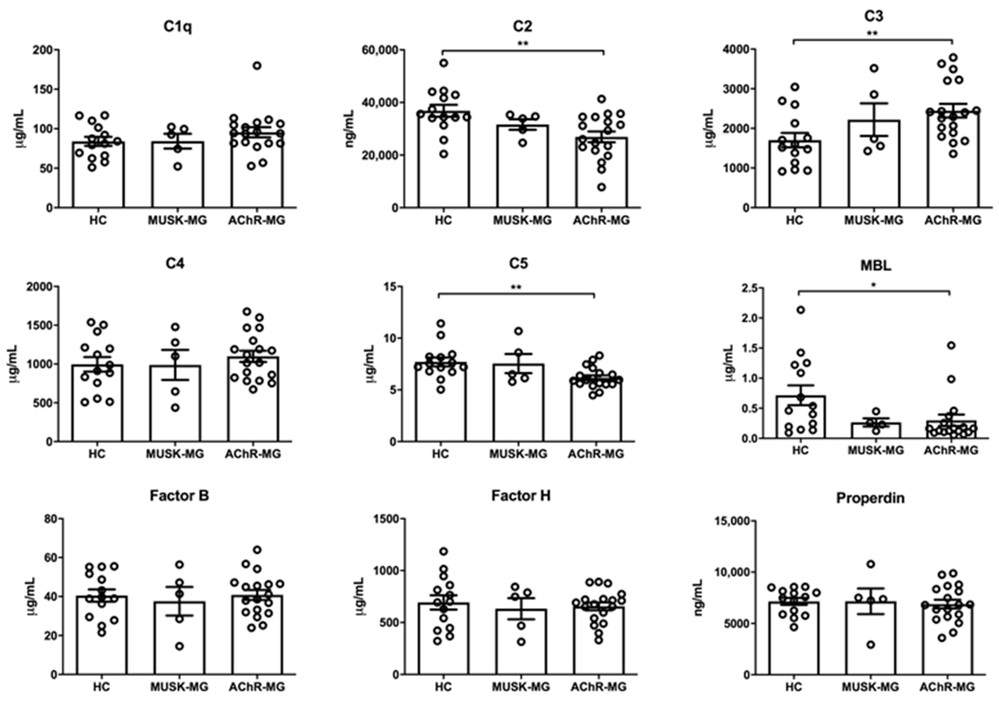 Fig. 2 C2 levels were estimated by a specific ELISA.1,2
References
-
Iacomino, Nicola, et al. "Complement activation profile in myasthenia gravis patients: perspectives for tailoring anti-complement therapy." Biomedicines 10.6 (2022): 1360. https://doi.org/10.3390/biomedicines10061360
-
Distributed under Open Access license CC BY 4.0, without modification.
Frequently Asked Questions
Is C2 activity testing the same as C2 protein quantification?
No. C2 protein quantification measures the amount of C2 protein present in a sample, while C2 activity testing evaluates whether that C2 is functionally active. A sample may contain measurable C2 protein but show reduced activity because of mutation, degradation, improper processing, inhibitor binding, autoantibodies, complement consumption, or unfavorable storage conditions. For functional pathway studies, C2 activity testing often provides more biologically relevant information than concentration measurement alone.
What types of samples can be tested?
Creative Biolabs can support C2 activity testing using a wide range of sample types, including human serum, human plasma, animal serum, animal plasma, purified C2 protein, recombinant C2 protein, C2 variants, C2-depleted serum systems, biological fluids, cell culture supernatants, tissue homogenates, disease model samples, preclinical samples, and customized biological matrices. Final sample compatibility depends on the assay format, species, matrix background, sample volume, and expected activity level.
Can C2 activity testing be combined with CH50?
Yes. Combining C2 activity testing with CH50 can be highly useful. CH50 provides an overview of classical pathway functional capacity, while C2 activity testing helps determine whether C2 contributes to any observed defect. Additional assays such as C4, C3, C3a, C5a, sC5b-9, C1q binding, or C3b deposition can further clarify the pathway mechanism.
Can C2 activity testing be used for complement inhibitor screening?
Yes. Complement C2 activity assay formats can be adapted for inhibitor screening and validation. Candidate molecules may be evaluated for their ability to reduce C2-dependent complement activation, inhibit C3 convertase formation, suppress downstream C3b deposition, block hemolysis, or reduce terminal complement complex generation. Dose-response testing, IC50 calculation, and comparison with control inhibitors can also be included.
Which assay format should I choose?
If the goal is to measure integrated classical pathway function, a hemolytic assay may be suitable. If the goal is to measure downstream complement activation products, an ELISA-based or deposition assay may be preferred. If the goal is to evaluate recombinant C2 or C2 variants, a reconstitution assay may be appropriate. If the goal is to evaluate inhibitors, a dose-response functional assay with pathway-specific controls is recommended. Creative Biolabs can help select the optimal format after reviewing your project requirements.
How much sample is required?
The required sample volume depends on the assay format, number of replicates, dilution scheme, control design, and whether repeat or confirmatory testing is needed. Small-volume testing may be possible for some assays, while multi-readout or dose-response studies may require more material. Creative Biolabs will provide project-specific sample volume recommendations during the consultation stage.