Product Overview This product is a potent C5 inhibitor, it interacts with C5 to prevent its cleavage by the C5 convertase and blocks zymosan-induced the membrane-attack complex (MAC) deposition in 50% human whole blood with an IC50 of 0.77 µM.
The complement system is a crucial part of the innate immune system, it recognizes many non-self structures present on pathogens or altered self cells. The initiation of the complement system elicits proteolytic cascades which finally leads to the cleavage of the C5 protein into two fragments, C5a and C5b. C5a is a small anaphylatoxin that can cause a variety of biological responses upon binding to the 7TM receptors C5aR and the C5L2. However, C5b is a big fragment nucleates generation of the membrane attack complex which enables to kill susceptible pathogens via the production of a pore structure in association with complement components C6, C7, C8, and C9.
Fig.1 Generation of C5a and C5b through C5 activation by C5 convertase.1, 3
Generally, a range of regulatory molecules help to regulate C5 mediated immune responses towards host cells. However, in many major inflammatory conditions (e.g., sepsis and arthritis), C5a is demonstrated to contribute significantly to disease etiology. In the past years, several attempts have been made to develop inhibitors of complement C5 activation. These inhibitors target factors upstream of C5, such as complement components C5, C5 convertase, C5a, and C5b, as well as C5a receptor. Nowadays, a full range of types of antibodies and compounds have actively been developed. These inhibitors may be effective at treating various inflammatory diseases involving complements.
C5 Functional Service
Creative Biolabs offers a comprehensive suite of products related to C5, including anti-C5 antibodies and aptamers, C5 detection ELISA kits, C5 proteins, C5 blocking peptides and C5 inhibitors. These carefully crafted tools are crucial in advancing research aimed at devising therapeutic strategies for a variety of diseases.
Fig.2 Renal biopsy findings in an aHUS patient before and after administration of anti-C5 monoclonal antibody therapy.2, 3
An unprecedented case of complement-mediated atypical hemolytic uremic syndrome (aHUS) associated with a mutation in complement factor H and the presence of anti-factor H antibodies is documented by researchers, analyzed through successive kidney biopsies. A female patient, with a family history of acute kidney injury, exhibited AKI, thrombocytopenia, and hemolytic anemia. An initial biopsy identified extensive endothelial damage and thrombosis in renal structures. Following anti-C5 monoclonal antibody treatment, significant improvements were visible in subsequent biopsies, showing progressive healing of kidney pathology. This study highlights the transformative impact of anti-C5 monoclonal antibody in ameliorating aHUS-associated renal damage over time.
Creative Biolabs offers a suite of customized services focused on C5, which includes comprehensive interaction evaluations and additional functional capabilities. These services are precisely designed to assist distinguished clients in their scientific investigations and clinical endeavors.
Click the following targets to view our C5 product lists.
References
Horiuchi, Takahiko, and Hiroshi Tsukamoto. "Complement-targeted therapy: development of C5-and C5a-targeted inhibition." Inflammation and regeneration 36 (2016): 1-5.
Kurihara, Shigekazu, et al. "Anti-C5 monoclonal antibody treatment showing pathological resolution of complement-mediated atypical hemolytic uremic syndrome: a case report." BMC nephrology 25.1 (2024): 224.
Distributed under Open Access license CC BY 4.0, without modification.


 INQUIRY
 Datasheet
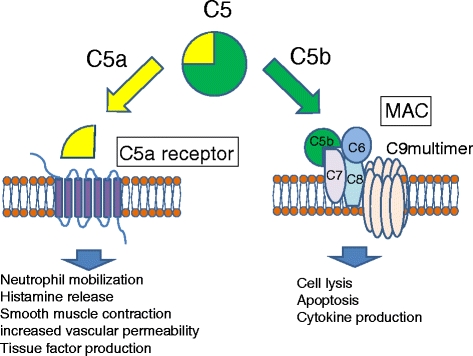 Fig.1 Generation of C5a and C5b through C5 activation by C5 convertase.1, 3
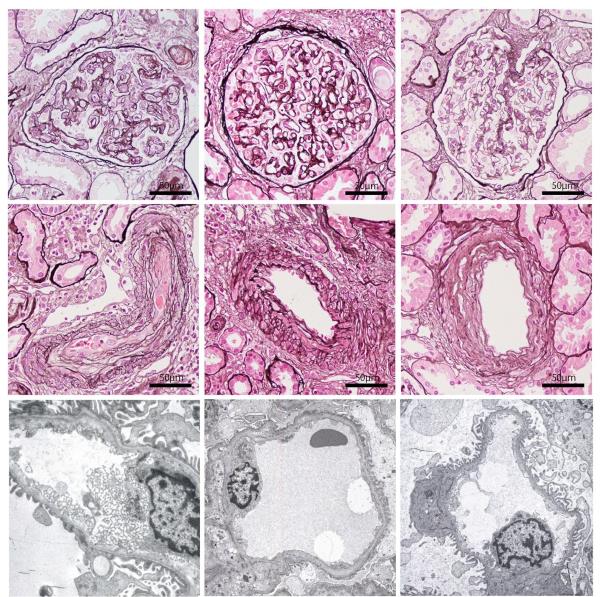 Fig.2 Renal biopsy findings in an aHUS patient before and after administration of anti-C5 monoclonal antibody therapy.2, 3
