We confirm the precise functional status of your target protein by mapping its complete PTM signature (e.g., confirming the active phosphorylated or acetylated state) before you commit significant resources to expensive downstream trials. This data is crucial for determining true druggability.
Post-Translational Modification Service
Creative Biolabs' precision post-translational modification (PTM) analytics services provide the indispensable data needed to transform a potential drug target into a validated therapeutic asset. We deliver objective, actionable insights that span the full spectrum of drug development, from early target identification and mechanism of action (MoA) studies to final regulatory-compliant quality control. Our integrated workflow ensures that even low-abundance, labile PTMs are accurately mapped and quantified, minimizing risk and maximizing the therapeutic potential of your protein candidates.
Background What We Can Offer Workflow Publication Why Choose Us FAQs Customer Review Related Services Contact Us
The PTM Landscape: Decoding the Dynamic Proteome
Post-translational modification refers to the covalent and enzymatic alteration of a protein during or after its biosynthesis. This vast biological vocabulary allows a finite number of genes to produce an exponentially complex functional proteome, providing the basis for critical cellular processes like cell division, signaling, and differentiation. With over 650 types of PTMs identified to date, the complexity of this molecular language continues to expand. The most significant PTM classes include:
| PTM Category | Functional Impact | Relevance to Disease |
|---|---|---|
| Phosphorylation | The master switch. Controls protein activity, localization, and interaction via kinases and phosphatases. | Central to signal transduction pathways (e.g., MAPK, PI3K/AKT) and is a primary target in oncology, inflammation, and neurodegeneration. |
| Glycosylation | Affects protein folding, stability, and cell-surface recognition. | Crucial for immunogenicity, cell-to-cell communication, and defining biological drug efficacy (e.g., ADCC, half-life). |
| Ubiquitination & SUMOylation | Directs protein degradation (ubiquitin) or regulates transcription and nuclear transport (SUMO). | Key for immune regulation, cell cycle control, and rapidly emerging as targets for novel degradation therapies. |
| Acetylation & Methylation | Modifies histones and non-histone proteins, regulating gene expression and metabolism. | Directly linked to epigenetic mechanisms, metabolic reprogramming, and neurodegenerative disease. |
Specific Deliverables and Solutions You Can Expect
De-Risking Target Validation
Deciphering Drug MoA
Determine precisely how your lead compounds modulate PTM regulatory enzymes, such as kinases and phosphatases (writers/erasers). We provide clear, quantitative data on the drug's effect on upstream and downstream signaling pathways, strengthening your intellectual property portfolio.
Identifying PTM-Regulated Degrons
Pinpoint the specific PTM sites that govern protein stability, which is essential for designing effective targeted protein degradation (TPD) agents and molecular glues. This process allows for the rapid identification of PTM-Activated and PTM-Inactivated Degrons.
Biomarker Discovery
Quantify dynamic PTM patterns that serve as superior diagnostic and prognostic biomarkers for disease progression, patient stratification, and monitoring treatment response, often providing more immediate feedback than static gene expression data.
To understand how these targeted PTM insights can de-risk your specific project and accelerate your timeline, we strongly encourage you to request a consultation.
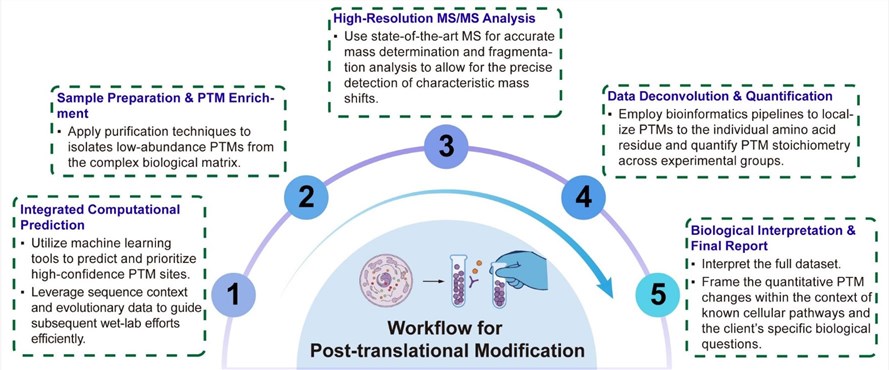
Workflow: Comprehensive PTM Characterization
The complex nature of PTMs demands a rigorous, integrated analytical workflow at Creative Biolabs, combining advanced wet-lab techniques with sophisticated bioinformatics to ensure accuracy and comprehensive coverage.
Publication
This review outlines how PTMs regulate protein stability through the opposing mechanisms of PTM-activated and PTM-inactivated degrons. It details the roles of methylation, phosphorylation, and acetylation, and highlights how advanced proteomics can map these regulatory networks. The work underscores their potential as therapeutic targets for challenging diseases, providing a framework for novel intervention strategies.
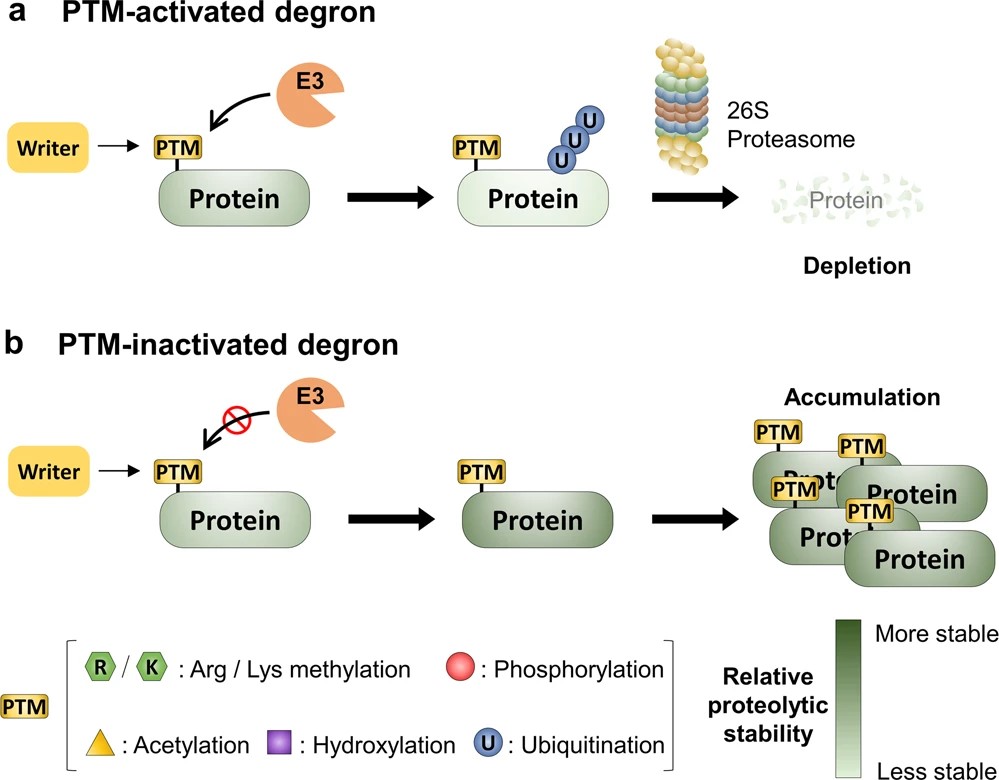 Fig.1 PTM as a molecular switch between degron activation and inactivation. 1
Why Choose Creative Biolabs?
Creative Biolabs offers unparalleled technical depth, combining decades of experience in protein chemistry with cutting-edge machine learning integration for the most comprehensive PTM data. Our technical advantage addresses the fundamental challenge of low PTM stoichiometry by employing precise enrichment coupled with ultra-sensitive detection methods. Our commitment to accuracy and efficiency means we don't just find PTMs—we interpret their functional significance. We provide reliable data for accelerated product advancement and regulatory confidence.
Experience the Creative Biolabs Advantage - Get a Quote Today
FAQs
Why is mass spectrometry analysis alone insufficient for comprehensive PTM characterization?
We integrate specialized PTM enrichment techniques with high-resolution MS to overcome low abundance, isolate modified peptides, and prevent signal suppression by unmodified ones, ensuring comprehensive site localization.
Can your service quantify PTM changes in response to drug treatment?
Absolutely. Our service is explicitly designed to provide quantitative stoichiometry data using both label-free and label-based methods. We can compare PTM levels across different biological states to determine precisely if your compound is acting as a "writer" or "eraser" modulator.
My target protein is highly unstable or difficult to purify. Are there any precautions you take during sample preparation?
We employ strict protocols (rapid quench, enzyme inhibitor cocktails, temperature control) upon cell lysis to "freeze" the PTM status in situ, preventing ex vivo modification changes and ensuring accurate data.
Customer Review
-
Exceptional PTM Localization
The use of Creative Biolabs' solutions in our research has significantly improved the precise localization of low-abundance phosphorylation sites in membrane receptors. Their high-resolution mass spec achieved a level of site-specificity that previous external labs could not match, allowing us to publish our key findings sooner. – Dr. Tra*Kng
Related Services
To fully leverage the power of PTM data, clients often require complementary services to progress their therapeutic candidates:
Phosphatase Panel Screening Service
Creative Biolabs' phosphatase panel screening service uses enzyme kinetics and HTS to provide a high-fidelity assessment of phosphatase activity, facilitating the identification of enzyme modulators and accelerating drug discovery.
Learn More →System Immunity Measurement
Creative Biolabs offers comprehensive bioassay and multi-omics services for measuring system immunity in gut microbiota-associated neuro diseases. We use GF, gnotobiotic, and ABX-treated SPF mice to study the gut-brain-immune axis.
Learn More →Contact Us
Ready to unlock the therapeutic potential of the post-translational code? Our team of senior scientists is available to discuss your project's unique PTM challenges and design a customized analytical solution tailored to your timeline and budget.
Contact Our Team for More Information and to Discuss Your Project
Reference
- Lee, J. M., et al. "Control of protein stability by post-translational modifications." Nat Commun 14.1 (2023): 201. Distributed under Open Access license CC BY 4.0, without modification. https://doi.org/10.1038/s41467-023-35795-8
 Download our brochure
Loading case studies...
Online Inquiry