By leveraging the NKG2D pathway, this program engineers fusion proteins to activate both NK and T cell responses. Specialized constructs, such as cytokine fusions and bispecific engagers, are provided for cancer research models.
Learn More →Next-IO™ NK Cell related Therapeutics
Creative Biolabs provides a versatile suite of tools for the development of innate immune-based drug leads. We provide customized cell engineering, including CAR-NK development, checkpoint knockouts, and stealth modifications to bypass immune detection. Our clients can expect to gain access to highly persistent, metabolically fit NK cell candidates that demonstrate enhanced infiltration into solid tumor models. This service provides the necessary biological tools to validate novel targets and explore synergistic combinations with existing therapeutic candidates.
Introduction What We Can Offer How We Can Help Why Choose Us Customer Reviews FAQs Related Services Contact Us
Engineering the Innate Immune System for Cancer Therapy
The Next-IO™ concept represents a fundamental shift from simple observation toward the active engineering of the innate immune system. Established research indicates that Natural Killer cells provide a highly effective, non-MHC-restricted alternative to traditional cell-based approaches while minimizing many common risks associated with cellular research. Creative Biolabs' proprietary platform leverages these unique biological advantages, integrating synthetic biology and advanced metabolic reprogramming. This combination creates a flexible, universal platform designed to overcome challenges in solid tumor oncology research and drug discovery.
Request a Consultation →
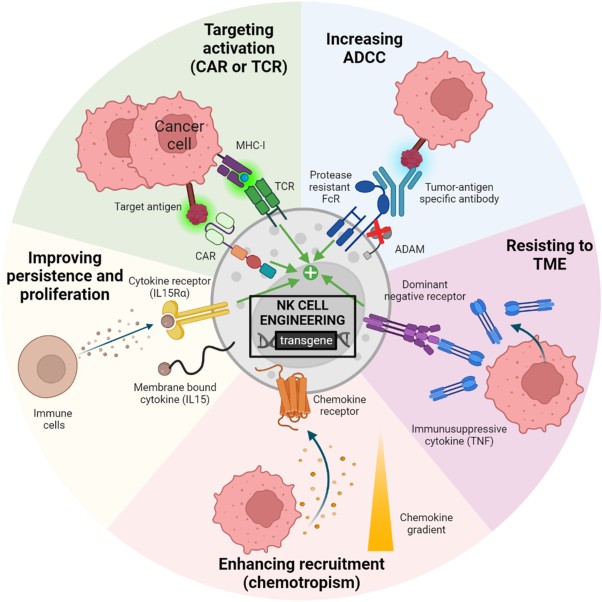 Fig.1 Development of NK cell-based cancer immunotherapies. 1
What We Can Offer
Full-Scale Customization
We provide bespoke engineering of CAR-NK and fusion proteins precisely tailored to your proprietary targets. This ensures that every construct is optimized for your specific tumor indications and experimental research objectives.
One-Stop Cellular Manufacturing
Our facility facilitates a smooth transition from initial laboratory-scale R&D to large-scale expansion. By utilizing high-capacity bioreactor systems, we ensure a steady supply of high-quality engineered cells for your projects.
Guaranteed Genetic Stability
We employ advanced molecular protocols to ensure the long-term stability of engineered constructs. This rigorous approach maintains functional consistency across large-scale expansions and the establishment of robust research cell banks.
Optimized Codon Usage
Our team provides expert gene optimization to maximize the expression of chimeric receptors and cytokines. This process ensures high-density surface expression across various human cell sources used in your research.
How Creative Biolabs Can Assist Your Project
Next-IO™ Fusion Protein of NKG2D Program
Next-IO™ Anti-sMIC Monoclonal Antibody Program
To reverse tumor-induced immunosuppression, we develop non-blocking neutralizing antibodies against soluble MIC (sMIC). Revamping both innate and adaptive immune responses allows these therapeutics to target metastatic tumors.
Learn More →Next-IO™ Anti-CD48 Monoclonal Antibody Program
Targeting the overexpressed CD48 ligand found in multiple myeloma, this program creates therapeutic antibodies that induce immune-mediated cytotoxicity. These candidates effectively inhibit tumor cell growth while preserving healthy progenitor cells.
Learn More →Next-IO™ Anti-2B4 Monoclonal Antibody Program
NK and CD8+ T cell cytotoxicity can be restored in research models by developing antibodies that block the 2B4 (CD244) inhibitory receptor. This blockade disrupts 2B4/CD48 interactions to enable efficient cancer cell attacks.
Learn More →Next-IO™ Anti-HLA-G Monoclonal Antibody Program
Our researchers develop antibodies to block HLA-G interactions with inhibitory receptors like KIR2DL4. Neutralizing HLA-G suppresses tumor immune evasion and restores NK cell cytotoxicity within various research models.
Learn More →Next-IO™ Anti-KIR2DL4 Monoclonal Antibody Program
Restoring NK cell cytotoxicity is the primary goal of this therapeutic antibody program targeting the KIR2DL4 receptor. These candidates modulate inhibitory signals to enhance innate antitumor responses and overcome tumor evasion.
Learn More →Next-IO™ Anti-KIR2DL1-3 Monoclonal Antibody Program
Blocking the KIR2DL1-3 inhibitory receptors on NK cells allows for enhanced cytotoxicity against tumor cells. By disrupting MHC-I/KIR interactions, these antibodies restore immune function in research models.
Learn More →Next-IO™ Anti-CD94-NKG2A Monoclonal Antibody Program
We engineer antibodies to target the CD94/NKG2A inhibitory receptor and block its binding to HLA-E. This neutralization effectively reverses immunosuppression by restoring NK cell cytokine production.
Learn More →Next-IO™ Anti-PVR Monoclonal Antibody Program
To prevent tumor immune escape, this program develops antibodies that neutralize the Poliovirus Receptor (PVR/CD155). This action blocks inhibitory interactions with CD96, thereby restoring NK cell anti-tumor cytotoxicity.
Learn More →Next-IO™ Anti-CD96 Monoclonal Antibody Program
Cytokine production is restored and tumor metastasis is prevented through the development of antibodies against the CD96 (TACTILE) receptor. This approach neutralizes the inhibitory interaction between CD96 and CD155/PVR.
Learn More →Next-IO™ Anti-CD16 (FcgRIIIA) IgG Program
Monoclonal antibodies with optimized Fc regions are developed here to maximize CD16 (FcγRIIIa) engagement. Such optimization triggers potent ADCC and tumor apoptosis in diverse oncology research settings.
Learn More →Next-IO™ Anti-LILRB1 Monoclonal Antibody Program
Neutralizing the LILRB1 inhibitory receptor blocks its interaction with MHC-I/HLA-G, thereby enhancing innate and adaptive immunity. These antibodies restore the cytotoxic potential of NK and T cells.
Learn More →Next-IO™ Anti-KLRG1 Monoclonal Antibody Program
This initiative develops therapeutic antibodies to block the KLRG1 inhibitory receptor from binding with cadherin ligands. Effector functions are restored and antitumor efficacy is enhanced through this specific blockade.
Learn More →Next-IO™ Anti-Cadherin Monoclonal Antibody Program
Cadherin-targeted antibodies are developed to disrupt tumor cell adhesion and inhibit metastasis. These candidates also block inhibitory signaling to restore NK cell effector functions in research models.
Learn More →Next-IO™ Anti-LLT1 Monoclonal Antibody Program
By blocking the interaction between LLT1 (CLEC2D) and NKRP1A, these therapeutic antibodies enhance NK cell-mediated cytotoxicity. The program aims to reverse immune evasion across several cancer models.
Learn More →Next-IO™ Anti-NKRP1A Monoclonal Antibody Program
Antitumor efficacy against breast and prostate cancer models is enhanced through antibodies targeting the NKRP1A (CD161) receptor. Neutralizing this receptor restores vital NK cell cytotoxicity.
Learn More →Next-IO™ Targeting Sialic Acid Program
Innovative antibody-sialidase conjugates desialylate tumor cells to disrupt Siglec-mediated inhibitory signaling. Reactivating NK cell cytotoxicity reverses glycan-mediated evasion in solid tumor research.
Learn More →Next-IO™ Anti-Nectin2 Monoclonal Antibody Program
Neutralizing Nectin-2 (CD112) suppresses tumor progression by disrupting its inhibitory binding with PVRIG and TIGIT. This restore-and-restrain strategy maximizes NK cell-mediated cytotoxicity.
Learn More →Highlights
Integrated Infrastructure
Creative Biolabs excels in the innate immunity field by merging deep biological expertise with sophisticated large-scale manufacturing. This unique combination allows us to support projects from initial concept through industrial-scale expansion.
Advanced Armoring
Our Next-IO™ platform incorporates sophisticated features like membrane-bound cytokines and dominant-negative receptors. These modifications enable engineered cells to effectively resist immunosuppressive signals and survive within challenging research-based tumor environments.

Metabolic Resilience
We focus on optimizing the metabolic fitness of our NK cell candidates. This ensures they maintain functional vigor even in nutrient-deprived or hypoxic conditions commonly found in advanced solid tumor models.
Validated Performance
Unlike generic service providers, we leverage robust data sets to demonstrate high cytotoxic efficacy. Our candidates are rigorously tested to ensure they meet the specific performance benchmarks required for your research.
Our specialists will provide a detailed project roadmap and transparent pricing tailored to your specific target validation and cellular engineering needs - get a quote today.
Customer Reviews
-
Sustained Persistence
Our long-term tumor-challenge assays were greatly supported by Creative Biolabs' proprietary CIML expansion. We attained a level of NK cell longevity that was previously impossible to reach using only standard activation protocols. - Dr. A**n. S. -
Solid Tumor Penetration
By integrating Chemokine Engineering into our workflow, we observed remarkably improved homing to pancreatic sites. Real-time imaging successfully validated that our engineered cells efficiently reached their intended targets. - Prof. M***l. K.
FAQs
How do you ensure NK cells survive the immunosuppressive microenvironment?
We armor our cells with dominant-negative receptors and tailored metabolic enhancements, ensuring these engineered candidates do not become exhausted while navigating the core of challenging research-based solid tumor microenvironment models.
Can I combine these therapeutics with my existing small molecule inhibitors?
Yes, our platform is specifically optimized for synergy. We provide data-driven protocols to explore how our engineered NK cells interact with your proprietary inhibitors to enhance overall research lead efficacy.
Related Services
Immuno-Oncology Animal Models
Advanced preclinical animal modeling services featuring syngeneic, CDX, PDX, and humanized mouse models. These platforms facilitate high-fidelity evaluation of therapeutic efficacy, safety, and PK/PD profiles within a functional immune environment.
Learn More →Bispecific Antibody Engineering
Comprehensive engineering services providing diverse formats designed to simultaneously engage dual antigens or immune effectors, enhancing therapeutic specificity and efficacy in complex research models.
Learn More →How to Contact Us
Creative Biolabs provides a powerful, versatile, and scalable alternative for modern cell-based research. By combining proprietary cytokine-induced memory-like expansion, advanced "stealth" genetic engineering to avoid host rejection, and sophisticated logic-gated CAR constructs, we provide a robust technical pathway for researchers to achieve meaningful results even in difficult-to-treat solid tumor models.
We offer comprehensive consultations to help you determine the optimal engineering strategy for your experimental goals, providing technical guidance from initial design to final validation, please contact us.
Reference
- Page, Audrey et al. "Development of NK cell-based cancer immunotherapies through receptor engineering." Cellular & molecular immunology vol. 21,4 (2024): 315-331. Distributed under an Open Access license CC BY 4.0, without modification. https://doi.org/10.1038/s41423-024-01145-x
 Download our brochure
Loading case studies...
Online Inquiry