Introduction What We Can Offer Workflow Published Data Why Choose Us? Applications FAQs Featured Services Featured Products
Creative Biolabs provides professional 2′-NH₂ modification services to help researchers overcome the challenges of nuclease-mediated degradation. Our solutions assist customers in developing highly stable aptamers, ensuring reliable performance in complex biological matrices and supporting various research-based targeting applications.
Contact our team to get an inquiry now!
2′-NH₂ Modifications of Aptamer
Aptamers are vulnerable to ubiquitous nucleases, which typically limit their half-life in biological fluids to minutes. Incorporating 2'-amino (2'-NH₂) modifications into the ribose residue of the sugar-phosphate backbone is a cornerstone strategy for enhancing metabolic stability. This modification involves replacing the 2'-hydroxyl (2'-OH) group of pyrimidines with an amino group. Unlike natural RNA, 2'-NH₂ modified oligonucleotides adopt a conformation that resists enzymatic cleavage while maintaining the ability to form the intricate tertiary structures necessary for high-affinity binding. This modification is particularly favored for its balance between structural stability and chemical flexibility, often rendering aptamers 100-fold more stable in serum than their unmodified counterparts, making them indispensable for long-term research studies.
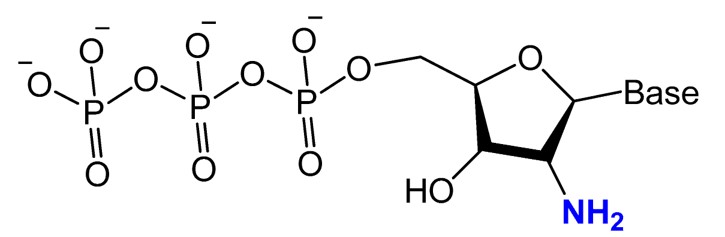 Fig.1 Chemical structures of 2'-NH₂ modified nucleotides.1
What We Can Offer
We offer a comprehensive 2′-NH₂ modification platform that covers every stage of aptamer development. From initial library design and SELEX-compatible enzymatic incorporation to post-selection chemical synthesis, we provide tailored solutions to improve nuclease resistance for your specific research goals.
Our Service Capabilities:
Enzymatic Library Construction
We utilize specialized mutant polymerases, such as T7 RNA polymerase variants, to successfully incorporate 2'-NH₂-modified nucleotides into random-sequence pools. This ensures that the selection process occurs within a stabilized chemical landscape, yielding candidates that are inherently resistant to degradation.
Post-SELEX Optimization
For customers with pre-existing lead sequences, we offer site-specific 2'-NH₂ substitutions. Our scientists evaluate the impact of these changes on binding affinity using advanced biophysical characterization to ensure stability is gained without losing target specificity.
High-Purity Chemical Synthesis
Utilizing solid-phase phosphoramidite chemistry, we produce modified aptamers with high precision. We employ TBDMS (t-butyldimethylsilyl) protection strategies during synthesis to ensure the integrity of the 2'-NH₂ group and the overall purity of the final product.
Custom Hybrid Modifications
To achieve maximum protection, we can combine 2'-NH₂ modifications with other stabilization techniques, such as 3'-inverted thymidine capping or phosphorothioate backbone alterations, providing a multi-layered defense against both endo- and exo-nucleases.
Workflow
01
Project Consultation: Clients provide the target profile, desired application environment, and any existing sequence data. We discuss whether pre-SELEX incorporation or post-SELEX modification is most appropriate.
02
Strategy Design: We define the modification pattern (e.g., all-pyrimidine or site-specific) and select the appropriate mutant polymerases or synthetic building blocks.
03
Library/Sequence Preparation: We synthesize the 2'-NH₂ modified library or the specific optimized sequence using automated solid-phase synthesis.
04
Selection or Validation: If starting from scratch, we perform SELEX using the modified pool. For existing sequences, we perform binding assays (e.g., MST or SPR) to confirm target affinity.
05
Quality Control: Each product undergoes rigorous HPLC/Mass Spectrometry analysis to verify purity and modification accuracy.
06
Final Delivery: We deliver the purified, modified aptamer alongside a comprehensive technical report including sequence data, binding curves, and stability profiles.
Published Data
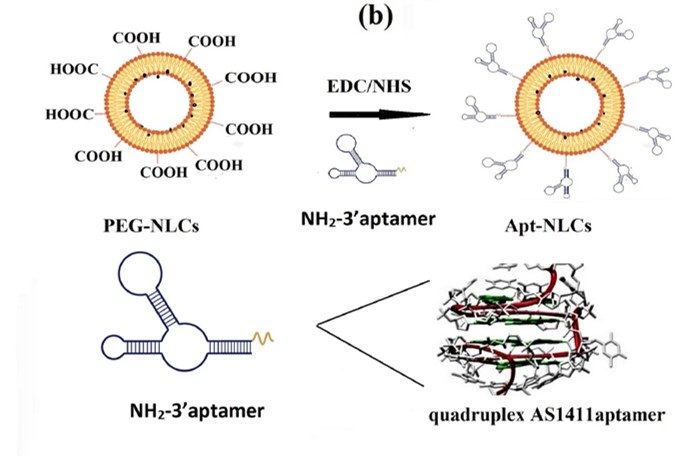 Fig.2 Schematic of NH₂-modified aptamer for surface functionalization of PEG-NLCs (nanoliposomes).2
A significant case study highlighting the utility of amino-modifications involves the optimization of the aptamer for targeting nucleolin-overexpressing tumor cells. In this research, scientists developed a dual-modified aptamer featuring both 2'-NH₂ and phosphorothioate modifications to enhance metabolic stability. This modified aptamer was successfully conjugated to stealth nanoliposomes for the delivery of apigenin in neoplastic liver research. The project results demonstrated that the amino-modified aptamer functionalized nanocarriers exhibited superior biostability and targeted accumulation compared to unmodified versions. Crucially, the modifications allowed the aptamer to maintain high affinity for nucleolin while providing the chemical robustness necessary for effective in vivo biodistribution, ultimately accelerating the therapeutic threshold in complex biological systems.
Why Choose Us?
-
Integrated Technical Platform: We offer one-stop development from modification and selection to final synthesis and validation.
-
Expert Scientific Team: Our in-house specialists possess deep expertise in sugar-ring chemistry and mutant polymerase applications.
-
Precision Synthesis: We use advanced TBDMS protection to ensure high chemical purity and consistent modification density.
-
Proven Stability Profiles: Our modified products are verified to achieve up to 100-fold increases in serum half-life.
-
Transparent Project Tracking: We provide timely data feedback at every stage, from initial SELEX rounds to final purification.
-
Reliable Reproducibility: Our automated synthesis processes ensure minimal batch-to-batch variation for consistent research results.
Applications
-
Longitudinal In Vivo Research: By significantly extending the systemic half-life of nucleic acid ligands, 2'-NH₂ modifications enable complex longitudinal studies in various animal models. This minimizes the need for frequent redosing protocols while ensuring sustained target engagement throughout the duration of the research project.
-
Next-Generation Diagnostic Platforms: Modified aptamers act as highly stable capture reagents in advanced ELONA, lateral flow, or biosensor systems. They maintain structural integrity and binding performance even when exposed to high concentrations of nucleases in raw biological samples like whole blood, serum, or saliva.
-
Multifunctional Targeted Delivery: The 2'-NH₂ group serves as a versatile and robust chemical handle for the site-specific conjugation of therapeutic payloads, fluorophores, or nanoparticles. This allows researchers to develop sophisticated molecular probes and targeted delivery vehicles with high chemical precision and stability.
-
High-Enzyme Environment Targeting: These aptamers are specifically engineered for research in nuclease-rich environments, such as intracellular targeting or localized delivery to metabolically active tissues. They offer a protective advantage in the liver, kidneys, or tumor microenvironments where natural oligonucleotides would be rapidly degraded.
FAQs
Q: What are the advantages of the 2′-NH₂-modified aptamers?
A: The primary advantage is their extraordinary resistance to ribonuclease degradation, which is a major hurdle for natural RNA. Beyond stability, the amino group provides unique hydrogen-bonding opportunities that can enhance the binding interaction with target proteins. Furthermore, the 2'-NH₂ group offers a reactive chemical "hook" for post-selection labeling or conjugation with various research-related probes, making these aptamers highly versatile for multifunctional applications.
Q: In which targets are 2′-NH₂ modifications selected to optimize aptamer properties?
A: These modifications are typically employed for complex protein targets that exist in nuclease-rich biological environments, such as growth factors (VEGF, bFGF), complement proteins (C5), and coagulation factors (Thrombin). They are also highly effective for cell-surface receptors and circulating inflammatory cytokines, where maintaining structural integrity over long periods is crucial for meaningful research observations.
Q: Can I modify an existing DNA aptamer with 2'-NH₂ nucleotides?
A: Yes, we can perform post-synthetic modifications. However, since the 2'-NH₂ group changes the sugar pucker and steric profile, it may alter the aptamer's 3D structure. We typically recommend a pilot study to test several substitution patterns to ensure that target affinity is preserved after the stability-enhancing modification is added.
Q: Is 2'-NH₂ modification better than 2'-F for serum stability?
A: Both modifications significantly increase stability compared to natural RNA. 2'-NH₂ is often chosen for its specific hydrogen-bonding potential and the ease of further chemical conjugation via the amino group. The choice often depends on the specific target and the polymerase being used in the project.
Q: Can the 2'-NH₂ group be used for bioconjugation?
A: Absolutely. The primary amine at the 2' position is highly reactive and can be used for site-specific labeling or attachment to surfaces. This makes 2'-NH₂ modified aptamers excellent tools for developing customized molecular probes.
Q: Can 2'-NH₂ modifications be applied to purines as well as pyrimidines?
A: Standard 2'-NH₂ SELEX typically involves modifying pyrimidines (C and U/T). Modification of purines is chemically possible but often more technically challenging for enzymatic incorporation. We can discuss custom strategies for all-position modification based on your project needs.
When you choose us, you will not only get highly stable aptamer products but also in-depth scientific support from experts with years of experience. If you are interested in our services, please feel free to contact us for more details.
Featured Services
Featured Products
References
-
Odeh, Fadwa, et al. "Aptamers chemistry: Chemical modifications and conjugation strategies." Molecules 25.1 (2019): 3. https://doi.org/10.3390/molecules25010003
-
Dhara, Moumita, et al. "Phosphorothioated amino-AS1411 aptamer functionalized stealth nanoliposome accelerates bio-therapeutic threshold of apigenin in neoplastic rat liver: a mechanistic approach." Journal of Nanobiotechnology 21.1 (2023): 28. https://doi.org/10.1186/s12951-022-01764-4
-
Distributed under Open Access license CC BY 4.0. The image was modified by extracting and using only part of the original image.
For Research Use Only.
Related Sections: