Introduction What We Can Offer Workflow Published Data Why Choose Us? Applications FAQs Featured Services Featured Products
Creative Biolabs provides professional biotin modification services for DNA and RNA aptamers, helping researchers overcome challenges in molecular immobilization and signal transduction. Our expertise ensures high-efficiency conjugation that transforms synthetic oligonucleotides into powerful tools for high-sensitivity diagnostic assays and targeted discovery.
Contact our team to get an inquiry now!
Biotin Modifications of Aptamer
Aptamer-based biosensors serve as sophisticated recognition agents for detecting proteins, metabolites, and carbohydrates in biological and environmental matrices. Due to their small size, aptamers minimize steric hindrance, making complex analytes more accessible than traditional antibodies. Biotinylation is a cornerstone modification in this field, particularly for colorimetric-based aptasensors used in lateral flow analysis (LFA) and enzyme-linked aptamer assays (ELAA). By leveraging the ultra-high affinity (Kd≈10-15 M) of the biotin-streptavidin interaction, researchers can achieve precise mobility determination, target enrichment, and stable attachment to solid surfaces. Recent studies indicate that 3'-biotin capping also provides a "double-shield" effect, significantly enhancing nuclease resistance while maintaining the aptamer's native folding.
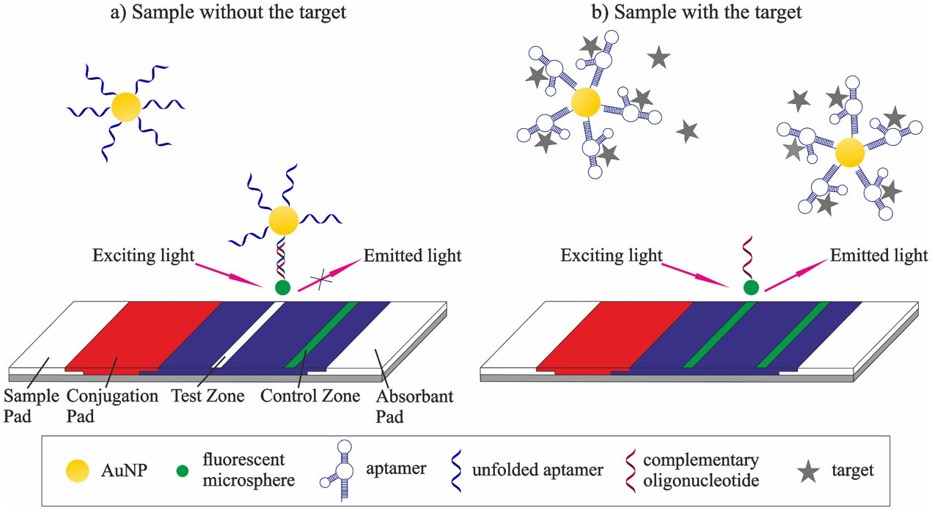 Fig.1 The principle of the dual recognition LFA.1,3
What We Can Offer
We offer a comprehensive suite of biotinylation services, including site-specific terminal labeling and internal modification. Our platform integrates advanced chemical synthesis with structural validation to ensure your biotinylated aptamers perform optimally in diverse diagnostic and analytical environments.
At Creative Biolabs, we provide a vertically integrated approach to biotin modification:
Strategic Site-Specific Biotinylation
We specialize in 3' and 5' terminal labeling using varied linker lengths (C6, C12, or PEG). 3'-biotinylation is particularly effective for blocking exonuclease degradation, while 5'-labeling is ideal for surface immobilization where the binding pocket must remain unobstructed.
High-Density Internal Labeling
For applications requiring signal amplification, we offer internal biotinylation via biotin-dT or modified phosphoramidites. This allows for the loading of multiple streptavidin-labeled fluorophores or enzymes onto a single aptamer strand.
Pre-SELEX & Post-SELEX Integration
We can incorporate biotinylated nucleotides during the SELEX process to select for "born-to-bind" modified sequences, or perform post-selection refinement to optimize existing leads for commercial diagnostic platforms.
Structural Compatibility Assessment
Our team utilizes CD spectroscopy and melting curve analysis to ensure that the introduction of biotin does not disrupt the critical secondary or tertiary structures (such as G-quadruplexes) required for target recognition.
Custom Linker Engineering
To prevent steric clashes on crowded sensor surfaces, we provide custom spacers that project the aptamer away from the substrate, maximizing binding kinetics and capture efficiency.
Workflow
01
Initial Consultation: We discuss your specific application (e.g., LFA, ELISA, or pull-down) and target requirements. Clients provide the target sequence or starting materials.
02
Rational Design: Our scientists determine the optimal modification site and linker type based on the aptamer's predicted secondary structure to ensure bioactivity.
03
Chemical Synthesis: Utilizing high-performance solid-phase synthesis, we incorporate biotin moieties with precision. We can handle scales from nanomolar R&D to large-scale production.
04
Purification & Verification: Every product undergoes stringent HPLC or PAGE purification. We confirm 100% modification efficiency using ESI-MS or mass spectrometry.
05
Final Delivery: You receive the lyophilized biotinylated aptamer, a comprehensive COA, and technical guidance for your specific assay integration.
Published Data
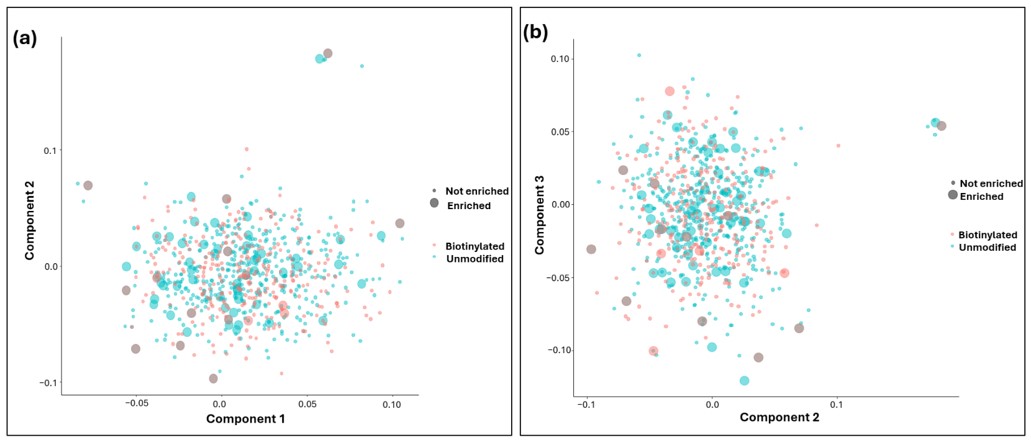 Fig.2 Principal component analysis (PCA) based on the top selected cluster sequences for the biotinylated and unmodified pools.2,3
In this study, researchers addressed the loss of binding affinity often seen when modifying aptamers post-SELEX. They implemented a "Biotin-Guided Re-Selection" strategy, amplifying a hCG-targeting DNA pool with 5'-biotin-C6-phosphoramidite primers to select sequences optimized for their modified state. Using Nanopore NGS and bioinformatic clustering, the team identified 24 stable cluster sequences that persisted in both modified and unmodified pools. Despite minor sequencing biases from the biotin moiety, this approach validated that integrating biotin during re-enrichment ensures aptasensors retain maximum sensitivity and specificity for diagnostic translation.
Why Choose Us?
-
Expert Linker Selection: We provide structure-guided advice on PEG vs. Alkyl linkers to prevent steric interference.
-
Guaranteed Modification Purity: Every batch is verified by Mass Spectrometry to ensure zero unlabeled sequences.
-
Enhanced Biostability: Our 3'-biotinylation strategies increase serum half-life by protecting against exonuclease attack.
-
Scalable Synthesis: We support your journey from initial R&D screening to commercial kit manufacturing.
-
Optimized Binding Kinetics: We ensure that the biotin tag does not alter the Kd of your precious aptamer leads.
-
Comprehensive Support: Access to our years of experience in oligonucleotide chemistry and assay development.
Applications
-
Advanced LFA: Biotinylated aptamers function as indispensable detection or capture reagents in rapid diagnostic strips. This enables superior point-of-care testing by utilizing the biotin-streptavidin interaction for clear, reliable colorimetric signals in field environments.
-
High-Throughput ELAA: These serve as optimized functional alternatives to antibodies in ELISA-based plate formats. Biotinylation facilitates the recruitment of HRP or AP enzyme conjugates, significantly boosting detection sensitivity for complex protein biomarkers.
-
Precision Affinity Purification & Cell Sorting: By anchoring biotinylated aptamers to streptavidin-functionalized magnetic beads or matrices, researchers can achieve the highly specific isolation of target proteins, organelles, or whole cells from heterogeneous biological lysates and clinical samples.
-
Quantitative Surface Plasmon Resonance (SPR): Biotinylation allows for the stable, oriented immobilization of aptamers onto gold-coated sensor chips. This ensures consistent surface density, which is paramount for obtaining accurate, reproducible data regarding real-time binding kinetics and thermodynamics.
-
Targeted Nano-Drug Delivery Systems: Biotin serves as a versatile chemical bridge for conjugating aptamers to streptavidin-coated nanocarriers, liposomes, or exosomes. This modification directs therapeutic payloads to specific cellular targets while enhancing overall payload stability and uptake.
FAQs
Q: Will the addition of a biotin molecule affect the binding affinity of my aptamer?
A: While biotin is a small molecule, its placement is critical; if it is placed within a binding loop, it can cause steric hindrance. We mitigate this by using structural modeling to select terminal positions or by adding long PEG spacers to ensure the biotin tag remains distal to the binding site.
Q: Can you provide biotinylation for both DNA and RNA aptamers?
A: Yes, our synthesis platform is fully compatible with both DNA and RNA, including sequences containing 2'-fluoro or 2'-O-methyl modifications. RNA biotinylation often includes additional 3'-capping to ensure the molecule survives the rigors of biological testing.
Q: What is the advantage of using a PEG linker over a standard carbon linker for biotin?
A: PEG linkers are hydrophilic and provide greater flexibility, which can reduce non-specific binding and improve the reach of the aptamer on a crowded surface. This is particularly useful in diagnostic arrays where the analyte is a large protein or a whole cell.
Q: Can I order internal biotin modification instead of just terminal labeling?
A: Absolutely, we can replace standard thymidine residues with biotin-dT at specific internal positions. This is often used for multi-valent signaling or creating "branched" aptamer structures for enhanced avidity.
Q: Is the biotin-streptavidin bond stable enough for harsh washing conditions?
A: The biotin-streptavidin bond is one of the strongest non-covalent interactions known, withstanding high temperatures, varied pH levels, and organic solvents. This makes it ideal for stringent washing protocols in complex diagnostic samples like blood or urine.
Q: Does biotinylation help with the nuclease stability of the aptamer?
A: When biotin is placed at the 3' terminus, it acts as a chemical cap that hinders the progress of 3' to 5' exonucleases. While not a total solution for stability, it provides a measurable increase in serum half-life compared to unmodified sequences.
Creative Biolabs provides a wide range of services (One-stop Aptamer In Vitro Selection Service, Aptamer-based Conjugation Services, Aptamer Modifications Services, etc.) to support your project and is the best choice for providing high-quality, cost-effective outsourcing/collaboration options for your research projects. Please feel free to contact us for more information.
Featured Services
Featured Products
References
-
Schüling, Torsten, et al. "Aptamer-based lateral flow assays." AIMS Bioengineering 5 (2018), Nr. 2 5 (2018): 78-102. https://doi.org/10.15488/4903
-
Singh, Tasmita, Ronen Fogel, and Janice Limson. "NGS-Guided Aptamer Re-Selection for Improved Sensor Applications: Biotin as a Modification Tag in the Amplification of Enriched Pools." Engineering Proceedings 109.1 (2025): 7. https://doi.org/10.3390/engproc2025109007
-
Distributed under Open Access license CC BY 4.0, without modification.
For Research Use Only.
Related Sections: