Introduction What Can We Offer? Workflow Published Data Why Choose Us? Applications FAQs Featured Services Featured Products
Creative Biolabs offers specialized 2′-O-Methyl (Me) modification services to enhance the biostability of aptamers. Our advanced chemical engineering approach helps researchers overcome nuclease degradation challenges, ensuring high-affinity target binding and robust performance in complex experimental environments.
Contact our team to get an inquiry now!
2′-O-Methyl (Me) Modifications of Aptamer
The 2′-O-Methyl (Me) modification is a premier ribose-based alteration where a methoxy group replaces the 2'-hydroxyl group. This small chemical shift provides significant steric hindrance, effectively shielding the phosphodiester backbone from both endonucleases and 3' exonucleases. Recent research indicates that 2'-O-Me residues favor a C3'-endo (A-form) sugar pucker, which increases the thermal melting temperature (Tm) and rigidifies the aptamer structure. Beyond stability, 2'-O-Me modifications are instrumental in reducing the activation of innate immune sensors like Toll-like receptors (TLRs), which often recognize unmodified C-G-rich sequences. By integrating these non-natural nucleotides, we expand the chemical diversity of aptamer libraries, facilitating the development of candidates with superior biophysical profiles for diverse research applications.
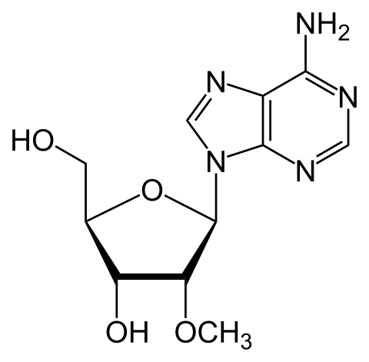 Fig 1 2'-O-methyl modification.Distributed under Public Domain, from Wiki, without modification.
What Can We Offer?
We provide a comprehensive suite of 2'-O-methyl modification strategies designed to transform vulnerable oligonucleotide sequences into stable, high-performance molecular tools. Our services range from site-specific post-selection optimization to the generation of inherently resistant modified aptamer libraries.
Our Core Capabilities:
Post-SELEX SAR Optimization
We conduct detailed structure-activity relationship (SAR) studies on your existing aptamer leads. By systematically scanning the sequence, we identify non-essential residues for 2'-O-Me substitution, ensuring maximum stability gain with zero loss in binding affinity.
Modified Library Synthesis
We offer custom-designed oligonucleotide libraries incorporating 2'-O-Me purines or pyrimidines. This allows for the selection of "born-stable" aptamers that do not require extensive downstream chemical engineering.
Strategic DNA/RNA Hybridization
For DNA-based projects, we utilize high-resolution substitution with 2'-O-Me RNA analogues. This hybrid approach leverages the stability of RNA-like sugar puckering while maintaining the structural motifs of the original DNA paratope.
High-Yield Synthesis & Scale-up
Our laboratory is equipped for high-efficiency solid-phase synthesis. We provide modified aptamers in scales ranging from nanomolar for screening to gram quantities for larger-scale research studies, ensuring high purity via HPLC and Mass Spectrometry verification.
Dual-Modification Synergy
To address complex pharmacokinetic requirements, we can combine 2'-O-Me modifications with terminal protections such as 3'-inverted thymidine (idT) or 5'-PEGylation, providing a multi-layered defense against enzymatic attack and rapid clearance.
Workflow
01
Client Provision: You provide the candidate sequence or target protein/molecule.
02
Sequence Analysis: We perform in silico folding analysis to predict potential modification sites.
03
Synthesis & Optimization: We synthesize a panel of 2'-O-Me variants (Post-SELEX) or initiate a modified SELEX campaign.
04
Binding Validation: Each modified candidate undergoes affinity measurement via Surface Plasmon Resonance (SPR) or Biolayer Interferometry (BLI).
05
Stability Testing: Variants are incubated in serum or specific buffers to verify nuclease resistance.
06
Final Delivery: You receive the purified modified aptamer, accompanied by a comprehensive Certificate of Analysis (CoA) including HPLC/MS data.
Published Data
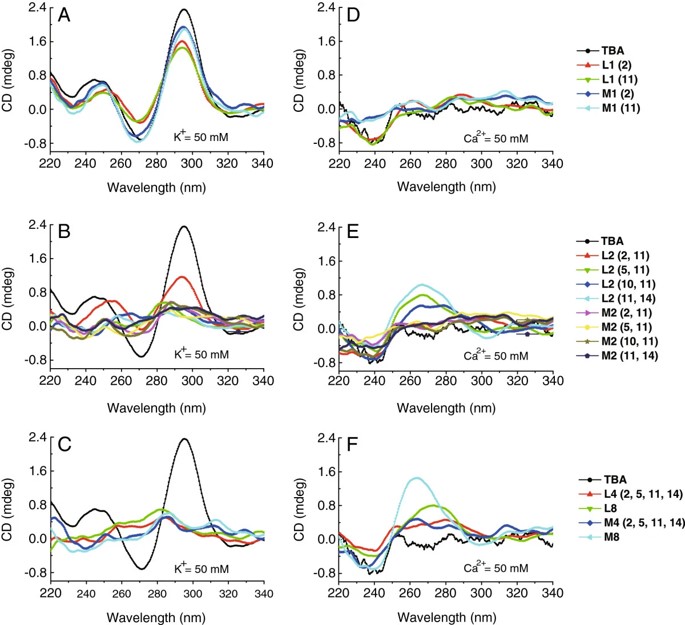 Fig.2 OMeNA-modifications induced TBA structural transition.1
In this detailed structural study, researchers investigated the impact of site-specific 2'-O-methyl nucleic acid (OMeNA) modifications on the thrombin binding aptamer (TBA). The project explored how these modifications induce structural transformations in various ionic environments. The results demonstrated that while OMeNA substitutions can significantly alter G-quadruplex folding topologies, strategic site-specific modification with four or more OMeNA units successfully converted unstructured TBA into a stable, parallel quadruplex structure in the presence of Ca2+ ions. This study highlights the power of 2'-O-Me modifications not just for simple nuclease resistance, but as a sophisticated tool for modulating the secondary structure and conformational stability of G-quadruplex aptamers in complex research environments.
Why Choose Us?
-
Biophysical Precision: We focus on the C3'-endo sugar pucker to ensure thermodynamic stability.
-
Hybrid Expertise: Specialized protocols for DNA/RNA 2'-O-Me hybrid stabilization.
-
Custom Synthesis: Tailored substitution patterns rather than "one-size-fits-all" approaches.
-
Rigorous Validation: Every modification is backed by SPR-based binding affinity data.
-
Scalable Solutions: Seamless transition from pilot-scale to bulk synthesis for research.
-
Expert Consultation: Years of collective experience in oligonucleotide engineering.
Applications
-
In Vivo Imaging and Tracking: 2'-O-Me aptamers are ideal for longitudinal imaging studies where prolonged circulation and resistance to tissue nucleases are mandatory for clear signal detection. They allow for precise molecular tracking without premature degradation in high-nuclease environments, providing superior contrast and resolution in research models.
-
Diagnostic Assay Development: Incorporation of 2'-O-Me residues ensures that aptamer-based biosensors maintain their integrity when exposed to crude environmental samples or undiluted biological fluids. This stability facilitates the creation of robust, reproducible diagnostic tools capable of operating in non-standard conditions where native DNA/RNA would fail.
-
Mechanistic Inhibitor Research: For researchers studying pathway inhibition or protein-protein interactions, 2'-O-Me modified aptamers provide the sustained presence required to observe biological effects without frequent re-dosing. They serve as reliable tools for long-term cell culture experiments, offering a stable chemical framework for kinetic and structural studies.
-
Targeted Delivery Systems: These modified aptamers serve as stable "homing" ligands for the delivery of siRNA, toxins, or nanoparticles to specific cell populations. Their enhanced biostability ensures that the delivery vehicle reaches the intended intracellular compartment intact, significantly increasing the efficiency of the molecular cargo delivery.
FAQs
Q: Will 2'-O-Me modifications significantly alter the binding affinity (Kd) of my existing aptamer sequence?
A: If applied globally to every nucleotide, affinity may decrease due to structural rigidity; however, our systematic SAR optimization identifies specific "safe zones" for substitution. This allows us to protect the oligonucleotide while maintaining, or in some cases even slightly improving, the binding constant through localized conformational stabilization.
Q: Can you perform modifications on only the 3' and 5' ends of the aptamer molecule?
A: Yes, we provide terminal-only "capping" services using inverted bases or biotin labels. However, internal 2'-O-Me substitutions are highly recommended if your research involves complex biological media containing high concentrations of endonucleases that can cleave the sequence internally.
Q: Is the 2'-O-Me modification strategy suitable for DNA-based aptamers?
A: Absolutely. We frequently utilize 2'-O-Me RNA nucleotides to create high-performance DNA/RNA hybrids. This specific engineering strategy combines the predictable folding and structural motifs of DNA with the superior biostability and nuclease-shielding properties of the 2'-O-Me ribose backbone.
Q: Are these modified aptamers likely to be immunogenic in sensitive cell culture models?
A: 2'-O-Me is a naturally occurring modification found extensively in human tRNA and rRNA. Because of this natural prevalence, these aptamers are significantly less likely to trigger innate immune responses or cytokine storms compared to unmodified oligonucleotides or those containing exotic synthetic bases.
Q: Does the presence of 2'-O-Me groups interfere with common labels like PEGylation or Biotin?
A: No, the 2'-O-Me modification is fully compatible with standard 5' or 3' labeling chemistries. Our scientists can simultaneously optimize for both biostability and pharmacokinetic bulk by integrating PEG chains or fluorescent markers alongside the internal 2'-O-Me substitutions.
Q: Can I provide a random library for you to select from, or must I provide a fixed sequence?
A: We offer flexibility for both scenarios. We can conduct a full-service SELEX campaign starting from our proprietary 2'-O-Me libraries or provide custom post-selection optimization and stabilization services for your pre-existing, pre-selected lead sequences.
Creative Biolabs' 2'-O-methyl modification platform provides the technical rigor needed to elevate your aptamer. Contact our scientific team to discuss how our stability-enhancing solutions can support your specific project goals.
Featured Services
Featured Products
Reference
-
Liu, Bo, and Da Li. "Structural transformation induced by locked nucleic acid or 2′–O-methyl nucleic acid site-specific modifications on thrombin binding aptamer." Chemistry Central Journal 8.1 (2014): 19. Distributed under Open Access license CC BY 4.0, without modification. https://doi.org/10.1186/1752-153X-8-19
For Research Use Only.
Related Sections: