These compounds bind to a receptor and induce a conformational change that activates the downstream biological response. This category includes full agonists (maximal efficacy) and partial agonists (submaximal efficacy).
Agonist/Antagonist Assay Services
Defining your lead compound's functional profile is the single most critical step in de-risking your therapeutic program. Creative Biolabs provides the quantitative data needed to definitively classify your molecule and predict its in vivo behavior, whether it is a full agonist, a neutral antagonist, or a pathway-selective biased ligand. Our solutions are built on two decades of pharmacology expertise, ensuring every EC50 or IC50 we deliver is reliable, reproducible, and actionable for regulatory submission. We prioritize the detailed pharmacological characterization of your lead molecules to maximize their therapeutic potential and minimize late-stage development failures.
Background Featured Services Applications Publication Why Choose Us FAQs Customer Review Related Services Contact Us
Defining the Mechanism: Agonists, Antagonists, and the Spectrum of Activity
The relationship between a drug candidate and its target receptor is complex, falling into a spectrum of functional mechanisms:
Agonists
Antagonists
These compounds bind to the receptor but do not elicit a response themselves. Instead, they block or dampen the effects of endogenous ligands or agonists, effectively inhibiting the pathway. Antagonists are further characterized as reversible or irreversible.
A precise understanding of these functional roles is paramount, particularly in therapeutic areas like immuno-oncology, where modulating checkpoint inhibitors (often using antagonists) or stimulating immune cells (often using agonists) is the core mechanism of action.
Featured Services at Creative Biolabs
Agonist Neurite Outgrowth Assay
Our service provides you with a robust platform to evaluate the effects of various compounds on neuronal growth and differentiation. Utilizing established neuronal cell lines or primary neurons, this assay measures neurite outgrowth in response to agonist treatments, enabling the identification of potential neuroregenerative therapeutics. By quantifying parameters such as neurite length, branching, and overall cell morphology, the service delivers comprehensive insights into the efficacy of test compounds. The assay is adaptable to various experimental conditions, allowing for the assessment of different dosages, treatment durations, and environmental factors.
Please click on the keywords for more information!
Agonist/Antagonist Uptake Assay
Our [3H]-2-deoxy-D-glucose (2-DG) rat transporter cell basal agonist and antagonist uptake assay service is designed to evaluate the functional activity of glucose transporters in cellular models. Utilizing radiolabeled [3H]-2-deoxy-D-glucose, this service measures the uptake of glucose in response to various compounds, including potential agonists and antagonists. The assay can assess the effects of test substances on transporter activity, providing insight into their ability to modulate glucose uptake in rat cell lines. This is particularly valuable for understanding metabolic pathways and the pharmacological profiles of new therapeutic agents targeting glucose metabolism.
Please click on the keywords for more information!
Our cell-based antagonist assay services are designed to provide comprehensive analysis of compound efficacy and mechanism of action in a physiological context. Utilizing advanced cellular models, we assess the ability of potential antagonists to inhibit receptor signaling or cellular responses triggered by specific ligands. Our services include detailed screening and validation of compounds, with options for high-throughput formats, tailored assay designs, and multiplexing capabilities. We leverage state-of-the-art technologies, such as live-cell imaging and quantitative assays, to deliver robust data on potency, selectivity, and functional profiles.
Please click on the keywords for more information!
Applications of Agonist/Antagonist Assays
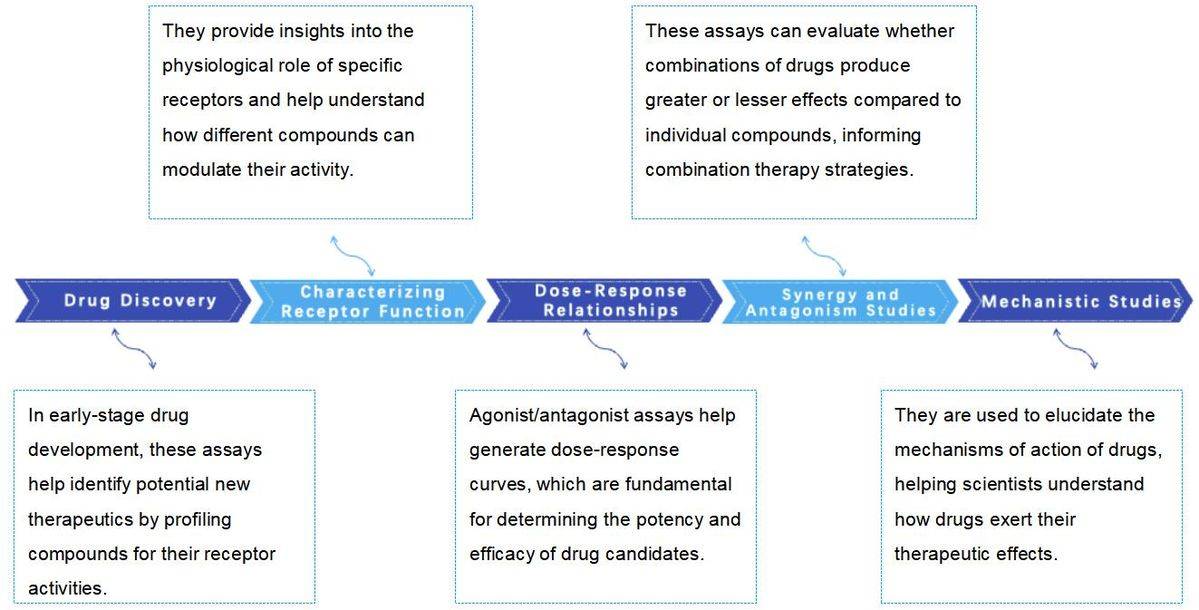
Agonist/antagonist assays are crucial tools in pharmacological research, enabling the identification and optimization of drugs targeting specific receptors. These assays help determine how compounds interact with receptors, identifying whether they act as agonists (activating the receptor) or antagonists (blocking or inhibiting the receptor's activity).
Discover How We Can Help - Request a Consultation Today to detail your specific target needs.
Publication
This review explores A2A adenosine receptor (A2AAR) antagonists for cancer immunotherapy. In the tumor microenvironment (TME), extracellular adenosine accumulates and suppresses anti-tumor immunity by engaging A2AAR on T cells and NK cells. A2AAR antagonists block this pathway, reactivating the immune response. The article surveys the development of these antagonists, highlighting their efficacy in preclinical models and clinical trials, particularly when combined with checkpoint inhibitors like anti-PD-1/PD-L1 antibodies. It also discusses structural insights into drug-receptor binding, positioning A2AAR as a promising target to enhance immuno-oncology treatments.
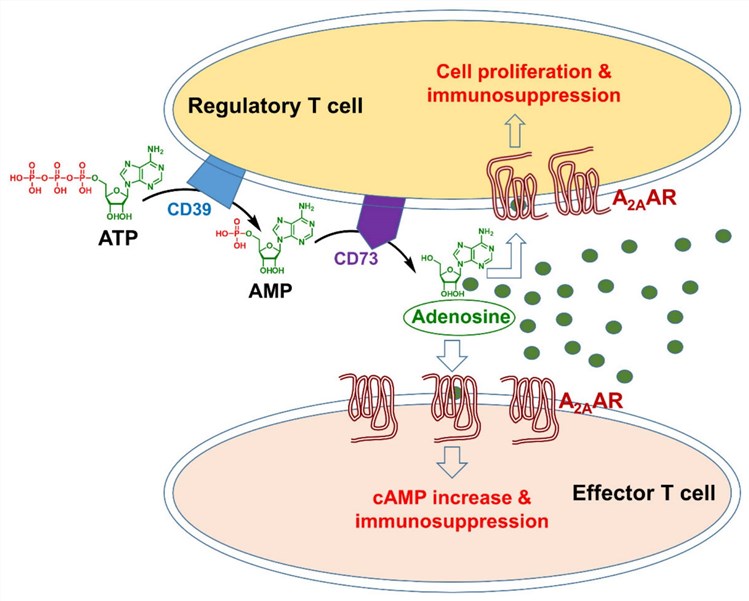 Fig.1 Mechanism of action of A2AAR antagonists in immuno-oncology. 1
Why Choose Creative Biolabs?
Creative Biolabs' competitive edge is built on deep scientific expertise and a commitment to quality, specializing in complex targets overlooked by other contract research organizations (CROs) using cutting-edge, published methodology. We are pioneers in functional selectivity, offering unmatched capabilities in designing assays to quantify biased agonism and allosteric modulation, crucial for discovering superior lead candidates with reduced off-target effects and improved therapeutic indices. Our physiologically relevant models utilize validated cell-based systems and advanced downstream endpoint readouts for challenging targets, ensuring functional classifications directly correlate with true biological effects. We guarantee unrivaled quality and validation, with all assays high-throughput, meticulously validated, and designed for optimal statistical power, thereby reducing development risk.
Experience the Creative Biolabs Advantage - Get a Quote Today to discuss how our specialized expertise can solve your most difficult pharmacological challenges.
FAQs
What is the main advantage of your functional assays over simple competitive binding assays?
Competitive binding assays only tell you if a compound sticks (affinity); functional assays tell you what the compound does (efficacy). This functional data is mandatory for submission and crucial for differentiating a true therapeutic lead from an inactive binder.
Can you help us define whether our compound is an allosteric modulator instead of a traditional antagonist?
Absolutely. We employ sophisticated pharmacological curve-fitting techniques and assay designs to specifically calculate allosteric constants, providing irrefutable evidence of allosteric activity. This advanced analysis is a core competency.
We are targeting an oncology receptor where cell death is the ultimate goal. Can your assays measure this directly?
Yes. For targets like the sigma-2 receptor, where apoptosis is the therapeutic endpoint, we utilize specialized endpoint readouts. This ensures our functional classification is directly linked to the biological effect you seek in cancer cells.
Customer Reviews
-
Classification Precision
Using Creative Biolabs' services in our research has significantly facilitated the classification of our lead antibody candidate. Their inverse agonism assays were robust, confirming our compound was a neutral antagonist, which dramatically simplified our strategy. - Dr. Km*Tr -
High-Quality Metabolic Data
The services in our research have significantly improved the validation of our glucose transporter PAM. Their 2-DG uptake assay was highly sensitive, and the IC50 reproducibility was far superior to what we achieved internally, allowing us to publish with confidence. - Prof. Jn*De
Related Services
To ensure the success of your project beyond functional screening, Creative Biolabs offers a comprehensive suite of complementary services designed to streamline your drug development pipeline:
Quality Control for In Vivo Assays
Creative Biolabs provides in vivo research services for cell and gene therapy, encompassing model development, validation, and assay design, ensuring qualified preclinical testing and robust data interpretation.
Learn More →Biomarker Development Service
Creative Biolabs offers biomarker identification, assay development, and validation services, providing critical information for go/no-go decisions and supporting drug discovery with accurate, sensitive, and high-quality analytical readouts.
Learn More →How to Contact Creative Biolabs
Creative Biolabs provides comprehensive agonist/antagonist assay services that deliver essential pharmacological data—from standard EC50/IC50 to advanced bias factor analysis and direct physiological endpoint measurements. By choosing our specialized platforms and expert team, you empower your drug discovery program with precision, reproducibility, and actionable insights.
Reach out to our expert team for a detailed, no-obligation discussion about your project. We specialize in tailoring solutions to meet your unique pharmacological challenges.
Reference
- Zhang, Jinfeng, et al. "Tumor immunotherapy using A2A adenosine receptor antagonists." Pharmaceuticals 13.9 (2020): 237. Distributed under Open Access license CC BY 4.0, without modification. https://doi.org/10.3390/ph13090237
 Download our brochure
Loading case studies...
Online Inquiry