Dendritic Cell Immunophenotyping Service
Introduction to Dendritic Cell Analysis by Flow Cytometry
Dendritic cells (DCs) are indispensable components of the immune system, serving as primary sentinels that bridge innate and adaptive immunity. Their unique ability to capture, process, and present antigens makes them central players in initiating, modulating, and sustaining immune responses. Given their profound impact on immunity, the precise identification of DC subsets, coupled with the assessment of their functional status, is paramount for advancing our understanding of various diseases, from infections and autoimmune conditions to cancer. Flow cytometry stands as the gold standard for this multifaceted analysis, offering a high-throughput, multiparametric approach to dissect DC heterogeneity and activity. At Creative Biolabs, with over two decades of dedicated experience in advanced cellular analysis, we specialize in comprehensive flow cytometry solutions for detailed DC characterization.
The functional outcomes of DC activity, such as cytokine production and T cell activation, are intimately linked to the specific DC subsets involved and their activation states. Therefore, a robust analytical platform capable of simultaneously assessing surface markers for lineage identification and intracellular markers for functional output is critical.
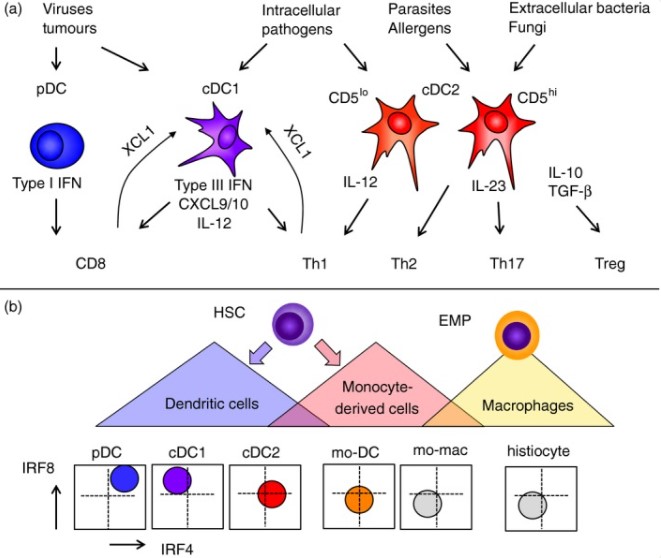 Fig.1 Overview and functional specialization of human dendritic cells (DC).1
Dendritic Cell Immunophenotyping Service at Creative Biolabs
Flow cytometry offers an unparalleled capacity for the "deep immunophenotyping" of dendritic cells, even those constituting less than 0.1% of a heterogeneous sample. This technique enables the simultaneous detection of numerous cell surface and intracellular markers, providing a multi-parametric view of individual cells and their functional attributes. Creative Biolabs' approach integrates advanced marker detection with functional assessment to offer a holistic understanding of DC Immunophenotyping biology.
Multiparametric Cell Marker Detection
The identification of distinct DC subsets relies on precise cell surface marker profiling. While no single marker is exclusive to all DCs, a strategic combination of positive and negative markers allows for their accurate isolation and subtyping. Our methodology rigorously employs a defined gating strategy:
- Lineage Negative (LIN-) Gating: This crucial initial step removes common immune cell types (e.g., T cells, B cells, NK cells, monocytes, granulocytes) from the analysis by excluding cells expressing markers like CD3, CD14, CD19, CD56, and CD66b. This ensures that subsequent analysis is focused solely on the DC compartment, enhancing the purity and specificity of detection.
- HLA-DR+ Gating: Cells expressing HLA-DR (Major Histocompatibility Complex Class II), a universal marker for antigen-presenting cells, are then selected.
- CD14- Gating: To further refine the DC population and exclude monocytes, which also express HLA-DR, cells negative for CD14 are selected.
Following this foundational identification, distinct human DC subsets are precisely delineated using specific phenotypic markers:
- Plasmacytoid DCs (pDCs): Identified by the co-expression of BDCA-2 (CD303) and CD123. These cells are potent producers of Type I interferons, crucial in antiviral responses.
- Myeloid/Conventional DC1 (cDC1): Characterized by the expression of CD141 (BDCA-3), often co-expressed with Clec9A and CD26. cDC1s are specialized in cross-presentation, activating cytotoxic CD8+ T cells to eliminate infected or cancerous cells.
- Myeloid/Conventional DC2 (cDC2): Identified by the expression of CD1c (BDCA-1), and often co-expressing CD11c, CD36, and CD172a/b. cDC2s are pivotal in initiating helper CD4+ T cell responses.
- Axl+ Siglec6+ DCs (AS DCs): An emerging and distinct DC subset, identified by the co-expression of Axl and Siglec6. Further detailed analysis by Creative Biolabs can reveal subsets within AS DCs, such as CD123high CD11c- and CD123low CD11c+.
- Monocyte-Derived DCs (mo-DCs): While distinct from classical DCs in their steady-state development, monocytes can differentiate into DC-like cells, particularly under inflammatory conditions. Our flow cytometry panels are designed to distinguish these populations based on specific marker combinations, providing clarity in diverse biological contexts.
Functional Testing through Intracellular Cytokine Staining
Beyond mere enumeration, flow cytometry allows for the assessment of DC functional capabilities, particularly their cytokine production profiles. Following appropriate stimulation, DCs can be fixed and permeabilized, enabling the staining of intracellular cytokines. This provides a direct measure of the cellular source of specific cytokines, a significant advantage over bulk assays like ELISA that only provide total cytokine levels in a sample.
Key functional readouts for DCs include the production of:
- IL-12: A critical cytokine produced by activated DCs, essential for driving cell-mediated immunity, activating NK cells, and promoting the differentiation of T helper 1 (Th1) cells that produce IFN-gamma.
- IL-23: Another important DC-derived cytokine that contributes to the development and maintenance of Th17 cell responses, vital for protection against extracellular pathogens and implicated in autoimmune diseases.
- TNF-alpha and IL-1: Pro-inflammatory cytokines produced by DCs, contributing to the early stages of immune responses and maintaining DC activation.
By combining phenotypic markers with intracellular cytokine staining, Creative Biolabs provides a comprehensive view of DC functionality at a single-cell level, revealing how specific DC subsets contribute to distinct immune outcomes.
Comprehensive Service Content and Methodologies
Our service is meticulously structured to provide an exhaustive analysis of DC populations, ensuring scientific rigor and reproducible results essential for cutting-edge research and clinical translation.
- Advanced Instrumentation for High-Resolution Analysis
Creative Biolabs leverages state-of-the-art flow cytometry platforms, including high-parameter instruments. Which system enables the effective distinction of highly complex and rare cell populations. For the most challenging analyses, such as those involving exceedingly rare DC subsets that comprise less than 0.1% of a heterogeneous sample, our capabilities extend to specialized instruments. This system is engineered for "deep immunophenotyping," providing clear resolution even for cell types with overlapping marker expression. The minimal spillover observed with its UV laser enhances the accuracy of rare cell detection, ensuring that no critical subset is overlooked.
- Tailored Antibody Panels and Gating Strategies
Recognizing the dynamic nature of immunological research, Creative Biolabs offers the flexibility to customize antibody panels. Our expert team works closely with clients to design or adapt panels to meet specific research objectives, incorporating both established and emerging markers relevant to their studies. This bespoke approach ensures maximum data relevance and specificity. Our rigorous gating strategies are developed based on extensive experience and validated protocols, ensuring accurate and consistent identification of all relevant DC subsets.
- Data Acquisition, Analysis, and Interpretation
Our service encompasses the entire workflow, from sample preparation and precise data acquisition to sophisticated bioinformatics analysis. We provide detailed data interpretation, including quantitative and qualitative reports on DC subset frequencies, activation markers, and functional readouts. Our experts can assist in correlating flow cytometry data with other experimental findings, providing integrated insights into immune mechanisms.
Our Advantages
With over two decades of experience in biological services, Creative Biolabs stands as a leader in providing comprehensive and precise flow cytometry analysis of dendritic cells. Our unwavering commitment to scientific excellence and client success defines our approach.
- Unrivaled Expertise and Experience
- Cutting-Edge Technology and Methodological Superiority
- Customized Solutions and Collaborative Partnership
FAQs
Q1: What types of samples can Creative Biolabs analyze for Dendritic Cell markers and function?
A1: Creative Biolabs is equipped to analyze a wide range of biological samples, including but not limited to peripheral blood mononuclear cells (PBMCs), isolated tissue leukocytes (e.g., from tumors, lymph nodes, spleen), and differentiated cell cultures. Our methods are optimized for various sample types to ensure accurate and reliable results.
Q2: How does Creative Biolabs ensure the accurate detection of rare DC populations?
A2: Accurate detection of rare DC populations is achieved through the use of highly sensitive, high-parameter flow cytometers that offer minimal spectral spillover. We also employ meticulously designed, validated antibody panels and rigorous, multi-step gating strategies to precisely isolate and characterize even the most elusive DC subsets.
Q3: Can Creative Biolabs' service assess the functional activity of DCs?
A3: Yes, our service extends beyond mere phenotypic identification. We can assess DC functional activity, primarily through intracellular cytokine staining. This allows us to measure the production of key cytokines (e.g., IL-12, IL-23, TNF-alpha) by specific DC subsets following appropriate stimulation, providing direct evidence of their functional capabilities.
Q4: Is it possible to customize the flow cytometry panels for specific research needs?
A4: Absolutely. Creative Biolabs offers extensive customization options for flow cytometry panels. We encourage clients to discuss their specific research questions and target markers with our experts, enabling us to design or adapt panels that are perfectly tailored to their experimental objectives.
Contact Us
To explore how Creative Biolabs' DC Immunophenotyping service can accelerate your research, or to discuss your specific project requirements, please contact our dedicated team of biological specialists. We are committed to providing precise, high-quality data and expert insights to support your scientific endeavors.
Reference
- Collin, Matthew, and Venetia Bigley. "Human dendritic cell subsets: an update." Immunology vol. 154,1 (2018): 3-20. DOI: 10.1111/imm.12888. Distributed under Open Access License CC BY 4.0, without modification.
 Download our brochure