Cancer Cell Engineering Service with Nucleolin Specific Aptamer for Cancer Immunotherapy
Cell surface nucleolin (NCL) is a specific target to inhibit tumors by means of using nucleolin-binding aptamers. R&D scientific team at Creative Biolabs is well-equipped and versed in nucleolin-specific aptamer selection and cancer cell engineering for Immunotherapy.
NCL in Cancer Research
A multifunctional protein discovered in 1973, NCL consists of three distinct regions: an acidic N-terminal domain, the middle four RNA-recognition motifs (RBDs), and a C-terminal tail (RGG), rich in glycine, arginine, and phenylalanine residues. Wherein, RBDs and RGG regions are thought to provide specific RNA binding sites. NCL is first described as a nucleolar protein related to ribosome biogenesis. However, it has been currently demonstrated that is present in different cell compartments and adopts diverse functions.
Ubiquitously distributed in the nucleolus, nucleus, and cytoplasm of the cell, NCL plays a role in controlling RNA metabolism and ribosome biogenesis. An altered expression of NCL has been observed in many cancers. For instance, NCL is highly expressed both intracellularly and on the surface of cancer cells, and a 6-fold increase in NCL expression level has been reported in breast and colorectal cancers. Moreover, a high cytoplasmic amount of NCL is associated with poor prognosis in patients with gastric and pancreatic cancer. Accumulated evidence has proposed cell surface NCL as an important target to inhibit both tumor and angiogenic capacities on various angiogenic-mediated diseases.
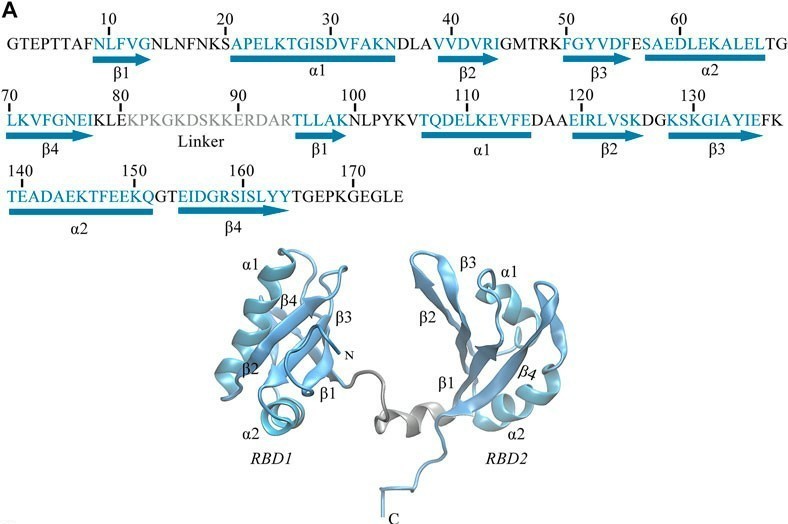 Fig.1 Sequence and 3D structure of human NCL RBD1,2.1
Engineering Cancer Cells with Nucleolin-specific Aptamer Service at Creative Biolabs
Aptamers are oligonucleotide sequences with a length of around 20-80 bases, including ssDNA or RNA molecules. Thanks to their stable three-dimensional folding, aptamers bind to their specific targets with high affinity and specificity. Due to their unlimited targets, thermally stable, smaller size, short production time, cost-effectiveness, and easier modification compared to monoclonal antibodies, aptamers have become ideal recognition candidates for therapeutic agents. Aptamer can be used as a recognition probe to distinguish cancer cells from normal ones by binding to NCL with selective targeting activity, due to the overexpression of NCL on the cancer cell surface. The development of nucleolin-binding aptamers is an efficient strategy to inhibit tumors.
Equipped with a team of seasoned scientists in aptamer development, Creative Biolabs offers fast and reliable support for every phase of aptamer selection and quality control. We select aptamers to NCL from the standard DNA library of oligonucleotides of choice, quality control is performed using agarose gel electrophoresis. To select NCL-specific aptamer with high affinity and high specificity, flow cytometry is employed. In this process, a positive target and a negative target will be used.
Research scientists at Creative Biolabs are experts in Cancer Cell Engineering with NCL-specific aptamer based on their requirements. We provide efficiencies with shorter timelines to accelerate our clients’ special needs in this field. For more detailed information, please feel free to contact us or directly send us an inquiry.
Reference
- Bie, Lihua, et al. "Insights into the binding mode of AS1411 aptamer to nucleolin." Frontiers in molecular biosciences 9 (2022): 1025313. Distributed under Open Access license CC BY 4.0, without modification.
 Download our brochure