Introduction What Can We Offer? Workflow Published Data Why Choose Us? Applications FAQs Featured Services Featured Products
Creative Biolabs offers industry-leading aptamer-cholesterol conjugation services designed to overcome the pharmacokinetic limitations of native oligonucleotides. We help global researchers enhance the circulatory half-life and tissue-specific delivery of their aptamers, transforming promising candidates into robust, bioavailable therapeutic leads.
Contact our team to get an inquiry now!
Introduction of Aptamer-Cholesterol Conjugates
Aptamers are structured oligonucleotide or peptide sequences characterized by high specificity and affinity for diverse targets. Often hailed as "chemical antibodies," they offer distinct advantages over protein-based biologics, including superior thermal stability, low immunogenicity, and the ability to penetrate dense tissues due to their small size (typically 30–80 nucleotides). Furthermore, their chemical synthesis allows for high-precision targeting of non-immunogenic molecules and toxins.
Despite these benefits, the therapeutic utility of native aptamers is frequently hampered by their low molecular weight, which results in rapid renal clearance and a short plasma half-life. To bypass this "renal threshold," aptamers can be conjugated with a wide range of molecules, such as drugs, aptamer-antibody conjugates, aptamer-nanoparticle conjugates, and aptamer-cholesterol conjugates. The aptamer-cholesterol conjugates have emerged as a gold-standard strategy. By tagging a lipophilic cholesterol moiety, typically at the 5'-terminus, the aptamer can "hitchhike" on plasma lipoproteins (LDL and HDL). This association increases the complex's hydrodynamic radius and shields the sequence from nuclease degradation, significantly extending its systemic residence time.
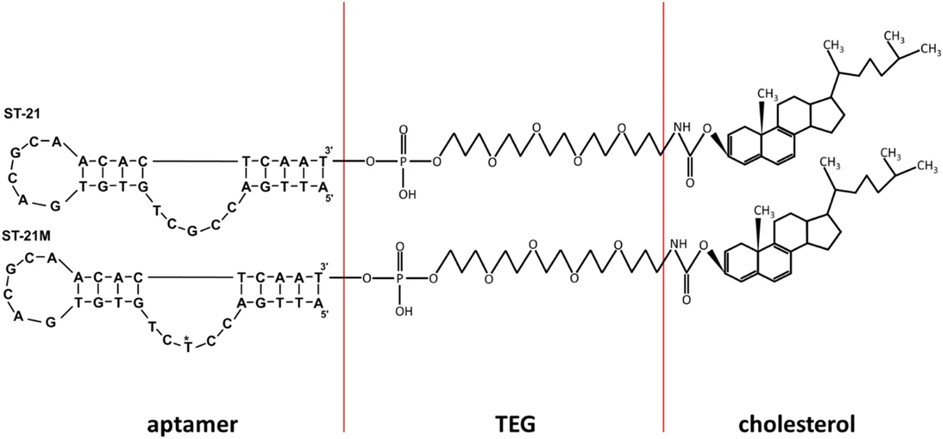 Fig. 1 Structures of the aptamer-cholesterol conjugate.1
What Can We Offer?
Creative Biolabs provides a specialized end-to-end platform for the design, synthesis, and characterization of cholesterol-modified aptamers. Our services are tailored to bridge the gap between initial selection and in vivo application, ensuring maximum bioactivity and stability.
Our Core Capabilities:
Precision Chemical Synthesis
We employ high-efficiency phosphoramidite chemistry to incorporate cholesterol at specific terminal positions. While 5'-end tagging is standard for minimizing interference with target binding, we also provide 3'-modifications and internal labeling for specific structural requirements.
Custom Linker Engineering
We recognize that the spacer between the aptamer and the cholesterol is vital. We offer a library of linkers, including Triethylene Glycol (TEG) and various Polyethylene Glycol (PEG) lengths, to optimize the distance and flexibility, preventing steric hindrance and ensuring the aptamer maintains its native 3D fold.
Advanced Backbone Modifications
To further enhance stability, we can combine cholesterol conjugation with internal modifications such as 2'-Fluoro, 2'-O-Methyl, or phosphorothioate linkages, creating a multi-layered defense against metabolic degradation.
High-Resolution Purification
Hydrophobic cholesterol tags make purification challenging. We utilize optimized Reverse-Phase HPLC (RP-HPLC) and Ion-Exchange chromatography to achieve >95% purity, ensuring that unconjugated aptamers and truncated sequences are strictly excluded.
Rigorous Analytical Characterization
Every conjugate undergoes comprehensive validation. We use Electrospray Ionization Mass Spectrometry (ESI-MS) to confirm molecular weight and UV-Vis spectroscopy for precise quantification, ensuring the final product meets your exact specifications for concentration and identity.
Workflow
01
Consultation & Feasibility: Clients provide the aptamer sequence and target data. We perform a structural assessment to recommend the best conjugation site and linker type.
02
Aptamer Synthesis: We synthesize the oligonucleotide sequence using state-of-the-art solid-phase synthesis, incorporating the required backbone modifications.
03
Cholesterol Conjugation: The cholesterol moiety is attached via a specialized linker during or post-synthesis, depending on the complexity.
04
Purification & QC: The crude product is purified via RP-HPLC and characterized by Mass Spectrometry and analytical HPLC.
05
Delivery: We ship the lyophilized conjugate along with a detailed Certificate of Analysis (CoA) and HPLC/MS traces.
Published Data
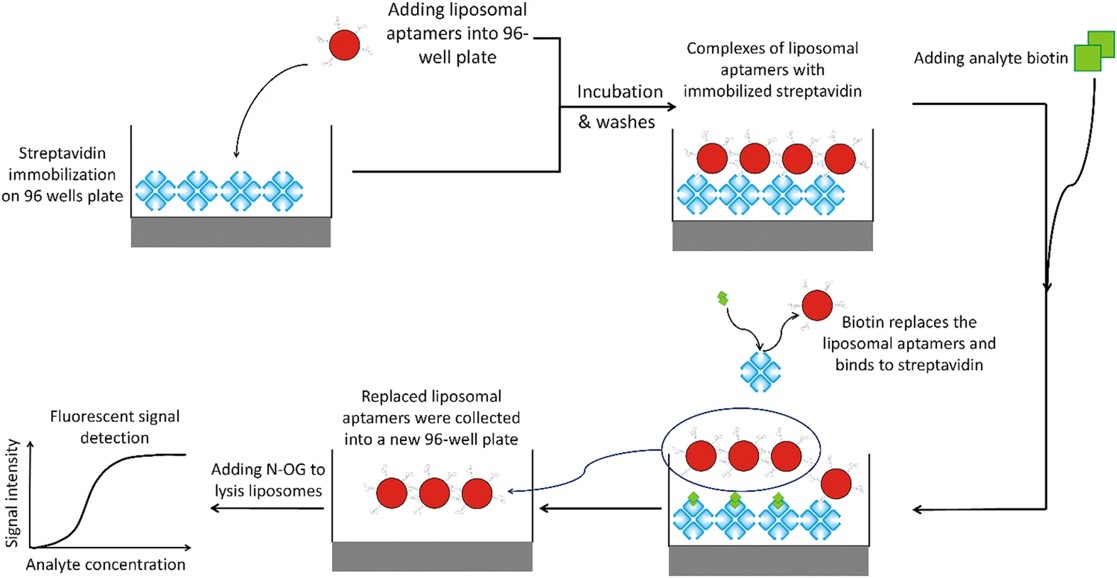 Fig.2 The cholesterol-modified liposomal aptamer for the detection of biotin.1
An authentic verification of the utility of cholesterol conjugation is presented in the study. In this research, a 5'-cholesterol-modified aptamer was utilized to functionalize liposomes, creating a highly sensitive biosensing platform. The project results demonstrated that the cholesterol moiety effectively facilitated the spontaneous insertion and stable anchoring of the aptamer into the liposomal lipid bilayer. This "replaceable" aptamer system allowed for the detection of target molecules with extraordinary sensitivity. The researchers observed that the cholesterol-conjugated constructs remained functional even under varying environmental conditions, maintaining high target accessibility and structural integrity. This study highlights the versatility of cholesterol conjugation, proving it to be a premier tool not only for pharmacokinetic extension but also for the development of advanced liposomal diagnostic agents and nanocarriers.
Why Choose Us?
-
Fully Customized: No matter the aptamer and cholesterol types, or partial/one-stop service is all based on your specific needs.
-
High Reproducibility: Our standardized synthesis protocols and rigorous QC testing ensure that every batch of conjugate yields consistent, reliable data for your in vivo studies.
-
Extensive Technical Experience: We have successfully executed numerous complex aptamer modification projects, accumulating deep expertise in handling the unique solubility challenges of lipophilic oligonucleotides.
-
Proprietary Linker Technology: Benefit from our specialized library of chemical spacers designed to maintain maximum binding affinity while ensuring stable cholesterol anchoring.
Applications
-
Targeted Delivery of Liver Antivirals: Enhancing the transport of therapeutic aptamers to hepatocytes for the treatment of Hepatitis B or C by utilizing the lipoprotein receptor pathway to facilitate receptor-mediated endocytosis.
-
Extended Circulatory Half-Life for Systemic Therapy: Prolonging the residence time of aptamers targeting circulating proteins, such as Thrombin or VEGF, to minimize dosing frequency while maintaining stable and consistent therapeutic concentrations within the plasma.
-
Delivery Vehicles for Oligonucleotide Payloads: Employing cholesterol-modified aptamers as high-affinity targeting ligands to deliver secondary payloads, including siRNAs or ASOs, specifically to malignant tissues or cells characterized by a high density of lipoprotein receptors.
-
Precision Molecular Imaging and Diagnostics: Developing "hitchhiking" molecular probes that facilitate the high-resolution visualization of lipoprotein metabolism or the non-invasive characterization of cholesterol-rich atherosclerotic plaques through prolonged systemic circulation and specific tissue accumulation.
FAQs
Q: How does cholesterol conjugation affect the binding affinity (Kd) of my aptamer?
A: While a lipophilic tail can theoretically cause steric hindrance, our use of optimized PEG or TEG linkers creates sufficient distance between the cholesterol and the binding pocket. Most clients report that their conjugate maintains a Kd within the same nanomolar range as the parent aptamer.
Q: Is it better to attach cholesterol to the 5' or 3' end?
A: The 5'-end is the most common site because it is more accessible during standard phosphoramidite synthesis. However, if your aptamer's 5'-end is involved in target interaction, we can utilize 3'-cholesterol-CPG supports to conjugate at the 3'-terminus, which also provides additional protection against 3'-exonucleases.
Q: Can you handle aptamers with complex internal modifications like 2'-OMe or 2'-F?
A: Absolutely. Our synthesis platform is fully compatible with a wide array of sugar and backbone modifications. Combining these with cholesterol conjugation is a recommended strategy to achieve maximal in vivo stability and potency.
Q: Will the cholesterol conjugate be soluble in standard aqueous buffers like PBS?
A: Cholesterol is highly hydrophobic, but the highly charged oligonucleotide backbone generally maintains the solubility of the conjugate in aqueous media. For very short sequences or high concentrations, we may recommend specific buffer additives to prevent aggregation.
Q: Can these conjugates cross the blood-brain barrier (BBB)?
A: Standard cholesterol-aptamer conjugates are generally not efficient at crossing the intact BBB. Their primary strength lies in systemic stability and hepatic uptake via lipoprotein receptors. For CNS targeting, different ligand strategies may be required.
Q: Do I need to provide the physical aptamer, or do you synthesize it from a sequence?
A: Most clients prefer us to synthesize the entire molecule de novo to ensure the highest quality and consistency. However, if you have a unique modified aptamer, we can discuss "click chemistry" or post-synthetic conjugation options.
Q: Can you assist with the design of the PEG linker length?
A: Yes, we provide computational modeling of the aptamer-cholesterol complex to predict potential folding interference and recommend an ideal linker length (e.g., PEG6, PEG12, or PEG24) based on your sequence.
Creative Biolabs combines decades of scientific depth with cutting-edge conjugation chemistry to solve your most pressing pharmacokinetic challenges. We invite you to leverage our expertise in aptamer-cholesterol conjugates to accelerate your therapeutic pipeline.
Contact our scientific team today for a detailed consultation.
Featured Services
Featured Products
Reference
-
Sung, Tzu-Cheng, et al. "A replaceable liposomal aptamer for the ultrasensitive and rapid detection of biotin." Scientific Reports 6.1 (2016): 21369. Distributed under Open Access license CC BY 4.0, without modification. https://doi.org/10.1038/srep21369
For Research Use Only.
Related Sections: