Introduction What Can We Offer? Workflow Published Data Why Choose Us? Applications FAQs Featured Services Featured Products
Creative Biolabs provides a premier, end-to-end aptamer-nanoparticle conjugate development service. We assist global biopharmaceutical clients in overcoming the limitations of traditional drug delivery, such as systemic toxicity and poor bioavailability, by engineering high-precision "smart" nanocarriers tailored for complex therapeutic indications.
Contact our team to get an inquiry now!
Introduction of Aptamer-Nanoparticle Conjugates
Aptamer-nanoparticle conjugates represent a revolutionary class of hybrid materials that combine the programmable recognition of nucleic acid aptamers with the multifunctional payload capacity of nanoparticles. Often referred to as "chemical antibodies," aptamers are single-stranded DNA or RNA sequences that fold into intricate 3D architectures to bind targets with high affinity. When integrated onto the surface of a nanoparticle, be it a liposome, gold nanoparticle, or polymeric micelle, they act as a molecular GPS, guiding the therapeutic cargo directly to specific cellular markers.
The synergy within these conjugates is profound. While the nanoparticle core protects the cargo from enzymatic degradation and enables high drug loading, the aptamer corona ensures active targeting, bypassing healthy tissues to minimize off-target effects. This dual-functionality is particularly effective in oncology, where the Enhanced Permeability and Retention (EPR) effect is further amplified by the specific ligand-receptor interactions of the aptamer, leading to superior therapeutic indices and enhanced cellular internalization.
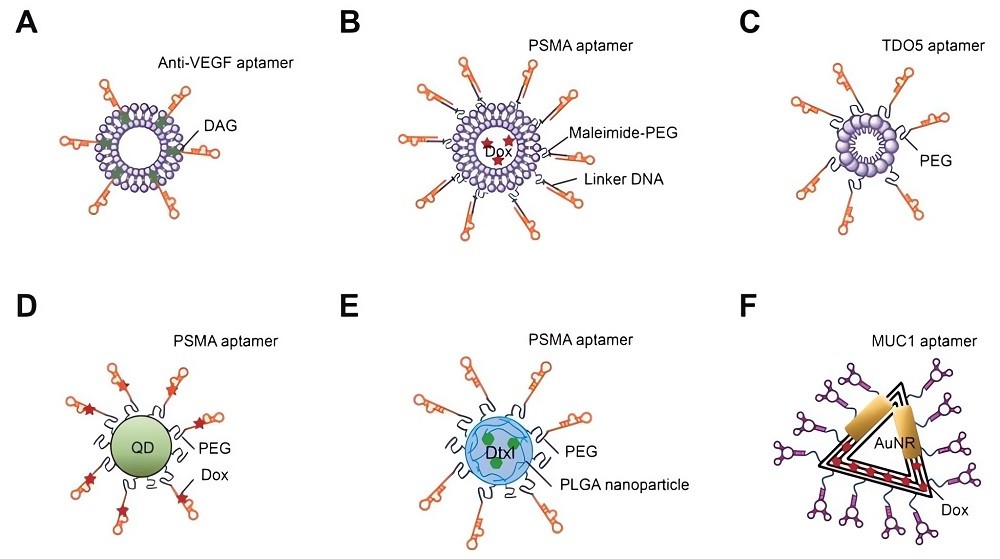 Fig.1 Schematics of aptamer nano-vehicle conjugates.1,3
What Can We Offer?
Our comprehensive service covers everything from de novo SELEX screening and aptamer modification to the precise chemical conjugation of ligands onto diverse nanoparticle scaffolds, followed by rigorous in vitro and in vivo functional characterization to ensure research readiness.
Custom Aptamer Selection & Engineering
We utilize advanced Cell-SELEX and Capture-SELEX platforms to identify aptamers specifically optimized for the nanoparticle interface. Our engineering team performs post-selection truncations and chemical modifications (e.g., 2'-F, 2'-OMe) to guarantee maximum nuclease resistance and binding stability.
Diverse Nanoparticle Functionalization
Our expertise spans a wide array of scaffolds, including Gold (AuNPs) for imaging, Magnetic (SPIONs) for MRI contrast, and Polymeric (PLGA/PEG) or Liposomal NPs for high-capacity drug delivery. We ensure the nanoparticle core is perfectly suited for your specific payload, whether it be small molecules, siRNA, or proteins.
Precision Conjugation Chemistry
We employ site-specific bioconjugation techniques to control ligand density and orientation. By using optimized thiol-gold bonding, EDC/NHS coupling, or click chemistry with proprietary DNA spacers, we prevent steric hindrance and maintain the aptamer's functional conformation.
Comprehensive Analytical Characterization
Every aptamer-nanoparticle conjugate batch undergoes stringent quality control. We utilize Dynamic Light Scattering (DLS) for size analysis, Zeta Potential for stability testing, and Surface Plasmon Resonance (SPR) or Microscale Thermophoresis (MST) to verify that the binding affinity (KD) remains optimized after conjugation.
Workflow
01
Technical Consultation: Clients provide the target profile, desired nanoparticle type, and payload details.
02
Aptamer Identification & Optimization: We perform SELEX (if a binder isn't provided) and introduce chemical modifications to ensure biological longevity.
03
Nanoparticle Synthesis & Loading: The core nanocarrier is synthesized and encapsulated with the client's therapeutic cargo or imaging agent.
04
Surface Engineering & Conjugation: We apply optimized linker chemistry to graft the aptamers onto the NP surface at calculated densities.
05
Purification & Validation: Unbound ligands are removed via ultracentrifugation or dialysis. We then conduct in vitro binding assays and release-profile studies.
06
Final Delivery: You receive the purified conjugates, a detailed COA (Certificate of Analysis), and a comprehensive experimental report.
Published Data
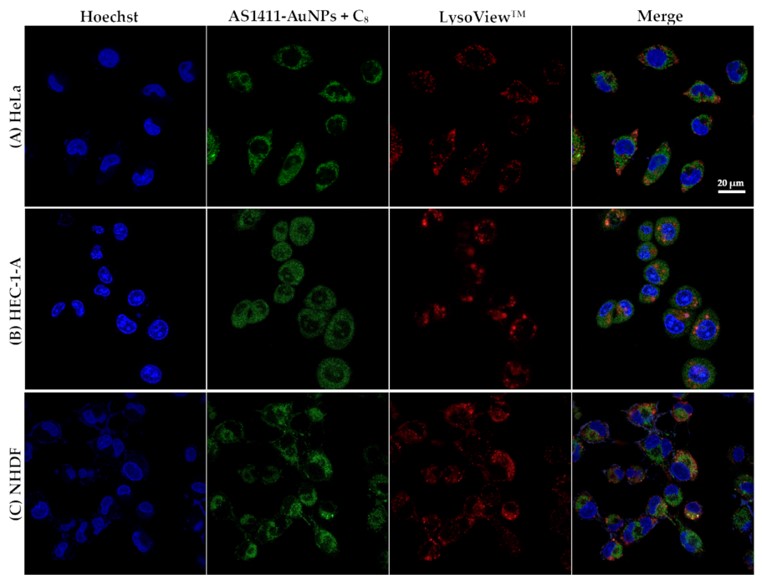 Fig.2 Improved drug delivery in cells incubated with Aptamer-gold nanoparticles with C8.2,3
In a landmark study, researchers developed an aptamer-nanoparticle conjugate for the treatment of gynecological carcinomas. The project involved the supramolecular conjugation of Aptamer-AuNPs with the potent anticancer ligand C8 and a commercially available drug. The results demonstrated that the conjugate significantly improved the selectivity and anticancer efficacy in cervical cancer cells compared to the free drugs. The nanoparticles exhibited favorable drug release properties and were successfully internalized by target cells, as confirmed by confocal microscopy. This case underscores the ability of aptamer-nanoparticle conjugates to transform non-selective compounds into targeted, high-potency therapeutics.
Why Choose Us?
-
Proprietary Spacer Technology: We use specialized DNA/PEG spacers to ensure aptamers maintain 3D flexibility on the NP surface.
-
Scalable Chemical Synthesis: Unlike biological antibodies, our synthetic conjugates offer zero batch-to-batch variation and are easily scalable.
-
Ultra-Low Immunogenicity: Our nucleic acid-based targeting minimizes the risk of Adverse Immune Responses (AIRs) compared to protein ligands.
-
High Ligand Density Control: We precisely tune the number of aptamers per nanoparticle to maximize target avidity.
-
Theranostic Versatility: We can integrate imaging agents and therapeutics into a single, multifunctional conjugate.
-
Nuclease-Resistant Designs: Our advanced nucleotide modifications extend the serum half-life of your conjugates from minutes to days.
Applications
-
Precision Oncology & Targeted Chemotherapy: Aptamer-nanoparticle conjugates solve the "off-target" toxicity problem by ensuring that cytotoxic payloads are only released upon cellular internalization via aptamer-mediated endocytosis. By targeting biomarkers like PSMA, HER2, or MUC1, aptamer-nanoparticle conjugates achieve a higher therapeutic index compared to systemic chemotherapy.
-
Advanced Molecular Imaging & Theranostics: By functionalizing gold nanoparticles or quantum dots with specific aptamers, high-contrast agents for MRI, CT, and fluorescence imaging were created. These "theranostic" platforms allow for the simultaneous detection of micro-metastases and the delivery of therapy, enabling real-time monitoring of treatment efficacy.
-
Point-of-Care (POC) Biosensing & Diagnostics: In diagnostic applications, aptamer-nanoparticle conjugates are utilized in lateral flow assays and electrochemical sensors. The high surface-to-volume ratio of the nanoparticles provides signal amplification, while the aptamers offer the specificity required to detect ultra-low concentrations of pathogens, toxins, or circulating tumor cells (CTCs) in complex biological fluids.
-
Targeted Gene & RNA Interference (RNAi): Therapy aptamer-nanoparticle conjugates provide a protective "shield" for sensitive genetic cargoes like siRNA. The aptamer corona ensures these payloads are delivered specifically to the cytoplasm of target cells, preventing enzymatic degradation in the bloodstream and increasing the efficiency of gene silencing.
FAQs
Q: How do you prevent the nanoparticles from being cleared by the immune system?
A: We utilize PEGylation (surface coating with Polyethylene Glycol) alongside our aptamer targeting. This creates a "stealth" layer that reduces opsonization and prevents premature clearance by the Reticuloendothelial System (RES), significantly extending circulation time.
Q: Can aptamers survive the harsh conditions often used in nanoparticle synthesis?
A: Yes, this is a major advantage. Unlike antibodies that denature easily, aptamers are incredibly robust. They can undergo reversible denaturation and withstand the organic solvents or temperature shifts often required for polymeric or metallic nanoparticle formulation.
Q: Do you offer "off-the-shelf" aptamers for conjugation?
A: We maintain a catalog of validated aptamers for common targets like PSMA, Nucleolin, and EpCAM. However, most clients prefer our custom SELEX service to ensure the aptamer is perfectly tuned to their specific nanoparticle scaffold.
Q: How do you ensure the aptamer doesn't lose its binding affinity after being attached to the nanoparticle?
A: We perform post-conjugation SPR analysis. If affinity drops, we implement our proprietary "extended spacer" designs to move the binding pocket further from the NP surface, reducing steric interference from the carrier.
Q: Can you conjugate more than one type of aptamer to a single nanoparticle?
A: Absolutely. We can develop "dual-targeted" or bispecific nanoparticles that bind two different receptors, which is a powerful strategy for overcoming tumor heterogeneity and preventing treatment resistance.
Q: What initial materials do I need to provide for a project?
A: Ideally, we require information on your target molecule/cell line and your payload. If you have a preferred nanoparticle type, we can work with that; otherwise, our experts will recommend the optimal scaffold for your goals.
With years of expertise in nucleic acid chemistry and nanotechnology, Creative Biolabs is your trusted partner for creating the next generation of targeted therapies. Contact our scientific team today to transform your therapeutic payloads into precision-guided nanomedicines.
Featured Services
Featured Products
References
-
Kim, Minhee, et al. "Applications of cancer cell-specific aptamers in targeted delivery of anticancer therapeutic agents." Molecules 23.4 (2018): 830. https://doi.org/10.3390/molecules23040830
-
Lopes-Nunes, Jessica, et al. "Aptamer-functionalized gold nanoparticles for drug delivery to gynecological carcinoma cells." Cancers 13.16 (2021): 4038. https://doi.org/10.3390/cancers13164038
-
Distributed under Open Access license CC BY 4.0, without modification.
For Research Use Only.
Related Sections: