Creative Biolabs maps tumor immunopeptides to identify physiologically relevant MHC ligands. This comprehensive analysis provides accurate, sensitive data for peptide-specific immunotherapy and tumor immunopeptide discovery.
Learn More →T Cell based CFSE Assay Service
Background What We Can Offer Workflow Why Choose Us FAQs Customer Review Related Services Contact Us
The findings that each cancer contains many mutant genes do not present in normal tissues have prompted considerable interest in the cancer epitope landscape. Creative Biolabs is dedicated to offering cancer epitope identification, assay development, and validation services to our clients with the most potential candidates to accelerate their drug development.
CFSE-based Proliferation Assay
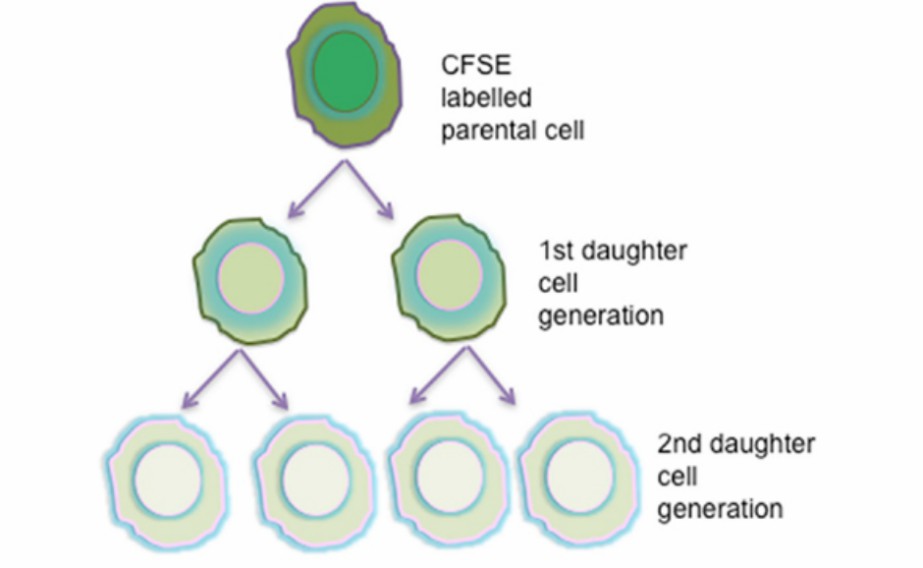 Fig.1 CFSE proliferation assay.1,3
Cancer antigens are the consequence of somatic mutations in individual tumors and are not present in normal tissues. The lack of in-depth study of the peptide epitope information of the individual tumors impairs the advance in tumor immunity study.
The specific response of T cells to target tumor cells can be applied to analyzing cancer epitopes. The carboxyfluorescein succinimidyl ester (CFSE) based method is a non-radioactive way to measure cell expansion. When penetrating living cells, it undergoes esterase cleavage and conjugates with intracellular protein covalently, generating fluorescently labeled cells. As cell proliferation, the CFSE is equally divided into progeny cells.
T Cell-based CSFE Assay Services at Creative Biolabs
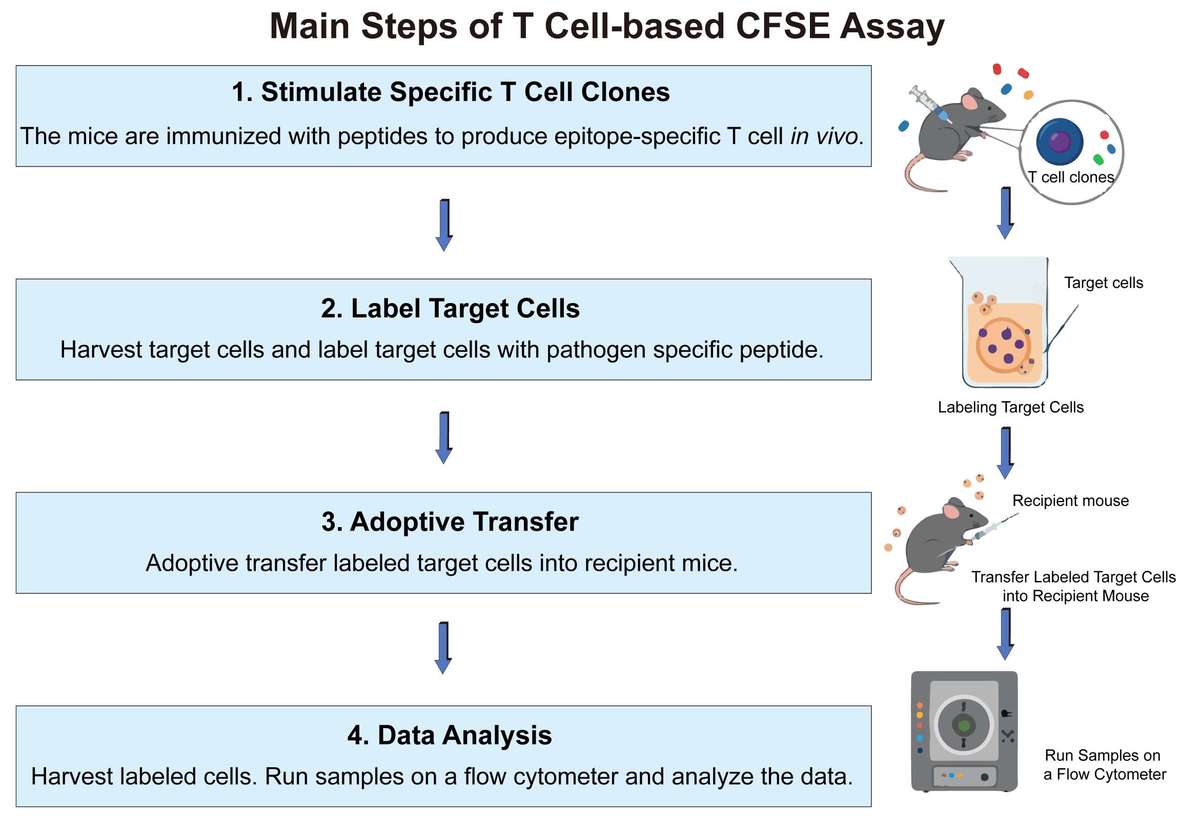
The CFSE-based fluorescent dye assay has widely been used to study the cytotoxicity of cytotoxic T lymphocytes in vivo. Based on this experiment, Creative Biolabs applies it to T cell-relevant cancer epitope analysis and develops an easy and quick assay. The assay is carried out based on the cytotoxicity of specific T cells on target cells and following the reduction of target cell signals.
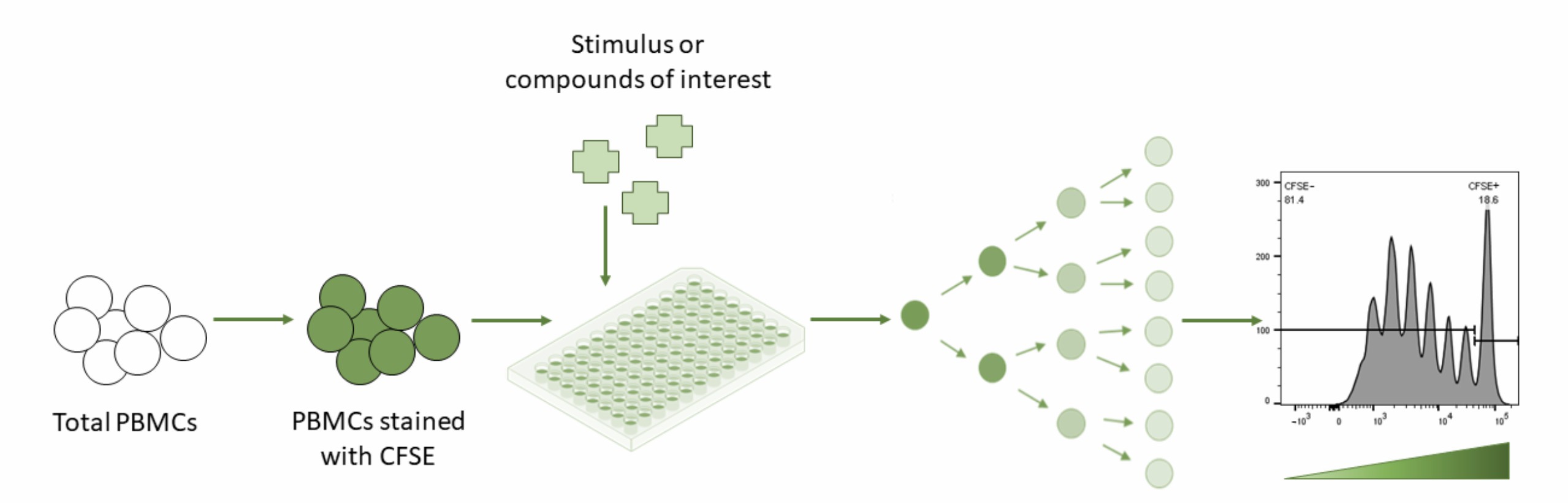 Fig.2 Workflow of T Cell-based CSFE Assay for cancer epitope analysis.2,3
Description of the Main Steps
Our T cell-based CFSE assay is performed through a series of meticulous steps to ensure reliable and reproducible data, which can be visualized as a clear workflow.
Why Choose Us?
At Creative Biolabs, we've mastered the T cell-based CFSE assay, elevating it from a simple lab technique into a powerful, high-throughput tool! Count on our deep experience to generate the high-quality, reproducible data you need to make real progress on your projects. Our commitment to excellence means you benefit from:
Unrivaled Sensitivity and Precision
Thanks to our optimized protocols and state-of-the-art flow cytometry, we achieve exceptional resolution, capturing even the tiniest shifts in T cell proliferation.
True Biological Relevance (Without Toxicity)
Unlike older radioactive methods, our CFSE dye is gentle on cells, ensuring your results genuinely represent biological activity.

Effortless Integration for Comprehensive Insights
Our CFSE assay plays well with others! Easily combine it with multi-staining to simultaneously analyze T cell phenotypes, cytokine production, and activation markers, giving you a full picture of the immune response.
Tailored Solutions for Every Scale
Big or small, we customize! From in-depth pilot studies to massive high-throughput screening campaigns, we design assays to perfectly match your specific research objectives.
Discover how we can help your project succeed. Request a consultation today to begin the conversation about your specific goals.
FAQs
Q1: How does the T cell-based CFSE assay compare to other proliferation assays?
A1: Creative Biolabs' CFSE assay is non-toxic and provides a detailed, generation-by-generation analysis of cell division. This allows you to differentiate between cells that have divided and those that have not, offering a much higher level of resolution.
Q2: Can the T cell-based CFSE assay be combined with other staining methods?
A2: Absolutely. The CFSE dye's unique fluorescence properties allow it to be easily combined with a wide range of fluorescently labeled antibodies. This multi-staining capability enables us to simultaneously analyze T cell proliferation, phenotype, and activation markers.
Q3: What types of samples can you analyze with this assay?
A3: We are equipped to handle a variety of sample types, including peripheral blood mononuclear cells (PBMCs), purified T cell subsets, and lymphocytes isolated from tissues.
Customer Review
-
Rapid CAR-T Potency Evaluation
The T cell-based CFSE assay facilitated the rapid evaluation of our CAR-T cell construct's potency. The comprehensive data report was easy to interpret and directly helped us select our lead candidate. – Ey*Won -
Reliable In Vivo Tracking
Creative Biolabs' service was crucial for our in vivo tracking studies. The stability of the CFSE label allowed us to accurately monitor cell kinetics in a mouse model, and the data were consistent and reproducible across all our replicates. – Ly*Rez
Related Services
To achieve a comprehensive understanding of your project, the T cell-based CFSE assay can be seamlessly integrated with our other complementary services at Creative Biolabs. These assays provide additional layers of data, allowing you to build a holistic profile of your therapeutic agent's immunomodulatory effects.
MHC-Ligandome Mapping
Neoepitope-specific T Cell Isolation Service
Creative Biolabs provides neoepitope-specific T cell isolation service, delivering highly purified, functional, and ready-to-use neoantigen-specific T cells. This enables precise cancer immunotherapy research while also offering comprehensive phenotypic and functional characterization.
Learn More →Contact Us
Creative Biolabs is your trusted partner for high-quality, high-resolution T cell functional analysis. Our T cell-based CFSE assay is a testament to our commitment to providing innovative and reliable solutions that accelerate the development of life-changing immunotherapies. By leveraging our expertise and advanced platforms, you can gain a deeper understanding of T cell function and move your research forward with confidence.
To discuss your project in detail or to receive a customized quote, please reach out to our team of experts. We are ready to assist you in designing the perfect study to illuminate your path forward.
References
- Lokhande, Megha U et al. "Methodologies for the Analysis of HCV-Specific CD4(+) T Cells." Frontiers in immunology vol. 6 57. 25 Feb. 2015, doi:10.3389/fimmu.2015.00057
- Ganesan, Nirosha et al. "Methods to Assess Proliferation of Stimulated Human Lymphocytes In Vitro: A Narrative Review." Cells vol. 12,3 386. 20 Jan. 2023, doi:10.3390/cells12030386
- Distributed under Open Access license CC BY 4.0, without modification.
 Download our brochure
Loading case studies...
Online Inquiry