Oncolytic Herpes Simplex Virus Engineering Services

OV Engineering Services · oHSV Platform

Oncolytic Herpes Simplex Virus Engineering Services

Creative Biolabs provides oncolytic herpes simplex virus (oHSV) engineering services for researchers developing tumor-selective, payload-armed, retargeted, or safety-enhanced HSV candidates with practical support from design review to rescue, characterization, and validation planning.

Herpes simplex virus is one of the most established oncolytic virus platforms because its large double-stranded DNA genome supports multi-gene engineering, its biology is well characterized, and its lytic replication can be reshaped through attenuation, transcriptional control, entry retargeting, and payload insertion.

Creative Biolabs designs oHSV engineering projects around the specific development question: how to improve tumor-selective replication, reduce normal-tissue risk, encode a therapeutic or imaging payload, alter entry behavior, or generate a candidate that is ready for in vitro validation, combination testing, or in vivo study planning.

Attenuation and SelectivityReview deletion, promoter, detargeting, and replication-control designs to balance safety and viral potency.

Payload CapacityUse oHSV genome capacity for cytokines, antibodies, enzymes, reporters, safety switches, or combination-oriented payloads.

Entry and Tropism ControlAssess glycoprotein retargeting, receptor usage, tumor entry, and normal-cell comparator strategies.
Service Scope

From oHSV design review to engineered candidate characterization

The service can be used before construction to finalize an oHSV architecture or after prototype generation to troubleshoot replication, payload expression, tropism, stability, and validation readiness.

oHSV backbone review
Module 01

Backbone and Genome Architecture Review

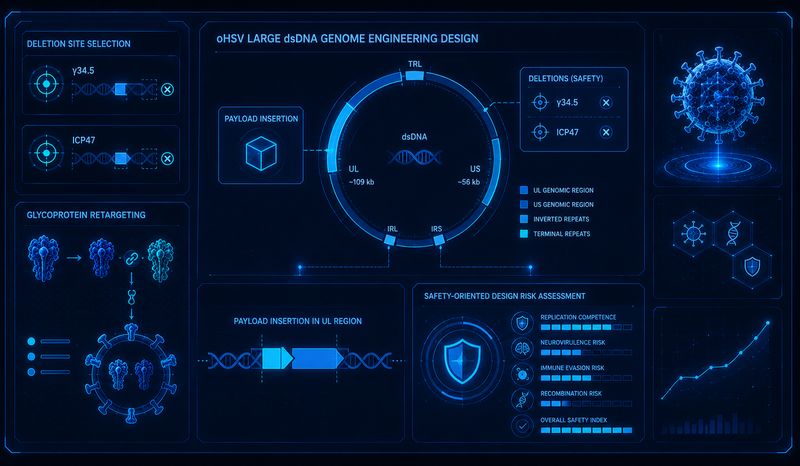
Assess HSV-1 or HSV-derived backbone, genome map, insertion locus, deletion history, packaging limits, rescue system, and intended development use.

Typical output

Backbone fit assessment and recommended engineering strategy.

oHSV attenuation design
Module 02

Attenuation and Replication-Control Design

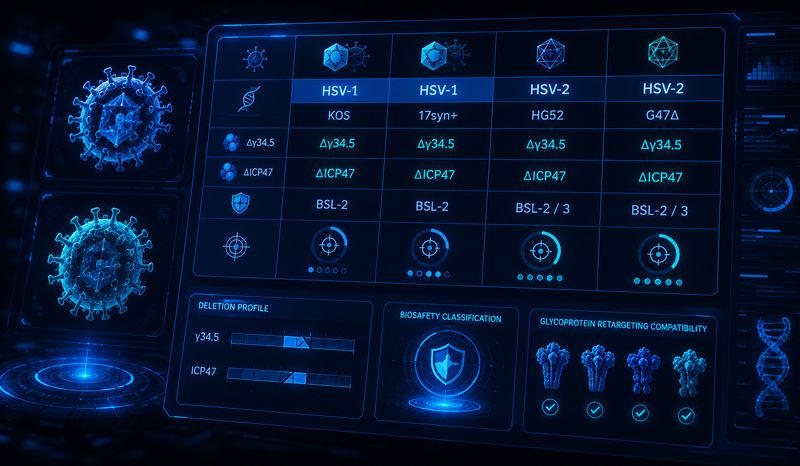
Review ICP34.5-, ICP47-, UL39-, TK-, US11-, promoter-controlled, or miRNA-compatible designs to tune tumor selectivity and safety margin.

Typical output

Attenuation plan with replication and safety readout recommendations.

oHSV payload design
Module 03

Payload and Reporter Insertion Strategy

Plan cytokine, chemokine, antibody, checkpoint, bispecific, enzyme, suicide gene, imaging, or reporter cassettes with expression timing and burden considered.

Typical output

Payload-ready cassette architecture and construct map notes.

oHSV glycoprotein retargeting
Module 04

Glycoprotein Retargeting and Entry Engineering

Evaluate gD, gB, gH/gL, ligand fusion, antibody-fragment, or receptor-restriction concepts for tumor entry and normal-cell detargeting.

Typical output

Entry engineering plan with receptor and infectivity assay design.

oHSV rescue and amplification
Module 05

Rescue, Amplification, and Stock Characterization

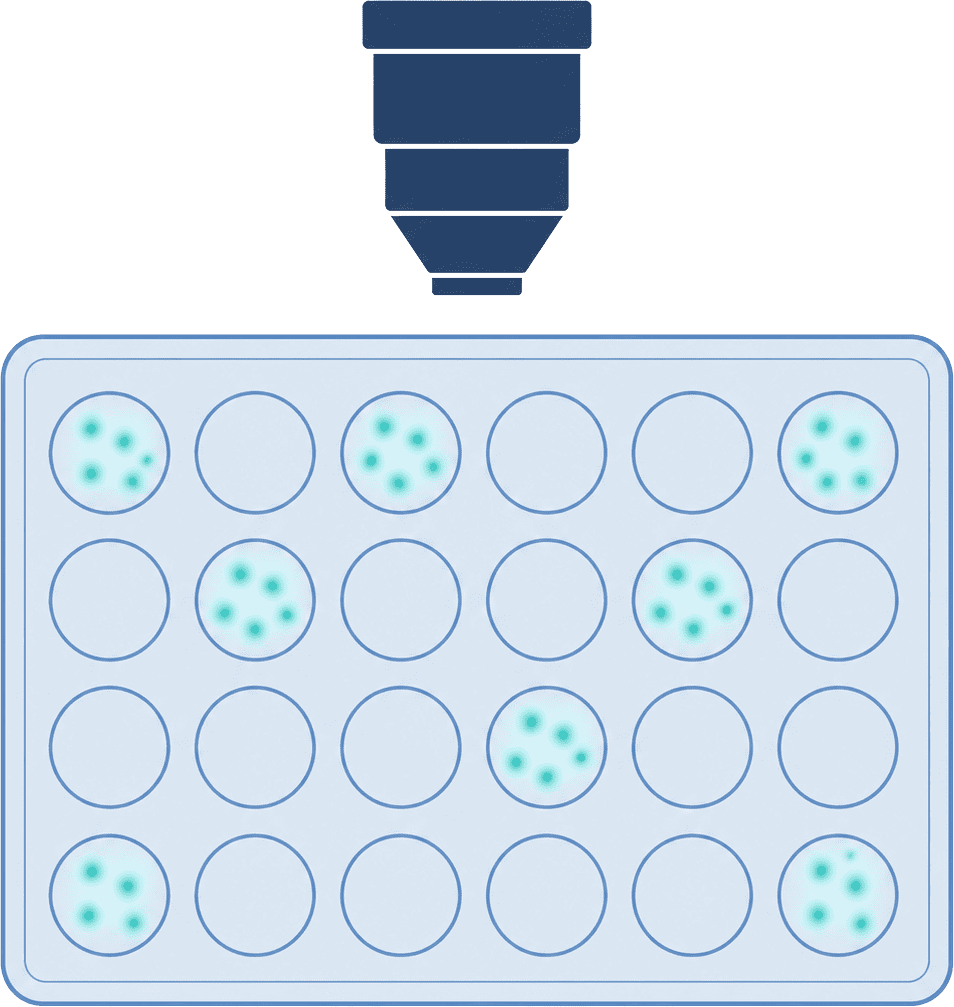
Support recombinant oHSV rescue feasibility, plaque isolation strategy, amplification, infectious titer, genome identity, and initial stock characterization.

Typical output

Prototype oHSV stock and quality characterization package.

oHSV functional validation
Module 06

Replication, Payload, and Potency Testing

Evaluate infection, replication kinetics, payload expression, tumor-cell killing, immune readouts, normal-cell comparator response, and selected stability indicators.

Typical output

Decision-ready validation dataset and next-step recommendations.

Typical Starting Materials
  • HSV backbone, strain, genome map, BAC, plasmid system, or existing recombinant oHSV candidate.
  • Target deletion, insertion locus, promoter, payload, reporter, safety switch, or retargeting concept.
  • Target tumor type, receptor expression information, cell models, and normal-cell comparator preferences.
  • Available viral stocks, rescue data, sequencing data, plaque phenotype, titer, or previous infectivity results.
  • Preferred downstream milestone such as broader in vitro validation, combination testing, or in vivo preclinical planning.
Technical Platforms

Platform-aware assays for oHSV design, rescue, entry, and function

Creative Biolabs builds the technical package according to the oHSV architecture and development decision point, connecting molecular design with virology, tropism, payload expression, and safety-oriented validation.

Molecular design
Design

Genome and Cassette Design

Deletion/insertion locus review, promoter selection, polycistronic cassette planning, payload orientation, sequence verification, and rescue feasibility review.

Recombinant HSV rescue
Rescue

Recombinant oHSV Generation Support

BAC-based or homologous recombination-compatible planning, rescue monitoring, plaque purification strategy, amplification, and stock preparation.

Virology characterization
Virology

Identity, Titer, and Replication Readouts

Infectious titer, qPCR-based genome copy analysis, replication kinetics, plaque phenotype, sequencing or locus confirmation, and selected passage stability checks.

Entry retargeting assays
Entry

Receptor and Tropism Testing

Receptor-positive and receptor-negative cell panels, competition or blocking assays, glycoprotein design comparison, and infectivity selectivity profiling.

Payload expression
Payload

Expression and Localization Verification

Reporter readouts, RT-qPCR, ELISA, western blot, flow cytometry, immunofluorescence, secretion analysis, and time-course expression profiling.

Functional testing
Function

Tumor Killing and Immune Readouts

2D tumor panels, spheroid-compatible assays, immune co-culture, cytokine release, checkpoint pathway readouts, and combination therapy matrix design.

Safety checks
Safety

Safety-Oriented In Vitro Checks

Normal cell comparators, replication restriction readouts, payload-related risk flags, neurovirulence-related design review, and early safety boundary assessment.

Engineering Evaluation Framework

A decision framework that balances oHSV potency, selectivity, and developability

Engineered oHSV candidates should not be advanced based on rescue success alone. Creative Biolabs organizes design and assay evidence into a framework that makes the tradeoffs clear.

01

Attenuation Balance

Whether the selected deletion or replication-control strategy reduces normal-cell risk without removing the replication strength needed for tumor killing.

02

Backbone Compatibility

Impact of engineering changes on rescue, plaque phenotype, titer, genome identity, replication kinetics, and candidate stability.

03

Payload Performance

Expression level, secretion or localization, timing relative to infection, functional activity, and burden on viral fitness.

04

Entry Specificity

Evidence that glycoprotein or receptor-targeting designs improve tumor entry while limiting undesired infection of comparator cells.

05

Safety Signal Awareness

Normal-cell replication, cytotoxicity, cytokine release, payload-related flags, and study-planning issues that could affect later validation.

06

Next-Step Feasibility

Readiness for optimized construction, potency assay development, combination testing, in vivo efficacy, or biodistribution studies.

Recommended Workflow

A clear path from oHSV engineering concept to validated prototype

The workflow can start from a concept, published design, BAC or plasmid system, existing recombinant HSV, or troubleshooting request. The output is a practical candidate recommendation and validation plan.

Scope
Project scoping
01

Project Scoping

Define target indication, HSV backbone, attenuation goal, payload concept, entry strategy, available materials, and decision criteria.

Design
oHSV design
02

Genome and Cassette Design

Finalize deletion, insertion, promoter, payload, reporter, retargeting, or safety-control architecture with assay endpoints defined.

Rescue
oHSV rescue
03

Prototype Rescue or Sample Intake

Generate or receive engineered oHSV candidates, plasmids, BACs, viral stocks, infected cell lysates, or comparator constructs.

QC
oHSV characterization
04

Identity, Titer, and Replication Testing

Assess genome identity, infectious titer, plaque phenotype, replication kinetics, and selected stability readouts.

Validate
functional validation
05

Functional and Safety-Oriented Validation

Measure tumor infection, cytotoxicity, payload expression, immune activity, receptor dependence, and normal-cell comparator response.

Rank
candidate ranking
06

Candidate Recommendation

Integrate engineering design, virology, payload, selectivity, and safety evidence into a next-step plan.

Project scope depends on backbone status, rescue system, biosafety review, candidate complexity, number of engineering variants, assay model availability, and whether in vivo validation or combination therapy testing is included.
Deliverables & Quality

A decision-ready package for engineered oHSV development

Deliverables are organized to connect design choices with rescue feasibility, virus quality, biological activity, selectivity, and next-step development needs.

Design Output

oHSV engineering design package

Included

Backbone review, deletion/insertion strategy, payload cassette notes, retargeting concept, safety-control plan, and proposed validation endpoints.

Quality focus

Confirms that engineering choices match the biological objective and available rescue or validation system.

Virus Output

Prototype rescue and stock characterization

Included

Rescue observations, plaque purification notes, stock preparation, infectious titer, genome confirmation, and handling notes when included in scope.

Quality focus

Connects recombinant virus generation with identity, titer, and early usability metrics.

Function Output

Replication, entry, and payload evidence

Included

Replication kinetics, infection selectivity, receptor dependence, payload expression, tumor killing, immune readouts, or comparator response data.

Quality focus

Interprets potency with viral fitness and selectivity rather than treating each endpoint separately.

Safety Output

Safety-oriented assay summary

Included

Normal-cell comparator results, attenuation-related interpretation, payload risk flags, stability observations, and study-planning considerations.

Quality focus

Supports early exclusion or redesign before larger validation investment.

Decision Output

Candidate recommendation report

Included

Ranked candidate recommendation, design risks, follow-up optimization options, and suggested next studies for in vitro, in vivo, or combination programs.

Quality focus

Makes the reasoning behind advancement, redesign, or deprioritization clear to project stakeholders.

Application Scenarios

When oHSV engineering support adds the most value

This service is most useful when the goal is to refine how an HSV candidate replicates, expresses payloads, enters target cells, or behaves in safety-oriented validation models.

#
Scenario
Objective
Engineering Emphasis
01
Tumor-selective attenuation programs

Tune replication control while retaining enough viral fitness for productive tumor infection and lysis.

ICP34.5UL39Promoter controlNormal cells
02
Payload-armed oHSV candidates

Insert and compare therapeutic, imaging, reporter, or safety-related transgenes without losing rescue and replication performance.

CytokinesAntibodiesReportersSuicide genes
03
Retargeted or receptor-restricted HSV

Evaluate whether glycoprotein engineering improves receptor-dependent tumor entry and lowers unwanted infection.

gDgBLigand fusionBlocking assay
04
Combination immunotherapy design

Build oHSV candidates that express immune-stimulatory payloads or support checkpoint blockade, cell therapy, or vaccine strategies.

CheckpointT cell readoutsCytokinesCo-culture
05
Safety-enhanced oHSV architecture

Add or evaluate promoter control, miRNA detargeting, reporter-tracer, suicide-gene, or other control elements.

Safety switchmiRNAReporterTherapeutic window
06
Prototype troubleshooting

Resolve low rescue efficiency, weak payload expression, unstable insert, poor replication, or unclear tumor selectivity.

Low titerPlaque phenotypeInstabilityRedesign
Why Choose Creative Biolabs

Integrated oHSV engineering support beyond basic virus construction

oHSV engineering requires attention to HSV genome biology, attenuation logic, entry glycoproteins, payload expression, rescue feasibility, and validation context. Creative Biolabs supports researchers with platform-aware design and decision-oriented evidence generation.

Platform

Engineering plans account for HSV genome capacity, neurovirulence-related attenuation, glycoprotein entry biology, insertion locus selection, and rescue workflow.

Flexibility

Projects can begin with design concepts, published architectures, BAC systems, plasmids, viral stocks, prototype candidates, or troubleshooting data.

Continuity

oHSV engineering can connect to construction, payload screening, promoter control, detargeting, in vitro validation, and in vivo preclinical studies.

Quality

Identity, titer, replication, payload, tropism, and stability results are interpreted together to avoid advancing fragile designs.

Decision

Reports translate engineering and assay data into candidate recommendations, redesign options, and next-step study requirements.

Oncolytic HSV engineering workflow placeholder image
From oHSV design to usable evidenceDesigned to balance attenuation, payload expression, entry control, viral fitness, and next-step study fit.
Frequently Asked Questions

Common questions about oncolytic HSV engineering

Questions about construction versus engineering, attenuation, payload insertion, glycoprotein retargeting, safety-oriented testing, starting materials, and validation planning.

oHSV construction focuses on generating a recombinant herpes simplex virus from a defined design. oHSV engineering starts with the design question: which attenuation, replication-control, glycoprotein, promoter, payload, or safety architecture should be used, how it affects viral fitness and tumor selectivity, and what validation evidence is needed before the candidate moves forward.

Creative Biolabs can support backbone review, ICP34.5-, ICP47-, UL39-, TK-, US11-, or related locus design review, tumor-selective promoter or miRNA detargeting-compatible architecture, payload insertion planning, reporter design, glycoprotein retargeting concepts, rescue feasibility, amplification, titer testing, stability checks, and fit-for-purpose validation.

Yes. oHSV offers substantial genetic capacity for cytokines, chemokines, checkpoint modulators, antibodies, bispecific engagers, suicide genes, enzymes, reporter genes, imaging-related genes, and combination-oriented payloads. Payload design should consider insertion locus, promoter strength, expression timing, secretion or membrane anchoring, viral replication burden, and downstream potency readouts.

Retargeting strategies may include gD, gB, gH/gL, or other entry-related glycoprotein design concepts, ligand or antibody-fragment fusion, receptor usage modification, and entry restriction approaches. Each design must be assessed for rescue feasibility, infectivity, receptor-dependent entry, normal-cell reduction, replication behavior, and genetic stability.

Early safety-oriented evaluation may include normal cell comparators, tumor-selective replication assays, neurovirulence-related design review, replication kinetics, cytotoxicity profiling, payload-related risk flags, miRNA detargeting or promoter-control review, stability monitoring, and in vivo study planning when the candidate is ready for animal model work.

Useful materials include the HSV backbone or strain, genome map, plasmid or BAC information, intended deletion or insertion locus, payload sequence, promoter or targeting concept, desired attenuation profile, target tumor type, cell models, normal cell comparators, route of administration, available viral stock or rescue data, and intended next development milestone.

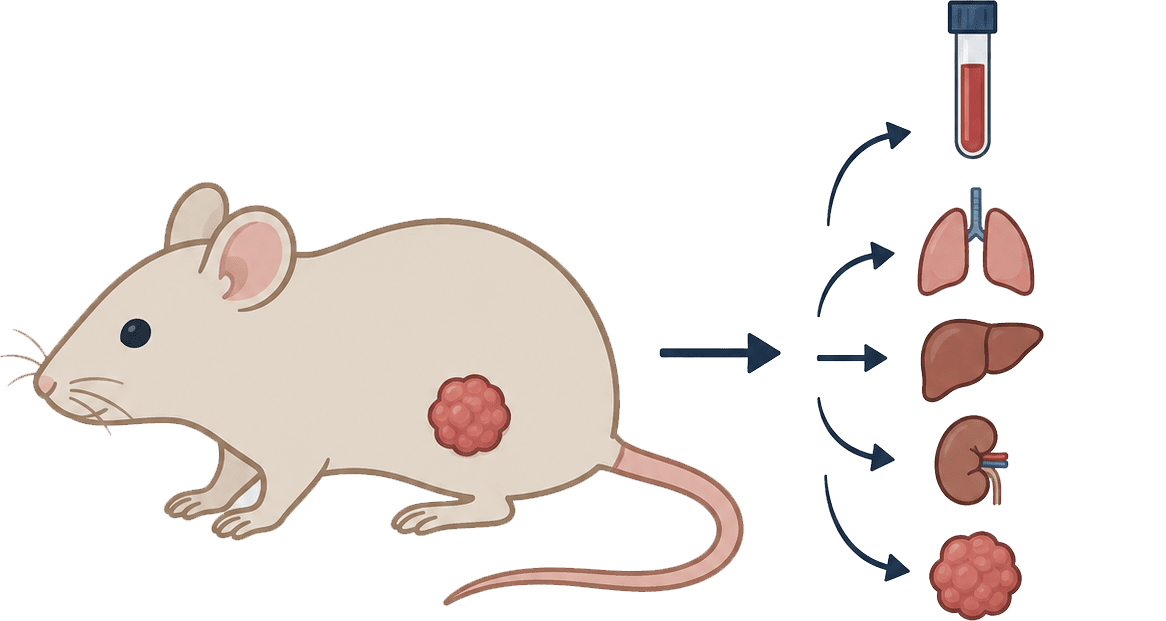
Yes. Engineering can be connected to in vitro infection, replication, payload expression, cytotoxicity, immune activation, normal-cell comparator assays, and in vivo efficacy, biodistribution, safety, viral shedding, or combination therapy studies depending on the program stage and biosafety requirements.

Request a Quote

Contact Creative Biolabs

To discuss an oncolytic HSV engineering project, please share your HSV backbone or strain, genome map, BAC or plasmid status, intended deletion or insertion locus, payload sequence, promoter or retargeting concept, desired attenuation profile, target tumor type, cell models, normal-cell comparators, delivery route, existing viral stock or rescue data, biosafety context, and intended next milestone. Creative Biolabs can help design a service plan that connects oHSV engineering, construction, quality control, and validation endpoints.

Online Inquiry
! All products and services are for Research Use Only. Not For Clinical Use.