
Entry
Infection Efficiency
Reporter signal, immunostaining, flow cytometry, and early genome detection help clarify whether activity is limited at the entry stage.

Selecting the right oncolytic virus candidate is one of the earliest and most consequential decisions in an OV development program. Creative Biolabs provides structured, data-driven screening programs to compare viral platforms, engineered constructs, and early-stage leads across infection efficiency, replication kinetics, cytotoxicity, selectivity, immune activation, and developability.
Oncolytic virus programs often begin with multiple possible directions: different viral backbones, engineered variants, attenuation strategies, armed constructs, tumor-targeted designs, or clinical indication hypotheses. The challenge is not only to identify which construct is most active, but to understand why one candidate is more suitable for a defined development goal than another.
Creative Biolabs helps clients establish a structured screening plan before committing to extensive engineering, animal studies, or process development. The evaluation can be tailored to a single cancer type, a panel of tumor indications, a specific route of administration, or a comparison of several viral platforms. This approach helps reduce late-stage rework by identifying candidate limitations early and by generating a rationale for the next development step.



Each module can be customized according to virus type, biosafety requirements, available starting material, and project maturity. Clients may request a rapid comparison or a broader multi-module screening program.

Plan the candidate set, tumor models, control groups, assay sequence, decision criteria, and study timeline before any assay begins.
Study design document, sample requirement list, acceptance criteria, project timeline assumptions
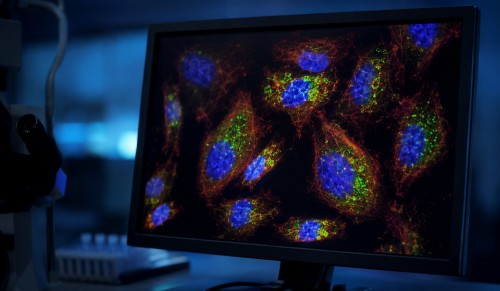
Compare viral entry and early infection across target tumor cell lines or indication panels to identify permissive versus resistant models.
Infection rate, reporter signal, receptor-associated interpretation, cell line sensitivity profile

Assess viral growth behavior over time in permissive, partially permissive, and control cells to characterize amplification potential.
Viral growth curve, burst pattern, replication window, comparison across candidates

Measure tumor cell killing using dose-response and time-course formats to rank candidates by functional activity.
IC50 or EC50 estimates, viability curves, cell death pattern, potency ranking

Evaluate tumor preference by testing non-malignant cells or disease-relevant normal tissue controls alongside tumor cell lines.
Tumor selectivity index, off-target cytotoxicity signal, early safety flag summary

Characterize cytokine, chemokine, interferon-related, or immune co-culture responses when combination or immune activation context is relevant.
Cytokine panel data, immune activation snapshot, co-culture readout interpretation

Consider whether top candidates are suitable for production, delivery, and next-step validation before deeper commitment.
Titer feasibility, genetic stability observations, delivery considerations, recommended candidate shortlist
Screening can be built around 2D tumor cell panels, primary tumor cells, 3D tumor spheroids, organoid-like models, immune co-culture systems, or small-scale in vivo exploration. Assays are selected according to the biological question.
Reporter signal, immunostaining, flow cytometry, and early genome detection help clarify whether activity is limited at the entry stage.

TCID50, plaque assay, qPCR/ddPCR, genome copy number, and infectious titer indicate whether the candidate can amplify in tumor models.

Cell viability, cytotoxicity, apoptosis/necrosis markers, and live-cell imaging rank candidates by functional tumor cell killing.

Selectivity index, normal-cell viability, and off-target replication signals support early safety-window assessment.

IFN-related signals, cytokine panels, chemokines, and activation markers connect direct oncolysis with immunological activity.

Titer, recovery, stability, passage-associated change, and formulation sensitivity flag practical advancement risks.
Rather than relying on a single endpoint, candidate ranking uses a weighted framework that reflects the client's program goals. A locally delivered candidate may be ranked differently from a systemically delivered one.
Strength, speed, and consistency of tumor cell killing across relevant models.
Separation between tumor activity and normal-cell activity, including replication and cytotoxicity differences.
Titer potential, recovery, genetic stability, and compatibility with available production systems.
Fit with intratumoral, regional, or systemic administration assumptions.
Availability of supporting data, assay compatibility, engineering flexibility, and development familiarity.
Clarity of recommended follow-up work, such as deeper in vitro validation, transgene optimization, biodistribution study, or animal efficacy testing.
The workflow can be compressed for rapid feasibility screening or expanded into a multi-stage lead selection program. The goal is a clear decision path from intake to recommendation.

Define the candidate list, target indication, model requirements, sample availability, biosafety conditions, and the decision to be made at the end of screening.

Review viral stock information, confirm titer or concentration, assess construct identity if needed, and verify suitability for the selected assays.

Select tumor cell lines, normal-cell controls, 3D or immune co-culture models, dosing range, time points, and positive or negative controls.

Evaluate infection efficiency, dose response, cytotoxicity, and early selectivity signals to identify candidates that merit deeper characterization.

Measure viral growth behavior, genome copy changes, infectious particle production, and optional immune-related markers.

Combine efficacy, selectivity, replication, immune response, and practical feasibility data into a comparative scoring framework.

Provide a lead candidate recommendation, data interpretation, limitations, and suggested follow-up experiments for validation or engineering refinement.
Deliverables are organized as sequential review artifacts, connecting the screening workflow with the final go or no-go decision.
Candidate set, model matrix, control logic, assay endpoints, acceptance criteria, and project assumptions.
Aligns each assay with virus biology and the decision to be made at the end of screening.
Raw and processed assay data, viability curves, infection measurements, growth curves, and cytokine results.
Documents MOI, incubation time, serum condition, and assay window to support fair comparison.
IC50 or EC50 estimates, viral growth curves, replication kinetics, selectivity index, and normal-cell safety signals.
Clarifies where curve fitting is appropriate and where data should remain descriptive.
Candidate comparison table, lead recommendation, limitations, and suggested next-step services.
Integrates efficacy, selectivity, replication, immune activation, and developability into a defensible decision.
This service is suitable for early and mid-stage OV programs that need a defensible candidate selection rationale before committing resources to deeper development.
Choose the most suitable platform for a cancer indication or route of administration.
Prioritize constructs before investing in in vivo efficacy studies.
Determine whether the limitation is entry, replication, cytotoxicity, model selection, or assay format.
Select a candidate with an immune activation profile compatible with downstream combination design.
Generate independent data to support partner review, licensing, or internal portfolio decisions.
Candidate screening is most useful when the experimental design reflects how the virus will be developed next. Creative Biolabs integrates screening endpoints with broader OV development logic, helping teams reduce uncertainty before investing in larger validation programs.
Screening plans can reflect backbone biology, tumor type, delivery route, and mechanism-of-action assumptions.
Data can be organized around potency, selectivity, immune activation, feasibility, and next-step readiness.
Lead selection can connect directly to optimization, in vitro validation, in vivo study design, and broader OV development planning.
Assay matrices can be adapted to purified virus stocks, crude preparations, construct maps, plasmid-stage concepts, and platform-specific biology.

Questions about timing, applicable platforms, starting materials, model options, deliverables, and connecting screening to downstream studies.
Useful information includes the viral platform, construct map, available titer, passage history, target indication, preferred cell models, biosafety requirements, previous assay data, and the decision the screening package needs to support. If the project is still exploratory, clients can also provide a short description of the intended route of administration, desired comparison group, or key uncertainty. Creative Biolabs can then help translate these inputs into a practical model matrix, assay sequence, material requirement list, and decision criteria.
Yes. When virus stocks are not yet available, the project can be initiated from rescue-ready plasmids or design concepts, depending on the viral system, genome design, and biosafety review. In this situation, the first stage usually focuses on confirming feasibility, clarifying the rescue or construction route, and defining what material quality will be required before comparative screening. Additional virus construction, rescue, amplification, identity confirmation, or titer determination may be recommended before the candidate set enters side-by-side testing.
The number can range from a few closely related variants to a broader comparison across different viral backbones or engineering designs. The recommended scale depends on assay complexity, available material, model number, endpoint depth, and whether the project requires primary cells, 3D systems, or immune co-culture assays. For larger candidate sets, Creative Biolabs can structure the program as a staged screen, using an initial rapid triage step to narrow the list before deeper replication, selectivity, immune-response, or developability testing.
Yes. 3D tumor spheroids, organoid-like models, or other tumor-architecture systems can be incorporated when the program needs a more stringent evaluation of viral spread, penetration, replication behavior, and killing under tissue-like conditions. These models are often used after an initial 2D screen narrows the candidate list, because they typically require more optimization and material. They can be especially useful when a candidate shows strong activity in standard cell culture but the project needs additional evidence for tumor penetration, multicellular resistance, or model-dependent performance.
The service can include both experimental data and an integrated candidate recommendation report, depending on the requested scope. The recommendation can combine potency, selectivity, replication kinetics, immune-response signals, normal-cell safety observations, and developability considerations into a comparative ranking framework. The report may also discuss assay limitations, data confidence, candidate-specific risks, and suggested next-step experiments, so the output is useful for lead selection rather than only a collection of raw results.
Yes. Candidate screening can be designed to generate the rationale for downstream in vivo work, including animal model selection, dose range planning, route of administration, pharmacodynamic endpoints, efficacy readouts, or biodistribution follow-up studies. For example, in vitro infectivity, replication, and selectivity data can help identify which tumor model and dosing assumptions are most appropriate before animal resources are committed. The final screening report can therefore serve as a bridge between early candidate comparison and a more focused preclinical validation plan.
To discuss an oncolytic virus candidate screening project, contact Creative Biolabs with your candidate information, target indication, available materials, and key development question. Our team can help design a screening matrix that compares candidates efficiently and supports a clear next-step decision.