
Oncolytic Virus Preclinical Evaluation Services

Preclinical Evaluation

Oncolytic Virus Preclinical Evaluation Services

Creative Biolabs provides integrated preclinical evaluation services to help researchers characterize, compare, and advance oncolytic virus candidates before IND-enabling studies.

Preclinical evaluation of an oncolytic virus candidate is not limited to measuring tumor cell killing. A well-designed program should determine whether the virus selectively infects and replicates in malignant cells, whether it generates meaningful tumor control in relevant models, whether it activates antitumor immunity, and whether its biodistribution and safety profile support further development.

Creative Biolabs helps clients translate platform-specific differences into practical study designs, model systems, readout panels, and decision-oriented deliverables. Projects can begin from early candidate ranking, mechanism-of-action analysis, delivery comparison, combination evaluation, or pre-IND planning.

Integrated assay design
Integrated evaluation scopeConnect cell assays, 3D models, animal efficacy, PDX, biodistribution, shedding, toxicology, and immune profiling.
Model selection
Model selection supportSelect 2D, 3D, organoid, immune co-culture, syngeneic, xenograft, humanized, or PDX models according to the project question.
Decision-ready interpretation
Decision-ready reportingGenerate candidate ranking, quantitative readouts, integrated interpretation, and next-step recommendations.
Key Preclinical Questions

Evaluation designs built around the decision you need to make

Instead of applying one fixed assay panel, Creative Biolabs configures each study around the virus platform, tumor indication, route of administration, payload design, and development milestone.

01Tumor selectivityDetermine whether the candidate infects and replicates selectively in tumor cells compared with relevant normal or control cells.
02Replication and cytotoxicity linkAssess whether viral replication correlates with oncolysis, immune activation, payload expression, or mechanism-related biomarkers.
03Model relevanceSelect tumor models that match the intended indication, route of administration, immune mechanism, and translational objective.
04Advanced model performanceCompare results in 3D spheroids, organoids, immune co-cultures, syngeneic models, xenografts, humanized models, or PDX systems.
05Distribution and safetyPlan sampling for biodistribution, viral shedding, PK/PD behavior, toxicology observations, and safety-related tissue analysis.
06Next-step developmentUse results to guide candidate selection, efficacy confirmation, delivery optimization, toxicology planning, or IND-enabling preparation.
Service Scope

A parent evaluation hub connecting cell assays, translational models, and animal studies

This page is positioned as the level 2.9 service hub. It helps readers understand how specialized assay pages and animal-study pages can be combined into one coherent preclinical evaluation plan.

Question Assay-focused Service Pages This Evaluation Hub
Best for Clients who already know which specific assay, model, or endpoint they need. Clients who need model selection, integrated study design, candidate ranking, and next-step interpretation.
Client input Defined assay request, sample type, virus stock, tumor model, or endpoint list. Virus platform, candidate information, tumor indication, route, prior data, and key development question.
Core value Executes a focused experimental component with fit-for-purpose controls and readouts. Connects multiple assay components into a practical preclinical development workflow.
Decision output Assay-specific results such as cytotoxicity, viral load, tumor volume, cytokines, or pathology. Integrated interpretation for candidate selection, model choice, efficacy confirmation, safety planning, or pre-IND preparation.
In short: specialized pages answer “which assay can be run?” This hub answers “which combination of assays and models will support the next development decision?”
Core Evaluation Modules

Modular preclinical capabilities from early screening to translational interpretation

Each module can be requested independently or combined into a customized preclinical evaluation package.

01In Vitro Validation and Candidate Ranking
Screening+
Representative Capabilities
  • Tumor cell infection and replication kinetics analysis.
  • Cytotoxicity, viability, and tumor selectivity assays.
  • Transgene expression, immunogenic cell death markers, and cytokine release analysis.
  • MOI and time-course comparison for candidate ranking.
Typical Development Use
  • Early screening and candidate comparison.
  • Mechanism exploration before animal studies.
  • Selection of readouts for downstream potency or efficacy testing.
023D Tumor Spheroid and Organoid Testing
3D Models+
Representative Capabilities
  • Tumor spheroid and organoid viability analysis.
  • Penetration depth, infection spread, and 3D killing evaluation.
  • Patient-derived organoid and optional immune co-culture systems.
  • Delivery strategy and payload function assessment in tumor-like architectures.
Typical Development Use
  • Translational validation beyond 2D assays.
  • Comparison of candidates with similar 2D performance.
  • Evaluation of penetration, matrix barriers, and route-relevant delivery behavior.
03Animal Efficacy and Survival Studies
Efficacy+
Representative Capabilities
  • Subcutaneous, orthotopic, syngeneic, xenograft, and humanized model options.
  • Dosing route, dose level, schedule, control group, and observation-window planning.
  • Tumor growth, survival, imaging, tissue collection, and pharmacodynamic endpoints.
  • Combination therapy and route-comparison study support.
Typical Development Use
  • Proof-of-concept efficacy evaluation.
  • Dose and schedule selection.
  • Tissue endpoint collection for mechanism, viral load, and immune readouts.
04PDX and Translational Model Evaluation
PDX+
Representative Capabilities
  • PDX or PDOX model selection based on indication and study objective.
  • Dosing strategy, response assessment, and tissue pathology support.
  • Viral distribution analysis and heterogeneity-aware interpretation.
  • Patient-relevant efficacy evaluation and candidate prioritization.
Typical Development Use
  • Indication-focused translational validation.
  • Response heterogeneity assessment.
  • Selection of candidates for deeper efficacy or safety studies.
05Biodistribution, Viral Shedding, and PK/PD Support
Distribution+
Representative Capabilities
  • qPCR/ddPCR, infectious titer assays, and tissue viral-load analysis.
  • Blood, tissue, excreta, tumor, and lymphoid-organ sampling plans.
  • Time-course sampling to support distribution, clearance, and route interpretation.
  • Tumor enrichment, off-target exposure, and shedding-risk assessment.
Typical Development Use
  • Route-of-administration comparison.
  • PK/PD interpretation and sample-map planning.
  • Connection to toxicology and safety-oriented studies.
06Toxicology and Safety Observation
Safety+
Representative Capabilities
  • Clinical signs, body weight, hematology, and serum chemistry monitoring.
  • Inflammatory cytokine signals, gross necropsy, and histopathology.
  • Dose range and route-specific safety observation support.
  • Risk-based study planning before formal IND-enabling work.
Typical Development Use
  • Early safety evaluation.
  • Dose feasibility and schedule refinement.
  • Identification of safety signals that should shape follow-up studies.
07Tumor Immune Microenvironment Profiling
Immune+
Representative Capabilities
  • Flow cytometry, IHC/IF, cytokine panels, qPCR, RNA-seq, and spatial profiling options.
  • Evaluation of T cell infiltration, macrophage polarization, antigen presentation, and checkpoint induction.
  • Immune conversion profiling after OV treatment.
  • Combination therapy rationale and biomarker-oriented interpretation.
Typical Development Use
  • Mechanism-of-action analysis.
  • Immunotherapy combination planning.
  • Identification of immune biomarkers and follow-up endpoints.
Recommended Workflow

A practical route from project intake to development recommendations

The workflow can be used as a full integrated package or divided into independent modules depending on project stage and available materials.

Intake
01
Project intake

Project Intake

Review virus platform, genome design, payload, production status, target indication, route, prior data, and decision objective.

Ranking
02
In vitro ranking

In Vitro Ranking

Evaluate infection efficiency, replication kinetics, cytotoxicity, selectivity, payload expression, cytokines, and mechanism markers.
Models
03
Advanced model testing

Advanced Models

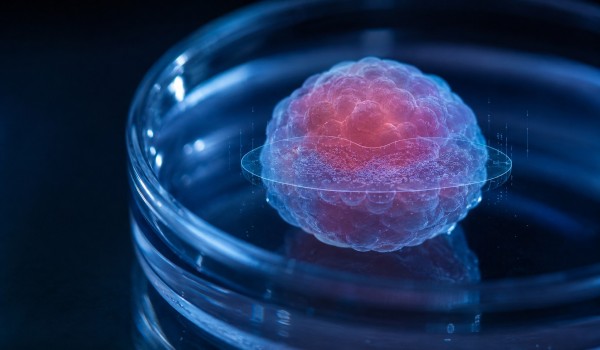
Use 3D spheroids, organoids, patient-derived models, or immune co-culture systems to assess penetration and translational relevance.
In Vivo
04
In vivo study

Efficacy and Sampling

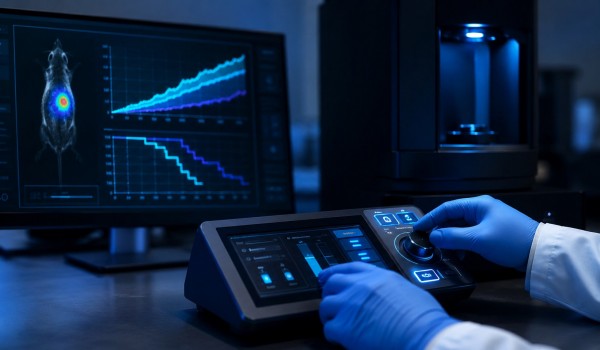
Design animal efficacy studies with dosing route, controls, tumor measurement, imaging, survival, and tissue collection.

Report
05
Integrated report

Integrated Analysis

Deliver quantitative data, candidate ranking, model-specific interpretation, risk observations, and recommended next steps.

Flexible entry point

Start from a single assay question, a tumor model selection problem, a delivery-route comparison, or a complete preclinical evaluation plan.

Model System Coverage

Model choices aligned with the virus platform and translational question

Model selection is central to oncolytic virus preclinical development. Creative Biolabs helps combine models that match the client's key question rather than relying on a single assay format.


2D tumor cell panel
2D Tumor Cell PanelEarly screening
Fast comparison of infection efficiency, replication, cytotoxicity, and normal-cell selectivity across multiple tumor and control cell lines.
3D tumor spheroid
3D Tumor SpheroidPenetration and spread
Evaluates viral penetration, replication spread, and killing in a structured tumor-like mass, especially when 2D results are insufficient.
Tumor organoid
Tumor Organoid or PDOTranslational relevance
Supports indication-focused candidate selection with better preservation of tumor architecture, heterogeneity, and patient-relevant biology.
Tumor immune co-culture
Tumor-Immune Co-cultureMechanism studies
Adds immune interaction, cytokine release, T cell activation, macrophage response, or combination-therapy pre-screening readouts.
Animal models
Syngeneic, Xenograft, and Orthotopic ModelsIn vivo proof of concept
Used for efficacy, route comparison, imaging, survival, tissue endpoints, and immune-mediated effects depending on model compatibility.
PDX model
PDX, PDOX, and Humanized OptionsAdvanced translational models
Supports patient-relevant efficacy evaluation, response heterogeneity assessment, immune mechanism interpretation, and human-directed payload evaluation.
Project Deliverables

Customized evaluation packages for preclinical decision-making

Deliverables can be configured for exploratory research, candidate nomination, preclinical proof of concept, or pre-IND planning.

  • Study design package with rationale, model selection, groups, dosing plan, sample map, endpoints, and analysis plan.
  • Raw and processed datasets, including tumor growth, survival, imaging, infectivity, genome copy, cytokine, flow cytometry, pathology, or transcriptomic outputs as applicable.
  • Integrated study report with methods summary, quantitative results, interpretation, figures, tables, candidate ranking, limitations, and development recommendations.
  • Assay and QC documentation covering virus titer confirmation, reagent and cell information, controls, sample handling, and reproducibility notes.
  • Next-step guidance for model selection, route optimization, combination strategy, biodistribution or toxicology studies, and CMC/analytical coordination.
  • Optional specialized reports for 3D tumor models, PDX evaluation, biodistribution, viral shedding, or tumor immune microenvironment profiling.
Why Choose Creative Biolabs

Integrated OV development perspective instead of isolated endpoint testing

Creative Biolabs integrates oncolytic virus engineering, validation, preclinical models, analytical testing, and translational study design to support clients from candidate selection through preclinical proof of concept.

Our team can tailor each study package to the virus platform, tumor indication, route of administration, immune mechanism, payload design, and development milestone, while keeping reporting focused on actionable next steps.

Creative Biolabs research team
2D and 3D Models Animal Efficacy PDX Evaluation Biodistribution Immune Profiling Research Use Only
Frequently Asked Questions

Common questions about oncolytic virus preclinical evaluation

Browse answers about materials, model selection, selectivity testing, immune profiling, route-specific endpoints, and pre-IND planning.

Clients may submit purified virus stocks, engineered candidate viruses, plasmid or sequence information, prior assay data, target tumor indications, proposed route of administration, or specific questions to be answered. Information on titer, storage buffer, passage history, and freeze-thaw history is helpful when virus stocks are submitted.

Yes. Model selection can be based on tumor indication, viral tropism, species compatibility, immune mechanism, route of administration, expected clinical use, and available prior data. A project may combine 2D cell panels, 3D spheroids, organoids, syngeneic models, xenografts, orthotopic models, humanized models, or PDX models.

Typical readouts include infectious titer, qPCR or ddPCR genome copy analysis, reporter-based infection assays, replication kinetics, time-course cytotoxicity, and comparison against relevant normal or control cells.

Yes. Depending on the project, immune-related studies may include cytokine profiling, immune cell co-culture, flow cytometry, IHC/IF, immune gene expression, RNA-seq, or spatial profiling to understand how the candidate reshapes the tumor immune microenvironment.

Intratumoral studies often emphasize local replication, tumor retention, local immune activation, and lesion response. Systemic delivery studies usually require stronger focus on blood stability, liver and spleen exposure, tumor enrichment, off-target tissues, shedding, and safety observations.

Yes. This service can help generate decision-making data and identify gaps before IND-enabling studies. Results may guide candidate selection, route selection, dose schedule, model choice, assay development, biodistribution strategy, toxicology planning, and CMC-aligned analytical needs.

Get in Touch

Contact Creative Biolabs

Submit your virus platform, candidate information, tumor indication, planned route of administration, available assay data, and the key decision you need to make. Creative Biolabs can develop a customized preclinical evaluation plan aligned with your study goals.

Online Inquiry
! All products and services are for Research Use Only. Not For Clinical Use.