Oncolytic Adenovirus Engineering Services

OV Engineering Services · Adenovirus Platform

Oncolytic Adenovirus Engineering Services

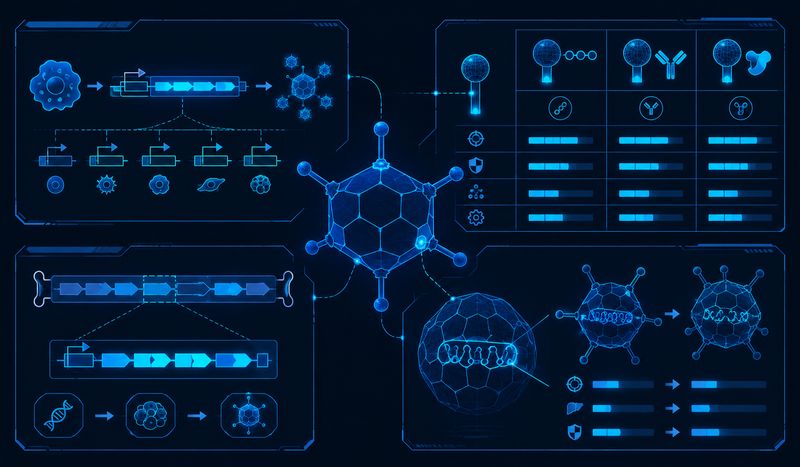
Creative Biolabs provides oncolytic adenovirus engineering services for researchers developing recombinant adenoviral candidates with optimized tumor-selective replication, capsid-mediated targeting, payload expression, safety control, production behavior, and validation readiness.

Adenovirus remains one of the most versatile oncolytic virus platforms because its genome can be engineered for selective replication, receptor-directed entry, transgene expression, and scalable research production. However, a useful oncolytic adenovirus candidate must balance potency with packaging capacity, capsid biology, promoter control, safety margin, and downstream assay compatibility.

Creative Biolabs designs adenovirus engineering projects around practical development decisions: which backbone or serotype to use, how to retarget infection, where to place payload or reporter cassettes, how to restrict replication to tumor cells, and which evidence package is needed before broader in vitro validation, animal studies, or combination therapy testing.

Selective ReplicationConnect E1-region design, promoter control, and normal-cell comparators to the desired safety window.

Retargeted InfectionEvaluate serotype, fiber/knob, receptor-use, and capsid-modification strategies for tumor-biased entry.

Developable ConstructsRank designs by packaging feasibility, payload expression, viral fitness, QC profile, and next-step validation fit.
Service Scope

From adenoviral backbone design to engineered candidate evaluation

Creative Biolabs supports adenovirus engineering as a platform-level design service. The work can start from a published architecture, an existing Ad candidate, a payload concept, a receptor-targeting goal, or a troubleshooting question from a construction or validation program.

Adenovirus backbone and serotype review
Module 01

Backbone and Serotype Strategy

Review Ad5-based, chimeric, subgroup, or alternative serotype concepts according to receptor biology, tumor model, delivery route, packaging feasibility, and available materials.

Typical output

Backbone recommendation with serotype, capsid, model, and risk notes.

Selective replication engineering
Module 02

Selective Replication Design

Design or review E1A-, E1B-, E3-, promoter-, and pathway-dependent strategies that restrict viral replication toward tumor cells while preserving antitumor performance.

Typical output

Selective replication plan with essential-gene control and normal-cell testing logic.

Capsid and fiber retargeting
Module 03

Capsid and Fiber Retargeting

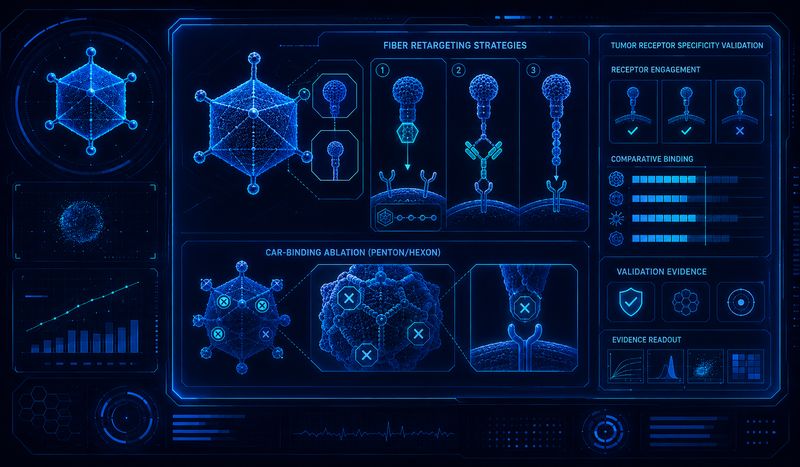
Evaluate fiber knob, shaft, hexon, penton base, chimeric capsid, peptide insertion, ligand display, and receptor-use strategies to improve tumor infection or reduce off-target entry.

Typical output

Retargeting concept map with receptor analysis and assay recommendations.

Payload and reporter cassette design
Module 04

Payload and Reporter Cassette Engineering

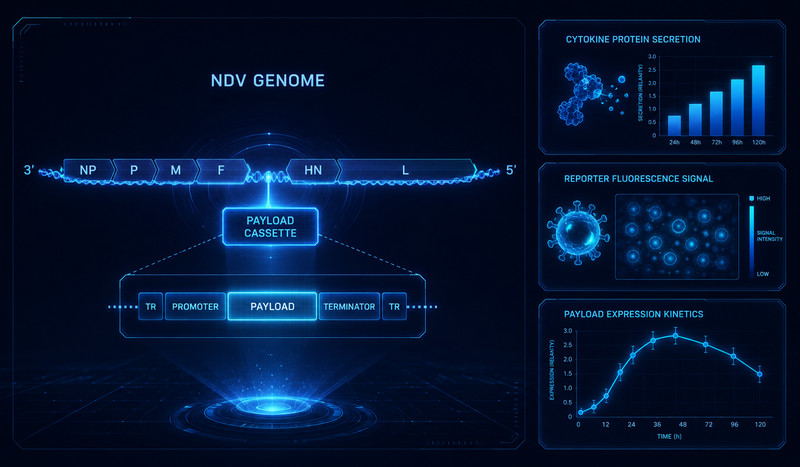
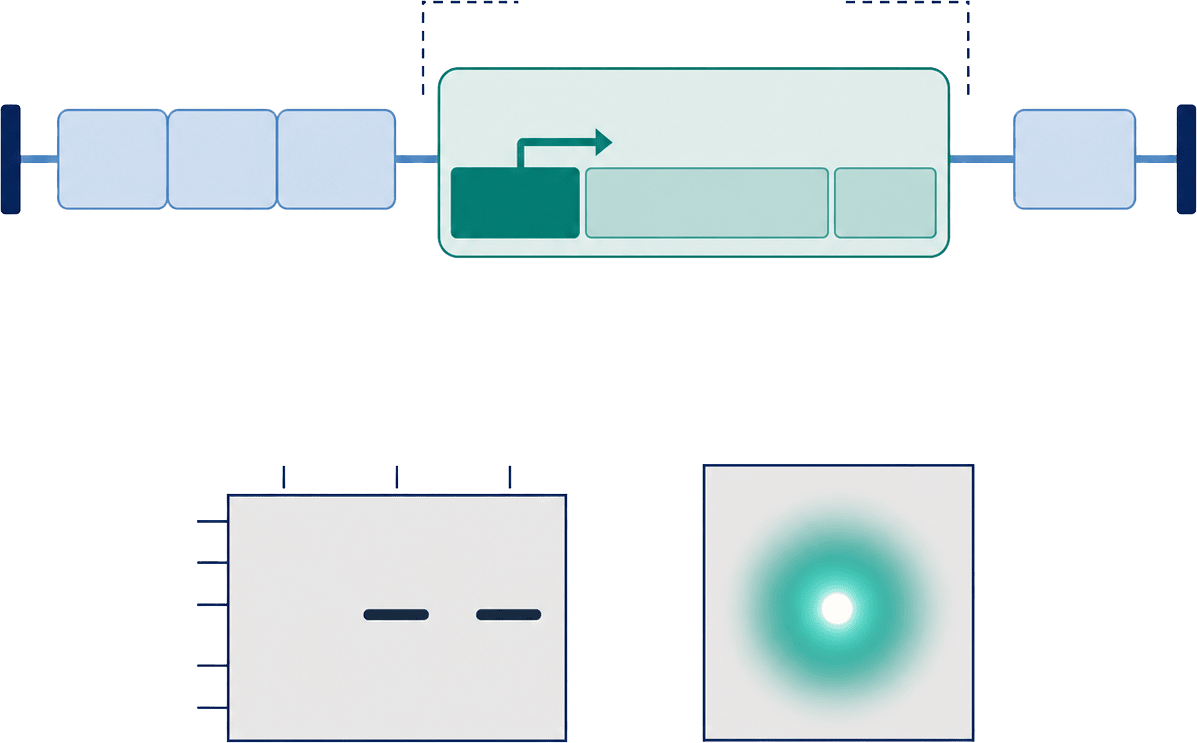
Plan insertion region, cassette size, promoter, polyadenylation signal, orientation, payload class, reporter gene, imaging gene, or safety-related component while monitoring genome capacity.

Typical output

Sequence-ready expression cassette and construct architecture summary.

Safety and detargeting design
Module 05

Safety and Detargeting Design

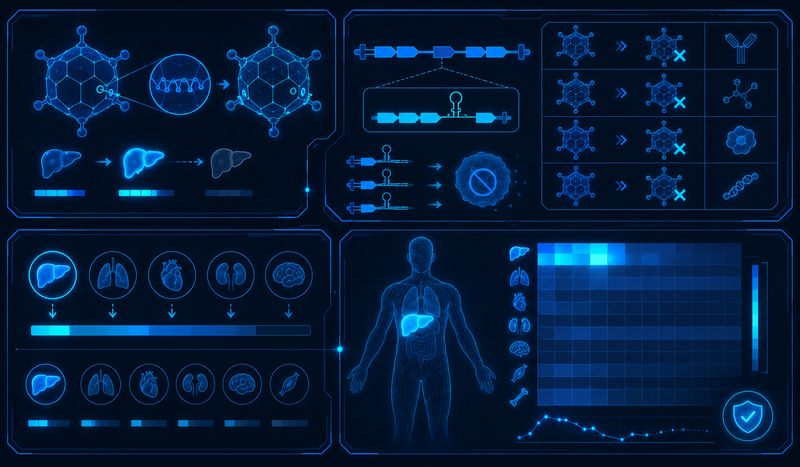
Integrate tissue-specific promoter logic, miRNA-compatible target sites, normal-cell comparators, replication restrictions, and optional safety elements to improve the therapeutic window.

Typical output

Safety-oriented engineering plan with risk flags and comparator assays.

Recombinant adenovirus generation support
Module 06

Prototype Generation and Production Support

Support genome assembly, packaging-compatible cell systems, recombinant virus recovery, amplification, plaque purification or clonal selection strategy, and research-scale production planning.

Typical output

Engineered adenovirus prototype or production-ready design package.

Adenovirus validation support
Module 07

Validation and Next-Step Study Planning

Connect engineered candidates to infectivity, replication, cytotoxicity, payload expression, receptor-dependence, normal-cell comparator, immune readout, and in vivo study planning.

Typical output

Validation roadmap with endpoints, controls, and candidate decision criteria.

Typical Starting Materials
  • Adenovirus serotype or backbone preference, genome map, or published reference design.
  • E1/E3 deletion plan, tumor-specific promoter concept, payload sequence, reporter cassette, or safety element.
  • Target tumor type, receptor information, desired delivery route, and intended combination strategy.
  • Available plasmids, viral stocks, cell lines, titer data, infectivity results, or prior construction notes.
  • Target and normal cell models, desired readouts, biosafety context, and next development milestone.
Technical Platforms

Assays and design tools matched to adenovirus biology

The technical package is adjusted according to serotype, capsid design, replication-control strategy, payload class, and development stage. The goal is to separate entry efficiency, replication selectivity, payload performance, production feasibility, and safety-oriented evidence.

Genome design review
Genome

Genome and Cassette Design Review

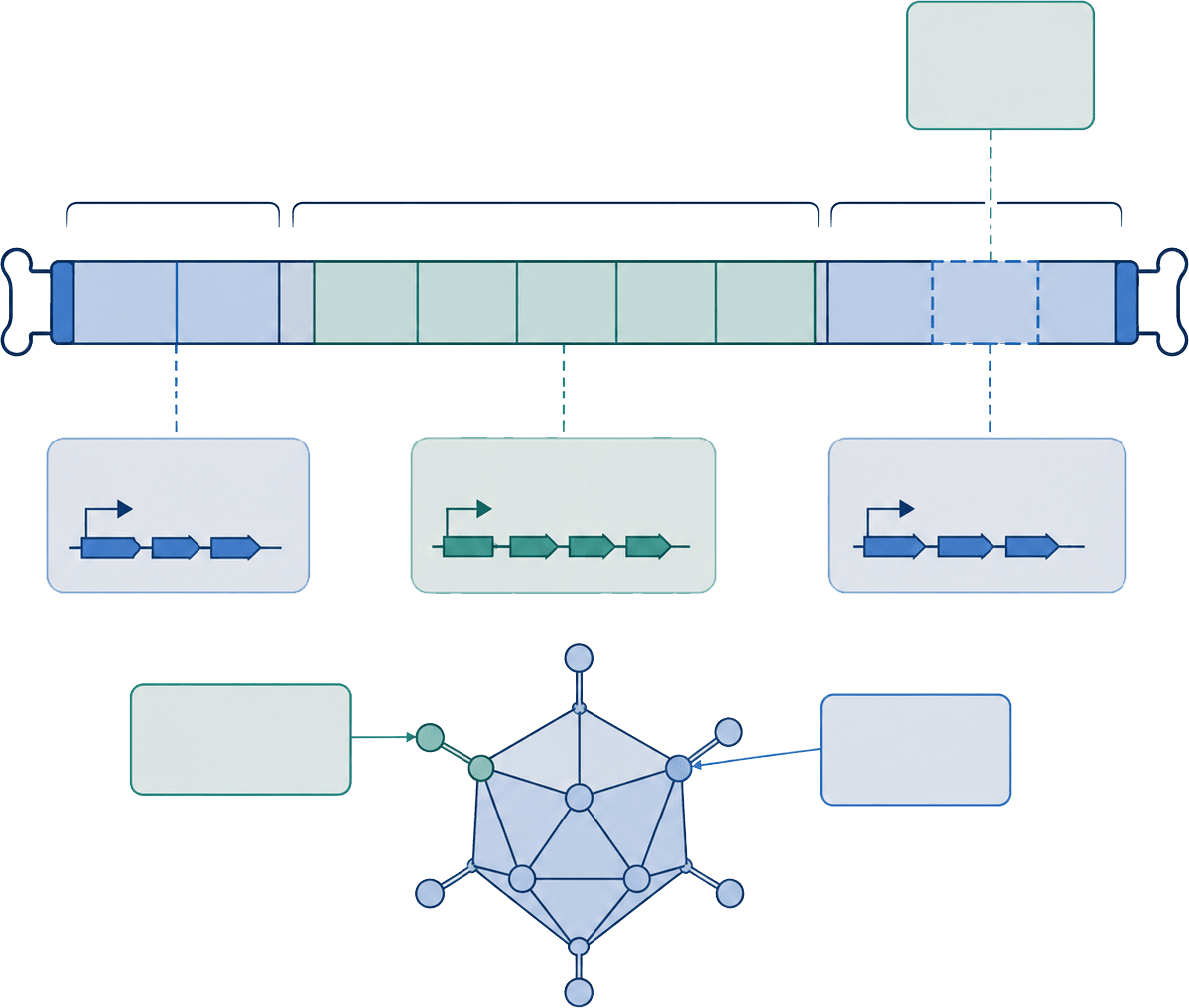
E1A/E1B/E3 region review, payload insertion region, expression cassette architecture, promoter selection, and packaging-capacity assessment.

Capsid and receptor analysis
Entry

Capsid and Receptor Analysis

Fiber/knob, shaft, hexon, penton base, chimeric capsid, ligand-display, receptor-expression, and competitive blocking assay planning.

Replication and titer assays
Virology

Replication and Titer Readouts

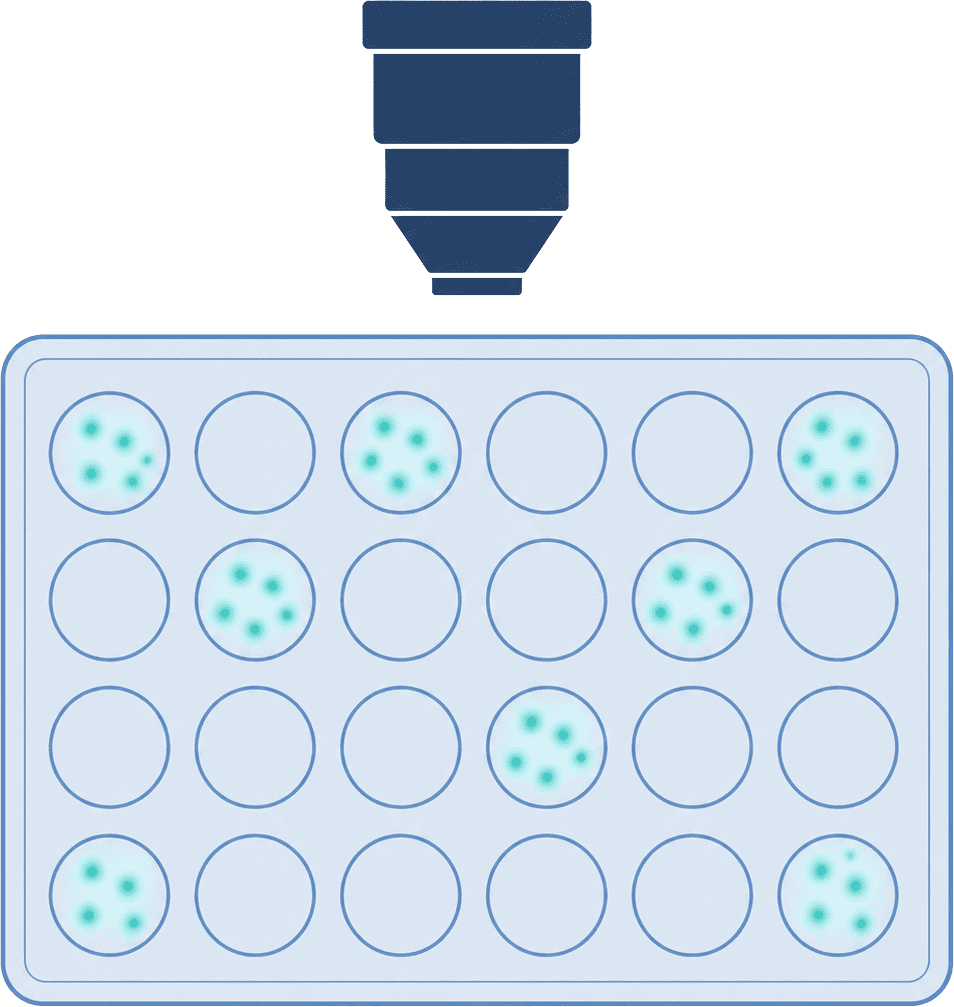
Infectious titer, genome copy analysis, replication kinetics, plaque phenotype, cytopathic effect, and production-yield comparison.

Payload expression verification
Expression

Payload and Reporter Verification

qPCR or RT-qPCR, ELISA, western blot, flow cytometry, reporter signal, imaging-gene readout, and time-course expression profiling.

Potency assays
Potency

Tumor Cell Activity Assays

2D tumor cell panels, matched normal-cell comparators, cytotoxicity, replication-dependent killing, spheroid or organoid-compatible testing, and combination matrices.

Identity and stability checks
QC

Identity, Purity, and Stability Checks

PCR or sequencing confirmation, particle-to-infectivity context, residual-risk notes, passage stability observations, and construct integrity assessment.

In vivo study planning
Translation

In Vivo Study Planning

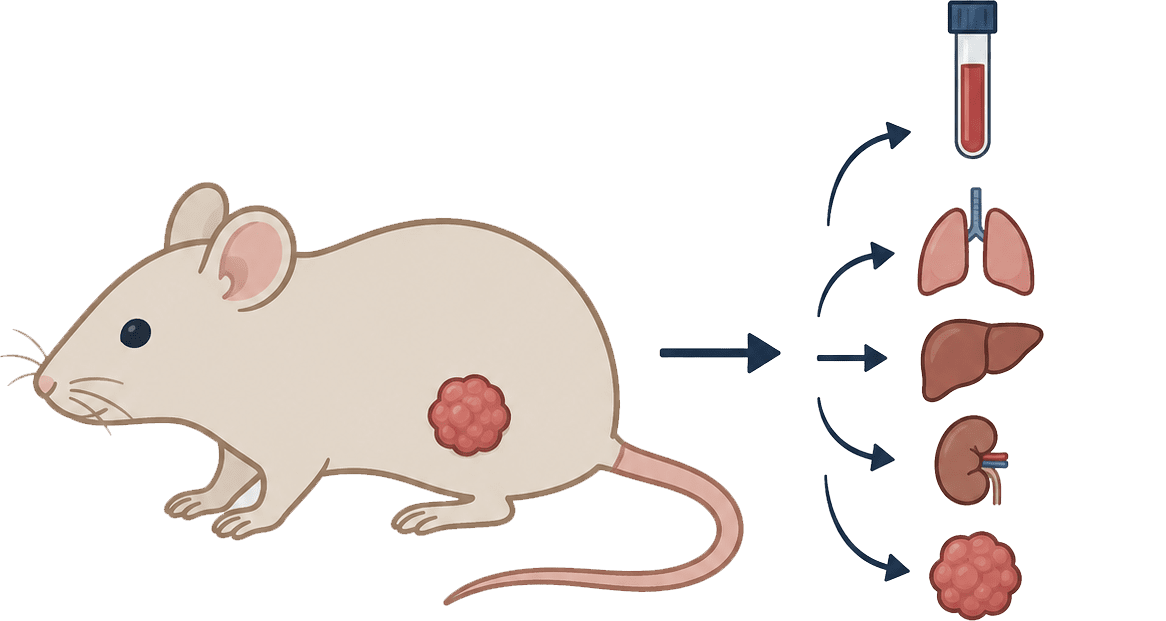
Model selection, route of administration, dose schedule, biodistribution endpoints, immune-context considerations, and combination therapy design.

Engineering Evaluation Framework

A decision framework for selecting a developable adenovirus design

Adenovirus candidates should not be advanced by one endpoint alone. Creative Biolabs organizes engineering data so tumor entry, replication control, payload behavior, safety signals, and production feasibility can be reviewed together.

01

Backbone and Receptor Fit

Alignment between adenovirus serotype, capsid design, target receptor expression, tumor model, normal tissue concern, and delivery route.

02

Selective Replication Logic

Strength of E1/E3 design, promoter control, pathway dependence, detargeting features, and normal-cell comparator strategy.

03

Payload and Cassette Behavior

Expression level, timing, localization, secretion, genome burden, compatibility with replication, and mechanism-matched functional activity.

04

Viral Fitness and Production

Recovery feasibility, infectious titer, particle-to-infectivity context, amplification behavior, plaque phenotype, and selected stability observations.

05

Safety Signal Awareness

Normal-cell infection, off-target replication, excessive payload activity, unwanted receptor usage, and immune-related flags from early assays.

06

Next-Step Readiness

Suitability for construction, enhancement, in vitro validation, potency assay development, biodistribution work, or in vivo preclinical studies.

Recommended Workflow

A clear path from adenovirus design concept to ranked engineering output

The workflow can begin with a desired tumor indication, an existing adenovirus backbone, a receptor-targeting concept, a payload-armed construct, or a troubleshooting dataset. Each step is adjusted according to the requested engineering depth.

Scope
Project scoping
01

Project Scoping

Define tumor indication, adenovirus platform, receptor target, payload concept, delivery route, biosafety context, and decision criteria.

Design
Adenovirus genome and capsid design
02

Genome and Capsid Design

Review serotype, E1/E3 control, capsid retargeting, insertion region, promoter logic, and payload or reporter cassette architecture.

Build
Prototype generation
03

Prototype Generation or Sample Intake

Generate engineered prototypes or receive client-provided constructs, plasmids, viral stocks, maps, sequences, or prior infectivity data.

QC
Adenovirus QC
04

Recovery, Amplification, and QC

Assess recombinant recovery, amplification behavior, infectious titer, identity, plaque phenotype, particle context, and early stability indicators.

Test
Functional testing
05

Functional and Selectivity Testing

Run infectivity, receptor-dependence, replication, cytotoxicity, payload expression, normal-cell comparator, and mechanism-focused assays.

Decide
Recommendation
06

Recommendation and Next-Step Plan

Integrate engineering, QC, infectivity, selectivity, payload, and production evidence into a decision-ready recommendation.

Timelines and material requirements depend on serotype, genome complexity, payload size, capsid modification, need for construction, cell system, biosafety review, assay model availability, and whether animal or combination studies are included.
Deliverables & Quality

A decision-ready evidence package for adenoviral OV development

The deliverable connects genome design, capsid biology, viral performance, payload expression, selectivity, and feasibility so teams can decide whether to construct, optimize, validate, or advance a candidate.

Design Output

Adenovirus engineering design package

Included

Backbone or serotype recommendation, genome map comments, E1/E3 control logic, capsid-retargeting concept, payload cassette plan, and assay-control suggestions.

Quality focus

Confirms that construct logic matches tumor biology, receptor context, packaging capacity, and downstream development needs.

Prototype Output

Recombinant candidate or construct-ready materials

Included

Prototype generation notes, plasmid or genome assembly context, recombinant recovery observations, amplification notes, or construction-ready recommendations.

Quality focus

Documents recovery and production behavior so design activity is not interpreted separately from manufacturing practicality.

QC Output

Identity, titer, and stability context

Included

Identity confirmation, infectious titer, genome copy or particle context, plaque phenotype, purity-related notes, and selected passage stability observations when included.

Quality focus

Helps distinguish a biologically active design from a design that is difficult to recover, amplify, or maintain.

Function Output

Infectivity, selectivity, and payload data

Included

Receptor-use readouts, tumor cell infection, replication kinetics, cytotoxicity, payload expression, normal-cell comparator results, or combination-related outputs.

Quality focus

Uses endpoints selected for adenoviral engineering rather than a generic virus validation panel.

Decision Output

Engineering summary and next-step recommendation

Included

Candidate ranking, design risks, redesign options, recommended validation assays, and study planning suggestions for in vitro or in vivo development.

Quality focus

Makes the rationale for advancing, revising, or deprioritizing an adenovirus design clear to project stakeholders.

Application Scenarios

When adenovirus engineering adds the most value

This service is suitable when the central question is how to design or optimize an oncolytic adenovirus platform, not simply how to produce a pre-defined recombinant virus.

#
Scenario
Objective
Engineering Emphasis
01
Ad5-derived candidate redesign

Improve an existing adenovirus design by reviewing E1/E3 logic, promoter control, payload burden, capsid biology, and assay performance.

E1/E3 designAd5 backbonePayload fitQC review
02
Low receptor or resistant tumor models

Evaluate fiber, knob, capsid, serotype, or ligand strategies to improve entry into target tumor cells with suitable normal-cell controls.

Capsid retargetingReceptor profilingCompetition assayEntry efficiency
03
Payload-armed adenovirus programs

Design cytokine, checkpoint, antibody fragment, enzyme, reporter, imaging, or multi-cassette constructs while monitoring genome capacity and viral fitness.

Payload cassetteExpression timingGenome capacityPotency readout
04
Tumor-selective replication design

Use promoter control, pathway-dependent attenuation, detargeting, or normal-cell comparator assays to improve the therapeutic window.

Promoter controlNormal cellsReplication kineticsSafety window
05
Production or recovery troubleshooting

Assess whether genome design, payload size, insertion location, capsid modification, or cell system contributes to low recovery, titer, or stability.

RecoveryAmplificationTiterStability
06
Combination-ready adenovirus candidates

Prepare engineered candidates for studies with checkpoint inhibitors, chemotherapy, radiotherapy, adoptive cells, vaccines, or immune-modulating payloads.

CombinationImmune readoutDose matrixNext steps
Why Choose Creative Biolabs

Integrated adenovirus engineering support beyond basic construction

Oncolytic adenovirus engineering requires coordinated attention to genome design, capsid biology, promoter control, payload burden, viral recovery, production behavior, receptor context, and validation endpoints. Creative Biolabs supports platform-aware design and decision-oriented evidence generation.

Platform

Engineering plans account for adenovirus genome organization, E1/E3 control, capsid structure, serotype choice, receptor use, and payload capacity.

Flexibility

Projects can begin with design concepts, existing Ad candidates, plasmids, viral stocks, published architectures, or troubleshooting results.

Continuity

Adenovirus engineering can connect to construction, enhancement, promoter screening, capsid retargeting, miRNA detargeting, in vitro validation, and in vivo studies.

Quality

Identity, titer, replication, payload expression, receptor-dependent entry, selectivity, and stability results are interpreted together.

Decision

Reports translate engineering and assay data into candidate recommendations, redesign options, and next-step study requirements.

Oncolytic adenovirus engineering workflow placeholder image
From Ad design to usable evidenceDesigned to balance selective replication, capsid targeting, payload expression, viral fitness, and next-step study fit.
Frequently Asked Questions

Common questions about oncolytic adenovirus engineering

Questions about construction versus engineering, capsid retargeting, serotype selection, selective replication, payload insertion, starting materials, and validation planning.

Adenovirus construction focuses on producing a recombinant virus from an agreed genome design. Oncolytic adenovirus engineering starts earlier and evaluates the design choices that determine tumor selectivity, capsid tropism, promoter control, payload expression, viral fitness, safety margin, and validation strategy before or alongside construction.

Creative Biolabs can support backbone and serotype review, E1A/E1B/E3-region design, tumor- or tissue-specific promoter control, capsid retargeting, fiber knob or chimeric capsid concepts, payload and reporter cassette insertion, miRNA-compatible detargeting logic, safety-oriented design, amplification, identity confirmation, titer testing, and fit-for-purpose validation.

Yes. Depending on project goals, the design discussion may include Ad5-based modification, chimeric fiber or knob replacement, Ad3-, Ad11p-, Ad35-, or other receptor-use considerations, peptide or ligand insertion concepts, and receptor-expression analysis. Practical feasibility depends on backbone compatibility, packaging performance, infectivity, and available assay models.

Yes. Adenovirus candidates can be designed to encode cytokines, chemokines, checkpoint modulators, antibody fragments, enzymes, reporter genes, imaging genes, safety genes, or other payloads. Engineering evaluates insertion region, cassette size, promoter choice, expression timing, effect on viral rescue or production, payload stability, and mechanism-matched readouts.

Common design directions include E1A or E1B-related attenuation, tumor-specific promoter control of essential genes, E3-region modification, receptor-targeted entry, normal tissue detargeting, miRNA-compatible control, and normal-cell comparator testing. The final combination should be selected according to tumor biology, delivery route, backbone behavior, and the required safety window.

Useful materials include the adenovirus serotype or backbone, genome map, intended deletion or insertion regions, payload or reporter sequence, promoter or regulatory concept, target tumor type, receptor information, target and normal cell models, available plasmids or viral stocks, previous infectivity or titer data, delivery route, combination therapy concept, and the intended next milestone.

Yes. Engineering can be connected to in vitro infectivity, replication kinetics, cytotoxicity, payload expression, receptor-dependence, normal-cell comparator assays, and in vivo efficacy, biodistribution, safety, or combination therapy studies depending on candidate readiness and biosafety requirements.

Request a Quote

Contact Creative Biolabs

To discuss an oncolytic adenovirus engineering project, please share your adenovirus serotype or backbone, genome map, E1/E3 design, payload or reporter sequence, promoter concept, capsid or receptor-targeting goal, target tumor type, cell models, normal-cell comparators, delivery route, existing plasmid or viral stock information, titer or infectivity data, biosafety context, combination strategy, and intended next milestone. Creative Biolabs can help design a service plan that connects adenovirus engineering, construction, enhancement, quality control, and validation endpoints.

Online Inquiry
! All products and services are for Research Use Only. Not For Clinical Use.