Oncolytic Newcastle Disease Virus Engineering Services

OV Engineering Services · RNA Virus Platform

Oncolytic Newcastle Disease Virus Engineering Services

Newcastle disease virus (NDV) offers a distinctive RNA virus platform for oncolytic virotherapy research, combining tumor-selective replication potential with strong innate and adaptive immune activation. Creative Biolabs provides NDV engineering, reverse-genetics support, payload design, rescue evaluation, expansion, characterization, and validation services to help researchers develop NDV candidates with clearer antitumor mechanism, safety profile, and next-step development readiness.

NDV is an enveloped avian paramyxovirus platform with a single-stranded negative-sense RNA genome, cytoplasmic replication, immunogenic cell death potential, and sensitivity to host antiviral defense states. These features make it attractive for tumor-selective virotherapy research, but they also create development questions around strain selection, attenuation, insertion strategy, rescue feasibility, payload burden, tissue tropism, and model relevance.

Creative Biolabs develops NDV engineering plans that connect virus biology with practical service execution. We help clients design modified NDV candidates, generate or evaluate recombinant viruses, measure infectious titer and replication behavior, verify payload expression, compare tumor versus normal cell responses, and prepare evidence for expanded in vitro testing, immune mechanism assays, combination therapy exploration, or in vivo validation.

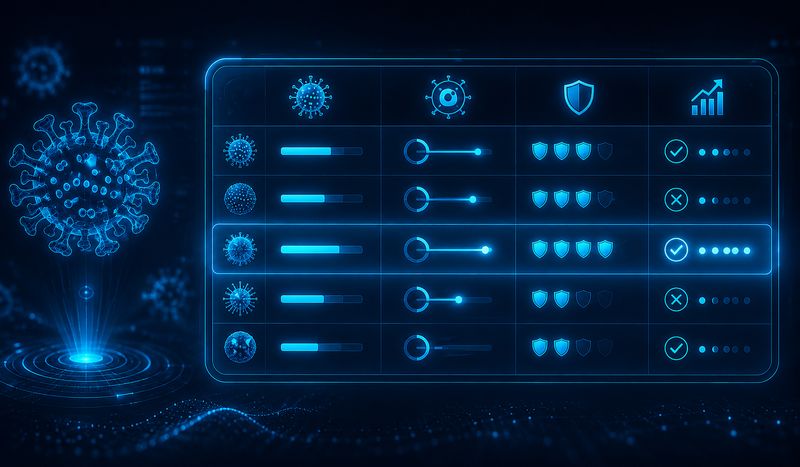
RNA Virus Platform FitEvaluate NDV strain background, genome design, rescue feasibility, attenuation logic, and payload compatibility.
Tumor-Selective ActivityAssess infection, replication, cytotoxicity, interferon-response context, and normal cell comparator behavior.

Development-Ready EvidenceConnect engineering output with titer, stability, payload expression, validation assays, and next-step study planning.
Our Service Scope

From NDV strain review to engineered candidate validation

Creative Biolabs supports NDV programs at discovery, candidate optimization, and preclinical preparation stages. The service can begin from a literature-supported concept, client-provided sequence, reverse-genetics system, viral stock, payload design, or a partially characterized NDV candidate that needs engineering refinement.

NDV platform review
Module 01

NDV Platform and Strain Review

Review strain background, virulence-associated design constraints, tumor indication, immune activation goals, biosafety context, and expected development milestone.

Typical output

NDV engineering brief with candidate suitability, risk notes, and recommended modification route.

Genome engineering design
Module 02

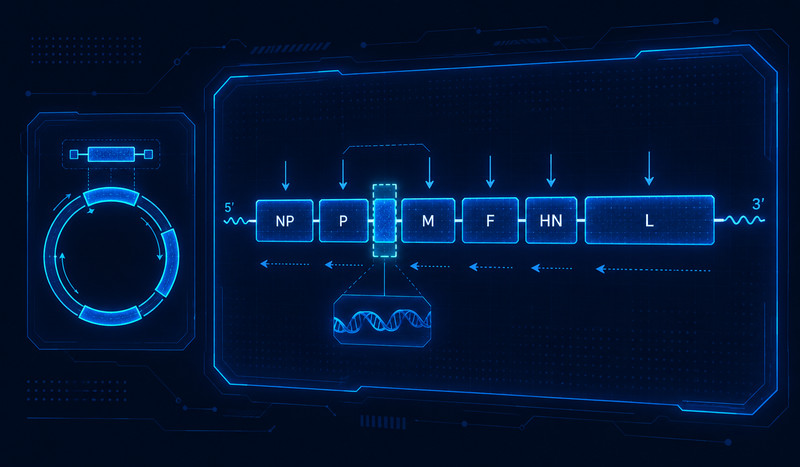
Genome Engineering and Rescue Design

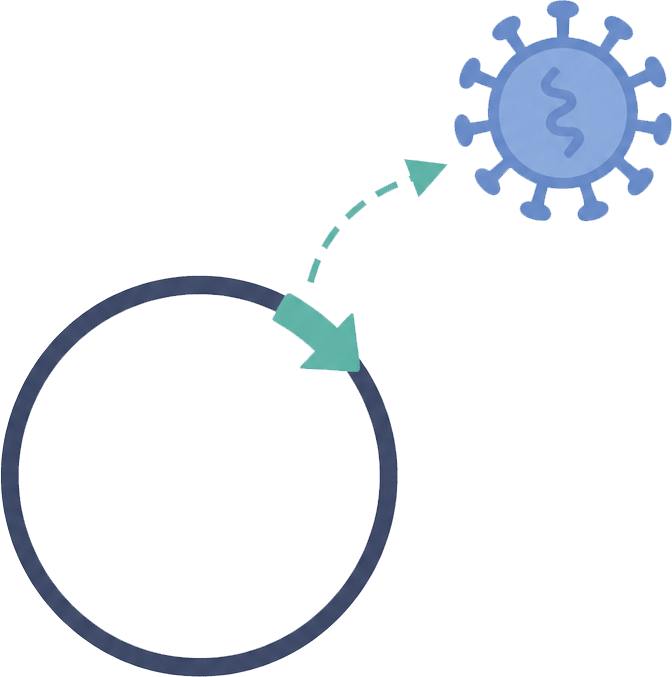
Support gene deletion or insertion planning, rescue plasmid architecture, viral transcription unit positioning, regulatory sequence review, and sequence-level feasibility checks.

Typical output

Sequence-ready design package for recombinant NDV construction or rescue evaluation.

Payload expression
Module 03

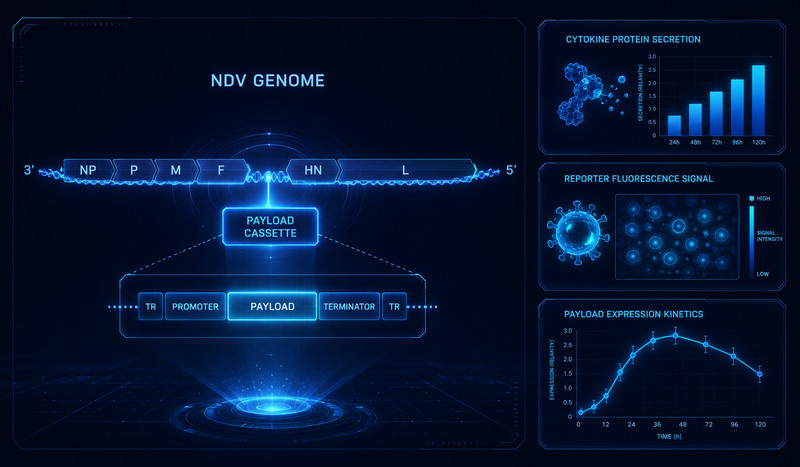
Payload and Reporter Expression Engineering

Design NDV candidates expressing cytokines, chemokines, checkpoint modulators, antibody fragments, tumor antigens, reporter genes, or customized payloads.

Typical output

Payload insertion strategy with expression, stability, and viral fitness considerations.

Attenuation design
Module 04

Attenuation and Safety-Oriented Design

Evaluate attenuation strategies, normal-cell restriction logic, IFN-response considerations, tissue exposure concerns, and compatibility with safety switch or detargeting concepts.

Typical output

Safety-oriented engineering plan and assay recommendations for risk-aware validation.

Tropism optimization
Module 05

Receptor, Tropism, and Entry Optimization

Assess tumor cell susceptibility, receptor or attachment-related constraints, entry efficiency, normal tissue concerns, and candidate retargeting or selection logic.

Typical output

Tropism evaluation plan with recommended tumor models and comparator cell systems.

Virus expansion and characterization
Module 06

Virus Expansion and Characterization

Support recombinant NDV rescue evaluation, amplification, infectious titer testing, genome copy analysis, payload expression checks, and passage stability assessment.

Typical output

Characterized NDV candidate material and data package for functional testing.

Validation and combination planning
Module 07

Functional Validation and Combination Planning

Design tumor killing, immune activation, normal comparator, 3D model, administration route, and combination therapy studies for the engineered NDV candidate.

Typical output

Validation roadmap with recommended in vitro, in vivo, and combination study next steps.

Helpful Starting Materials
  • NDV strain name, source, full or partial sequence, reverse-genetics components, or existing viral stock information.
  • Target insertion fragment, payload sequence, reporter gene, desired gene deletion, or attenuation concept.
  • Target tumor indication, preferred tumor cell lines, normal cell comparators, immune model preferences, and intended route of administration.
  • Expected titer range, previous rescue or amplification data, replication kinetics, cytotoxicity results, or payload expression records.
  • Project phase, validation milestone, preferred deliverables, biosafety context, and whether in vitro or in vivo follow-up is planned.
Technical Platforms and Assay Capabilities

Integrated reverse-genetics, virology, and mechanism-focused testing

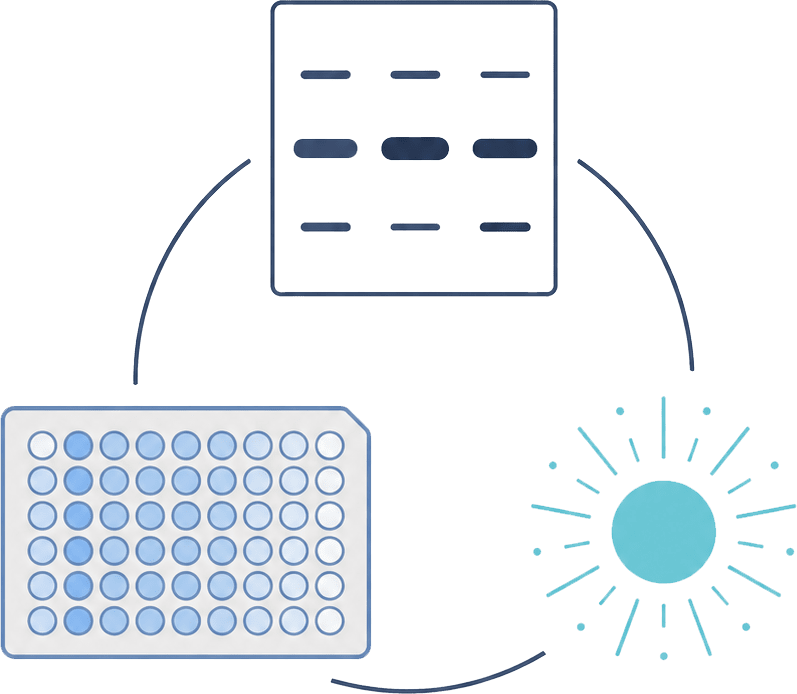
NDV development requires more than inserting a sequence into a viral genome. Creative Biolabs builds assay packages around the biology of NDV, including rescue feasibility, transcription unit design, viral fitness, tumor susceptibility, payload expression, innate immune activation, and model-specific validation.

NDV sequence design
Design

NDV Sequence and Genome Design

Strain sequence review, insertion site analysis, gene order considerations, regulatory sequence inspection, rescue system compatibility, and genome integrity checks.

Reverse genetics support
Rescue

Reverse-Genetics and Rescue Support

Design or evaluation of rescue plasmid systems, helper component compatibility, recombinant virus recovery feasibility, and early rescue quality observations.

Virus characterization
Virology

Virus Expansion and Titer Testing

Amplification support, infectious titer assays, genome copy quantification, replication kinetics, growth curve comparison, and stock characterization.

Payload expression analysis
Expression

Payload and Reporter Verification

RT-qPCR, immunoblotting, ELISA, flow cytometry, immunofluorescence, reporter readouts, secretion analysis, and expression time-course evaluation.

Tumor cell activity
Potency

Tumor Cell Infectivity and Cytotoxicity

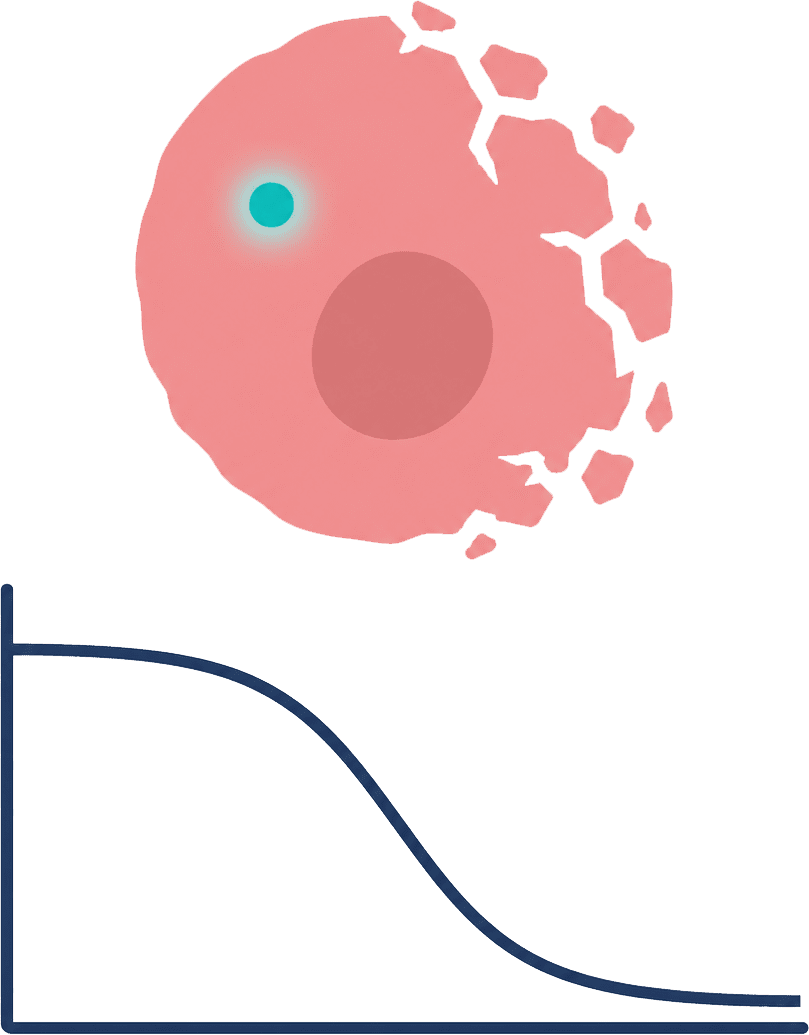
2D tumor panels, normal cell comparators, dose- and time-response assays, replication-linked killing, and 3D or organoid-compatible study options.

Immune mechanism assays
Immune

Innate and Adaptive Immune Readouts

Type I interferon-related markers, cytokine/chemokine profiling, dendritic cell activation, T cell or NK cell co-culture, and payload-specific immune readouts.

Stability and preclinical planning
Quality

Stability and Preclinical Planning

Passage stability checks, sequence retention, functional consistency, candidate ranking, administration route planning, and in vivo study alignment.

Engineering Options

NDV candidate design that balances potency, safety, and feasibility

NDV engineering decisions are evaluated according to their effect on viral rescue, replication, transgene expression, immune activation, tumor selectivity, normal cell safety, and production feasibility. Each design element should support a defined development milestone rather than add complexity without decision value.

01

Strain Background and Attenuation

Selection or modification of NDV background according to tumor model fit, safety expectations, immune activation profile, and rescue feasibility.

02

Gene Deletion or Insertion Strategy

Engineering of deletions, insertions, reporters, or expression units while considering genome architecture, transcription gradient effects, and viral fitness.

03

Therapeutic Payload Expression

Expression of cytokines, chemokines, antibodies, checkpoint modulators, tumor antigens, or customized payloads with evaluation of expression, localization, and burden.

04

Receptor and Tropism Optimization

Assessment of tumor susceptibility, entry-related constraints, normal cell infection risk, and retargeting-compatible validation readouts.

05

Replication and Stability Control

Measurement of infectious titer, replication kinetics, stock quality, genetic stability, and candidate consistency across relevant passages.

06

Validation and Development Fit

Alignment with in vitro cytotoxicity, immune mechanism testing, animal model selection, delivery route, and combination therapy goals.

Recommended Workflow

A practical path from NDV concept to validated candidate

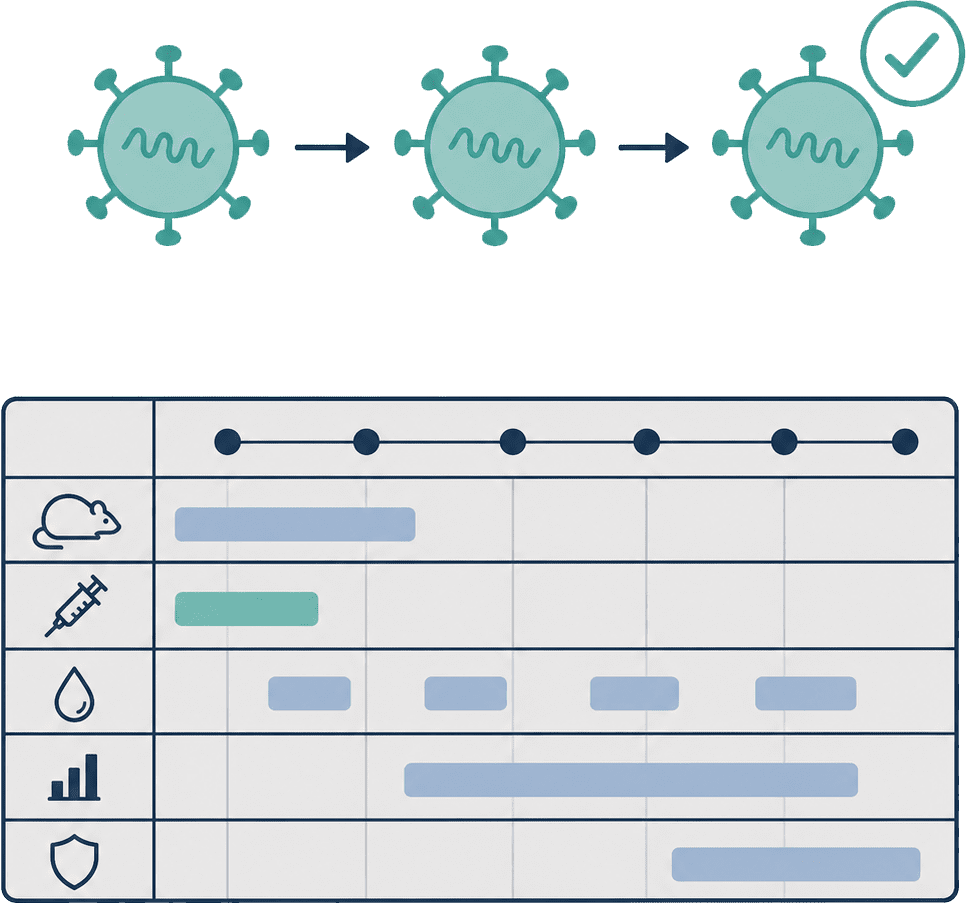
The workflow can start from a strain concept, sequence, plasmid system, payload plan, existing viral stock, or early candidate. Each step is designed to reduce uncertainty before the project advances into broader validation, animal studies, or combination therapy research.

Scope
NDV project scoping
01

Project Scoping

Define NDV strain background, target indication, desired modification, payload, model system, expected titer, and validation milestone.

Design
NDV genome design
02

Genome and Payload Design

Review sequence constraints, gene insertion or deletion plan, transcription unit position, payload format, attenuation logic, and control strategy.

Build
NDV construct preparation
03

Construct Preparation or Sample Intake

Prepare recombinant design elements or receive client-provided sequences, plasmids, stocks, cell models, or prior characterization data.

Rescue
NDV rescue and expansion
04

Rescue, Expansion, and Characterization

Evaluate recombinant virus recovery, amplification, infectious titer, genome copy level, baseline replication, and stock quality.

Test
NDV functional testing
05

Functional and Mechanism Testing

Measure payload expression, tumor infectivity, cytotoxicity, normal comparator behavior, immune activation, and stability indicators.

Plan
NDV development recommendation
06

Candidate Ranking and Next-Step Plan

Integrate virology, activity, safety-oriented, and feasibility data into recommendations for further optimization or validation.

Project scope and timing depend on NDV strain background, reverse-genetics readiness, inserted sequence length, rescue feasibility, biosafety review, candidate number, target models, assay endpoints, and whether in vivo or combination therapy work is included.
Deliverables and Quality Considerations

A traceable evidence package for NDV candidate decisions

The deliverable is organized around decision value: whether an engineered NDV candidate can be rescued, expanded, characterized, and advanced into the intended functional validation path. Reports connect construct design with viral fitness, payload behavior, model suitability, and quality control observations.

Design Output

NDV engineering design package

Included

Strain review, modification rationale, payload or reporter insertion plan, attenuation considerations, expected readouts, and sequence-level design notes.

Quality focus

Confirms whether the proposed modification fits the NDV platform before resource-intensive rescue or validation work.

Build Output

Construct and rescue verification

Included

Construct integrity information, recombinant virus rescue observations, amplification notes, stock identity confirmation, and baseline production context.

Quality focus

Documents whether engineering choices compromise recovery, amplification, or candidate handling.

Virology Output

Titer, replication, and stability data

Included

Infectious titer, genome copy analysis, growth curve data, replication kinetics, passage stability checks, and candidate-to-candidate comparisons.

Quality focus

Separates biologically active candidates from designs that express a payload but lose practical viral performance.

Function Output

Tumor activity and immune mechanism readouts

Included

Tumor cell infection, cytotoxicity, payload expression, cytokine or chemokine induction, immune co-culture readouts, and normal cell comparator data.

Quality focus

Links NDV engineering effects to mechanism-relevant activity rather than relying only on viral quantity measurements.

Decision Output

Development recommendation report

Included

Candidate ranking, risk flags, assay limitations, model recommendations, expected next steps, and suggestions for in vitro, in vivo, or combination studies.

Quality focus

Makes the reasoning behind advancement, redesign, or additional validation clear for project stakeholders.

Application Scenarios

When NDV engineering adds the most value

NDV engineering is useful when a project needs an RNA virus platform with tumor-selective replication potential, strong immune activation, payload delivery capacity, and a clear route from recombinant candidate design to validation-ready evidence.

#
Scenario
Objective
Engineering Emphasis
01
NDV platform selection for a new OV program

Evaluate whether NDV fits a target tumor type, immune mechanism, administration route, and validation model better than another OV platform.

Strain reviewTumor fitModel selectionCandidate comparison
02
Armed NDV candidate development

Insert therapeutic payloads or reporters while maintaining rescue feasibility, infectious titer, replication behavior, and stability.

Payload insertionReporter geneExpressionViral fitness
03
Attenuation and safety-oriented optimization

Refine NDV designs to reduce safety concerns while preserving tumor infection, replication, and immune activation potential.

AttenuationNormal cellsIFN contextSafety boundary
04
Tumor tropism and receptor-limited models

Assess infection efficiency and entry-related limitations across tumor models, normal cell comparators, and disease-specific systems.

TropismEntryCell panelsRetargeting
05
NDV plus immunotherapy or standard therapy

Design studies that connect NDV-induced immune activation with checkpoint blockade, cytokine payloads, cell therapy, chemotherapy, radiotherapy, or cancer vaccines.

CombinationImmune activationCytokine readoutSynergy
06
In vivo validation preparation

Generate the engineering, titer, stability, and functional data needed to support animal model selection and study design.

Animal modelRouteDose rationaleEndpoints
Why Choose Creative Biolabs

Integrated support for NDV design, rescue, characterization, and validation

NDV engineering requires coordinated decisions across viral genome design, payload biology, reverse genetics, titer and stability testing, tumor model selection, and immune mechanism validation. Creative Biolabs connects these elements into a service workflow built for research and preclinical development decisions.

Platform

Support for NDV-specific engineering questions, including strain background, rescue feasibility, genome design, attenuation, and payload burden.

Continuity

Projects can move from design to recombinant virus evaluation, expansion, titer testing, in vitro validation, immune assays, and preclinical planning.

Readouts

Assay panels are selected to evaluate tumor infection, replication, cytotoxicity, payload expression, normal cell response, and immune activation.

Flexibility

Clients may submit sequences, plasmids, viral stocks, existing candidates, payload ideas, tumor models, or a complete development brief.

Decision

Reports are organized around candidate advancement, redesign, or next-step validation rather than disconnected experimental endpoints.

Oncolytic Newcastle disease virus engineering workflow placeholder image
NDV engineering continuityDesigned to connect RNA virus design with rescue, titer, stability, functional validation, and development planning.
Frequently Asked Questions

Common questions about oncolytic NDV engineering

Questions about NDV platform fit, engineering strategies, payload expression, starting materials, validation assays, downstream development, and comparison with other oncolytic virus platforms.

Newcastle disease virus is an enveloped, negative-sense RNA virus with natural tumor-selective replication tendencies and strong immune-stimulatory potential. Many tumor models show altered antiviral defense, interferon signaling, receptor availability, or stress-response states that can make them more permissive to NDV than normal cells. Engineering support is often needed to adapt strain background, attenuation design, payload insertion, rescue feasibility, titer, genetic stability, and validation assays to the intended research objective.

Creative Biolabs can support NDV strain and sequence review, attenuation-oriented design, gene insertion or deletion planning, therapeutic payload expression, reporter insertion, transcription unit positioning, rescue plasmid design, receptor or tropism-related optimization, and candidate comparison. The final engineering plan is customized according to the starting strain, desired payload, target tumor model, route of administration, biosafety expectations, and downstream validation stage.

Yes. NDV candidates can be designed to express immunomodulatory cytokines, chemokines, antibody fragments, checkpoint-modulating molecules, reporter genes, tumor antigens, or other payload concepts when compatible with genome capacity and viral fitness. Payload design should consider insertion location, expression timing, transcript gradient effects, protein localization, rescue efficiency, replication impact, and stability across passages.

Useful information includes the NDV strain source or sequence, reverse genetics components if available, target insertion fragment, desired payload or reporter, target indication, intended cell or animal model, preferred route of administration, expected titer range, previous rescue or replication data, biosafety context, and whether the project is at discovery, candidate optimization, or preclinical planning stage.

Validation may include sequence confirmation, rescue feasibility, infectious titer testing, replication kinetics, payload expression analysis, tumor cell infectivity, cytotoxicity, normal cell comparator assays, interferon-response context, immune activation readouts, stability checks, and selected in vivo efficacy or biodistribution studies when appropriate for the program stage.

Yes. NDV engineering can be integrated with broader in vitro validation, 3D tumor model testing, immune mechanism assays, biodistribution planning, toxicology alignment, and in vivo efficacy studies. This continuity is useful when the project needs to move from a rescued or modified NDV candidate to a decision-ready evidence package.

Creative Biolabs can help compare NDV against other oncolytic virus candidates by reviewing tumor infectivity, replication behavior, payload compatibility, innate immune activation, production feasibility, model suitability, administration route, safety-related constraints, and downstream validation requirements. The goal is to determine whether NDV is the best platform for the customer's mechanism and development milestone.

Request a Quote

Contact Creative Biolabs

To discuss an oncolytic Newcastle disease virus engineering project, please share your NDV strain source or sequence, target insertion fragment or deletion concept, desired payload or reporter, expected titer range, target cancer model, preferred validation assays, intended route of administration, project phase, and planned next milestone. Creative Biolabs can help design an NDV engineering and validation plan that fits your scientific objective and development timeline.

Online Inquiry
! All products and services are for Research Use Only. Not For Clinical Use.