Oncolytic Reovirus Engineering Services

OV Engineering Services · Reovirus Platform

Oncolytic Reovirus Engineering Services

Reovirus is a non-enveloped, segmented double-stranded RNA virus platform with distinctive tumor-selective replication potential, immune-stimulatory activity, and translational relevance for solid tumor research. Creative Biolabs provides oncolytic reovirus engineering, strain and segment review, candidate construction support, virus rescue and expansion, titer testing, stability assessment, and mechanism-focused validation services to help researchers build reovirus programs with clearer selectivity, potency, production, and next-step development logic.

Oncolytic reovirus development requires more than selecting a naturally tumor-permissive virus. Orthoreovirus/reovirus biology involves segmented RNA genomes, receptor-dependent entry, cytoplasmic replication, innate immune sensing, and strain-specific differences in infectivity and cytotoxicity. These factors can influence tumor selectivity, production feasibility, model choice, safety-oriented interpretation, and whether a candidate remains stable after engineering.

Creative Biolabs builds reovirus engineering programs around practical development decisions. We help clients evaluate strain background, segment compatibility, gene insertion or reporter feasibility, receptor and tropism considerations, attenuation strategy, viral rescue and expansion, infectious titer, replication kinetics, tumor versus normal cell response, and readiness for broader in vitro validation, immune mechanism studies, combination therapy testing, or in vivo efficacy evaluation.

Strain and Segment FitAssess virus background, segment compatibility, rescue feasibility, and stability constraints before candidate build.

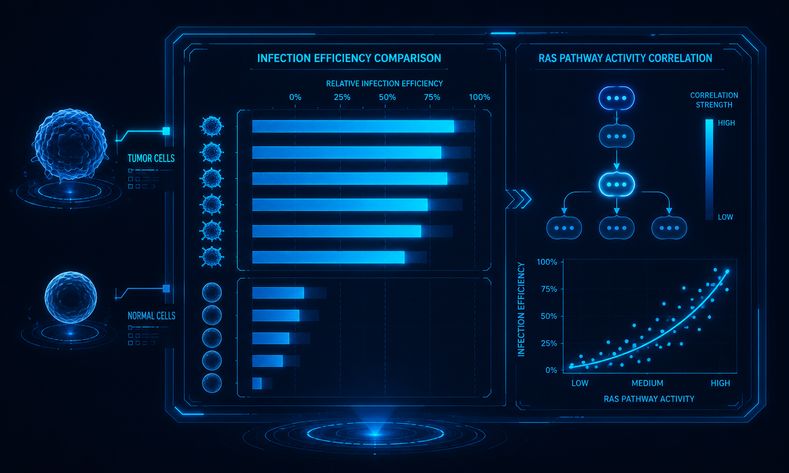
Tumor Selectivity EvidenceCompare infection, replication, cytotoxicity, and antiviral-response context in tumor and normal cell models.

Production and Validation ReadinessConnect engineering choices with titer, scale-up suitability, assay endpoints, and next-step development planning.
Service Scope

From reovirus platform assessment to engineered candidate validation

Creative Biolabs supports reovirus projects from early platform selection through candidate design, virus rescue or sample intake, expansion, characterization, and functional validation. The scope can be configured for discovery screening, candidate optimization, production-oriented characterization, or preclinical study preparation.

Reovirus platform review
Module 01

Reovirus Platform and Strain Review

Evaluate strain source, segment information, tumor indication fit, receptor context, antiviral-response considerations, biosafety expectations, and production constraints.

Typical output

Platform suitability memo with recommended strain, segment, model, and validation priorities.

Reovirus genome engineering
Module 02

Genome Segment and Engineering Design

Review gene deletion or insertion feasibility, reporter or payload design, segment choice, transcription and packaging constraints, attenuation logic, and candidate comparison strategy.

Typical output

Engineering design plan with sequence-level notes, feasibility risks, and decision criteria.

Reovirus rescue support
Module 03

Construct Preparation and Rescue Support

Support reverse-genetics component preparation, recombinant virus rescue planning, client-provided sample intake, identity confirmation, and early recovery assessment.

Typical output

Construct or rescue-readiness package and initial recombinant candidate status report.

Reovirus amplification
Module 04

Virus Expansion and Titer Testing

Develop amplification conditions, harvest strategy, stock preparation, infectious titer measurement, genome copy analysis, and batch comparability checks.

Typical output

Characterized reovirus stock information with titer, quality notes, and handling recommendations.

Reovirus tropism testing
Module 05

Receptor, Tropism, and Selectivity Testing

Compare tumor and normal cell infectivity, receptor-associated entry behavior, dose response, replication kinetics, and permissiveness across selected models.

Typical output

Tumor selectivity dataset with recommended cell models and normal comparator interpretation.

Reovirus function assays
Module 06

Functional Potency and Mechanism Assays

Measure cytopathic effect, tumor cell killing, replication-dependent activity, immune activation, payload or reporter expression, and candidate-to-candidate performance.

Typical output

Mechanism-focused activity report and recommendations for deeper validation.

Reovirus stability and development fit
Module 07

Stability and Development Fit Assessment

Assess passage stability, segment identity, stock consistency, intended route of administration, formulation interface, model selection, and next-step readiness.

Typical output

Development-fit assessment with risk flags and follow-up study recommendations.

Typical Starting Materials and Project Inputs
  • Reovirus strain source, sequence information, reverse-genetics system, viral stock, or prior characterization data.
  • Target insert, reporter, payload concept, desired modification, or attenuation strategy to be evaluated.
  • Target tumor indication, receptor or biomarker hypothesis, preferred cell panel, normal comparator, and animal model preference.
  • Expected titer range, route of administration, project phase, biosafety context, and downstream validation milestone.
  • Available plasmids, cell substrates, assay data, combination therapy concept, or previous in vitro/in vivo results.
Technical Platforms

Assays for reovirus engineering, production, and mechanism validation

The technical plan is tailored to the reovirus strain, engineering strategy, insert feasibility, target cell model, and decision point. Rather than treating reovirus as a generic OV candidate, Creative Biolabs separates design feasibility, rescue and expansion, titer, tumor selectivity, stability, and mechanism-specific functional evidence.

Strain and segment analysis
Design

Strain and Segment Analysis

Review strain background, segment compatibility, insert feasibility, attenuation logic, reporter or payload strategy, and expected rescue constraints.

Reverse genetics support
Rescue

Reverse-Genetics and Rescue Support

Support construct preparation, rescue workflow planning, sample intake, recovery assessment, identity confirmation, and early candidate comparison.

Reovirus titer testing
Titer

Virus Titer and Replication Readouts

Plaque assay, TCID50-compatible formats, genome copy analysis, growth curves, dose response, and replication kinetics in selected cell models.

Reovirus infectivity assays
Tropism

Entry, Tropism, and Selectivity Assays

Receptor-context review, tumor cell panel infection, normal comparator testing, competition or blocking designs, and selectivity interpretation.

Reovirus cytotoxicity assays
Potency

Cytotoxicity and Tumor Killing Assays

CPE monitoring, viability assays, time-course killing, 3D spheroid or organoid-compatible testing, and replication-linked potency analysis.

Immune mechanism assays
Immune

Innate and Adaptive Immune Readouts

Interferon-response context, cytokine or chemokine release, immune cell co-culture, antigen-presentation markers, and combination therapy readouts.

Reovirus stability checks
Stability

Passage Stability and Stock Quality

Segment identity checks, passage stability observations, batch consistency, stock handling notes, and risk flags for later production or preclinical planning.

Engineering Strategy

Engineering options aligned with reovirus biology and development risk

Reovirus engineering should be judged by whether the candidate remains recoverable, stable, potent, selective, and manufacturable enough for the next milestone. Creative Biolabs organizes reovirus engineering around design levers that can be matched to tumor biology, model availability, and downstream study goals.

01

Strain and Reassortant Selection

Compare strain background, segment combination, replication phenotype, tumor permissiveness, immune activation profile, and production behavior.

02

Gene Insertion or Reporter Feasibility

Evaluate whether an insert can be accommodated without disrupting segment compatibility, rescue efficiency, replication, or passage stability.

03

Payload Expression and Control Logic

Review expression format, target insert size, readout timing, transcript context, localization needs, and effects on viral fitness when payload expression is included.

04

Receptor and Tropism Optimization

Align candidate selection or engineering with receptor availability, tumor entry barriers, normal tissue comparator data, and desired route of administration.

05

Attenuation and Safety-Oriented Design

Balance tumor selectivity, normal cell restriction, innate immune sensitivity, replication control, and the need to preserve therapeutic activity.

06

Production and Validation Readiness

Prioritize designs that support consistent expansion, measurable infectious titer, traceable identity, and assays suitable for in vitro or in vivo follow-up.

Recommended Workflow

A practical path from reovirus concept to validated candidate

The workflow can begin with a virus strain, sequence information, reverse-genetics materials, viral stock, desired insert, target indication, or early candidate. Each step is designed to reduce uncertainty before the program advances into larger validation packages or animal studies.

Scope
Reovirus project scoping
01

Project Scoping

Define strain source, target indication, desired modification, insert fragment, expected titer, validation model, route, and project stage.

Design
Reovirus design
02

Engineering Design

Review segment architecture, insertion feasibility, payload or reporter plan, attenuation concept, tropism hypothesis, and assay controls.

Intake
Reovirus materials intake
03

Construct Preparation or Sample Intake

Prepare or receive sequences, plasmids, viral stocks, cell substrates, insert fragments, model information, and prior virology data.

Rescue
Reovirus rescue and expansion
04

Rescue, Expansion, and Titer Testing

Evaluate recovery, amplification conditions, infectious titer, genome copy level, baseline replication, and stock quality.

Validate
Reovirus validation assays
05

Functional and Selectivity Validation

Measure tumor infectivity, replication, cytotoxicity, normal comparator response, payload expression, immune activation, and stability markers.

Plan
Reovirus development recommendation
06

Candidate Ranking and Next-Step Plan

Integrate virology, potency, selectivity, production, stability, and model-fit data into a recommendation for follow-up work.

Project scope and timing depend on reovirus strain source, reverse-genetics readiness, target insert size, rescue feasibility, biosafety review, target models, expected titer range, assay endpoints, stability requirements, and whether in vivo or combination therapy work is included.
Deliverables and Quality Considerations

A traceable evidence package for reovirus candidate decisions

The final package is built to support a practical development decision: whether a reovirus candidate can be rescued, expanded, characterized, and advanced into the intended validation path. Reports connect engineering rationale with viral fitness, tumor selectivity, stock quality, assay limitations, and recommended next steps.

Design Output

Reovirus engineering design package

Included

Strain and segment review, engineering rationale, insert or reporter feasibility, attenuation considerations, model recommendations, and sequence-level design notes.

Quality focus

Confirms whether the proposed modification is compatible with reovirus platform constraints before rescue or validation work.

Build Output

Construct and rescue verification

Included

Construct or segment information, rescue observations, identity confirmation, initial amplification notes, and candidate handling context.

Quality focus

Documents whether engineering choices affect recovery, early amplification, or candidate usability.

Virology Output

Titer, replication, and stability data

Included

Infectious titer, genome copy analysis, growth curves, dose-response behavior, segment or identity checks, and passage stability observations when included.

Quality focus

Separates candidate potency from designs that lose practical viral performance or stock consistency.

Function Output

Tumor activity and mechanism readouts

Included

Tumor infection, cytotoxicity, normal comparator response, receptor-related assay context, payload or reporter expression, and immune activation readouts.

Quality focus

Links reovirus engineering effects to mechanism-relevant activity rather than relying only on titer or CPE measurements.

Decision Output

Development recommendation report

Included

Candidate ranking, risk flags, model-fit comments, route-of-administration considerations, assay limitations, and recommendations for in vitro, in vivo, or combination studies.

Quality focus

Makes advancement, redesign, or additional validation decisions easier for project stakeholders.

Application Scenarios

When reovirus engineering adds the most value

This service is designed for programs that need a reovirus-specific development route rather than a generic OV assay package. It is especially useful when tumor selectivity, virus production, payload feasibility, and validation model choice must be evaluated together.

#
Scenario
Objective
Engineering Emphasis
01
Solid tumor programs requiring reovirus platform assessment

Evaluate whether reovirus biology fits the target cancer type, receptor context, antiviral-response status, and intended development milestone.

Strain reviewTumor panelSelectivityModel fit
02
Reassortant or strain comparison projects

Compare candidate strains or segment combinations for infectivity, replication, cytotoxicity, immune activation, and production behavior.

ReassortmentReplicationTiterRanking
03
Reporter or payload feasibility evaluation

Determine whether a target insert can be engineered into a reovirus candidate without compromising rescue, expression, replication, or stability.

Insert designExpressionFitnessStability
04
Production and stock characterization needs

Establish expansion conditions, infectious titer, identity checks, stock consistency, and handling parameters for downstream experiments.

ExpansionPlaque assayGenome copyQC
05
Combination therapy exploration

Position reovirus with immune checkpoint blockade, cell therapy, chemotherapy, radiotherapy, or immunomodulatory strategies.

Immune activationCombination matrixCytokinesSynergy
06
In vivo validation planning

Prepare an engineered or selected reovirus candidate for efficacy, biodistribution, route-of-administration, or safety-oriented study design.

Animal modelRouteDoseNext steps
Why Choose Creative Biolabs

Integrated support for reovirus engineering and validation

Reovirus projects require coordination across virus biology, engineering feasibility, production, and assay interpretation. Creative Biolabs connects candidate design with experimental validation so clients can make clearer decisions about platform fit and development direction.

Platform

Support is tailored to orthoreovirus/reovirus biology, including segmented genome considerations, strain background, and model-dependent permissiveness.

Engineering

Design plans account for gene insertion, reporter or payload feasibility, attenuation, receptor or tropism considerations, and viral fitness.

Validation

Assays connect titer, replication, cytotoxicity, normal comparator behavior, immune activation, and stability into a practical evidence package.

Continuity

Projects can connect to candidate screening, in vitro validation, 3D tumor models, in vivo efficacy, biodistribution, and combination therapy research.

Decision

Deliverables highlight candidate strengths, risk flags, assay limitations, and recommended next steps rather than simply listing raw results.

Oncolytic reovirus engineering workflow placeholder image
Reovirus-specific development logicDesigned to balance tumor selectivity, viral fitness, production feasibility, and validation readiness.
Frequently Asked Questions

Common questions about oncolytic reovirus engineering

Questions about reovirus platform features, engineering feasibility, starting materials, payload design, validation assays, model selection, and downstream development integration.

Mammalian orthoreovirus, commonly called reovirus, is a non-enveloped double-stranded RNA virus with a segmented genome and cytoplasmic replication. Many tumor models can be more permissive to reovirus because of altered antiviral signaling, stress-response pathways, receptor availability, and tumor-specific permissiveness. Engineering and characterization are important because strain background, segment compatibility, receptor use, production conditions, and model selection can strongly influence infectivity, replication, tumor killing, and immune activation.

Creative Biolabs can support strain and segment review, reassortant candidate evaluation, reverse-genetics design support, platform-compatible gene insertion or reporter feasibility assessment, attenuation-oriented modification planning, receptor or tropism-focused optimization, payload expression strategy review, virus rescue or sample intake, expansion, titer testing, replication analysis, stability checks, and in vitro or in vivo validation planning.

Payload engineering for reovirus requires careful feasibility review because of the segmented RNA genome, packaging constraints, segment compatibility, and the need to preserve viral fitness. When a payload or reporter concept is suitable for the selected platform, Creative Biolabs can help evaluate insertion strategy, expression format, segment choice, rescue feasibility, expression verification, stability, and potential effects on replication and cytotoxicity.

Useful project information includes the reovirus strain source or sequence information, available reverse-genetics components, target insert or reporter sequence, desired titer range, tumor indication, proposed cell or animal models, route of administration, prior infectivity or replication data, comparator virus information, biosafety context, and whether the program is in discovery, candidate optimization, or preclinical planning.

Validation may include sequence or segment identity confirmation, rescue feasibility, infectious titer measurement, genome copy analysis, replication kinetics, cytopathic effect or cytotoxicity assays, tumor versus normal cell comparator testing, receptor or entry-related readouts, payload or reporter expression analysis, passage stability checks, immune activation assays, and selected in vivo efficacy or biodistribution studies when appropriate.

Model selection depends on tumor type, receptor expression, antiviral-response status, permissiveness to reovirus replication, and the intended therapeutic mechanism. Projects may use 2D tumor cell panels, normal cell comparators, 3D spheroids or organoids, immune co-culture systems, syngeneic or xenograft models, and combination therapy formats when the program requires efficacy, immune activation, or delivery-context evidence.

Yes. Reovirus engineering can be integrated with broader in vitro validation, 3D tumor model testing, immune mechanism assays, candidate screening, biodistribution planning, toxicology alignment, and in vivo efficacy studies. This continuity helps move a reovirus concept or engineered candidate toward a decision-ready evidence package for the next research milestone.

Request a Quote

Contact Creative Biolabs

To discuss an oncolytic reovirus engineering project, please share your reovirus strain source, sequence or reverse-genetics materials if available, target insert or reporter, desired engineering objective, expected titer, tumor indication, preferred validation model, route of administration, previous data, biosafety context, and project stage. Creative Biolabs can help design a reovirus-specific plan that connects engineering feasibility with production, selectivity, potency, and next-step validation.

Online Inquiry
! All products and services are for Research Use Only. Not For Clinical Use.