
IL4 & IL10-loaded Oncolytic Vaccinia Virus
Construction of Tumor-Specific Oncolytic Vaccinia Viruses
The advent of modern oncolytic vaccinia virus design presents great potentials for tumor treatment. Recent efforts have been focused on enhancing virus replication to improve tumor efficacy. There are three types of genes commonly used for the construction of tumor-specific oncolytic vaccinia viruses. The first type is the genes whose expression products can directly or indirectly kill tumor cells and induce apoptosis. The second category includes genes whose expression products contribute to viral infection and replication, as well as angiogenesis inhibition, such as IL-4 or IL-10. The third category includes the so-called "safety value" genes, which appropriately shut down the virus replication system when the virus replication is not controlled or the patient has an adverse reaction. The expression of these genes can affect how the immune system responds to tumors and influence tumor cell proliferation.
Research for IL4&IL10-loaded Oncolytic Vaccinia Virus
The insertion of the IL-4 or IL-10 gene into the vaccinia virus vector is beneficial to prevent the clearance of immature viruses and assist virus replication. Although this method can enhance the oncolysis effect mediated by the vaccinia virus, its safety needs to be further improved.
Some studies have shown that the construction of recombinant oncolytic herpes simplex viruses (oHSVs) lacking the neurovirulence gene γ134.5 (Δγ134.5) can express the immunosuppressive cytokines (IL-4 and IL-10). According to the tests in glioma models, the results showed that their expression reduced oncolytic vaccinia virus antitumor activity and overall survival. In contrast, the expression of immunosuppressive cytokines from the virus can improve survival. In conclusion, in addition to virus replication and tumor cell lysis, the immune response is also an indispensable part of viral anti-tumor activity. By combining immunomodulatory agents with oncolytic vaccinia virus, cytokine-expressing oncolytic viruses have been effective in pre-clinical models, and it is necessary to optimize this powerful tool for early-stage clinical trials.
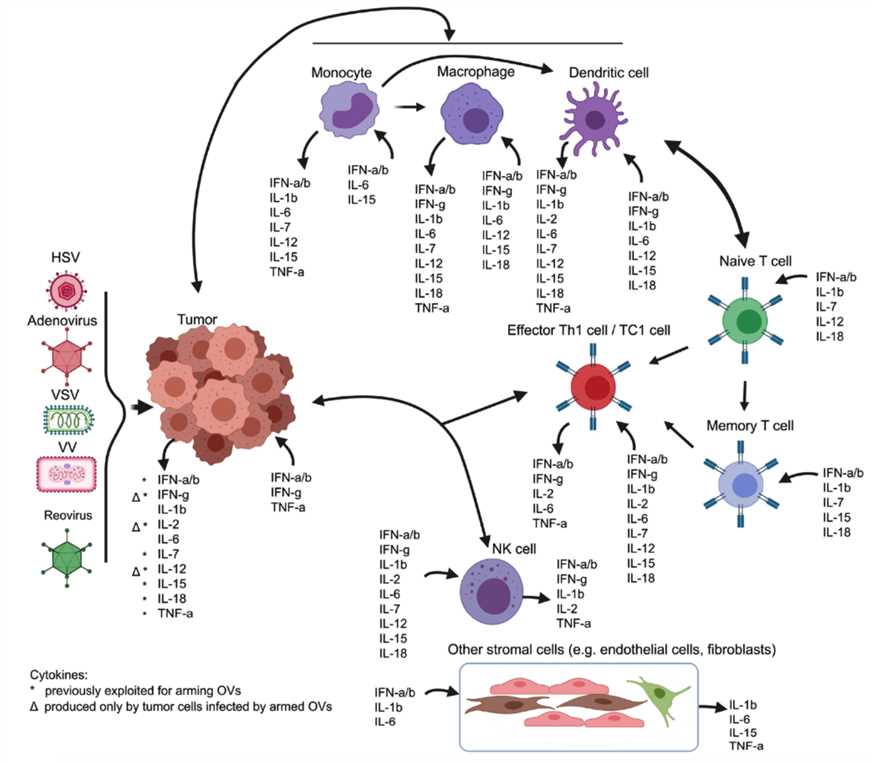 Fig.1 Interferons, interleukins, and tumor necrosis factors participating in antitumor immunity described upon oncolytic virotherapy. (Pol, 2020)
Creative Biolabs is one of the well-recognized experts who are professional in applying advanced technologies for a broad range of project objectives. Based on our extensive experience in the field of the oncolytic virus, now we can provide the one-stop oncolytic vaccinia virus enhancement service for our clients all over the world.
Reference
- Pol, J.; et al. Cytokines in oncolytic virotherapy. Cytokine & Growth Factor Reviews. 2020. Distributed under Open Access license CC BY 4.0, without modification.