
Heterobifunctional Crosslinkers
Introduction of Heterobifunctional Crosslinkers
Heterobifunctional crosslinkers are advanced chemical reagents engineered to covalently bridge two distinct biomolecules, such as proteins, nucleic acids, or glycans, with exceptional specificity. Unlike their homobifunctional counterparts, which feature identical reactive groups at both ends, heterobifunctional crosslinkers leverage strategically paired, dissimilar functional moieties (e.g., N-hydroxysuccinimide (NHS) esters and maleimides, or azides and alkynes). This intrinsic asymmetry enables selective, sequential targeting of unique chemical handles on each molecule, ensuring precise spatial orientation and stoichiometry in the final conjugate.
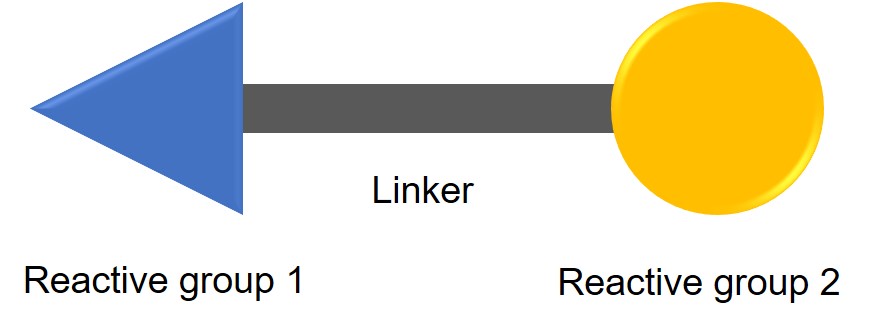 Fig.1 Structure of heterobifunctional crosslinker.
The hallmark of these crosslinkers is their capacity to minimize uncontrolled polymerization—a major limitation of homobifunctional systems. By enabling multi-step, "activate-then-conjugate" workflows (e.g., initial amine labeling on an antibody, followed by thiol coupling to a drug payload), heterobifunctional reagents drastically reduce undesired side reactions like homo-oligomerization. This precision is critical for applications demanding molecular fidelity, such as constructing antibody-drug conjugates (ADCs) with defined drug-to-antibody ratios (DARs), fabricating biosensors with immobilized enzymes, or probing protein interaction networks without crosslinking artifacts.
Classification of Heterobifunctional Crosslinkers
Heterobifunctional crosslinkers are broadly classified based on the specific reactive groups they possess. This diversity allows researchers to select the ideal reagent for their unique conjugation needs, targeting a wide range of functional groups commonly found on biomolecules.
Here are some key classifications:
- Amine-Reactive and Sulfhydryl-Reactive Crosslinkers
These are among the most common and widely used heterobifunctional crosslinkers. One end typically contains an amine-reactive group (e.g., NHS esters, isothiocyanates, or succinimidyl esters), which targets primary amines (found in lysine residues and the N-terminus of proteins). The other end features a sulfhydryl-reactive group (e.g., maleimides, pyridyl disulfides, or iodoacetamides), which specifically reacts with free sulfhydryl groups (found in cysteine residues). This combination is highly effective for conjugating proteins via their lysine and cysteine residues, allowing for controlled, site-directed coupling. This type of crosslinker includes N-Succinimidyl 4-(N-Maleimidomethyl)cyclohexanecarboxylate (SMCC), N-Succinimidyl 4-(4-Maleimidophenyl)butyrate (SMPB), α-Maleimidoacetic Acid-NHS (AMAS), etc.
- Carbonyl-Reactive and Sulfhydryl-Reactive Crosslinkers
This class includes reagents with one carbonyl-reactive end (e.g., hydrazides or aminooxy groups) and one sulfhydryl-reactive end, such as 4-(4-N-maleimidophenyl)butyric acid hydrazide (MPBH) and 3-(2-pyridyldithio)propionyl hydrazide (PDPH). Carbonyl groups (aldehydes or ketones) can be naturally present or introduced into biomolecules (e.g., via periodate oxidation of carbohydrates). These crosslinkers are particularly useful for conjugating glycoproteins or other molecules with accessible aldehyde groups to sulfhydryl-containing partners, offering an alternative to amine- or sulfhydryl-based strategies.
- Amine-Reactive and Photoreactive Crosslinkers
These crosslinkers combine an amine-reactive group with a photoreactive group (e.g., aryl azides, diazirines, or benzophenones), such as N-Succinimidyl 4-Benzoylbenzoate, N-hydroxysuccinimidyl-4-azidobenzoate (HSAB), and N-hydroxysuccinimidyl-4-azidosalicylic acid (NHS-ASA). The amine-reactive end allows for specific attachment to a protein or other molecule through its amine groups. The photoreactive end remains inert until exposed to UV light, at which point it becomes highly reactive and can non-selectively insert into virtually any nearby C-H bond. This makes them invaluable for photoaffinity labeling, where a ligand can be covalently linked to its receptor's binding site upon light activation, even if the exact interacting residues are unknown.
- Sulfhydryl-Reactive and Photoreactive Crosslinkers
Similar to the amine-reactive/photoreactive class, these reagents feature a sulfhydryl-reactive group on one end and a photoreactive group on the other. They enable specific attachment to sulfhydryl-containing molecules, followed by light-activated, non-selective crosslinking to a nearby interacting partner. This is particularly useful for studying protein-protein interactions or mapping binding sites where a sulfhydryl group can be strategically introduced or is naturally present on one of the interacting partners. This type of crosslinkers includes 1-(p-azidosalicylamido)-4-(iodoacetamido)butane (ASIB), Benzophenone-4-iodoacetamide, Benzophenone-4-maleimide, etc.
The selection of heterobifunctional crosslinkers extends beyond reactive groups to encompass cross-bridge properties like length, hydrophilicity, and cleavability. Spacer length variations within families enable precise control over conjugate distance, while PEG-based bridges enhance water solubility. Furthermore, cleavable linkages allow for controlled release of conjugated molecules, expanding experimental design possibilities.
Creative Biolabs is deeply committed to advancing the field of bioconjugation. We not only offer a comprehensive range of high-quality heterobifunctional crosslinkers but also provide a suite of customized conjugation services, tailored to meet the unique demands of your most challenging projects. Partner with Creative Biolabs to transform your research and accelerate your path to discovery. Contact us for more details.