
Introduction to Aptamer-ASO Conjugates
Antisense Oligonucleotides (ASOs) hold immense potential for treating genetic disorders, yet their clinical efficacy is often limited by poor cellular uptake and lack of tissue specificity. Aptamer-Conjugated ASOs represent a cutting-edge solution, utilizing nucleic acid aptamers as "chemical antibodies" to guide therapeutic ASOs directly to specific cell surface receptors.
By conjugating an ASO to a cell-specific aptamer, the resulting chimera is internalized via receptor-mediated endocytosis, significantly increasing the intracellular concentration of the drug in target cells (e.g., tumor cells) while sparing healthy tissues.
Key Advantages
Targeted Delivery
Aptamers bind with high affinity to specific cell surface markers, ensuring the ASO payload is delivered strictly to the disease site.
Enhanced Uptake
Utilizes receptor-mediated endocytosis to bypass the cell membrane barrier, a primary bottleneck for naked ASOs.
Reduced Toxicity
Lower systemic doses are required due to targeted accumulation, significantly minimizing off-target side effects and immunogenicity.
One-Stop Aptamer-ASO Development Solution
Aptamer Screening & Selection
Optimization
We utilize Cell and Protein technologies to screen for high-affinity DNA/RNA aptamers against your specific target receptors. We can also optimize existing aptamers for improved stability and binding kinetics.
Post-selection, we perform truncation and mutation studies to identify the minimal binding sequence, ensuring the aptamer component does not sterically hinder the therapeutic ASO function.
Bioconjugation Strategy
Flexible Linker Chemistries
We offer both cleavable (e.g., acid-sensitive, disulfide) and non-cleavable linkers. Cleavable linkers are designed to release the ASO payload upon endosomal acidification, maximizing cytoplasmic delivery.
Our platform supports various conjugation techniques, including "Click" chemistry (azide-alkyne), thiol-maleimide coupling, and direct linear synthesis (for shorter chimeras), ensuring high yield and purity.
Characterization & QC
Functional Validation
Rigorous analysis using HPLC and LC-MS to verify molecular weight, purity (>95%), and conjugate stoichiometry. We ensure no free aptamers or free ASOs remain in the final product.
We validate the binding affinity (Kd) of the conjugate to target cells using Flow Cytometry and Confocal Microscopy, confirming that conjugation has not compromised aptamer targeting.
Conjugation Strategies & Architectures
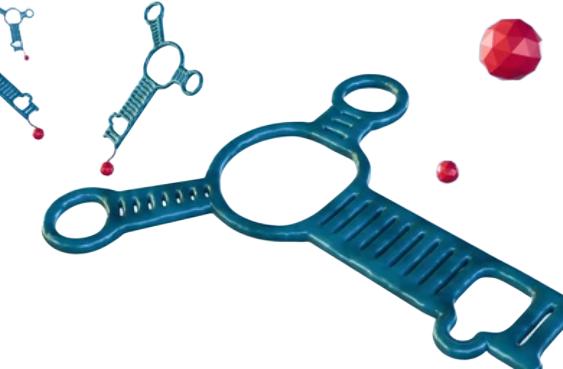
Direct Linear Synthesis
For shorter aptamer-ASO sequences, we employ a continuous solid-phase synthesis strategy. The aptamer and ASO sequences are synthesized as a single continuous strand connected by a non-nucleotide linker (e.g., PEG spacer) or a nucleotide bridge. This "chimera" approach ensures a defined 1:1 stoichiometry and simplifies the purification process. It is ideal for bivalent designs where the aptamer and ASO do not require complex secondary structure folding that might interfere with one another.
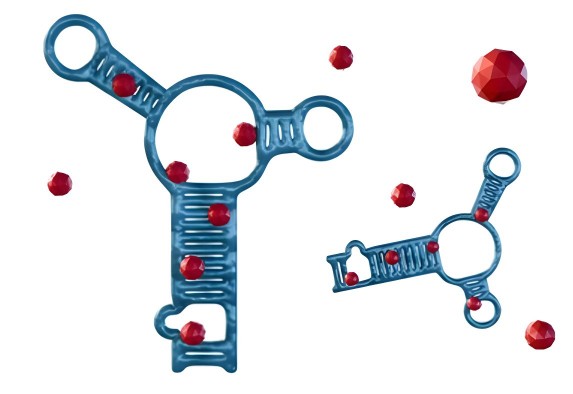
Modular Post-Synthetic Conjugation
For complex aptamers or long ASO sequences, we synthesize the two components separately and conjugate them post-synthetically. Functional groups (e.g., thiol, amine, azide, alkyne) are introduced at the 3' or 5' ends. This modular approach allows for the rigorous purification of the aptamer and ASO individually before coupling. It also facilitates the use of cleavable linkers (e.g., acid-labile hydrazone or disulfide bonds) that release the ASO payload inside the cell.
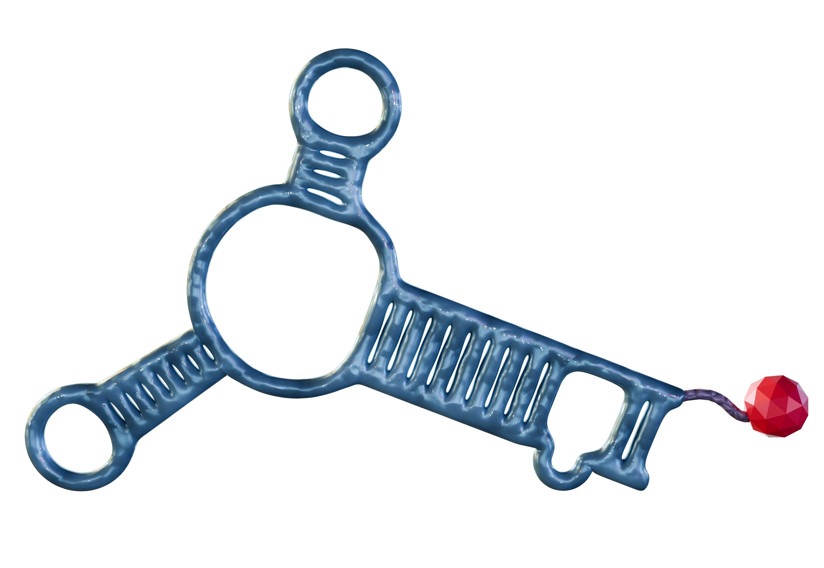
Sticky-End Annealing
A versatile non-covalent strategy where complementary "sticky ends" are added to the aptamer and the ASO. The two components hybridize through Watson-Crick base pairing to form the conjugate. This method is particularly useful for rapid screening of multiple ASO payloads with a single aptamer targeting moiety. To increase stability in vivo, the annealed region can be chemically cross-linked or modified with high-affinity analogues like LNA (Locked Nucleic Acid) or PNA.
Supported Linker Types
- Acid-labile Hydrazone (Endosomal release)
- Disulfide Linkers (Cytoplasmic reduction)
- Cathepsin-B cleavable peptides
- Stable PEG Spacers (various lengths)
- Alkyl Chain Linkers
- Triazole (Click Chemistry)
Why Choose Our Aptamer-ASO Service?
Expertise in Oligo Chimeras
Dual Expertise
Unique capability combining years of aptamer selection (SELEX) experience with state-of-the-art ASO chemical synthesis.
Custom Chemistry
Access to a wide range of modified nucleotides (2'-OMe, MOE, LNA) and linkers to optimize stability and release kinetics.
Functional Verification
We don't just synthesize; we validate cell binding and internalization to ensure your conjugate is biologically active.
Development Workflow
Consultation
Target Selection. We work with you to identify specific cellular targets and define project goals.
Design
Aptamer & Linker Choice. Selection of high-affinity aptamers and appropriate linker chemistry for optimal release.
Synthesis
Conjugation & Purification. Precise chemical synthesis and purification to ensure high chimera quality.
Delivery
Binding Assays & Report. Final product delivery accompanied by binding validation data and analytical reports.
Client Success Stories
Dr. Chen Wei
Principal Investigator, Oncology
"The aptamer-ASO chimera designed by Creative Biolabs showed a 50-fold increase in uptake in our resistant tumor cell lines compared to naked ASO."
Dr. James Porter
Biotech Director
"Their expertise in acid-labile linkers was crucial. The payload release profile was exactly what we needed for effective gene silencing."
Dr. Alisha Patel
Senior Researcher
"Consistent quality batch after batch. The binding affinity data they provided with the certificate of analysis saved us weeks of validation time."
Frequently Asked Questions
Yes, we can synthesize chimeras using your proprietary aptamer sequence. Alternatively, we can screen for a new aptamer against your target of interest using our SELEX platform.
Cleavable linkers (e.g., acid-labile or reducible disulfides) allow the therapeutic ASO to detach from the aptamer once inside the cell (endosome or cytoplasm). This often improves the ASO's ability to bind its RNA target without steric hindrance from the bulky aptamer.
We design appropriate spacers (e.g., PEG chains) between the aptamer and the ASO to prevent steric interference. We also perform post-synthesis binding assays (e.g., flow cytometry) to verify that the aptamer's affinity for its target is preserved.
We offer synthesis scales ranging from micrograms (OD) for initial in vitro screening to hundreds of milligrams or grams for in vivo animal studies.
Ready to Enhance ASO Delivery?
Combine the power of gene silencing with the precision of aptamers. Contact Creative Biolabs today to discuss your Aptamer-ASO development project.
Start Your Project Today
Tell us about your project, and our experts will get back to you with a customized quote and proposal.
