
Custom CRISPR Screening Service
We understand that each research project is unique—scientists often have specific hypotheses, experimental conditions, or target gene sets that may not align with standard screening protocols. Our custom CRISPR screening service is designed to offer the flexibility needed to accommodate diverse scientific goals, whether you're focusing on a particular pathway, cell type, perturbation method (CRISPRko, CRISPRa, or CRISPRi), or phenotypic readout. With strong technical support and an experienced team, Creative Biolabs is committed to delivering high-quality custom CRISPR screening solutions that accelerate discovery and innovation.
CRISPR Screening for Gene Therapy Research
Gene therapy research often involves highly specific biological systems. Cell type, vector response, transgene expression, delivery efficiency, immune-related effects, and disease phenotype can all influence experimental outcomes. Because of this complexity, a generic screening design may miss important signals. Custom CRISPR screening can be adapted to gene therapy-related questions, such as:
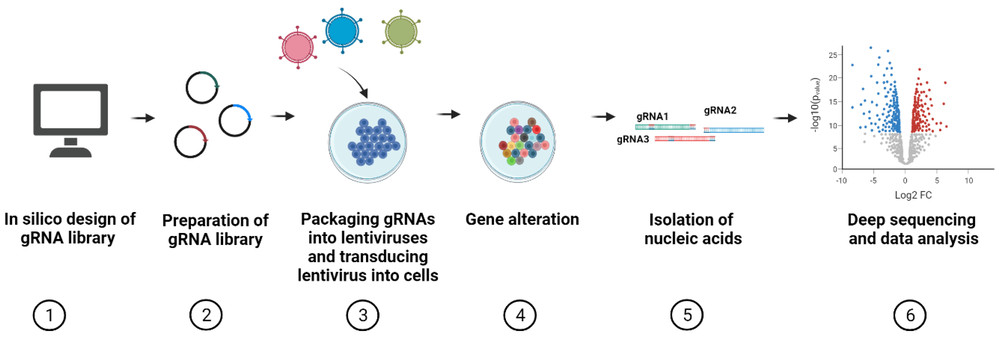 Figure 1. General workflow of CRISPR screens.1
| Research Focus | How Custom CRISPR Screening Helps |
|---|---|
| Disease mechanism | Identifies genes that drive or modify disease-associated phenotypes |
| Vector response | Finds host factors that may influence delivery, uptake, or expression |
| Therapeutic effect | Reveals genes associated with sensitivity or resistance to treatment |
| Cellular stress | Detects pathways linked to toxicity, survival, or adaptation |
| Candidate validation | Tests whether selected genes have functional relevance |
| Pathway regulation | Identifies upstream or downstream regulators of key biological processes |
The Core Challenges of In-House CRISPR Screening
Conducting a large-scale CRISPR screen in an internal laboratory often drains vital resources and introduces severe biological bottlenecks. Understanding these challenges is the first step toward overcoming them through expert partnership.
- Loss of Library Representation: The most critical biological failure in pooled screening is the loss of gRNA representation. If cell culture expansion is not meticulously managed—requiring massive culture vessels and precise splitting routines—certain gRNAs will randomly drop out, creating false negatives and destroying the statistical power of the experiment.
- Poor Lentiviral Titers: Many primary cells, stem cells, and suspension lines (like T cells) are notoriously difficult to transduce. Low-titer lentiviral preparations lead to low infection rates, forcing researchers to use massive volumes of virus that can cause severe cellular toxicity and obscure phenotypic results.
- Inconsistent Cas9 Expression and Toxicity: Delivering Cas9 and gRNAs simultaneously can induce cellular stress, DNA damage responses (like p53 activation), and apoptosis. Generating stable, biologically validated Cas9-expressing cell lines that maintain physiological relevance is a highly specialized skill.
- Off-Target Cleavage: While CRISPR is precise, non-specific binding can still occur. Without rigorous biological validation of the "hits" through independent assays (Western blotting, qPCR, single-cell cloning), false positives can easily misdirect a multi-million-dollar drug development pipeline.
Why Standard Screening Is Not Always Enough
Genome-wide CRISPR screening has become a widely used discovery tool, but a standard genome-wide approach is not always the best fit for every project. Some researchers already have a defined gene list and need a focused screen with higher coverage. Some need to compare multiple treatment conditions. Some work with difficult cell models that require careful optimization. Others need CRISPR activation or CRISPR interference rather than complete gene knockout.
Custom CRISPR screening solves these problems by creating a more project-specific workflow. The screen can be adjusted for library size, sgRNA number, cell type, delivery conditions, selection strategy, reporter system, timepoint arrangement, sequencing depth, and data output. This level of flexibility helps generate results that are not only technically reliable, but also easier to connect with the client's next experimental decision.
Introduction of Custom CRISPR Screening Service
Custom CRISPR Screening Service refers to a fully tailored gene perturbation solution that adapts the entire screening workflow to meet the specific needs of a research project. Unlike standardized, off-the-shelf screens, custom CRISPR screening allows researchers to design experiments around unique scientific questions, specialized cell models, or focused gene sets. Customization is especially important because biological research is rarely one-size-fits-all. Scientists often aim to study particular pathways, investigate disease-specific targets, or work with non-standard cell types that require adapted delivery methods or readouts. A custom screening strategy ensures that each step of the workflow is tailored to the specific goals of the project, enabling researchers to perform focused, relevant, and innovative studies. This personalized approach enhances the depth of biological insights and accelerates the discovery of novel targets, underlying mechanisms, and potential therapeutics.
Comprehensive Custom CRISPR Screening Services
We understand that every gene therapy project requires a unique biological approach. We offer a complete suite of CRISPR modalities to perturb the genome precisely according to your experimental needs.
01 CRISPR Knockout (CRISPR KO) Screens
CRISPR KO screens utilize wild-type Cas9 nucleases (or high-fidelity variants) to induce double-strand breaks (DSBs) at targeted genomic loci. The cell's natural Non-Homologous End Joining (NHEJ) repair pathway fixes these breaks, often introducing insertions or deletions (indels) that cause frameshift mutations, resulting in a complete, permanent loss of protein function.
02 CRISPR Activation (CRISPRa) Screens
Traditional overexpression studies rely on exogenous cDNA, which ignores natural splice variants and physiological expression limits. CRISPRa solves this by utilizing a catalytically dead Cas9 (dCas9) fused to potent transcriptional activators (such as VP64, p65, Rta, or the SunTag system). The dCas9-gRNA complex binds to the promoter regions of target genes, robustly upregulating endogenous gene expression without altering the underlying DNA sequence.
03 CRISPR Interference (CRISPRi) Screens
While CRISPR KO causes permanent gene disruption, CRISPRi offers a titratable, reversible suppression of gene expression. By fusing dCas9 to transcriptional repressors (like the KRAB domain), the complex binds downstream of the transcription start site, physically blocking RNA polymerase and creating repressive chromatin modifications.
Customizable Options for CRISPR Screening Service
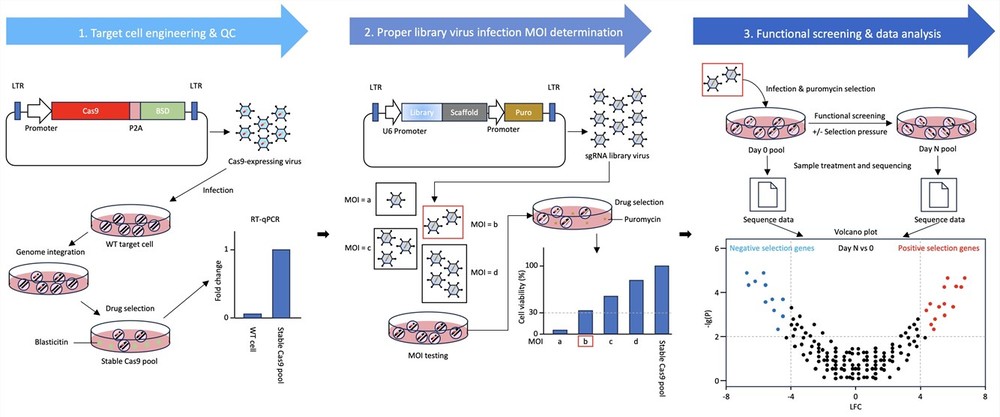 Figure. 2 Standard workflow of our CRISPR screening service (e.g. CRISPRko).
| Stage | Items | Customizable options |
|---|---|---|
| 1 | Adherent cells |
|
| Cas9-expression virus |
|
|
| Cassettes of transfer plasmid |
|
|
| Drug selection |
|
|
| QC of stable Cas9 pool |
|
|
| … | … | |
| 2 | Genome-wide sgRNA library |
|
| Cassettes of transfer plasmid |
|
|
| Drug selection |
|
|
| … | … | |
| 3 | Drug selection |
|
| Timepoints |
|
|
| Selection pressure |
|
|
| Data analysis |
|
|
| … | … |
Example Research Scenarios We Can Support
Scenario 1: Identifying Drug Resistance Genes
A client wants to understand why a cancer cell model becomes resistant to a targeted therapy. Creative Biolabs designs a CRISPRko screen comparing treated and untreated groups. sgRNAs enriched after drug treatment reveal genes whose loss supports resistance. The final report prioritizes candidate resistance pathways for validation.
Scenario 2: Discovering Pathway Activators
A researcher has a reporter cell line that fluoresces when a signaling pathway is activated. Creative Biolabs develops a CRISPRa screen and uses FACS enrichment to isolate cells with high reporter activity. Enriched sgRNAs identify genes that may activate or enhance the pathway.
Scenario 3: Studying Essential Genes in a Disease Model
A biotech team wants to identify genes required for survival in a disease-relevant cell line. Creative Biolabs performs a CRISPRko dropout screen and compares sgRNA depletion over time. Candidate essential genes are ranked for follow-up validation.
Scenario 4: Screening a Custom Candidate Gene List
A client has identified 800 candidate genes from transcriptomic analysis and wants functional validation. Creative Biolabs designs a focused sgRNA library and performs a custom screen under disease-relevant treatment conditions. The focused design increases coverage and reduces unnecessary sequencing complexity.
Comprehensive Quality Control (QC) Standards
Our commitment to biological integrity is reflected in our exhaustive QC protocols. We guarantee that the experimental data you receive is robust, reproducible, and ready for regulatory submissions or high-impact publications.
-
Plasmid Library QC:
- Next-Generation Sequencing of the plasmid pool to guarantee >95% gRNA coverage.
- Analysis of the skew ratio (the 90th percentile to the 10th percentile of read counts) to ensure uniform representation.
-
Viral Vector QC:
- Mycoplasma and endotoxin testing of all viral supernatants.
- Functional biological titration via FACS to determine accurate Transducing Units per milliliter (TU/mL) specifically on your target cell line.
-
Cellular QC:
- STR profiling to authenticate all human cell lines before screening begins.
- Continuous viability tracking via Trypan Blue or automated fluorescent counters during the entire expansion phase.
-
Assay QC:
- Inclusion of biological replicates (at least 3 independent infection and culture vessels) to ensure statistical rigor.
- Inclusion of well-established positive control gRNAs (e.g., targeting essential ribosomal genes to confirm cell death) and hundreds of non-targeting negative controls to establish an accurate baseline.
Customer Reviews

Frequently Asked Questions (FAQ)
Q: What is the difference between custom CRISPR screening and standard CRISPR screening?
A: Standard CRISPR screening usually follows a predefined workflow, often using a genome-wide library and a common selection method. Custom CRISPR screening is designed around your specific research goal, cell model, perturbation strategy, library type, and phenotype. It is more suitable when your project requires a focused gene set, specialized readout, non-standard cell model, or customized selection condition.
Q: Can I provide my own gene list for a custom CRISPR screen?
A: Yes. Creative Biolabs can support client-defined gene lists for focused sgRNA library design and screening. This is useful when you already have candidate genes from previous experiments, literature research, omics studies, or pathway analysis. A focused library can improve screening efficiency and provide stronger coverage for the genes most relevant to your project.
Q: Which CRISPR strategy should I choose: CRISPRko, CRISPRa, or CRISPRi?
A: The best strategy depends on your biological question. CRISPRko is suitable for loss-of-function studies and gene essentiality analysis. CRISPRa is useful when you want to identify genes whose activation promotes a phenotype. CRISPRi is suitable for gene repression studies, especially when partial inhibition is preferred or complete knockout may be problematic. Creative Biolabs can help recommend the appropriate strategy.
Q: Can Creative Biolabs work with difficult or non-standard cell types?
A: Creative Biolabs can evaluate and optimize screening conditions for different cell models, including adherent cells, suspension cells, engineered cell lines, and specialized disease models. For challenging cells, we can optimize delivery, selection, enrichment, and culture parameters before full-scale screening.
Q: Can the screen include drug treatment or other selection pressure?
A: Yes. Custom CRISPR screens can be designed around drug treatment, toxin exposure, cytokine stimulation, stress conditions, infection models, reporter-based sorting, or other phenotype-specific pressures. Selection conditions can be optimized to generate a clear biological signal while maintaining adequate cell viability and library coverage.
How Custom CRISPR Screening Service Can Assist Your Project
A highly customized CRISPR screening service offers the flexibility to align every aspect of the workflow with your specific research goals—whether you're targeting a unique gene set, using specialized cell models, or exploring unconventional readouts. This level of personalization ensures that the screening results are not only scientifically meaningful but also directly relevant to your study. At Creative Biolabs, we go beyond execution—we collaborate closely with you to refine your experimental design, offering professional insights on library selection, vector systems, delivery methods, and data analysis strategies. Our team ensures that your custom screen is both technically sound and strategically optimized.
From concept to final delivery, Creative Biolabs is dedicated to producing results that meet your expectations and drive your research forward. Contact us to start building a custom CRISPR screening strategy that is truly tailored to your project needs.
Reference
- Chulanov V, Kostyusheva A, Brezgin S, et al. CRISPR screening: molecular tools for studying virus–host interactions. Viruses, 2021, 13(11): 2258. https://doi.org/10.3390/v13112258 Distributed under Open Access license CC BY 4.0, without modification.
