
Gene Knockout Service
Knockout cell lines are crucial for exploring gene function, understanding disease mechanisms, and validating drug targets by permanently disabling specific genes. With advanced CRISPR technology and proven expertise, Creative Biolabs offers efficient and high-precision knockout cell line development services, providing stable, customized models to accelerate your research.
Introduction of Gene Knockout
Gene knockout (KO) in cell models involves disrupting a target gene to study its function at the cellular level. KO cell models are essential for investigating signaling cascades, disease causes, and potential treatment targets. Thanks to CRISPR technology, knockout cell line development is now more precise and efficient, enabling the creation of customized models to support diverse research needs. As a result, CRISPR-based KO cell models have become essential tools in biological research and drug development.
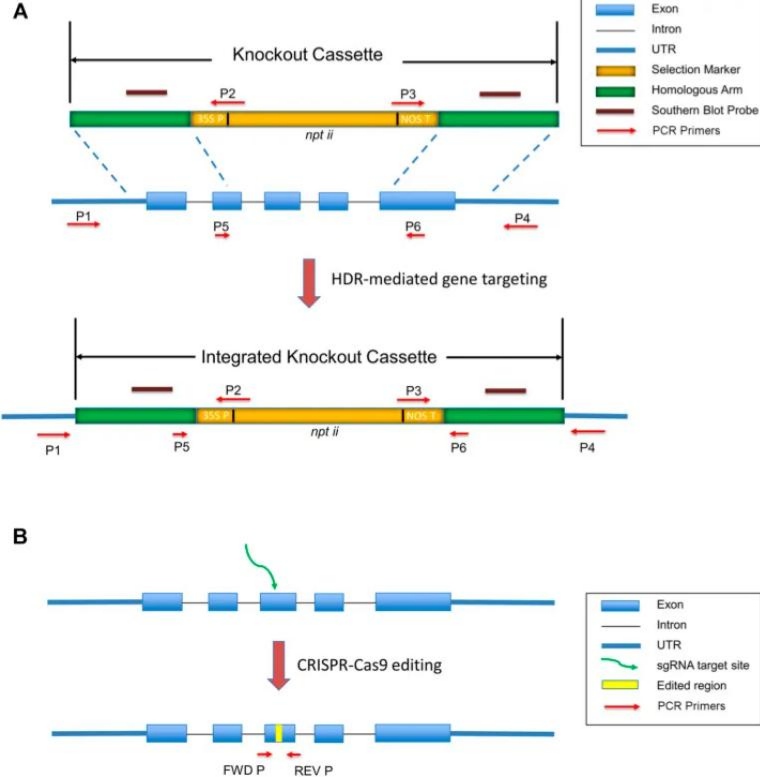 Figure 1. Targeted gene knockout generated by gene targeting and CRISPR-Cas9.1
The Imperative of Gene Knockout in Modern Therapeutics
Engineering Advanced Cellular Immunotherapies
In the realm of immuno-oncology, gene knockout is revolutionizing adoptive cell transfer. To generate "off-the-shelf" allogeneic CAR-T cells, researchers must eliminate the endogenous T-cell receptor (TCR) to prevent Graft-versus-Host Disease (GvHD), while simultaneously knocking out Human Leukocyte Antigen (HLA) class I molecules to evade host immune rejection.
Unraveling Complex Disease Mechanisms
For monogenic and complex polygenic disorders, recreating the precise genetic anomaly in vitro is the first step toward finding a cure. By systematically knocking out susceptibility genes, researchers can meticulously observe the resulting phenotypic deviations, map out compensatory molecular pathways, and identify actionable vulnerabilities.
Functional Genomics and Target Validation
Before a small molecule or biologic enters costly clinical trials, the therapeutic target must be definitively validated. Gene knockout provides the ultimate binary validation: if the removal of the target gene mimics the desired effect of the drug without intolerable toxicity, the target is deemed viable. Our high-throughput KO models are pivotal for both target discovery and off-target toxicity prediction.
Comparative Analysis of Gene Editing Technologies
| Feature | CRISPR/Cas9 | TALENs |
|---|---|---|
| Targeting Mechanism | RNA-guided (sgRNA) | Protein-guided |
| Design Complexity | Very Low (Easy to design) | High |
| Multiplexing Ability | Excellent (Multiple sgRNAs) | Poor |
| Off-Target Potential | Moderate (Mitigated by design) | Low |
| Cost and Timeline | Highly Cost-Effective / Fast | Expensive / Slow |
Creative Biolabs' Gene Knockout Service
Creative Biolabs offers customized CRISPR-based gene knockout cell line development to support a broad range of research and drug discovery applications. Our service covers the full process from project design to final validated clone delivery, helping clients avoid the time-consuming troubleshooting often associated with in-house cell line engineering.
Our Gene Knockout Service can support:
- Single-gene knockout cell line generation
- Multi-gene knockout model development
- Knockout in immortalized mammalian cell lines
- Knockout in disease-relevant or client-specified cell backgrounds
- CRISPR/Cas9-mediated gene disruption
- Clonal isolation and expansion
- Genotype validation by sequencing
- Phenotype-oriented validation support upon request
- Mycoplasma testing before delivery
- Stable cell banking and expansion support
Each project is designed according to the target gene, cell type, genomic context, desired knockout strategy, downstream application, and validation requirements. This customized approach helps improve project feasibility and ensures that the final cell model is aligned with the client's research objectives.
Case Examples
| Research Scenario | Client Question | Recommended KO Model |
|---|---|---|
| Cancer target validation | Does this gene functionally drive tumor behavior? | Single-gene KO in cancer cell line |
| Disease mechanism study | What happens when a disease-associated gene is lost? | KO in disease-relevant cell background |
| Antibody specificity testing | Is binding truly target-dependent? | Receptor KO control cell line |
| Drug resistance research | Does gene loss alter treatment response? | Pathway gene KO model |
| Rescue experiment | Is the phenotype caused by target gene loss? | Rescue-ready KO clone |
| Gene therapy testing | Can a therapeutic payload restore function? | Gene-deficient KO model |
| Pathway redundancy study | Do related genes compensate for each other? | Multi-gene KO model |
Workflow of Gene Knockout Service
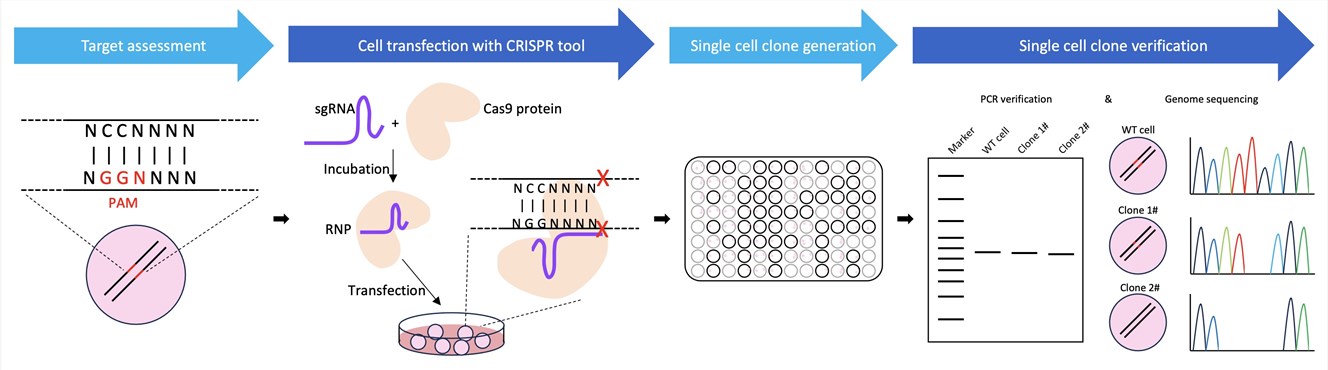 Figure. 2 Workflow of our gene knockout service.
Advantages of Gene Knockout Service
- Precise Disease Modeling - Create stable KO cell lines to mimic disease conditions, solving the challenge of limited patient samples.
- High Genetic Stability - Ensure consistent gene knockout and reproducible results across long-term experiments.
- Customizable Solutions - Support single or multiple gene knockouts tailored to specific research needs.
- High Editing Efficiency - Achieve high success rates with efficient CRISPR editing and stable knockout results.
- Cost-effective with Dependable Support - To guarantee a seamless research experience, provide competitive prices and expert after-sales support.
Collaboration Process
| Step | Main Focus | Output |
|---|---|---|
| 1. Project Consultation | Define target gene, cell line, application, and validation needs | Clear project requirements |
| 2. Knockout Strategy Design | Design gRNA, editing route, screening plan, and validation strategy | Customized technical plan |
| 3. CRISPR Editing and Cell Recovery | Perform targeted gene editing and recover edited cells | Edited cell population |
| 4. Clone Isolation and Expansion | Establish single-cell-derived candidate clones | Candidate KO clones |
| 5. Knockout Validation | Confirm target gene disruption by sequencing and optional assays | Validated KO clone information |
| 6. Final Delivery and Support | Expand, QC, document, and ship final cells | Research-ready knockout cell line |
Trusted by Leading Researchers and Biotech Innovators

Frequently Asked Questions (FAQ)
Q: How long does the entire gene knockout cell line generation process typically take?
A: The timeline varies depending on the complexity of the target and the growth rate of the cell line. Generally, gRNA design and validation take 2-3 weeks. Transfection, single-cell sorting, and expansion take approximately 6-8 weeks. Final validation adds another 2-3 weeks. A standard project is typically completed in 12-16 weeks.
Q: What is the difference between a knockout "pool" and a "monoclonal" cell line?
A: A KO pool is a mixed population of cells harvested shortly after the CRISPR editing event; it contains cells with biallelic KOs, monoallelic KOs, and unedited wild-type cells. It is useful for rapid, preliminary phenotypic screening. A monoclonal cell line is derived from a single edited cell, expanded into a population where 100% of the cells possess the exact same genetic knockout, ensuring absolute experimental reproducibility.
Q: My target gene is essential for cell survival. Can you still knock it out?
A: If a gene is absolutely critical for viability, a complete biallelic knockout will result in cell death, making isolation impossible. In such cases, we highly recommend our Conditional Knockout services (e.g., Cre-loxP systems) or Inducible Knockout systems (Tet-ON/Tet-OFF), allowing you to trigger the knockout only when desired during your experiment.
Q: Do you provide the negative control (Wild-Type) cell lines?
A: Yes. Alongside your genetically modified knockout clone, we always provide the matched, isogenic parental cell line (often taken through the same transfection and sorting process with a non-targeting scramble sgRNA) to serve as the perfect experimental control.
Q: Can you perform multiplex gene knockouts (knocking out 2 or more genes simultaneously)?
A: Absolutely. Leveraging our high-capacity viral vectors (like Adenovirus) or multiplexed LNP formulations, we can deliver multiple sgRNAs simultaneously to generate double or triple knockout models, which are especially critical in advanced CAR-T cell engineering.
How Gene Knockout Service Can Assist Your Project
Creative Biolabs is committed to delivering high-quality knockout (KO) single-cell clones with confirmed genetic modifications, stable phenotypes, and consistent growth performance. Each clone is rigorously validated through genetic sequencing and mycoplasma testing to ensure complete gene knockout, long-term stability, and freedom from contamination risk, providing a clean and reliable model for downstream research. Many of our clients have further confirmed the functionality of these cell lines through their own downstream assays, proving their reliability in various research applications.
These KO cell models provide accurate, reproducible data for disease studies, drug screening, and gene function analysis. Contact us to learn how trusted KO cell line services of Creative Biolabs can support your research goals!
Reference
- Nakashima N, Miyazaki K. Bacterial cellular engineering by genome editing and gene silencing. International journal of molecular sciences, 2014, 15(2): 2773-2793. https://doi.org/10.3390/ijms15022773 Distributed under Open Access license CC BY 4.0, without modification.
