
Single-Cell CRISPR Screening Service
Single-cell CRISPR screening is an innovative approach that integrates CRISPR-based gene perturbation with single-cell RNA sequencing (scRNA-seq), allowing researchers to assess the transcriptomic impact of gene editing at single-cell resolution. This technology is particularly valuable for uncovering cellular heterogeneity, understanding complex disease mechanisms, and identifying key regulators of processes like immune response, differentiation, and drug resistance. At Creative Biolabs, we combine high-quality sgRNA-barcode library design, efficient lentiviral delivery systems, and state-of-the-art single-cell sequencing platforms with robust data analysis pipelines.
Introduction of Single-Cell CRISPR Screening
Single-cell CRISPR screening is a cutting-edge functional genomics technique that combines CRISPR-based gene perturbation (such as CRISPRko, CRISPRa, or CRISPRi) with single-cell RNA sequencing (scRNA-seq). This approach enables researchers to track how individual cells respond to specific genetic modifications at the transcriptomic level, offering a high-resolution view of gene function across thousands of cells simultaneously. Unlike traditional pooled CRISPR screens that rely on bulk readouts like viability or enrichment, single-cell CRISPR screening captures the full gene expression profile of each cell and directly links it to the corresponding genetic perturbation using unique sgRNA barcodes. This allows for a detailed dissection of regulatory pathways and the identification of subtle phenotypic changes that may be hidden in population-level data. A major advantage of this method is its ability to resolve cellular heterogeneity, making it particularly useful for studying complex systems such as tumor microenvironments, immune cell landscapes, and developmental processes. Single-cell CRISPR screening uncovers rare cell states, functional subpopulations, and novel therapeutic targets, paving the way for deeper biological understanding and more precise therapeutic strategies.
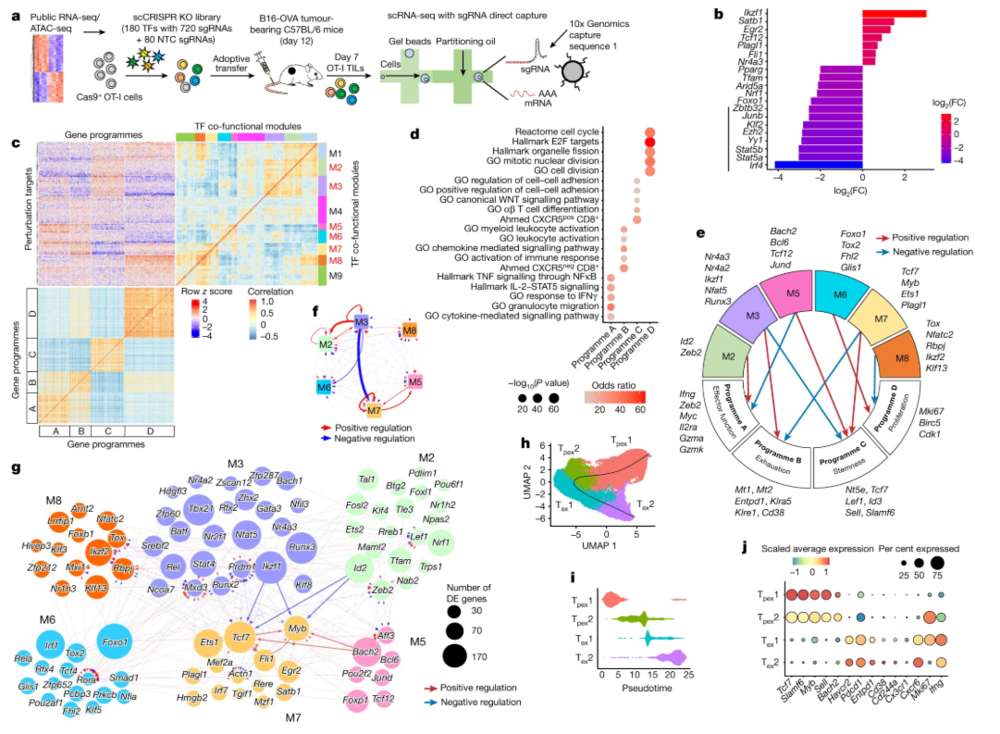 Figure 1: In vivo single-cell CRISPR screening of intratumoral CTLs reveals connectivity of co-functional modules and gene programmes.1
Why Transition from Bulk to Single-Cell Screening?
Beyond 1D Phenotypes
Move away from binary readouts (survival/proliferation) and explore complex, multi-dimensional phenotypes such as cell state transitions, metabolic shifts, and immune exhaustion trajectories.
Deconvoluting Heterogeneity
Tumors and tissues are not uniform. Single-cell CRISPR screening reveals how different subpopulations within a heterogeneous mixture respond to the same genetic perturbation.
Discovering Epistatic Interactions
Combinatorial single-cell screening enables the study of genetic networks and pathways by perturbing multiple genes simultaneously and observing the compounded transcriptomic effects.
Accelerating Drug Discovery
Understand the mechanism of action (MoA) of novel compounds by mapping how genetic knockouts mimic or mitigate drug-induced transcriptomic states.
Common Challenges and Our Integrated Solutions
| Challenge | Why It Matters | Creative Biolabs' Solution |
|---|---|---|
| Low transduction efficiency | Poor delivery can reduce perturbation coverage and weaken screening power | We optimize lentiviral delivery conditions and guide appropriate MOI selection |
| Loss of library representation | Uneven guide distribution can reduce data reliability | We support careful library design, QC, and coverage-aware cell handling |
| Weak guide RNA recovery | Poor guide assignment limits genotype-phenotype linking | We design sequencing-compatible strategies to improve perturbation identification |
| Cell stress during preparation | Stressed or dying cells can distort single-cell readouts | We optimize culture, selection, treatment timing, and cell preparation procedures |
| Complex data interpretation | Single-cell CRISPR data can be difficult to translate into action | We provide structured analysis and biologically oriented reporting |
| Heterogeneous cell responses | Mixed cell states can obscure true functional effects | We analyze perturbation effects across clusters, states, and conditions |
| Overly broad hit lists | Large screens may produce too many candidates | We prioritize hits based on consistency, pathway relevance, and biological significance |
How to Choose the Right CRISPR Screening Method
| Research Goal | Recommended Screening Strategy | Why This Method Fits |
|---|---|---|
| Identify unknown genes associated with survival, growth, or drug response | Genome-Wide CRISPR Screening | Provides broad, unbiased coverage across the genome and is well suited for primary discovery. |
| Discover genes whose increased expression promotes a phenotype | CRISPRa Screening | Activates endogenous gene expression and supports gain-of-function discovery. |
| Study genes that are essential or difficult to knock out completely | CRISPRi Screening | Represses gene expression without inducing DNA cleavage, allowing partial loss-of-function analysis. |
| Understand how perturbations reshape cellular states or pathways | Single-Cell CRISPR Screening | Links each perturbation to single-cell transcriptomic changes for mechanism-level insight. |
| Analyze heterogeneous systems such as tumors, immune cells, or differentiating cells | Single-Cell CRISPR Screening | Detects population-specific responses and rare cell states that bulk screens may miss. |
| Build a stepwise discovery-to-validation program | Genome-Wide CRISPR Screening + Focused Single-Cell CRISPR Screening | Genome-wide screening identifies candidates, while single-cell screening helps clarify mechanisms and prioritize hits. |
Creative Biolabs' Single-Cell CRISPR Screening Services
Creative Biolabs provides a comprehensive Single-Cell CRISPR Screening Service that integrates CRISPR-based genetic perturbation with single-cell transcriptomic profiling. This service is designed to help researchers identify functional genes, characterize regulatory pathways, and understand how specific perturbations reshape cellular behavior at single-cell resolution.
- Customized Project Design
- sgRNA Library Design and Construction
- Lentiviral Delivery and Cell Perturbation
- Data Processing and Biological Interpretation
- Single-Cell Capture and Sequencing
- Perturbation-Linked Transcriptomic Profiling
Workflow of Single-Cell CRISPR Screening Service
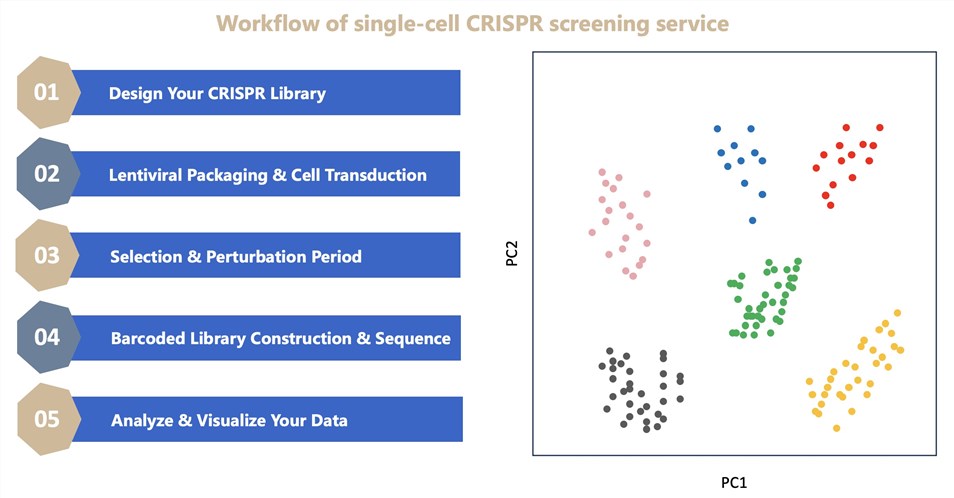 Figure 2 Workflow of our single-cell CRISPR screening service.
Advantages of Single-Cell CRISPR Screening Service
- High-Resolution Readout - Captures full gene expression profiles at the single-cell level, enabling more detailed functional insights than bulk measurements.
- Reveals Cellular Heterogeneity - Identifies rare cell types and diverse responses within mixed populations—ideal for complex systems like tumors or the immune system.
- Precise Genotype-Phenotype Linking - Directly connects transcriptome of each cell to its sgRNA, allowing clear interpretation of gene function and effect.
- Rich Functional Insights - Goes beyond viability to uncover pathway changes, regulatory effects, and differentiation trajectories in response to perturbation.
- Affordable & Expert-Guided Service - Offers cost-effective solutions with professional support, ensuring reliable results and a seamless project experience.
Example Research Scenarios
Scenario 1: Identifying Drug Resistance Regulators in Cancer Cells
A client is studying a targeted therapy and wants to identify genes that promote resistance. Instead of using only a survival-based pooled screen, single-cell CRISPR screening can reveal which perturbations cause resistant transcriptional states, stress adaptation, pathway reactivation, or cell-state transition.
Scenario 2: Discovering Regulators of T Cell Exhaustion
In immune cell research, a client may want to identify genes that influence T cell activation, exhaustion, cytokine production, or cytotoxic function. Single-cell CRISPR screening can profile how perturbations reshape T cell states and immune response programs.
Scenario 3: Mapping Differentiation Drivers in Stem Cell Models
For stem cell differentiation, a client may need to identify genes that promote or block lineage commitment. Single-cell CRISPR screening can track perturbation effects across developmental trajectories and reveal regulators of intermediate or mature cell states.
This may help improve differentiation protocols or disease modeling systems.
Scenario 4: Validating Disease-Associated Candidate Genes
After genomic or transcriptomic studies identify candidate disease genes, single-cell CRISPR screening can provide functional validation. Perturbing candidate genes and profiling cellular responses can reveal which genes actively drive disease-relevant programs.
Customer Reviews

Frequently Asked Questions (FAQ)
Q: How many cells are typically analyzed in a single-cell CRISPR screen?
A: The number of cells depends on the size of the sgRNA library. A general rule of thumb is to capture 100 to 400 cells per sgRNA to ensure statistical power for differential gene expression analysis. For a 100-gene library (with 3 sgRNAs per gene), we typically target the capture of 30,000 to 120,000 cells.
Q: Can you perform single-cell CRISPR screens on primary cells or iPSCs?
A: Yes. While continuous cell lines (e.g., A549, K562, HEK293) are the easiest to handle, we have extensive experience optimizing lentiviral transduction, cell viability, and single-cell capture for delicate primary cells and induced pluripotent stem cells (iPSCs).
Q: What is the difference between CROP-seq and Perturb-seq?
A: Both are variations of single-cell CRISPR screening. Perturb-seq traditionally relies on associating the sgRNA with a specific barcode located in the 3' UTR of a reporter transcript. CROP-seq (CRISPR Droplet Sequencing) simplifies this by placing the sgRNA cassette itself within a Pol II-transcribed region, allowing the exact sgRNA sequence to be directly captured and read during standard poly-A based scRNA-seq, minimizing barcode uncoupling issues. We utilize optimized CROP-seq and Feature Barcoding architectures for maximum fidelity.
Q: Do you offer in vivo single-cell CRISPR screening?
A: Yes, in vivo screens are incredibly powerful for studying the tumor microenvironment or immunology in living organisms. The workflow involves transducing cells in vitro, transplanting them into animal models, and later extracting the tissue, dissociating it into single cells, and performing scRNA-seq. Please contact our specialists to discuss the specific feasibility and animal models required for your project.
Q: Can Creative Biolabs help interpret the biological meaning of the data?
A: Yes. Creative Biolabs provides downstream analysis and result interpretation to help clients understand perturbation effects, pathway changes, cell-state shifts, and candidate hit relevance. Our goal is to help clients obtain actionable biological insights, not just raw sequencing output.
How Single-Cell CRISPR Screening Service Can Assist Your Project
At Creative Biolabs, our CRISPR screening service is built on a highly standardized and quality-controlled workflow—from custom sgRNA library construction and lentiviral packaging, to single-cell capture, high-throughput sequencing, and data analysis. Each step is carefully optimized to ensure efficient gene perturbation, accurate sgRNA tracking, and high-fidelity transcriptomic profiling at the single-cell level. This platform enables you to uncover gene functions with exceptional resolution, particularly in complex or heterogeneous systems. By linking individual gene edits to cell-specific expression profiles, we help identify key regulators, rare cell subpopulations, functional pathways, and phenotype-associated signatures that traditional pooled screens often miss.
Advanced bioinformatics pipeline from Creative Biolabs turns raw single-cell data into actionable insights—supporting studies in oncology, immunology, neurobiology, and stem cell research. Contact us today to learn how our single-cell CRISPR screening service can accelerate your discovery and bring clarity to complex biological questions.
Reference
- Zhou P, Shi H, Huang H, et al. Single-cell CRISPR screens in vivo map T cell fate regulomes in cancer. Nature, 2023, 624(7990): 154-163. https://doi.org/10.1038/s41586-023-06733-x Distributed under Open Access license CC BY 4.0, without modification.
