
Nuclease Activity Measurement Service
Nucleases are enzymes that play a critical role in nucleic acid metabolism by cleaving the phosphodiester bonds within DNA or RNA molecules, whose function is essential in various biological processes. Accurate measurement of nuclease activity is crucial for understanding enzyme functionality and ensuring the success of therapeutic and diagnostic applications involving nucleic acid manipulation. To support these nuclease-related research and development efforts, Creative Biolabs offers specialized nuclease activity measurement services. With advanced technologies and extensive expertise, we assist researchers and clients worldwide in generating reliable data for their enzyme characterization studies.
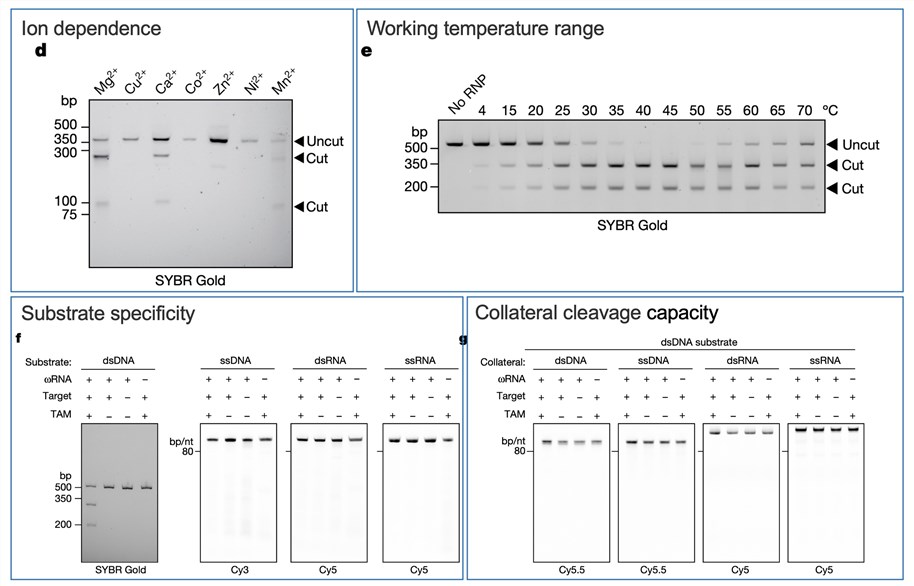 Figure 1. Nuclease activity measurement of Fanzor protein.1
Why Nuclease Activity Measurement Matters?
Nucleases catalyze the cleavage of phosphodiester bonds in DNA or RNA. Although this function may sound straightforward, the biological behavior of a nuclease can be highly complex. Different nucleases may recognize single-stranded DNA, double-stranded DNA, single-stranded RNA, double-stranded RNA, DNA/RNA hybrids, structured nucleic acids, guide RNA-bound substrates, or sequence-specific targets. Some nucleases require metal ions such as Mg²⁺, Mn²⁺, Ca²⁺, or Zn²⁺ for activity, while others exhibit sharply different performance under changes in salt concentration, pH, temperature, or buffer composition.
Accurate nuclease activity measurement provides essential information for:
- Confirming whether a nuclease is functionally active.
- Identifying optimal reaction conditions.
- Comparing wild-type and engineered nuclease variants.
- Evaluating DNA versus RNA substrate preference.
- Determining sequence- or structure-dependent cleavage patterns.
- Investigating metal ion requirements.
- Assessing temperature range and stability.
- Measuring collateral cleavage for diagnostic applications.
- Supporting assay development for gene editing and molecular detection.
- Generating functional evidence for research publications, grant applications, or development programs.
A Deep Dive into Nuclease Functionality
To appreciate the breadth of our services, it is crucial to understand the distinct biochemical pathways and structural dynamics we evaluate. Our assay development teams possess decades of combined experience in enzymology and structural biology, allowing us to tailor our measurement protocols to the specific class of nuclease under investigation. Nucleases are broadly categorized based on their site of action:
- Endonucleases
- Exonucleases
Programmable Nucleases: CRISPR-Cas Systems
The discovery and application of CRISPR (Clustered Regularly Interspaced Short Palindromic Repeats) and CRISPR-associated (Cas) proteins have radically transformed the life sciences. Unlike traditional restriction enzymes, Cas nucleases (such as Cas9, Cas12, Cas13, and the newly discovered eukaryotic Fanzor proteins) are guided to their targets by engineered guide RNAs (gRNAs). Our facility is highly specialized in the functional profiling of CRISPR-Cas systems:
- Cis-Cleavage (Targeted Cleavage): We measure the efficiency and accuracy of the primary DNA or RNA target sequence cleavage mediated by the Cas/gRNA ribonucleoprotein (RNP) complex.
- Trans-Cleavage (Collateral Cleavage): Many CRISPR systems, particularly Cas12 (targeting DNA) and Cas13 (targeting RNA), exhibit robust collateral nuclease activity once activated by their specific target.
Nickases and Engineered Variants
To reduce off-target effects in gene therapy, wild-type nucleases are frequently engineered into "nickases" that cleave only one strand of the DNA double helix. Using a pair of nickases can dramatically increase specificity. Measuring nickase activity requires highly sensitive electrophoretic or sequencing-based assays to differentiate between single-strand nicks and double-strand breaks. Our lab is fully equipped to characterize these engineered variants with unparalleled precision.
Our Nuclease Activity Measurement Services
Creative Biolabs develops customized nuclease activity assays based on the type of nuclease, target substrate, project objective, and downstream application. We can support both standard nuclease activity analysis and complex functional profiling projects involving multiple enzyme variants, substrate panels, guide RNAs, reaction conditions, or detection methods.
| Service Module | What We Evaluate | Typical Project Value |
|---|---|---|
| Substrate specificity analysis | ssDNA, dsDNA, ssRNA, dsRNA, DNA/RNA hybrids, structured substrates | Identifies preferred nucleic acid substrate types |
| Cleavage activity measurement | Cleavage efficiency, product formation, reaction completeness | Confirms nuclease functionality and relative activity |
| Metal ion dependence testing | Mg²⁺, Mn²⁺, Ca²⁺, Zn²⁺, EDTA control, ion concentration titration | Determines essential cofactors and optimal reaction conditions |
| Temperature range evaluation | Activity at different temperatures and incubation times | Supports enzyme application under different experimental settings |
| Buffer and pH optimization | Salt, pH, reducing agents, additives, reaction components | Improves assay performance and reproducibility |
| Time-course activity profiling | Early, intermediate, and endpoint cleavage analysis | Reveals reaction dynamics and activity progression |
| Enzyme dose-response testing | Nuclease concentration gradient analysis | Helps define working concentration and activity window |
| Guide-dependent activity analysis | gRNA/crRNA/tracrRNA-dependent cleavage where applicable | Supports CRISPR-associated nuclease characterization |
| Collateral cleavage assay | Activated nonspecific cleavage of reporter or bystander substrates | Important for molecular diagnostics and safety-related evaluation |
| Variant comparison | Wild-type versus engineered mutants or orthologs | Supports nuclease engineering and candidate selection |
Nuclease Types We Can Support
Creative Biolabs can support activity measurement for a broad range of nuclease systems. The assay strategy is customized based on enzyme type, source, expected substrate, and application.
| Nuclease Category | Examples of Project Types | Typical Measurement Focus |
|---|---|---|
| CRISPR-associated nucleases | Cas9, Cas12-like, Cas13-like, Cas14-like, Fanzor-like systems, engineered variants | Guide-dependent cleavage, target recognition, collateral activity, substrate specificity |
| Engineered nucleases | Mutant enzymes, fusion nucleases, domain-modified nucleases | Activity retention, altered specificity, condition optimization |
| Natural endonucleases | Newly discovered or purified nucleases | Substrate preference, cofactor dependence, cleavage pattern |
| Nickases | Single-strand cleavage enzymes or engineered nickase variants | Strand specificity, nicking efficiency, substrate selectivity |
| Exonucleases | DNA/RNA exonuclease candidates | Directionality, substrate degradation, time-course activity |
| Restriction-like enzymes | Sequence-specific DNA cleavage enzymes | Recognition specificity, cleavage efficiency |
| RNA nucleases | RNase-like enzymes, RNA-targeting programmable nucleases | RNA substrate cleavage, structure preference, guide dependence |
| Diagnostic nucleases | Target-activated trans-cleavage systems | Reporter cleavage, signal generation, sensitivity-related parameters |
Key Parameters We Can Evaluate
Substrate Preference
We can compare nuclease activity across ssDNA, dsDNA, ssRNA, dsRNA, hybrid substrates, structured substrates, and modified substrates. This analysis helps clarify whether the nuclease has broad activity or a narrow substrate requirement.
Cleavage Efficiency
We can quantify the percentage of substrate converted into cleavage products under defined reaction conditions. This is useful for comparing activity between enzyme variants, guide RNAs, or reaction parameters.
Time-Dependent Activity
Time-course assays help reveal how quickly cleavage occurs and whether the reaction reaches completion. This is particularly useful when comparing fast versus slow enzymes or optimizing incubation time.
Metal Ion Requirement
Many nucleases require divalent metal ions for catalysis. We can test different metal ions and concentrations to identify essential cofactors and optimal reaction conditions.
Our Seamless Project Workflow
Partnering with Creative Biolabs is designed to be a frictionless, highly collaborative experience. From your initial inquiry to the final data delivery, our workflow is optimized for transparency and efficiency.
-
Initial Consultation & Needs Assessment
Submit your inquiry through our secure portal. Within 24 hours, our scientific team will schedule a consultation to discuss your nuclease, your goals, and your desired timeline.
-
Custom Assay Design & Proposal
We develop a detailed Statement of Work (SOW) outlining the proposed experimental design, specific assays, required materials, milestones, and a transparent pricing breakdown.
-
Material Transfer & Quality Check
You ship your nuclease samples and any proprietary substrates to our facility. Upon receipt, we perform a rapid QC check (concentration, purity via SDS-PAGE) to ensure sample integrity before initiating the main study.
-
Assay Execution & Optimization
Our scientists conduct the assays as outlined in the SOW. If unexpected challenges arise, we communicate with you immediately to troubleshoot and pivot the strategy collaboratively.
-
Comprehensive Data Analysis & Reporting
We do not just hand you raw data. You receive a comprehensive, publication-ready final report containing detailed methodology, raw data tables, statistical analyses, high-resolution graphs (e.g., Michaelis-Menten curves, gel images), and expert scientific interpretation of the results.
Advantages of Nuclease Activity Measurement Service
- Comprehensive Characterization - Allows in-depth analysis of nuclease properties and accurately profiles substrate specificity, ion dependence, temperature range, and collateral cleavage.
- Application-Driven Insight - Helps assess enzyme suitability for in real-world applications and enhances experimental design like gene editing, diagnostics, and therapeutic use.
- Support for Optimization - Detailed activity data aids in modifying nucleases for higher stability, specificity, or efficiency and efficient candidate screening.
- Reliable Results from Proven Platform - Backed by extensive experience and robust assay systems, ensuring consistent and trusted data.
- Cost-Effective and Client-Focused - Offers flexible, affordable services with responsive technical support tailored to project needs.
Frequently Asked Questions (FAQ)
Q: What types of nucleases can Creative Biolabs evaluate?
A: Creative Biolabs can support activity measurement for a wide range of nucleases, including CRISPR-associated nucleases, engineered nuclease variants, DNA endonucleases, RNA nucleases, nickases, exonucleases, restriction-like enzymes, and target-activated diagnostic nucleases. The assay design will depend on the expected substrate type, catalytic mechanism, and intended application.
Q: Can you test both DNA and RNA substrates?
A: Yes. We can design assays for ssDNA, dsDNA, ssRNA, dsRNA, DNA/RNA hybrids, structured nucleic acid substrates, and labeled reporter substrates. If the substrate preference of your nuclease is unknown, we can build a comparative substrate panel to identify the most suitable substrate class.
Q: Can you measure collateral cleavage activity?
A: Yes. Creative Biolabs can evaluate collateral cleavage activity, especially for CRISPR-associated diagnostic systems and target-activated nucleases. We can test target-dependent reporter cleavage, background signal, reporter substrate preference, guide-dependent activation, and reaction condition effects.
Q: Do I need to provide purified nuclease protein?
A: This depends on the project. Clients may provide purified protein, expression constructs, enzyme preparations, or project-specific materials. In some cases, Creative Biolabs may help design a broader workflow that includes protein preparation or related upstream support. The best approach will be determined during project consultation.
Q: Can you compare several nuclease variants in one project?
A: Yes. Variant comparison is one of the most valuable applications of nuclease activity measurement. We can compare wild-type and mutant enzymes, engineered variants, orthologs, or different guide-enzyme combinations under matched assay conditions to support candidate ranking.
Get Started Today
Accurate nuclease activity measurement is the foundation of successful gene therapy development. Whether you are validating a new CRISPR system, conducting lead optimization, or preparing regulatory documentation, Creative Biolabs delivers the reliable, actionable data you need. Contact us today to discuss your project. Our scientific team will work with you to design a customized characterization plan that addresses your specific questions, fits your timeline, and supports your development goals.
Reference
- Saito, Makoto, et al. "Fanzor is a eukaryotic programmable RNA-guided endonuclease." Nature 620.7974 (2023): 660-668. https://doi.org/10.1038/s41586-023-06356-2 Distributed under Open Access license CC BY 4.0, without modification.
