
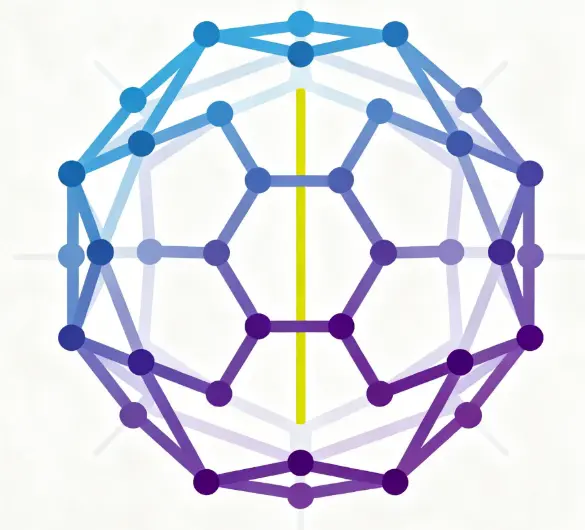
The development of tissue/cell specific targeting advanced adeno-associated virus (AAV) vector enables better, more effective and specific viral vectors to be better used in gene therapy. With the continuous understanding of the structure-function relationship of AAV, improved library generation and innovative screening methods, we can develop more suitable AAV vectors for the treatment of specific diseases. Whatever the stage of your research, scientists at Creative Biolabs will work with you to provide customized AAV services that best meet your needs.
Among these systems, the tetracycline-inducible expression system has several advantages over other regulated gene expression systems, such as:
- Tight on/off regulation
- High inducibility
- Fast reaction times
- No pleiotropic effect due to the use of the tetracycline operon derived from bacteria
Introduction of Targeting Advanced AAV Vector
In basic research, control of transgene expression in mammalian cells is critical for gene therapy and gene function research. Several regulated systems have been used to control transgene expression, including tetracycline, ecdysone, antiprogestin and dimerizer-based systems. Among these systems, tetracycline-inducible expression system has several advantages over other regulated gene expression systems, such as tight on/off regulation, high inducibility, fast reaction times and no pleiotropic effect due to the use of the tetracycline operon derived from bacteria.
Tissue/Cell Specific Targeting AAV Vector Service
Targeting can be achieved at the vector level: cell interaction (transductional targeting) and transgene regulation (transcriptional targeting). Of course, the connection between vectors and cell surface is the main mechanism determining vector tropism, so it is the initial focus of redesigning new tropism, which can improve the efficiency of gene transfer or introduce selectivity or both, depending on downstream applications. At present, we can provide the following two aspects of vector engineering design services.
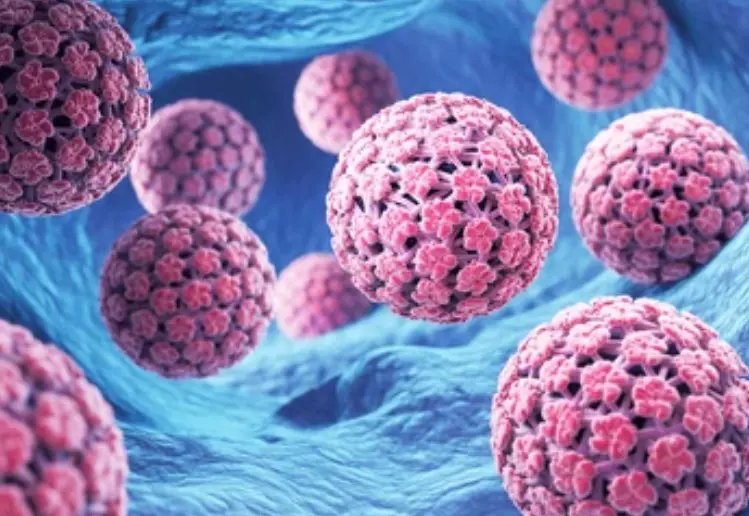
AAV Capsid Modification
The reasonable design depends on a thorough understanding of the structure-function relationship among the major amino acid sequences, the assembled fourth-order structures and the biological phenotypes of AAV capsids. We have successfully applied the educated capsid design, changed the specific targeting of tissue, avoided immune recognition, and improved the post-processing of the approach.
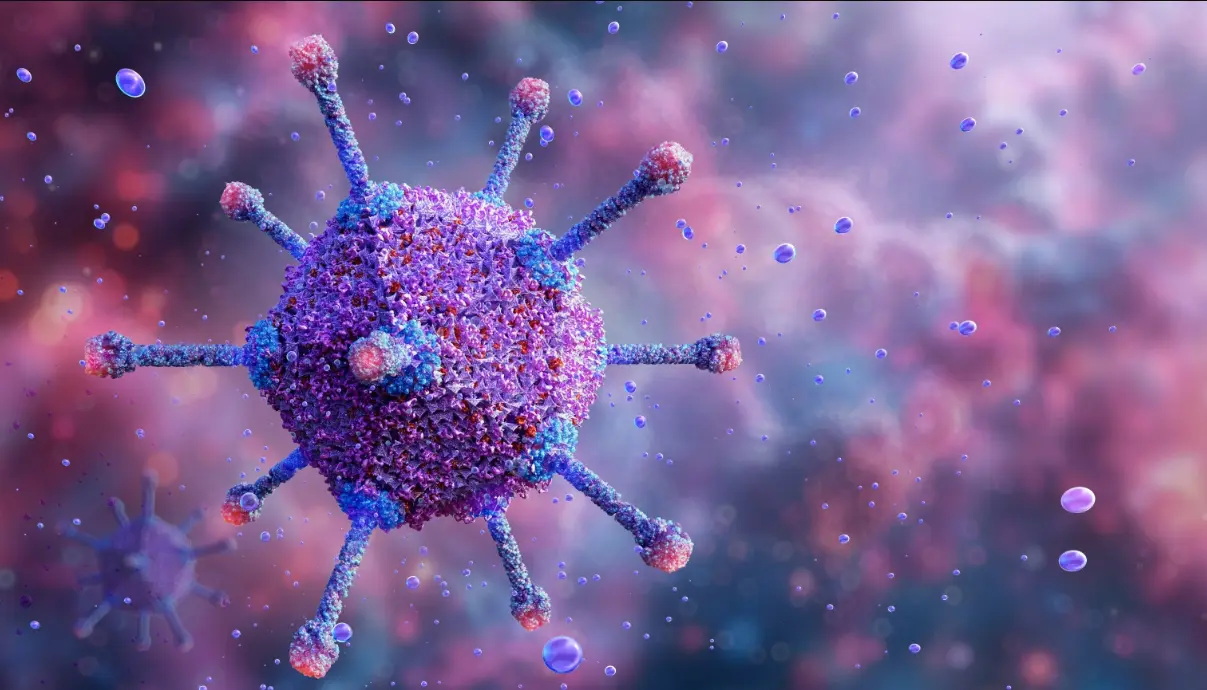
Transcriptional Adjusting
Due to the highly diversified application of vectors and target pathological list, transductional targeting remains a major technical challenge. At present, we have successfully constructed two strategies for AAV transductional adjusting, which are specific promoter-driven targeting and hypoxia regulatory element targeting, showing good results in gene therapy.
Core Engineering Strategies for Tissue/Cell-Specific Targeting Vectors
In order to achieve precise AAV targeting, the industry has developed two complementary core strategies: capsid engineering (controlling cell entry) and transcriptional targeting (controlling expression).
Strategy One: Capsid Engineering—Achieving Entry Specificity
Capsid engineering aims to reprogram the AAV's ability to bind to host cell surface receptors by altering its external protein sequences.
Strategy Two: Transcriptional Targeting—Achieving Expression Specificity
Transcriptional targeting, an effective complement to capsid engineering, is achieved by utilizing Tissue-Specific Promoters (TSPs) within the AAV genome. Even if the capsid enters a non-target cell, TSPs are only activated in specific cell types, thus restricting the expression of the transgene.
Reasons to Choose Creative Biolabs

Overcoming Immunological Barriers
The non-natural serotypes derived through directed evolution and computational design may significantly reduce the recognition rate of existing NAb.

Process Optimization
It is crucial to use efficient affinity chromatography and high-resolution ion exchange chromatography techniques for precise separation of empty/full shells, ensuring high purity and low toxicity of the product.

One-Stop Custom Services
One stop, high standard customized services are crucial for accelerating the transition of new gene therapies from basic research to preclinical translation, ensuring data reliability and product safety.
Case Study
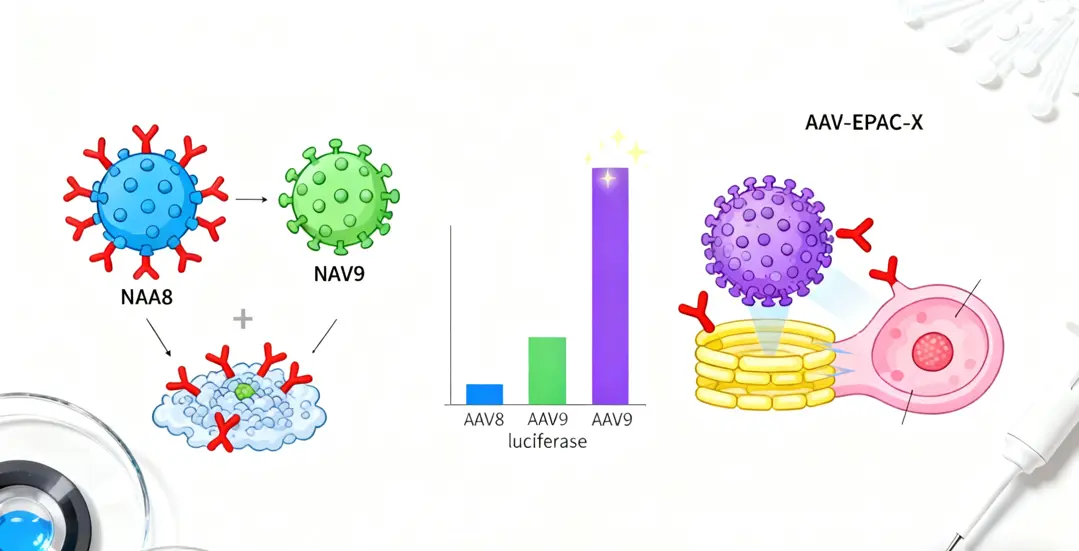
Case Study 1: Constructing a research tool for avoiding neutralizing antibodies (NAb) through directed evolution
Solution:
We utilized directed evolution and continuous in vivo screening against a range of anti AAV antibodies to identify a novel proprietary serotype (AAV-Escape-X).
Key Outcome:
AAV-Escape-X successfully delivered the reporter gene (luciferase) and achieved high-level and stable expression in the target muscles of antibody positive non-human primate models.
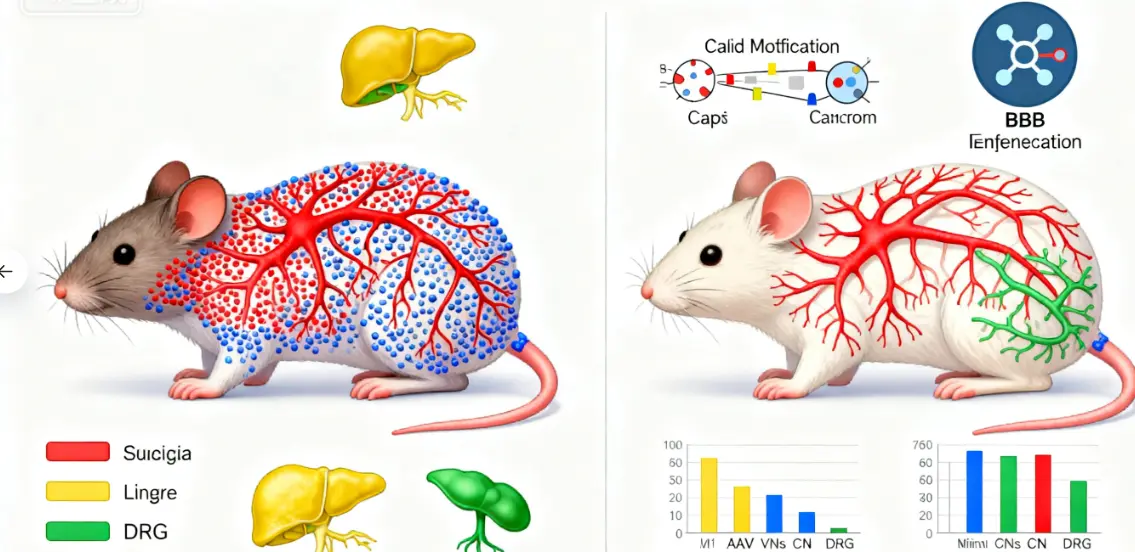
Case Study 2: Reasonable Design for Improving Cell Purity in Central Nervous System Mechanism Research
Solution:
We adopted a rational design method guided by AAV9 capsid structure calculation and analysis. We identified and modified specific surface residues associated with binding to dorsal root ganglia (DRGs) and glial cells.
Key Outcome:
AAV CNS Pure demonstrated excellent cell specificity when tested in a mouse model, limiting over 95% of total expression in the central nervous system (CNS) to target neurons and significantly reducing signals in the dorsal root ganglion (DRG) and liver.
Customer Review

Dr. Eleanor Vance
CEO
“Their AAV-PHP-eB engineering has unparalleled precision. We have shortened the project time by six months, mainly due to their strict empty/full ratio control and seamless integration of their new capsid design with our targeted promoter. This platform is a true partner in project conversion.”

Dr. Kenji Tanaka
Head of Gene Therapy Development
“The presence of pre-existing AAV8 immunity in our non-human primate model poses a significant challenge for us. The proprietary AAV-Muscle-X they developed for us successfully bypassed 90% of the tested NAb panels, effectively saving our systematic delivery solution. Their targeted evolution method has indeed reached a new level.”
Frequently Asked Questions
We use the most advanced purification technology, mainly high-resolution ion exchange chromatography (IEX), and perform it after the initial affinity chromatography step. This process enables us to achieve industry-leading empty/full shell ratios (typically less than 5-10% empty shell ratio), which is crucial for reducing immunogenicity and improving safety.
Of course. Our core competency is directed evolution. We can perform in vivo screening in your specific disease model, utilizing deep sequencing and iterative enrichment to discover new capsid variants that can even specifically target rare cell populations, such as specific neuronal subtypes or tumor microenvironment components.
The standard AAV genome size limit is still around 4.7 kb. However, for applications that require larger gene constructs, we have utilized a proprietary dual vector strategy to achieve gene co delivery and expression of up to 9 kb.
We have integrated transcriptional targeting technology to integrate highly selective tissue-specific promoter (TSP) and microRNA (miRNA) target sites into the vector genome. This dual layer approach restricts transgenic expression to specific cell populations, significantly improving signal fidelity for research applications.
We perform comprehensive functional QC, including digital droplet PCR (ddPCR) for vector genome titers, SDS-PAGE and silver staining for capsid integrity, and cell-based in vitro transduction assays for determining infection titers.
Connect with Us Anytime!
Creative Biolabs provides a wide range of customized AAV vector design services at a reasonable cost and fast turnaround time. Our experienced scientists are ready for difficult projects. Please feel free to contact us for details of your projects.
Reference
1. Sauer A V, Brigida I, Carriglio N, et al. Autoimmune dysregulation and purine metabolism in adenosine deaminase deficiency. Frontiers in immunology, 2012, 3: 265. https://doi.org/10.3389/fimmu.2012.00265 (Distributed under Open Access license CC BY 4.0, without modification.)
Start Your Project Today
Tell us about your project, and our experts will get back to you with a customized quote and proposal.
