Oligosaccharide Library Development Service
Oligosaccharide Library
Oligosaccharides are essential components of glycoproteins, glycolipids, and proteoglycans. Their structural diversity and variations in composition play critical roles in a multitude of biological processes like cell signaling, adhesion, and immune responses, making the study of oligosaccharides of paramount importance in the fields of glycobiology. One powerful tool for investigating the functions of oligosaccharides and their interactions is the creation of oligosaccharide libraries. These libraries are collections of structurally well-defined oligosaccharides generated for a variety of research purposes. They are invaluable for studying the intricate interactions between carbohydrates and proteins, exploring the potential of glycotherapeutics, and gaining deeper insights into the roles of carbohydrates in various biological processes.
Oligosaccharide Library Development Service at Creative Biolabs
In recent decades, substantial progress has been made in developing synthetic methodologies for constructing structure-defined oligosaccharides and glycoconjugates although they are challenging to synthesize due to their complex, branched structures with various linkages. Synthesizing oligosaccharides is a time-consuming process, typically requiring a skilled team of chemists and biochemists. Leveraging our extensive experience and advanced glycan synthesis techniques, Creative Biolabs now offers comprehensive oligosaccharide library development services, which provide a platform for the synthesis and assembly of well-defined oligosaccharide libraries, enabling researchers to study carbohydrate-protein interactions. Over the years, we have made significant advancements in synthetic methodologies for the construction of structure-defined oligosaccharides, such as Heparan Sulfate/Heparin Oligosaccharides, Chondroitin Sulfate, N-linked Oligosaccharides, Milk Oligosaccharides.
Our oligosaccharide library development services include:
Synthesis and assembly of oligosaccharide libraries
Creating oligosaccharide libraries is challenging but essential for advancing our knowledge of glycobiology and developing glycan-related medicines. At Creative Biolabs, we've developed efficient chemical and chemoenzymatic synthesis methods to produce a variety of natural and artificial glycan structures with high yields and cost-effectiveness. While oligosaccharide synthesis is often time-consuming and requires a skilled team, we've streamlined the process using powerful techniques like one-pot glycosylation, metal-catalyzed synthesis, automated solid-phase synthesis, and one-pot multienzyme synthesis to create well-defined glycans.
Analysis and characterization of oligosaccharide libraries
At Creative Biolabs, we provide comprehensive analysis methods for oligosaccharide libraries, including mass spectrometry and NMR spectroscopy. Mass spectrometry is a powerful analytical tool used to directly characterize oligosaccharide libraries. Matrix-assisted laser Desorption/Ionization (MALDI) and Electrospray Ionization Mass Spectrometry (ESIMS) are two specific techniques employed for this purpose, which enable the precise determination of compositions and structures of complex oligosaccharides within the libraries. NMR spectroscopy is another direct method used for the analysis of oligosaccharide libraries. Particularly, Magic Angle Spinning (MAS)-NMR spectroscopy has been employed to monitor solid-phase glycosylation reactions.
Applications of Oligosaccharide Library
Oligosaccharide libraries serve as a valuable source for the fabrication of glycan microarrays and offer diverse applications across various fields. Oligosaccharide libraries play a pivotal role in advancing research and development in the following areas:
-
Glycobiology Research: Oligosaccharide libraries are invaluable tools to aid researchers in unraveling the interactions between carbohydrates and proteins and investigating the structure and function of carbohydrates in biological processes.
-
Drug Discovery: Oligosaccharides are central to the pathology of many diseases, including cancer and infectious diseases. tumor-associated carbohydrate antigens, including truncated mucin-type O-glycans, are potential targets for immunotherapy. Oligosaccharide libraries serve as a resource for screening and identifying compounds that interact with specific targets.
-
Vaccine Development: Oligosaccharides are critical components of certain pathogens, and synthetic oligosaccharide epitopes hold significant promise for the development of vaccines. Oligosaccharide libraries are used to pinpoint immunogenic oligosaccharides, which can be employed in the design of carbohydrate-based vaccines.
-
Biosensor Development: Oligosaccharide libraries play a vital role in the development of biosensors that specifically detect interactions between glycans and proteins. These biosensors have far-reaching applications in medical diagnostics and drug screening.
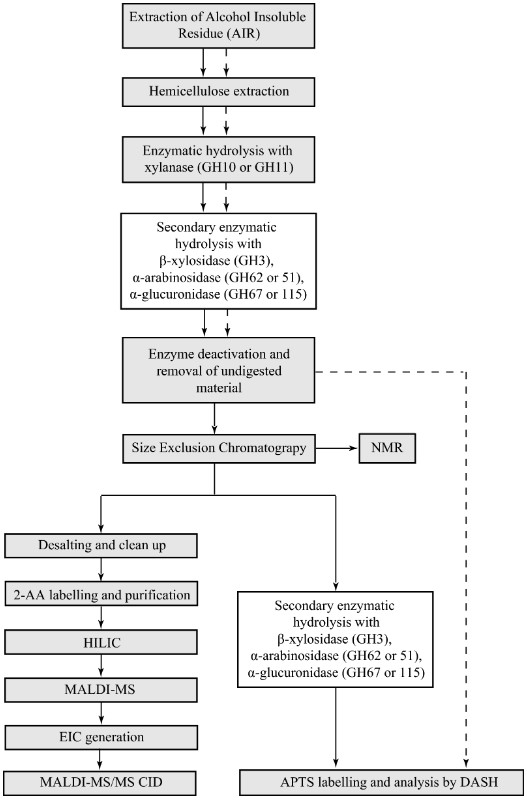 Fig.1 Development process of GAX oligosaccharide library.1, 2
Advantages of Our Services
-
Various strategies and automated systems for oligosaccharide synthesis
-
Efficient and rapid assembly of oligonucleotide libraries
-
Well-characterized structure by different analytical tools
-
Custom synthesis of different oligosaccharide libraries
-
High-yield and cost-effective production of oligosaccharide libraries
The development of oligosaccharide libraries has the potential to revolutionize our understanding of glycans in biological systems and their applications in drug and vaccine discovery. Our expertise in glycan synthesis and library development positions Creative Biolabs as a leading provider of high-quality oligosaccharide library development services. Contact us to learn more about how our services can benefit your research and projects in the field of glycobiology.
References
-
Tryfona, Theodora, et al. "Development of an oligosaccharide library to characterise the structural variation in glucuronoarabinoxylan in the cell walls of vegetative tissues in grasses." Biotechnology for Biofuels 12 (2019): 1-19.
-
Under Open Access license CC BY 4.0, without modification.
For Research Use Only.
Related Services