
Creative Biolabs is offering the most comprehensive services for antibody development projects. With strict regulation and effective execution, we are dedicated to providing the most valuable solutions to complete your projects.
HighlightsCreative Biolabs is offering the most comprehensive services for antibody development projects. With strict regulation and effective execution, we are dedicated to providing the most valuable solutions to complete your projects.
HighlightsCreative Biolabs has established a broad range of platforms for developing novel antibodies or equivalents. These cutting-edge technologies enable our scientists to meet your demands from different aspects and tailor the most appropriate solution that contributes to the success of your projects.
HighlightsWith deep understanding in antibody-related realms and extensive project experience, Creative Biolabs offers a variety of references to help you learn more about our capacities and achievements, including infographic, flyer, case study, peer-reviewed publications, and all kinds of knowledge that can assist your projects. You are also welcome to contact us directly for more specific solutions.
HighlightsGet a real taste of Creative Biolabs, one of the most professional custom service providers in the world. We are committed to providing highly customized comprehensive solutions with the best quality to advance your projects.
Highlights Loading...
All listed services and products are For Research Use Only. Do Not use in any diagnostic or therapeutic applications.
The CD274 gene is located in the 9p24.1 region of the human chromosome and encodes programmed death-ligand 1 (PD-L1), also known as B7 homolog 1 (B7-H1), a member of the B7 family within the immunoglobulin superfamily. CD274 is a type I transmembrane glycoprotein, with an extracellular region comprising two immunoglobulin-like domains—an N-terminal IgV-type domain responsible for receptor recognition and a membrane-proximal IgC-type domain—followed by a single transmembrane helix and a short cytoplasmic tail of approximately 30 amino acids. Its calculated molecular weight is approximately 33 kDa, though it migrates at 45–50 kDa by SDS-PAGE due to extensive N-linked glycosylation. CD274 is broadly expressed on hematopoietic cells including T lymphocytes, B lymphocytes, dendritic cells, and macrophages, as well as on non-hematopoietic tissues such as endothelial cells, keratinocytes, and placental trophoblasts, with expression markedly upregulated by interferon-γ. As a critical immune checkpoint ligand, CD274 binds to its receptor PD-1 (PDCD1) on activated T cells, triggering inhibitory signals that attenuate T-cell proliferation, cytokine production, and cytotoxic activity, thereby maintaining peripheral immune tolerance and preventing autoimmunity. CD274 also interacts with B7-1 (CD80) as a secondary receptor, adding another layer of immune regulatory complexity. The cytoplasmic tail, though short, contains signal transduction motifs that have been reported to transmit reverse signals upon antibody cross-linking. Multiple polymorphisms in the CD274 gene, particularly in the 3'-untranslated region, have been identified that influence transcript stability and protein expression levels. Additionally, CD274 has been detected in extracellular exosomes and can translocate to the nucleus under certain conditions where it has been implicated in transcriptional co-regulatory functions. Therefore, CD274 is regarded as a fundamental molecular model for studying immune checkpoint biology and T-cell regulatory mechanisms. Its functional analysis provides valuable tools for understanding the molecular basis of immune tolerance, the structural determinants of receptor-ligand interactions within the B7 family, and the regulatory networks controlling lymphocyte activation thresholds.
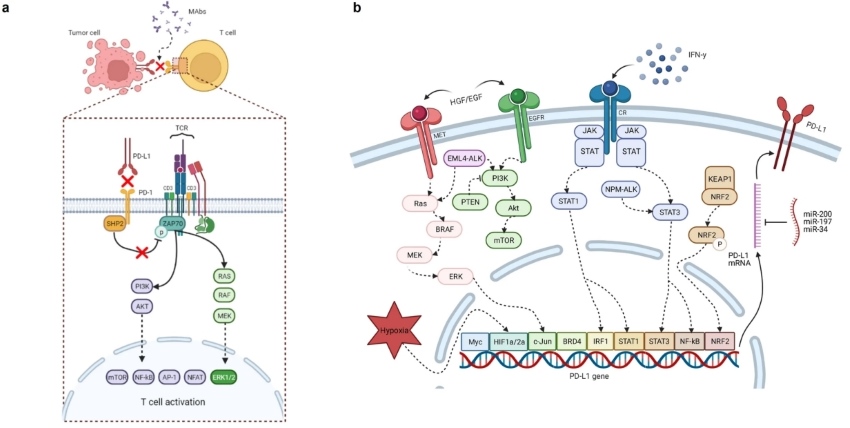 Fig. 1 Relationship between transcription factor activity and CD274 expression.1
The functional spectrum of CD274 encompasses multiple layers of immune regulatory activity centered on the PD-1 signaling axis:
Creative Biolabs offers a comprehensive series of high-quality CD274 membrane protein products designed to support structural and functional investigations of immune checkpoint interactions and receptor-ligand recognition. Built upon the independently developed MemDX™ recombinant membrane protein technology platform, CD274 proteins can be prepared through multiple expression systems, including virus-like particles (VLP) and in vitro prokaryotic expression systems, among others. These rigorously characterized protein products, which include MemDX™ recombinant human CD274 membrane protein (as virus-like particles) and human CD274 proteins derived from diverse expression systems, are suitable for ELISA, antibody screening and identification, receptor-ligand binding experiments, and functional research, equipping investigators with dependable reagents for analyzing CD274-mediated immune regulatory mechanisms and PD-1 signaling interactions.
Not finding the membrane protein product you need? Contact us to start your one-stop custom service!
Constructing a robust cell model is crucial for investigating CD274 function in immune checkpoint regulation. As a plasma membrane ligand that engages PD-1 on T cells and delivers inhibitory signals through SHP-1/SHP-2 recruitment, the expression level and surface density of CD274 directly affect the strength of immune inhibitory signaling and the threshold for T-cell activation. Alterations in CD274 expression, glycosylation status, or subcellular distribution may lead to significant changes in immune regulatory capacity. Creative Biolabs offers customized CD274 membrane protein stable transfection cell models, covering wild-type and various functionally characterized forms. These models stably express the target protein on the plasma membrane, and are suitable for studies on PD-1 binding kinetics, receptor-ligand interaction analysis at the immune synapse, T-cell co-culture suppression assays, and quantitative assessment of immune checkpoint signal output, providing a reliable and reproducible platform for exploring the molecular mechanism, structure-function relationship, and regulatory role of CD274 in immune homeostasis. Our technology ensures correct protein localization and plasma membrane integrity, facilitating your research.
Not finding the stable cell line product you need? Contact us to start your one-stop custom service!
Creative Biolabs offers highly specific recombinant antibodies targeting CD274, produced using advanced recombinant antibody technology. Compared to traditional antibodies, these recombinant antibodies demonstrate superior performance in terms of specificity, sensitivity, and batch-to-batch consistency. They can also be modified and labeled in various ways. Our CD274 recombinant antibodies support a wide range of applications, including Western Blot, ELISA, flow cytometry, immunofluorescence, immunocytochemistry, immunohistochemistry, and immunoprecipitation, and can be used to detect differences in CD274 expression levels in various tissues or cell types, analyze its plasma membrane distribution and glycosylation patterns, and conduct related research such as PD-1 binding blockade and immune checkpoint signaling pathway investigation. These antibodies provide reliable detection tools for the structural analysis, functional study of CD274, and the investigation of its role in immune checkpoint regulation and T-cell inhibitory signaling.
Not finding the recombinant antibody product you need? Contact us to start your one-stop custom service!
In addition to the standard products, Creative Biolabs also offers professional customized services for CD274. CD274 is a type I transmembrane glycoprotein with an extracellular region containing IgV-type and IgC-type immunoglobulin-like domains, and its glycosylation pattern and homodimerization status influence receptor recognition and protein stability. These structural features present specific requirements in aspects such as membrane protein expression, antigen design, and functional characterization. Leveraging our technology platform, we can assist you in completing the following customized projects:
CD274, also known as PD-L1 or B7-H1, functions as an immune checkpoint ligand that binds to the PD-1 receptor on activated T cells, delivering inhibitory signals that suppress T-cell proliferation, cytokine production, and cytotoxic activity. Its N-terminal IgV-type domain mediates PD-1 recognition, and upon receptor engagement, SHP-1 and SHP-2 phosphatases are recruited to the PD-1 cytoplasmic tail, dephosphorylating proximal TCR and CD28 signaling intermediates. This pathway is essential for maintaining peripheral immune tolerance and preventing excessive immune responses. CD274 also interacts with B7-1 (CD80) as a secondary receptor, adding further regulatory complexity.
CD274 serves as a central regulator of the balance between immune activation and tolerance, making it a critical model for studying immune checkpoint biology. Investigating CD274 provides insights into the structural basis of receptor-ligand recognition within the B7 immunoglobulin family, the signaling mechanisms of PD-1-mediated T-cell suppression, and the regulatory networks that control CD274 expression including interferon-γ responsiveness and post-translational modifications. The broad inducible expression of CD274 across hematopoietic and non-hematopoietic tissues and its role in establishing peripheral tolerance make it a valuable system for understanding how immune homeostasis is maintained.
Not applicable. All CD274 products and services provided by Creative Biolabs are for research purposes only and cannot be used for any clinical diagnosis, prevention, treatment or cure of any disease.
We offer a variety of product types, including recombinant CD274 membrane proteins, stable cell models expressing CD274, high-quality recombinant CD274 antibodies, as well as comprehensive customized services.









