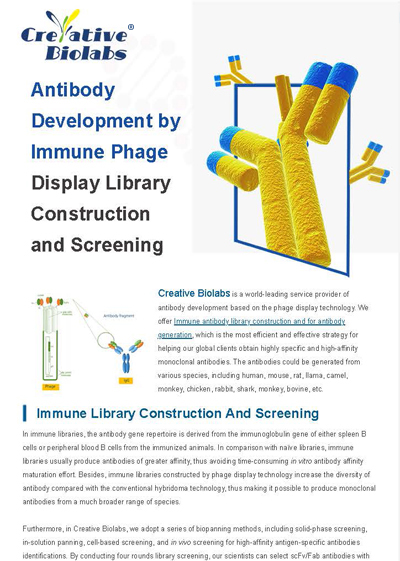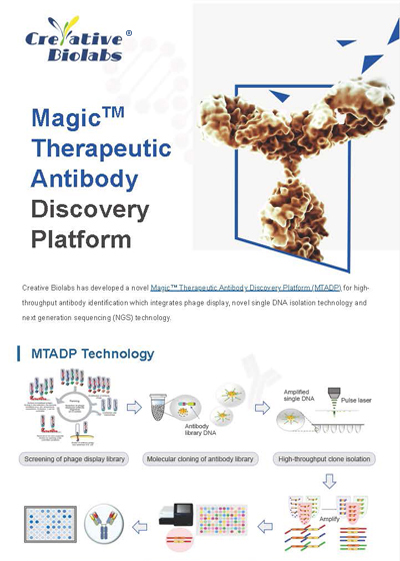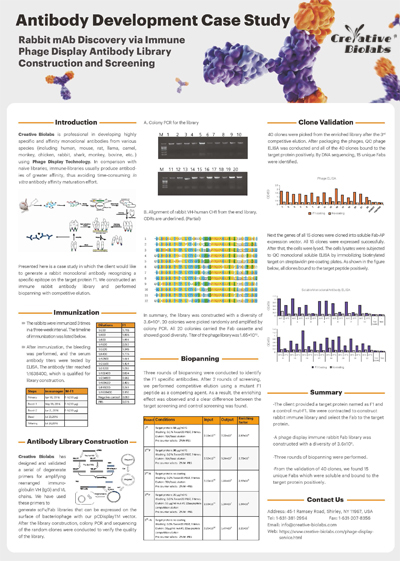
Creative Biolabs is offering the most comprehensive services for antibody development projects. With strict regulation and effective execution, we are dedicated to providing the most valuable solutions to complete your projects.
HighlightsCreative Biolabs is offering the most comprehensive services for antibody development projects. With strict regulation and effective execution, we are dedicated to providing the most valuable solutions to complete your projects.
HighlightsCreative Biolabs has established a broad range of platforms for developing novel antibodies or equivalents. These cutting-edge technologies enable our scientists to meet your demands from different aspects and tailor the most appropriate solution that contributes to the success of your projects.
HighlightsWith deep understanding in antibody-related realms and extensive project experience, Creative Biolabs offers a variety of references to help you learn more about our capacities and achievements, including infographic, flyer, case study, peer-reviewed publications, and all kinds of knowledge that can assist your projects. You are also welcome to contact us directly for more specific solutions.
HighlightsGet a real taste of Creative Biolabs, one of the most professional custom service providers in the world. We are committed to providing highly customized comprehensive solutions with the best quality to advance your projects.
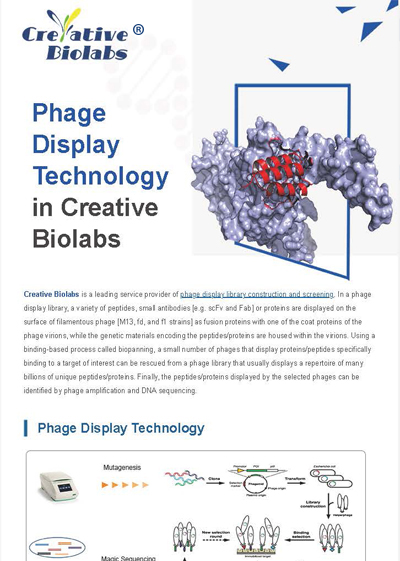
HighlightsAt Creative Biolabs, we harness phage display technology to engineer antibody libraries, peptide libraries and protein libraries that redefine the boundaries of target engagement. Our platform integrates advanced library construction methodologies with functional validation, enabling rapid discovery of high-affinity binders against diverse antigen classes—from soluble proteins and membrane-bound receptors to post-translationally modified epitopes.
Start your phage display project today. .
Creative Biolabs has long been at the forefront of phage display technology. With over two decades of experience, our team provides fully customized phage display library construction services. Central to our approach is the development of libraries exceeding 1011 unique clones, a diversity threshold critical for isolating rare, high-potency binders. We specialize in constructing immune, naïve, and synthetic libraries in scFv, Fab, and sdAb formats, each tailored to specific therapeutic objectives.
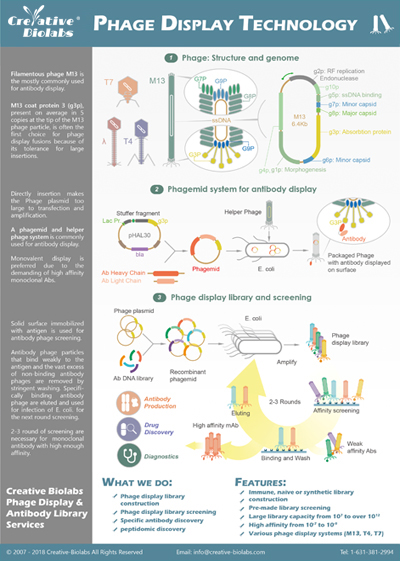
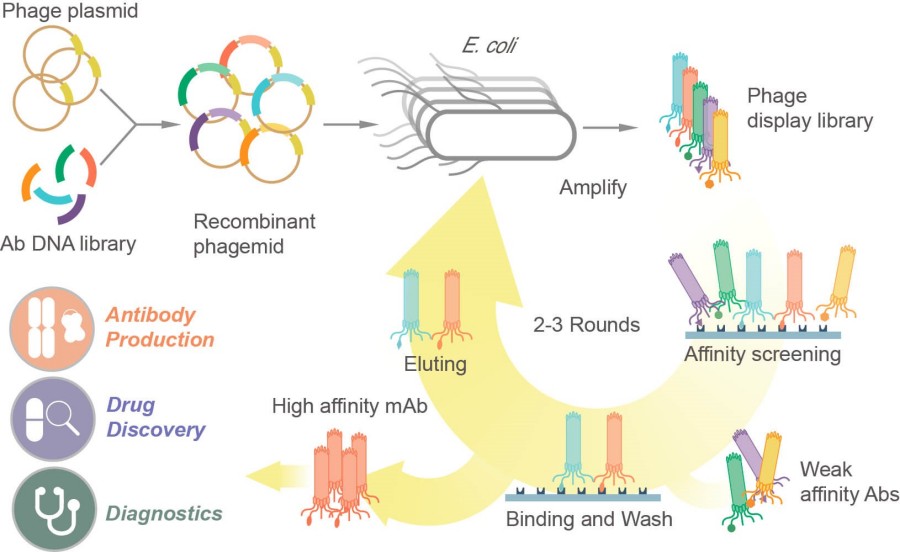 Fig.1 Phage display library construction and screening.
Quick Access
-High-quality, pre-validated libraries for rapid discovery
-Diverse clones from various species (human, mouse, camelids, etc.)
-Reliable and consistent results with minimal setup time
High Affinity
-Antibodies with high affinity due to immune response from immunized animals
-Reduced need for in vitro affinity maturation
-Libraries designed for specific targets and disease relevance
-Larger capacity and diversity compared to naïve libraries
Synthetic and Semi-synthetic Library Construction Service
Vast Diversity
-Vast diversity with fully customizable sequences
-Ability to target complex or rare antigens
-Enables precise control over antibody characteristics (e.g., affinity, specificity)
-Ideal for applications requiring highly specific, tailored antibody candidates
ScFv (Single-Chain Variable Fragment) Library Construction Service
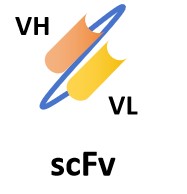
-Covalently linked VH and VL domains (25–30 kDa) with flexible peptide spacers, enabling monovalent antigen engagement while retaining compactness.
-Eliminates light-chain pairing variability inherent in traditional antibodies.
-Exceptional thermostability (ΔTm ≥10°C vs full-length IgG) and protease resistance, validated in acidic tumor microenvironments and inflammatory disease models.
-Accelerates discovery of tumor-targeting agents and bispecific antibody precursors with minimized off-target aggregation risks.
Fab (Fragment Antigen-Binding) Library Construction Service
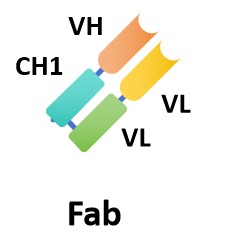
-Preserves VH-VL heterodimerization through interchain disulfide bonds, mirroring the antigen-binding topology of intact IgGs.
-Superior for conformation-dependent epitopes requiring precise spatial alignment (e.g., GPCR allosteric pockets, ion channel gating domains).
-Achieves sub-nanomolar affinity (KD ≤0.5 nM) against membrane proteins through mammalian display compatibility.
-Generates therapeutic leads for neurological disorders and autoimmune diseases, where epitope conformational fidelity dictates efficacy.
sdAb (Single Domain Antibody) Library Construction Service

-Heavy-chain-only antibodies with solvent-exposed CDR3 loops (up to 24 residues), stabilized by conserved CysCDR1-CysCDR3 disulfide bonds.
-Targets concave or cryptic epitopes (e.g., viral fusion machinery, enzyme catalytic clefts) inaccessible to conventional antibodies.
-Sub-15 kDa size enables blood-brain barrier penetration and intracellular target engagement, with picomolar affinity (KD ≤100 pM) against low-immunogenicity antigens.
-Powers development of inhaled biologics, CAR-T extracellular domains, and viral neutralization agents resistant to escape mutations.
Protein Variant Library Construction Service
-Accelerating protein optimization through systematic exploration of functional mutations.
-Enables tailored engineering of therapeutic proteins, enzymes, and antibodies with enhanced stability and activity.
-High-diversity platforms supporting both academic research and industrial biomanufacturing.
Scaffold Library Construction Service
- Non-antibody protein frameworks for novel binding interfaces.
- Ideal for targeting intracellular epitopes and designing cell therapy components (e.g., CAR-T extracellular domains).
- Combines structural stability with modular adaptability across diverse biomedical applications.
| Subtype | Features | Technical Differentiation | Application Value |
| Linear | 8-20 mers / Native frequency simulation | Solid-phase synthesis | Linear epitope mapping |
| Cyclic | Disulfide cyclization / Rigid conformation constraint | Oxidative folding optimization | Enhanced membrane permeability / GPCR ligand discovery |
| Mimotope | PTM mimics (phosphorylation/glycosylation) | Non-natural amino acid insertion | Anti-PTM antibody development |
| Constrained | Backbone crosslinking | Click chemistry cyclization | Protease resistance / Oral delivery |
| Random | Unbiased diversity (1e12) | Degenerate codon design | De novo bioactive peptide discovery |
cDNA Library Construction Service

-Constructed from polyadenylated mRNA via reverse transcription, preserving native splicing patterns and temporal/spatial expression profiles.
-Captures the functional proteome by excluding non-coding genomic regions, enabling direct interrogation of translated gene products.
-Supports yeast two-hybrid screens and phage display for de novo identification of RNA-binding proteins or disease-associated isoform interactions.
-Accelerates therapeutic target discovery in oncology (e.g., oncogenic fusion proteins) and autoimmune disorders (e.g., alternative splicing-derived autoantigens).
Lambda Phage-based Genome Library Construction Service
-Encodes 15–20 kb genomic fragments spanning coding/non-coding regions, prepared via mechanical shearing or restriction enzyme digestion.
-Maintains chromosomal context for studying distal regulatory elements (enhancers, insulators) and structural variations (CNVs, translocations).
-Compatible with functional complementation assays and epigenetic modifier screens to dissect cis-regulatory networks.
-Resolves mechanisms of chromosomal instability in cancer and identifies non-coding drivers of developmental disorders.

Begin your custom library construction. .
| QC Sample for Premade sdAb Antibody Library Construction |
|
Creative Biolabs generated our Camel Naïve sdAb Library, a cutting-edge resource sourced from 15+ individual camels. Designed to elevate your antibody research, this library offers a diverse and robust repertoire of single-domain antibodies (sdAb) for various applications. Rigorous Quality Control (QC)
|
Library Capacity >2.0×10¹⁰ 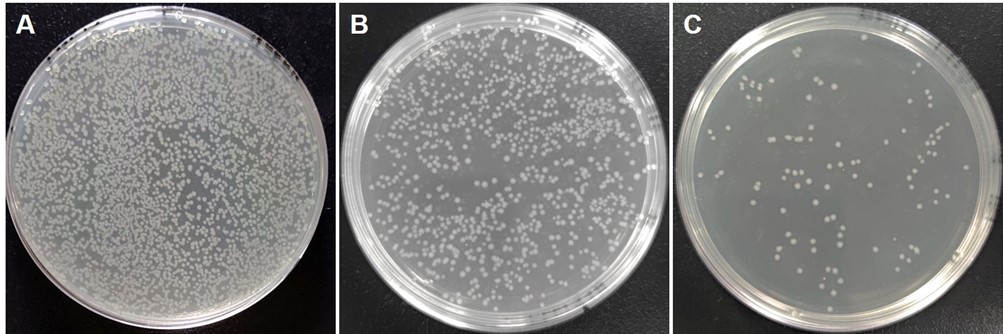
|
|
QC by Sanger Sequencing Sequencing Success Rate 100% Library Accuracy >95% All unique clones 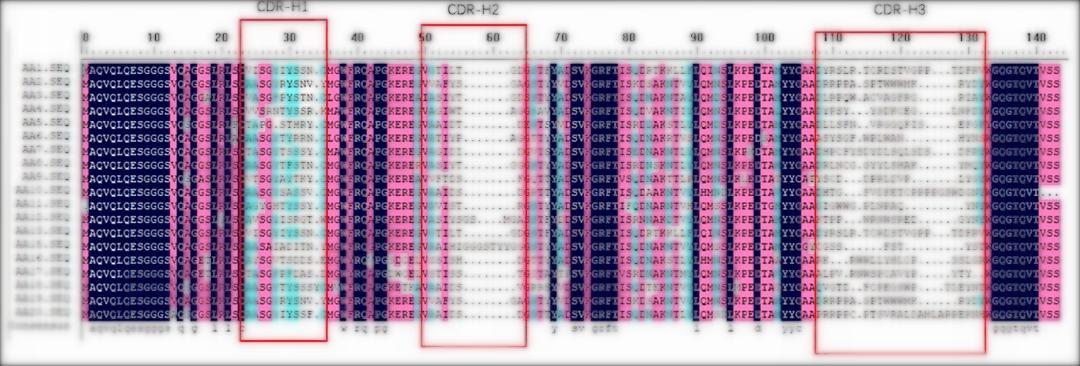
|
|
QC by NGS Sequencing >80% Unique Sequences Sequence diversity and in-frame of the library qualified by NGS. |
.
When it comes to phage display, one system definitely doesn't fit all projects. Depending on the target and the intended application—be it therapeutic, diagnostic, or purely exploratory research - the type of phage display system used can make a big difference. Creative Biolabs provides a diverse portfolio of phage display platforms, each optimized to address distinct project requirements. The principal system types are summarized below.
|
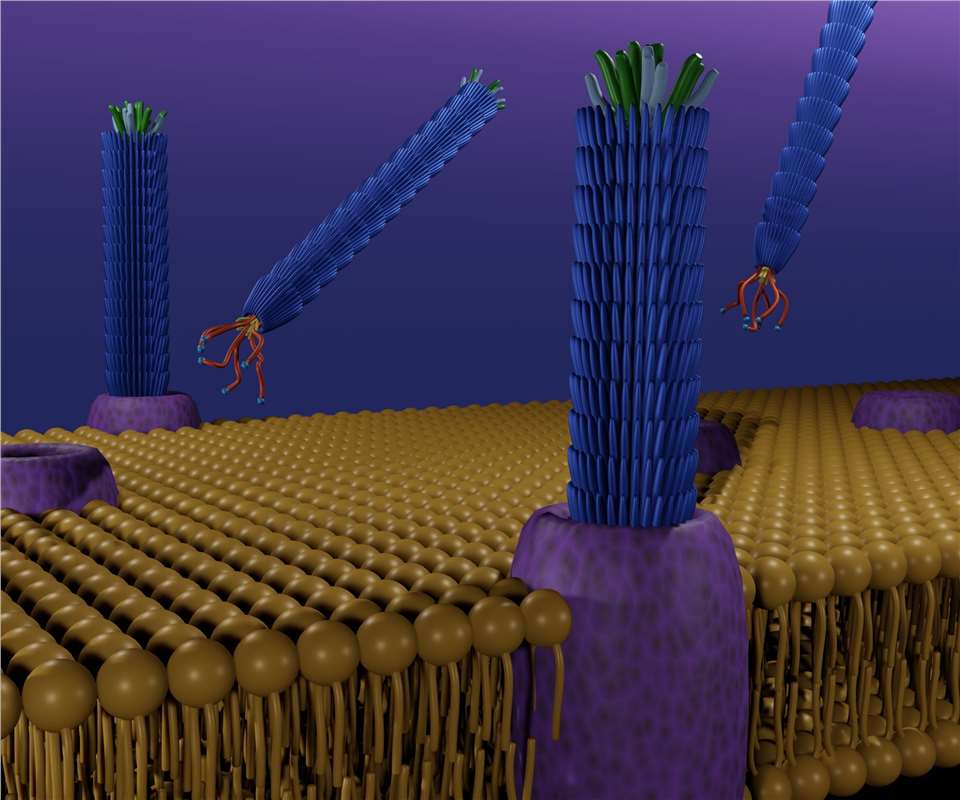
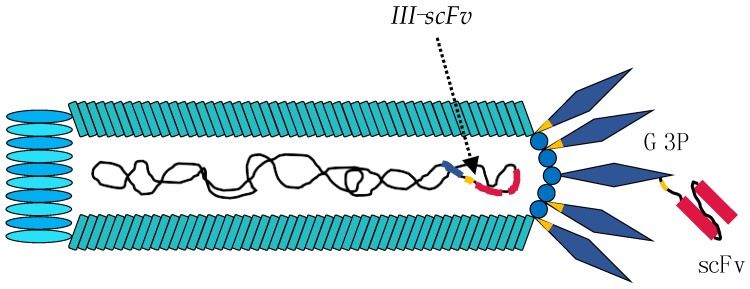
M13 Phage Library Construction Service This is one of the most commonly used systems for displaying peptides and antibody fragments like scFv, Fab, or sdAb. The M13 filamentous phage offers excellent stability and ease of manipulation, making it perfect for many applications. 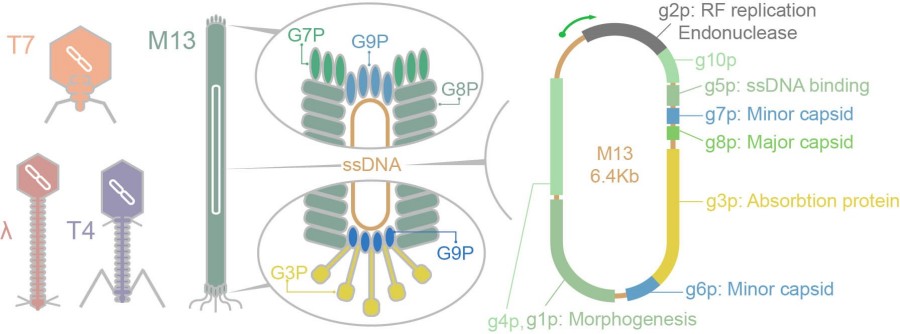
|
|
|
T7 Phage Library Construction Service Unlike M13, the T7 phage is lytic, which means it replicates more quickly and offers a higher display level. It's great for displaying larger proteins or for situations where rapid amplification is needed. |
T4 Phage Library Construction Service This system is less commonly used but can be advantageous when working with specific protein conformations or larger proteins due to its more complex capsid structure. |
.
As a leading expert in phage display technologies, Creative Biolabs recognizes that the success of a phage display campaign hinges on the careful selection of an appropriate display format. Each filamentous phage coat protein presents distinct structural and functional properties, which can be strategically leveraged depending on the molecular characteristics of the ligand and the intended downstream application.
| Coat Protein | Display Capacity | Optimal for | Remarks |
| pIII | Low copy number (≤5 per virion) | Antibody fragments (scFv, Fab, sdAb), peptides | Enables monovalent display; widely used due to minimal impact on infectivity |
| pVIII | High copy number (up to ~200 copies) | Small peptides, epitope mapping, polyvalent antigens | Best suited for high-density peptide display; less tolerant to larger inserts |
| pVI | Moderate display potential | cDNA libraries, large proteins | Allows flexible fusion at N-/C-termini; useful for expression studies |
| pVII | Low copy number | Antibody fragments, nanobodies | Emerging platform for small scaffold display and post-panning analyses |
| pIX | Very low copy number (≤5 per virion) | High-affinity ligand selection (monovalent display) | Favours stringent binder enrichment; expression efficiency varies by system |
Kickstart your phage display project. .

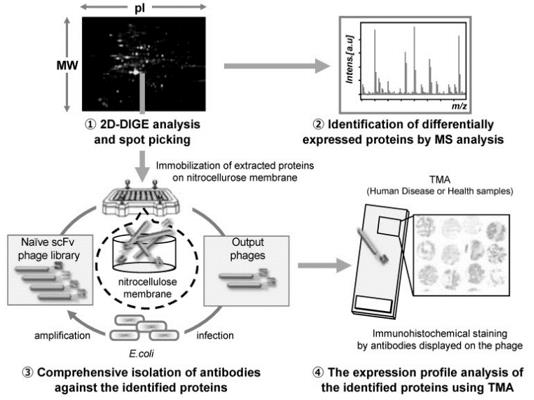
We offer a broad spectrum of phage display library formats, including scFv, Fab, and sdAb-based antibody libraries, as well as peptide, scaffold, and full-length cDNA libraries. This diversity allows us to support a wide range of applications—from therapeutic antibody discovery to functional protein screening.

Our fully synthetic and semi-synthetic libraries are engineered with controlled diversity using hard randomization, tailored codon strategies, and trimer phosphoramidite technology. Libraries can achieve diversity exceeding 1010 variants, with optimizations for stability, affinity maturation, and reduced immunogenicity.

We tailor phage display platforms—including M13, T4, T7, and lambda phage—to align with the molecular weight, structure, and biological context of the target protein. This flexibility ensures optimal expression and display fidelity across different project goals.

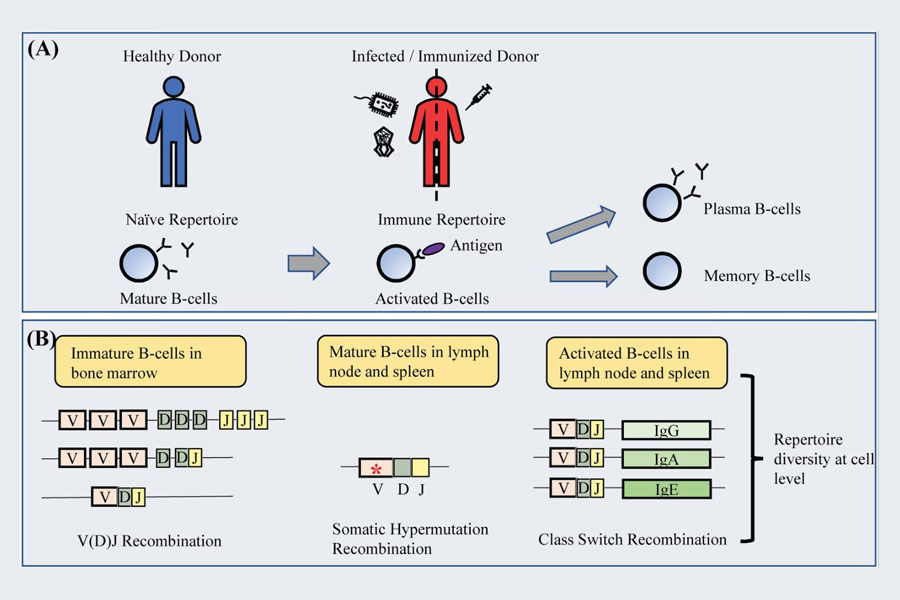
Our antibody libraries are derived from diverse sources, including immune and naïve human or animal plasma cells and splenocytes. For synthetic designs, we employ sequence-guided frameworks that reflect natural repertoires, enhancing developability and clinical translation.

We provide fully integrated services—from early-stage antigen design to downstream functional validation. Our scientific team works closely with clients to adapt the library design, phage system, and screening strategy to meet specific therapeutic, diagnostic, or research objectives.

Our phage display libraries are constructed with precise orientation, high insert integrity, and optimized expression, enabling high signal-to-noise ratios during screening. This is particularly advantageous for rare target discovery and low-abundance antigen screening.
to start your project.
Your goals, our solutions. .
Use the resources in our library to help you understand your options and make critical decisions for your study.

All listed services and products are For Research Use Only. Do Not use in any diagnostic or therapeutic applications.