
Creative Biolabs is offering the most comprehensive services for antibody development projects. With strict regulation and effective execution, we are dedicated to providing the most valuable solutions to complete your projects.
HighlightsCreative Biolabs is offering the most comprehensive services for antibody development projects. With strict regulation and effective execution, we are dedicated to providing the most valuable solutions to complete your projects.
HighlightsCreative Biolabs has established a broad range of platforms for developing novel antibodies or equivalents. These cutting-edge technologies enable our scientists to meet your demands from different aspects and tailor the most appropriate solution that contributes to the success of your projects.
HighlightsWith deep understanding in antibody-related realms and extensive project experience, Creative Biolabs offers a variety of references to help you learn more about our capacities and achievements, including infographic, flyer, case study, peer-reviewed publications, and all kinds of knowledge that can assist your projects. You are also welcome to contact us directly for more specific solutions.
HighlightsGet a real taste of Creative Biolabs, one of the most professional custom service providers in the world. We are committed to providing highly customized comprehensive solutions with the best quality to advance your projects.
Highlights Loading...
All listed services and products are For Research Use Only. Do Not use in any diagnostic or therapeutic applications.
C-type lectin domain containing 7A (CLEC7A) is a type II transmembrane C-type lectin receptor consisting of 247 amino acids with an approximate calculated molecular weight of 28 kDa. CLEC7A is primarily profiled on myeloid cells such as monocytes, macrophages, neutrophils, dendritic cells and microglia, but also expressed by B cells and other immune cell populations like eosinophil, mast cells, endothelial cell and subsets T cells and γδ Tccells. Expression is notably elevated in lung, intestine, spleen, thymus and lymph nodes which reflects its role in mucosal and systemic immune surveillance. CLEC7A is the main pattern recognition receptor (PRR) for fungal β-glucans and its activation induces an intracellular signaling cascade that involves Syk kinase, the CARD9-BCL10-MALT1 complex, and results in NF-κB activation, ROS production, phagocytosis, inflammasome activation, and cytokine secretion.
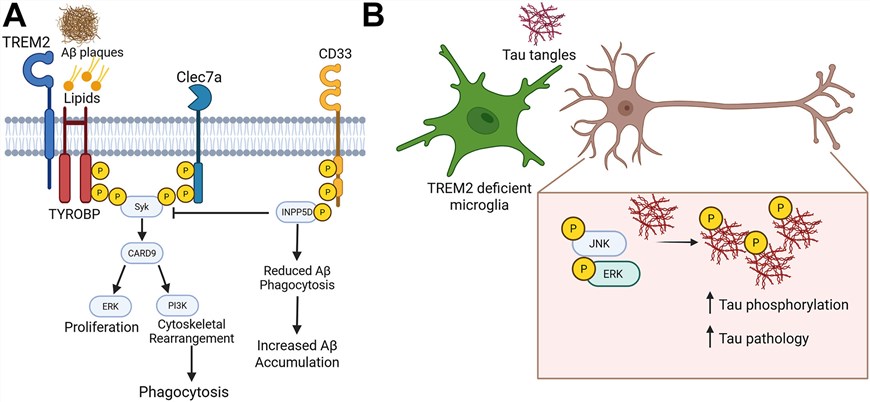 Fig.1 GWAS-implicated targets reveal a conserved, microglia-resident innate immune mechanism that partakes in AD pathogenesis.1
CLEC7A exhibits functional versatility, including pathogen recognition, adaptive immune modulation and tumor microenvironment regulation, as well as a wide extent of expressed cells and signaling options:
Creative Biolabs has released a panel of premium grade CLEC7A membrane protein products for structural and functional related investigation of this fungal pattern recognition receptor. Our proprietary technology, Membrane Protein, allows CLEC7A to be produced in different expression formats by employing diverse technologies. The validation series of proteins includes proteins such as CLEC7A Membrane Protein in Virus-Like Particles (MP-VLPs), the mouse/rat CLEC7A expressed in HEK293 or myeloid compatible systems, which you may use for applications like ELISA, antibody production and characterization etc., β-glucan binding assays and Syk recruitment studies, functional investigation of innate immune signaling. These offer researchers reliable tools for dissecting CLEC7A-coupled interactions with β-glucans, TLR2, CD37 and Syk kinase. When expressed in mammalian systems, our CLEC7A preparations retain bona fide CRD folding and Trp221/His223 accessibility to render physiologically relevant binding properties for therapeutic antibody development and vaccine adjuvant studies.
Not finding the membrane protein product you need? Contact us to start your one-stop custom service!
Cellular models particularly will be needed for effective research on CLEC7A. Creative Biolabs have custom-engineered CLEC7A membrane protein stable cell lines that stably express high amounts of human target CLEC7A. These stable cell lines offer a solid foundation for conducting CLEC7A biology and pharmacology studies, including drug screening, β-glucan binding studies, phagocytosis assays, cytokine induction assays, and high-throughput screening. Our domain expertise allows perfect expression and cell integrity to ensure your research pipeline is streamlined. Functional studies can be performed with CLEC7A-overexpressing lines (for studying β-glucan recognition and Syk-CARD9 signaling) or with its knockdown lines (for loss-of-function investigations), validated by flow cytometry, Western blotting, and functional zymosan binding assays. Additionally, novel reporter constructs in hematopoietic precursors for either NF-κB-luciferase or ROS-GFP provide real-time readouts of innate immune activation driven by CLEC7A that can be exploited for therapeutic screening in models of fungal infection and cancer immunotherapy.
Not finding the stable cell line product you need? Contact us to start your one-stop custom service!
We has developed a complete portfolio of high-affinity recombinant antibodies against CLEC7A, designed to address diverse research needs. Unlike traditional polyclonal antibodies, these recombinant produced monoclonal antibodies offer better specificity, sensitivity and batch-to-batch consistency. The CLEC7A recombinant antibodies that we have are applicable for WB, ELISA, FCM, IF, ICC and IHC/ICC. In addition to the types of samples as shown in Image 3 such as peripheral blood mononuclear cells; tumor-associated macrophages; fungal-infected tissue; dendritic cell lysates; FFPE with some special preparation and purified proteins (fused protein) applications. Here we present antibodies that recognize different CLEC7A epitopes; the CRD for β-glucan competition studies, stalk region to assess isoform specific detection, the hemITAM motif to evaluate signaling state, and transmembrane domain for membrane integration studies enabling complete profiling of CLEC7A within health, disease and therapeutic intervention contexts.
Not finding the recombinant antibody product you need? Contact us to start your one-stop custom service!
In addition to the products from our catalog, Creative Biolabs provides customized services in membrane protein and antibody discovery & development. With our in-depth experience and world-class platforms, we are there to help you with:
No, all Creative Biolabs CLEC7A products and services are strictly for research use only and are not intended for clinical diagnosis, prevention, treatment, or cure of any disease.
Absolutely. We can design CRD binding site mutants (W221A, H223A, W221A-H223A double mutant), hemITAM signaling mutants (Y7F), isoform-specific variants (isoform A with stalk, isoform B without stalk), stalk deletion constructs, glycosylation site mutraminors and tag fusions (His, Fc, FLAG, biotin) and select formulations - as part of our protein engineering service offering. We work closely with our scientific team and clients to design constructs that are tailored for structural biology, ligand interaction mapping as well as the development of therapeutic antibodies and vaccine adjuvants.
Yes, conformation-selective antibodies, which identify an epitope located in the extracellular stalk region exposed by receptor dimerization and juxtaposition of hemITAM following beta-glucan–induced receptor binding. The reagents permit direct detection of ligand-engaged, signaling-competent CLEC7A either on live membranes or in fixed tissue sections by flow cytometry and immunofluorescence, providing a receptor occupancy metric unencumbered by requirements for intracellular phospho-epitope preservation or supernatant cytokine quantitation.
We do have stable lines in which both full-length CLEC7A and Syk are constitutively expressed from independent loci of a myeloid-compatible background. Formulated as such each batch is accompanied with documentation of curdlan-stimulated IL-1β and IL-23 secretion profiles offering a standardized cellular platform for continuous mechanistic and pharmacological experimentation, without having to go through transient transfection repeatedly.








