Creative Biolabs is offering the most comprehensive services for antibody development projects. With strict regulation and effective execution, we are dedicated to providing the most valuable solutions to complete your projects.
HighlightsCreative Biolabs is offering the most comprehensive services for antibody development projects. With strict regulation and effective execution, we are dedicated to providing the most valuable solutions to complete your projects.
HighlightsCreative Biolabs has established a broad range of platforms for developing novel antibodies or equivalents. These cutting-edge technologies enable our scientists to meet your demands from different aspects and tailor the most appropriate solution that contributes to the success of your projects.
HighlightsWith deep understanding in antibody-related realms and extensive project experience, Creative Biolabs offers a variety of references to help you learn more about our capacities and achievements, including infographic, flyer, case study, peer-reviewed publications, and all kinds of knowledge that can assist your projects. You are also welcome to contact us directly for more specific solutions.
HighlightsGet a real taste of Creative Biolabs, one of the most professional custom service providers in the world. We are committed to providing highly customized comprehensive solutions with the best quality to advance your projects.
Highlights Loading...
All listed services and products are For Research Use Only. Do Not use in any diagnostic or therapeutic applications.
Immunoglobulin heavy constant gamma 3 (IgG3) is a secreted and membrane-tethered antibody isotype encoded by the IGHG3 gene, belonging to the gamma immunoglobulin constant region family and acting as the primary effector of robust complement cascade initiation and tissue-targeted inflammatory immune recruitment. IgG3 is secreted by differentiated plasma cell populations within systemic lymphoid and mucosal tissues, with evolutionarily conserved Fc constant domains and variable antigen-binding regions across species, serving as an essential modulator for antigen opsonization, classical complement pathway triggering and myeloid immune cell recruitment. IgG3-mediated antigen-antibody complex activity exerts decisive effects on sustaining rapid pathogen clearance, amplifying localized inflammatory immune response and maintaining systemic humoral immune defense under physiological conditions. Furthermore, IgG3 coordinates downstream signaling cascades governing immune cell phagocytosis, cytokine release and tissue inflammatory infiltration to safeguard intact pathogen clearance function. Distinct from other IgG subclasses with divergent complement activation efficiency, IgG3 carries unique non-redundant duties in potent classical complement cascade stimulation, rendering it indispensable for rapid humoral pathogen elimination, inflammatory tissue immune infiltration and overall systemic immune surveillance.
IgG3 executes biological functions through specific antigen epitope binding followed by Fc domain recognition of serum complement components to trigger sequential complement protein assembly, driving targeted pathogen opsonization and local inflammatory immune cell recruitment to eliminate foreign antigenic substances. Its conserved constant region domains mediate complement protein anchoring and myeloid cell receptor engagement, enabling precise tuning of humoral immune potency and inflammatory signal transmission. IgG3-dependent signaling sustains systemic immune equilibrium, covering intact complement activation cycles, coordinated tissue inflammatory infiltration and persistent humoral pathogen surveillance. IgG3 participates in an extensive spectrum of biological processes, such as antigen opsonization, classical complement cascade activation, myeloid immune cell recruitment and adaptive humoral immunity regulation. Aberrant enrichment or sustained production of IgG3 severely amplifies complement-mediated tissue injury, disturbs immune response balance and elevates susceptibility to autoantibody-driven inflammatory disorders, including autoimmune tissue damage and chronic infectious inflammatory lesions. Therefore, IgG3 constitutes a pivotal research target for investigating antibody isotype biology, complement immunology and autoimmune disease pathogenic mechanisms.
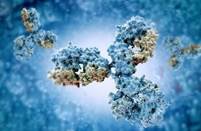
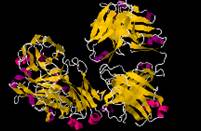
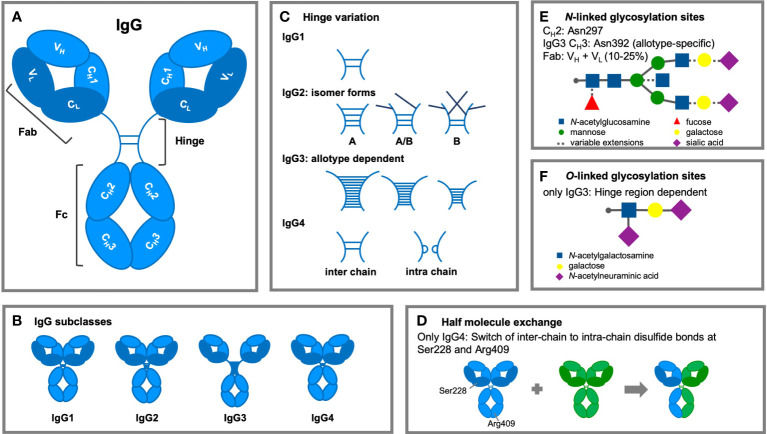 Fig. 1 Human IgG structural framework; IgG3 has elongated hinge with abundant disulfide bonds, unique CH3 N-glycosylation and exclusive hinge O-glycosylation, driving its high structural flexibility.1
The biological functions of IgG3 are focused on antigen-specific opsonization, classical complement cascade initiation and myeloid immune cell recruitment:
Creative Biolabs offers high-quality IgG3 proteins via optimized expression systems, covering full-length IgG3 antibodies and isolated Fc/antigen-binding domain variants. These products retain native spatial conformation and intrinsic complement-binding biological activity, suitable for antibody isotype functional analysis, complement interaction studies and small molecule compound screening targeting autoimmune inflammatory disorders. All IgG3 proteins undergo rigorous quality control to guarantee consistent functional performance and reliable application across diverse research platforms.
Not finding the membrane protein product you need? Contact us to start your one-stop custom service!
Creative Biolabs provides custom engineered IgG3 stable cell lines, including overexpression and gene silencing models. These cell line models are optimized for antibody isotype secretion research, complement activation phenotype observation and compound immunomodulatory response profiling. Each cell line undergoes strict validation procedures to ensure steady target expression levels and uniform functional performance across multiple experimental scenarios.
Not finding the stable cell line product you need? Contact us to start your one-stop custom service!
High-specificity recombinant antibodies targeting IgG3 are developed with advanced antibody engineering workflows, without cross-reactivity against other IgG subclass homologs. These antibodies receive multi-scenario functional validation, applicable to immunoglobulin expression profiling, tissue antibody deposition detection, Fc-complement binding interaction assessment and autoimmune disease research, enabling precise characterization of IgG3 expression patterns, tissue distribution and functional modulation under physiological and pathological states.
Not finding the recombinant antibody product you need? Contact us to start your one-stop custom service!
Beyond catalog products, Creative Biolabs offers specialized custom services for IgG3 research:
IgG3 is a specialized gamma immunoglobulin isotype that mediates antigen opsonization, classical complement cascade activation and inflammatory myeloid immune cell recruitment.
IgG3 exerts irreplaceable control over potent complement-dependent humoral immunity; abnormal IgG3 accumulation drives autoimmune tissue inflammatory injury, establishing it as a vital research target.
No, all IgG3 products and services are strictly for research use only, not intended for clinical diagnosis or treatment.
Offerings include IgG3 proteins, high-specificity recombinant antibodies and custom stable cell lines for antibody isotype and autoimmune immunology research.
IgG3 proteins undergo functional verification via complement binding capacity assessment, antigen complex formation analysis and conformational stability evaluation.