Creative Biolabs is offering the most comprehensive services for antibody development projects. With strict regulation and effective execution, we are dedicated to providing the most valuable solutions to complete your projects.
HighlightsCreative Biolabs is offering the most comprehensive services for antibody development projects. With strict regulation and effective execution, we are dedicated to providing the most valuable solutions to complete your projects.
HighlightsCreative Biolabs has established a broad range of platforms for developing novel antibodies or equivalents. These cutting-edge technologies enable our scientists to meet your demands from different aspects and tailor the most appropriate solution that contributes to the success of your projects.
HighlightsWith deep understanding in antibody-related realms and extensive project experience, Creative Biolabs offers a variety of references to help you learn more about our capacities and achievements, including infographic, flyer, case study, peer-reviewed publications, and all kinds of knowledge that can assist your projects. You are also welcome to contact us directly for more specific solutions.
HighlightsGet a real taste of Creative Biolabs, one of the most professional custom service providers in the world. We are committed to providing highly customized comprehensive solutions with the best quality to advance your projects.
Highlights Loading...
All listed services and products are For Research Use Only. Do Not use in any diagnostic or therapeutic applications.
Plasminogen activator, urokinase receptor (PLAUR), commonly recognized as uPAR or CD87, is a heavily glycosylated type GPI/AP glycolipid membrane cleaved cell-surface protein with carrier glycoprotein/chain-associated molecular weights between 50–60 kDa depending on the variation of oligosaccharide chains in unique cellular physiologies. PLAUR (urokinase-type plasminogen activator [uPA] receptor), a glycosylphosphatidylinositol-coupled surface antigen, represents the most prominent docking site for uPA on myeloid cells, endothelial cells and fibroblasts as well as malignant epithelial derivatives. Following ligand engagement, the receptor facilitates localized conversion of plasminogen to active Plasmin which mediates precisely regulated pericellular proteolytic cascades that degrade substrates associated with extracellular matrix components and basement membrane barriers. Apart from its canonical role in fibrinolysis, PLAUR functions as a dynamic signaling platform that regulates cell adhesion, chemotaxis, proliferation and survival by directly physically binding to integrin adhesion receptors (e.g. αvβ3), receptor tyrosine kinases such as EGFR and PDGFR,and the G protein-coupled receptor FPRL1. Dysregulated expression of PLAUR is a solidly established hallmark of aggressive malignancies, including pancreatic ductal adenocarcinoma (PDAC), triple-negative breast cancer (TNBC), non-small cell lung carcinoma (NSCLC) and chemoresistant metastatic colorectal cancer. Additionally, increased levels of circulating soluble PLAUR (suPAR) have been identified as reliable prognostic indicators in inflammatory diseases, infections and chronic kidney disease. PLAUR subsequently has gained significant pharmaceutical attention not only as a precision diagnostic marker, but also druggable target for different classes of antibody-directed therapeutics appropriate small-molecule antagonists and targeted protein degradation modalities.
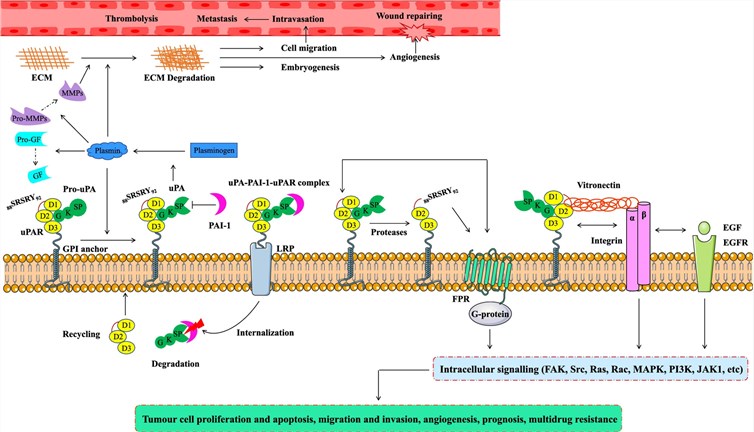 Fig.1 Schematic representation of the uPAR-mediated pathways.1
PLAUR carries out various biological programs that are not merely limited to its classical function in fibrin clearance:
A unique portfolio of full-length—post-translationally pristine PLAUR proteins custom-engineered to circumvent the biochemical hurdles typically associated with research into GPI-anchored receptors. Inspired to microengineer the dynamics of membrane-embedded uPAR and also realizing that native mammalian N-linked glycosylation, GPI-anchor attachment at the C-terminus, in a heterologous expression system are absolute prerequisites for high-affinity binding between both recombinant proteins as well as naturally occurring forms, we integrated advanced technologies from distinct but complementary fields, including intracellular components involved in remodeling lipid raft bilayer stability. As a result, these complementary production methodologies enable researchers to perform quantitative ligand-binding studies at physiological and sub-physiological levels of specificity while dissecting the structural architecture that underlies molecular recognition within the PLAUR–uPA complex, as well as conduct high-throughput screening campaigns targeting both receptor-ligand interface sites and allosteric regulatory elements. Comprehensive quality control for each protein preparation includes GPI-anchor integrity determination with sensitivity assays to phosphatidylinositol-specific phospholipase C, glycosylation profiling by lectin blotting and mass spectrometry, uPA-binding affinity measurement using surface plasmon resonance (SPR), along with functional validation through chromogenic plasminogen activation assay as well as the assessment of biological fidelity.
Not finding the membrane protein product you need? Contact us to start your one-stop custom service!
Broadening the use of physiologically relevant cellular models will be fundamental to revealing PLAUR-mediated proteolytic signalling mechanisms, and for expediting therapeutic discovery pipelines. Utilizing a unique dual-delivery strategy to jointly harness lentiviral transduction and the transposon-based pathway for genomic integration, we present high-quality PLAUR stable cell lines that reproduce native GPI-anchored membrane presentation, recapitulate glycosylation landscapes of primary human cells downstream of de novo expression in addition to uPA-triggered reprogramming into competent plasminogen activators. In addition to wild-type PLAUR, our cell-based platforms include disease-relevant structural variants—including deletion mutants of the D1 domain that inhibit uPA binding and glycosylation-deficient receptor isoforms with altered trafficking, some associated with known polymorphisms in cancer susceptibility—as well as luciferase-coupled reporter systems designed for quantaitative evaluation of ERK, PI3K/Akt or NF-κB pathway activation over short time scales/real-time modules capable not only measuring migration but also three-dimensional invasion. These scalable, reproducible cellular resources provide key assets to study oncogenic mechanisms and anti-metastatic compound screening.
Not finding the stable cell line product you need? Contact us to start your one-stop custom service!
Further your PLAUR research with our comprehensive catalog of high-affinity fully characterized monoclonal antibodies specifically designed to tackle this complicated structural and functional nature exhibited by such a GPI-anchored receptor. Our antibodies identify conformations of latent and ligand-occupied PLAUR as well as glycosylation-dependent epitopes present on the three homologous LU (Ly-6/uPAR) domains, with specific distinction between membrane-bound receptor anchor conformation and soluble metabolized recombinant forms. They are pre-validated for many uses: low background Western blotting (sensitive under both reducing and non-reducing electrophoretic conditions), soluble PLAUR quantification in biological fluids via direct and competitive ELISA formats, flow cytometric characterizations of live-fixable tumor-derived populations or subpopulations of immune cells, high-resolution confocal microscopy imaging studies on membrane microdomains & invadopodia as well as formalin-fixed paraffin-embedded tissue sections from clinical cases now being tested against functional receptor-blocking binding studies (uPA) that inhibit proteolysis per cell aggregates.
Not finding the recombinant antibody product you need? Contact us to start your one-stop custom service!
In addition to our catalog offerings we provide versatile, integrated solutions for protein design and engineering specifically designed toward advanced PLAUR-directed research programs:
Yes. Our mammalian expression systems ensure correct post-translational processing and GPI-anchor addition at the C-terminal ω-site. Pancreatic secretory phospholipase A2 (sPLA2) is the mark with which you can recognize that each batch of anchor has been tested analytically for anchor integrity by means of tests based on cleavage assays, membrane fractionation studies, and detergent-phase partitioning to demonstrate authentic association at membranes as well as lipid-raft localization.
We have designed our production protocols to intentionally mimic the N-linked glycosylation events of each of the three LU domains as well as disulfide bond arrangements that are key for maintaining proper protein folding, uPA-binding affinity, protease resistance and recognition by conformation-sensitive antibodies. These modifications are explicitly validated through quality control before releasing.
Certainly. With this platform, we present systematic deletions of all D1,D2 and D3 domains as well as the flexible linker regions linking these domains to allow detailed structure-function relation studies, dominant-negative strategy development and accurate mapping of integrins/growth-factor receptors protein-protein interaction surfaces.
Absolutely. We have generated D1 domain deletion mutants that completely abolish binding of uPA, glycosylation-site variants with altered receptor trafficking and shedding kinetics, as well as naturally occurring polymorphisms associated with cancer susceptibility and fibrinolytic disorders. The purified recombinant proteins or genetically stable cell lines carrying the variants are used for mechanistic and drug-discovery studies.