Creative Biolabs is offering the most comprehensive services for antibody development projects. With strict regulation and effective execution, we are dedicated to providing the most valuable solutions to complete your projects.
HighlightsCreative Biolabs is offering the most comprehensive services for antibody development projects. With strict regulation and effective execution, we are dedicated to providing the most valuable solutions to complete your projects.
HighlightsCreative Biolabs has established a broad range of platforms for developing novel antibodies or equivalents. These cutting-edge technologies enable our scientists to meet your demands from different aspects and tailor the most appropriate solution that contributes to the success of your projects.
HighlightsWith deep understanding in antibody-related realms and extensive project experience, Creative Biolabs offers a variety of references to help you learn more about our capacities and achievements, including infographic, flyer, case study, peer-reviewed publications, and all kinds of knowledge that can assist your projects. You are also welcome to contact us directly for more specific solutions.
HighlightsGet a real taste of Creative Biolabs, one of the most professional custom service providers in the world. We are committed to providing highly customized comprehensive solutions with the best quality to advance your projects.
HighlightsCreative Biolabs offers a specialized FcγRI binding assay to address the challenges of long drug development cycles, difficulties in antibody development, and the complex nature of clinical trials in the biopharmaceutical field. This essential service helps you accelerate drug discovery, develop highly specific antibodies, and streamline preclinical assessment through advanced high-throughput screening platforms and innovative protein engineering techniques.
The high-affinity Fc gamma receptor I (FcγRI, also known as CD64) is a pivotal player in the innate and adaptive immune systems, predominantly expressed on myeloid cells such as monocytes, macrophages, and neutrophils. It uniquely binds monomeric IgG with high affinity, initiating critical immune responses like antibody-dependent cellular cytotoxicity (ADCC) and the efficient clearance of immune complexes. In the current landscape of antibody therapeutic development, understanding these interactions is paramount. Genetic variations in FcγRs can significantly influence therapeutic outcomes, making precise characterization of FcγRI binding essential for optimizing antibody design, predicting in vivo efficacy, and ensuring drug safety. This deep understanding is crucial for overcoming development hurdles and advancing novel therapeutic candidates.
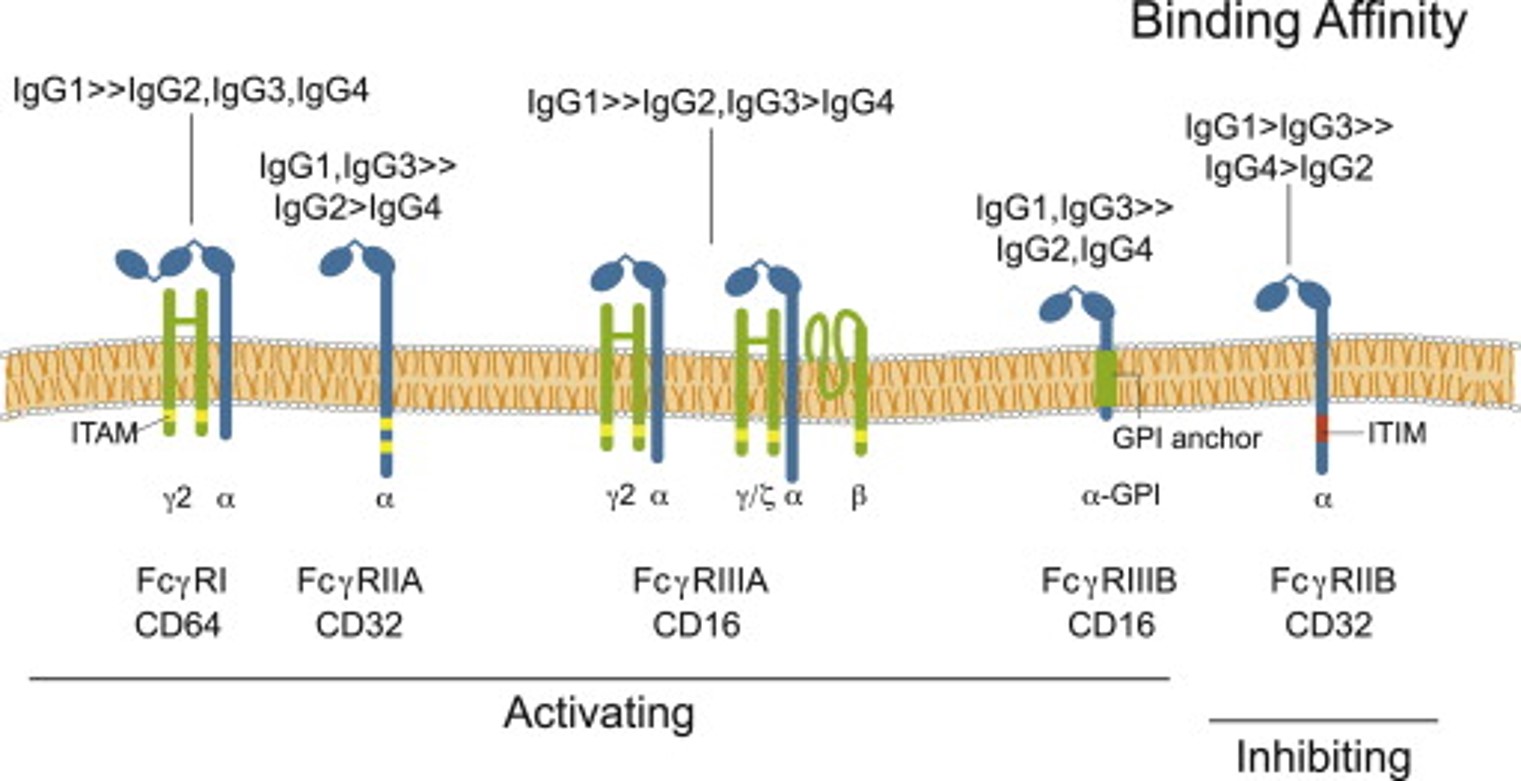 Fig.1 Fc receptors may have distinct Ig specificities.1
In the challenging landscape of biopharmaceutical development, where long drug development cycles and the demand for highly specific antibody therapeutics are constant pressures, Creative Biolabs' FcγRI binding assay offers a crucial solution. Our service is meticulously designed to provide precise and comprehensive data on the interaction between your antibody therapeutics and FcγRI. We follow rigorous principles, employing state-of-the-art platforms to delineate binding kinetics (association and dissociation rates) and affinity constants (KD). This is indispensable for rational antibody engineering and accurately predicting potential Fc-mediated effector functions.
Clients gain actionable insights to optimize antibody candidates, enhance their therapeutic index, and streamline the path to clinical development. The typical timeframe for these in-depth analyses ranges from 4 to 8 weeks, depending on project complexity. We uphold the highest standards of quality through rigorous experimental controls, advanced instrumentation, and expert data interpretation, guaranteeing reliable and reproducible results for every project.
Step1. Initial Consultation & Design: Our scientific team partners with you to define project goals, then designs and optimizes the most relevant assay methodology to ensure maximum data quality.
Step2. Recombinant FcγRI Preparation: We meticulously prepare, purify, and validate high-quality, biologically active recombinant human FcγRI (CD64) protein in-house, guaranteeing consistent and reliable reagents for every study.
Step3. Assay Execution & Data Acquisition: Experienced scientists execute the selected assay on state-of-the-art analytical platforms. For SPR, FcγRI is immobilized, and antibody samples are flowed over at various concentrations to capture real-time association and dissociation events, generating raw sensorgram data.
Step4. Data Processing & Quality Control: Raw data undergoes rigorous processing, including baseline subtraction, blank subtraction, and normalization, followed by comprehensive quality control checks to validate data reliability and integrity.
Step5. Kinetic & Affinity Analysis: Specialized software models the processed data to yield crucial binding parameters: association rate (ka), dissociation rate (kd), and the equilibrium dissociation constant (KD), providing a quantitative measure of binding strength.
We provide a variety of selective design approaches to meet the unique needs of each customer's project:
| Objective: | To measure the binding affinity of sample-1 with FcγRI/CD64 via the SPR method. | ||||||||||||||||||||||
| Assay Format: | Binding and fitting curves between samples with FcγRI/CD64: 1:1 binding model; | ||||||||||||||||||||||
| Results: | The fitting curves for Sample-1 binding to CD64 are shown in Fig.2. Using the 1:1 binding model, the captured CD64 can bind Sample-1 with an affinity constant of 2.99 x 10⁻⁹ M. | ||||||||||||||||||||||
|
Table 1 SPR result summary between sample-1 with FcγRI/CD64 |
|||||||||||||||||||||||
Creative Biolabs' FcγRI Binding Assay facilitated a direct comparison of our antibody candidates against both FcγRI and other Fc receptors. This provided clear insights into the desired specificity, helping us avoid potential off-target binding issues. The comprehensive data report was instrumental in guiding our antibody engineering efforts, allowing us to select the most promising candidates.
We relied on Creative Biolabs for our Fc-fusion protein characterization, and their FcγRI Binding Assay delivered consistently reliable and reproducible data. Their robust experimental design and thorough data analysis addressed our concerns regarding potential batch variability and provided strong evidence for our regulatory submissions. The scientific support was exceptional.
A1: FcγRI, a high-affinity receptor for IgG, plays a crucial role in activating myeloid cells, mediating antibody-dependent cellular cytotoxicity (ADCC), and clearing immune complexes. For therapeutic antibodies, understanding FcγRI binding is critical because it dictates how effectively an antibody can engage immune effector cells to eliminate target cells, influencing both efficacy and potential off-target effects.
A2: Creative Biolabs employs various state-of-the-art techniques, including ELISA, Flow Cytometry, and Surface Plasmon Resonance (SPR) or Bio-layer Interferometry (BLI). While all methods offer valuable insights, SPR/BLI are highly recommended for their ability to provide real-time, label-free kinetic and affinity data, offering a more comprehensive understanding of the interaction.
A3: Yes, our advanced platforms can be leveraged to investigate the impact of different glycosylation patterns on FcγRI binding. By testing glycoengineered antibody variants or using specific enzymatic treatments, we can help you understand how Fc glycan modifications influence binding affinity and kinetics, which is crucial for optimizing antibody function.
Creative Biolabs offers a comprehensive suite of complementary services to support every stage of your antibody therapeutic development, ensuring a holistic understanding of your molecule's characteristics and potential:
Creative Biolabs is your premier partner for advanced biopharmaceutical research, delivering comprehensive FcγRI Binding Assay services that provide unparalleled insights into antibody-receptor interactions. Our extensive expertise, cutting-edge platforms, and unwavering commitment to quality ensure you receive the most reliable data to accelerate your drug discovery and development. Accelerate your therapeutic development with our global FcγRI Binding Assay services. Our expert team is ready to help you evaluate your therapeutics; contact us today to get started.
Reference
All listed services and products are For Research Use Only. Do Not use in any diagnostic or therapeutic applications.

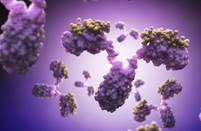




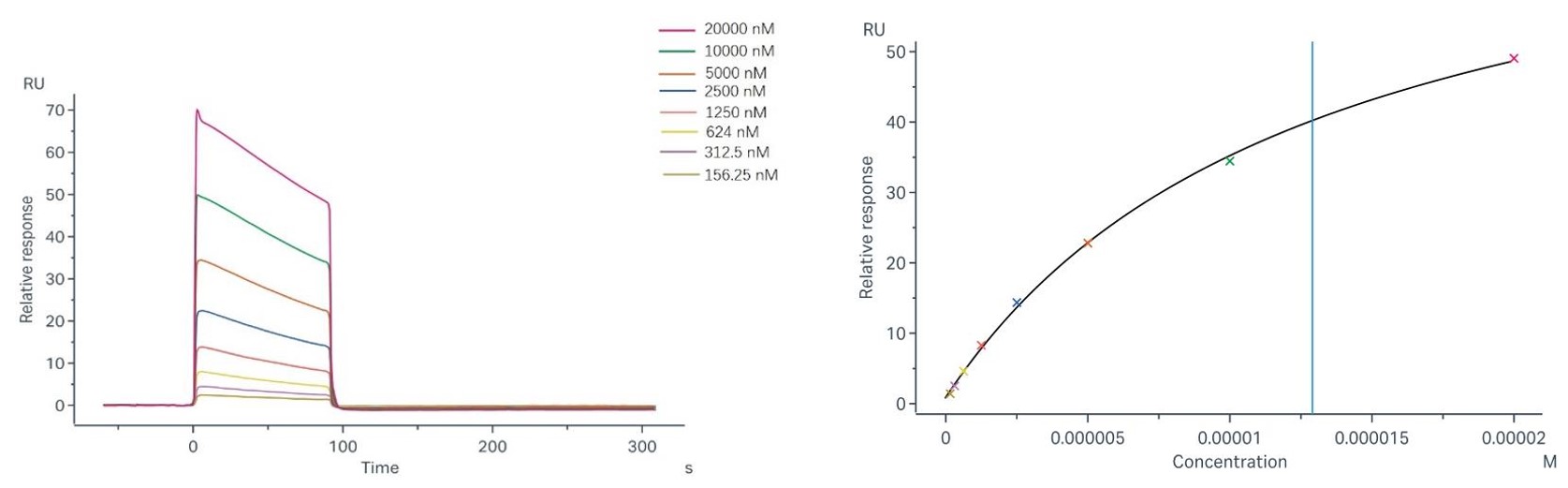 Fig.2 Binding and fitting curves between sample-1 with FcγRI/CD64 at different concentrations.