Creative Biolabs is offering the most comprehensive services for antibody development projects. With strict regulation and effective execution, we are dedicated to providing the most valuable solutions to complete your projects.
HighlightsCreative Biolabs is offering the most comprehensive services for antibody development projects. With strict regulation and effective execution, we are dedicated to providing the most valuable solutions to complete your projects.
HighlightsCreative Biolabs has established a broad range of platforms for developing novel antibodies or equivalents. These cutting-edge technologies enable our scientists to meet your demands from different aspects and tailor the most appropriate solution that contributes to the success of your projects.
HighlightsWith deep understanding in antibody-related realms and extensive project experience, Creative Biolabs offers a variety of references to help you learn more about our capacities and achievements, including infographic, flyer, case study, peer-reviewed publications, and all kinds of knowledge that can assist your projects. You are also welcome to contact us directly for more specific solutions.
HighlightsGet a real taste of Creative Biolabs, one of the most professional custom service providers in the world. We are committed to providing highly customized comprehensive solutions with the best quality to advance your projects.
HighlightsCreative Biolabs offers expert immunogen design services, utilizing both synthetic peptides and recombinant protein expression. We specialize in crafting tailored immunogens that trigger highly specific and strong immune responses. Through our deep understanding of immunology and cutting-edge technologies, we deliver exceptional value to our customers, accelerating their antibody research and development timelines and ensuring project success.
Immunogens, fundamentally, are substances capable of triggering an adaptive immune response within a host organism. These can be broadly categorized into diverse classes, encompassing polypeptides, proteins, nucleic acids, and certain small molecules. Their principal functions involve the activation of immune cells and the subsequent generation of antibodies. The effectiveness of an immunogen hinges on its ability to activate the immune system and produce the desired immune response. A well-designed immunogen is critical for generating high-quality antibodies with desired characteristics, such as high affinity and specificity. The design process may involve modifying the antigen, choosing an appropriate carrier molecule, and optimizing the presentation format to maximize the immune response. Effective immunogen design is essential for successful antibody discovery, vaccine development, and the study of immune responses.
Our immunogen design workflow is a streamlined, multi-step process engineered for efficiency and precision. Initially, we work together with customers to identify their specific project goals and target antigens. Subsequently, our team leverages advanced bioinformatics tools to analyze antigen sequences, predict immunogenic epitopes, and design optimal immunogen constructs. The process culminates in the synthesis or expression of the designed immunogen, followed by rigorous quality control and validation.
The process commences with a thorough consultation to define project objectives, target antigens, and desired antibody characteristics. A crucial step involves an in-depth analysis of the target antigen sequence, including identifying potential immunogenic epitopes and assessing their structural properties. This foundational step guides subsequent design and synthesis strategies.
Based on the antigen analysis, our scientists design immunogen constructs optimized for immunogenicity and specificity. This stage may involve selecting appropriate carrier proteins, designing peptide conjugates, or engineering recombinant proteins. Employing sophisticated modeling software, we ensure the designed immunogen presents the target epitope in an optimal conformation.
Following the design phase, the immunogen is synthesized or expressed using state-of-the-art techniques. Peptide immunogens are typically synthesized using solid-phase peptide synthesis, while protein immunogens are produced using recombinant expression systems, such as E. coli or mammalian cells. Our protocols ensure high purity and yield of the final immunogen product.
The identity, purity, and integrity of the synthesized or expressed immunogen are verified using stringent quality control procedures. Techniques such as mass spectrometry, HPLC, and ELISA are employed to ensure that the immunogen meets the required specifications.
In addition, aggregation analysis is performed to assess the homogeneity and stability of the immunogen, crucial for its effective presentation to the immune system.
Furthermore, for immunogens designed to elicit T-cell responses, MHC-I and MHC-II binding analysis is conducted to predict the immunogen's ability to bind to major histocompatibility complex (MHC) molecules, a key step in T-cell activation. This rigorous validation guarantees the reliability and reproducibility of downstream applications.
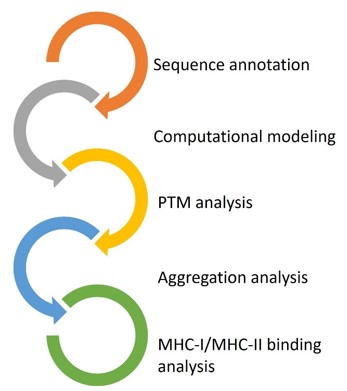 Fig.1 Peptide immunogen design process.
Using synthetic peptides as immunogens is the simplest way to produce antibodies against difficult-to-purify proteins or putative protein sequences derived from DNA sequence information. As the epitope is well-defined, this method is also useful to target a specific isoform of a given protein or a specific region such as its active site or an extracellular domain. Peptide immunogens must be carefully designed since they must perfectly mimic the protein region from which their sequence originates. Otherwise, the antibodies nicely recognize the peptides will not recognize the protein.
Many factors should be considered when the immunogen is designed, such as length, molecular weight, secondary structure, purity, hydrophobicity, and amino acids. Based on the following four major criteria, Creative Biolabs provides a full range of immunogen design services for hybridoma development. We strongly suggest injecting 2 or 3 distinct peptides to increase the stimulation of the immune system and to target several epitopes of the protein.
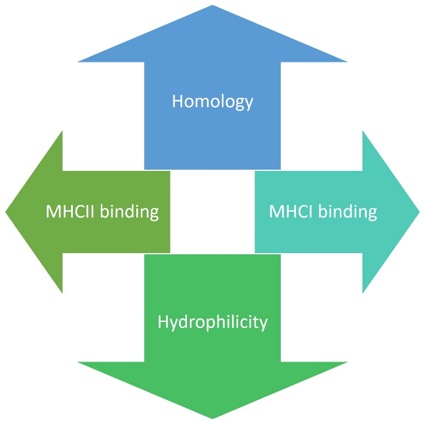 Fig.2 Some major factors in immunogen design.
Proteins are widely used to develop monoclonal antibodies (mAbs) and polyclonal antibodies (pAbs) due to their high number of distinct epitopes, leading to very high immunogenicity. Recombinant or native proteins are good choices for developing antibodies which are expected to work in a wide range of applications.
Sometimes, the presence of conserved patterns within some protein families might be a concern in terms of cross-reactivity, and the presence of tags within recombinant proteins may lead to the production of anti-tag antibodies. Moreover, some proteins may be difficult to purify or require specific purification processes, thus increasing production costs. Our customized bioinformatics studies may be used to help select the best immunogen considering critical features:
Protein antigens can be in the following format.
Post-translational modifications (PTMs) are critical determinants of protein function and represent significant targets for antibody development. We specialize in the design of immunogens that incorporate specific PTMs, such as phosphorylation, glycosylation, and ubiquitination. This service includes the synthesis of peptides or the expression of proteins with defined PTMs, as well as the characterization of these modifications. By targeting PTMs, we enable the development of highly specific antibodies for research and diagnostic applications.
A: An immunogen is defined as a substance capable of eliciting an adaptive immune response, resulting in the generation of antibodies or the activation of T lymphocytes. Although all immunogens are by definition antigens, the converse is not universally true. An antigen may bind to an antibody, but it might not necessarily elicit an immune response on its own. The key difference lies in the ability to induce an immune response: immunogens can do this, while some antigens cannot.
A: Effective antibody development heavily relies on precise immunogen design because the quality and specificity of the resulting antibodies are directly influenced by the immunogen used. A well-designed immunogen effectively presents the target antigen to the immune system, stimulating the production of high-affinity antibodies that specifically recognize the desired target. Conversely, a poorly designed immunogen may lead to low antibody titers, off-target binding, or failure to elicit an immune response.
A: Several critical factors must be considered during immunogen design. These include the choice of antigen or epitope, the size and structure of the immunogen, the use of carriers or adjuvants, and the route of immunization. Furthermore, the stability, solubility, and purity of the immunogen are also important considerations. The goal is to create an immunogen that effectively activates the immune system and elicits the desired antibody response.
A: Peptide-based immunogens consist of short amino acid sequences, often corresponding to specific epitopes of a target antigen. They are relatively simple to synthesize and can be used to target specific regions of a protein. Protein-based immunogens, on the other hand, are larger and more complex, typically consisting of the entire target protein or a large fragment. They often elicit a broader immune response and can be used to generate antibodies against conformational epitopes.
A: We employ several strategies to enhance the immunogenicity of our designed immunogens. These include conjugating peptides to carrier proteins (e.g., KLH, BSA), using adjuvants, and optimizing the presentation format (e.g., using multiple antigenic peptides or liposomes). For protein immunogens, we ensure proper folding and stability to maximize their ability to stimulate the immune system. Additionally, we can incorporate modifications or use specific expression systems to enhance immunogenicity.
A: We employ a range of expression systems for protein-based immunogen design, including E. coli, yeast, and mammalian cells. The selection of an appropriate expression system is contingent upon parameters such as the molecular weight and structural complexity of the target protein, the requirement for PTMs, and the anticipated yield. Our expertise in various expression systems allows us to produce high-quality protein immunogens for a wide range of applications.
Creative Biolabs takes advantage of a cutting-edge antigen design portfolio to make your project a success. Reach out to our dedicated scientists to discuss how we can assist you with your hybridoma production request today!
All listed services and products are For Research Use Only. Do Not use in any diagnostic or therapeutic applications.