
Creative Biolabs is offering the most comprehensive services for antibody development projects. With strict regulation and effective execution, we are dedicated to providing the most valuable solutions to complete your projects.
HighlightsCreative Biolabs is offering the most comprehensive services for antibody development projects. With strict regulation and effective execution, we are dedicated to providing the most valuable solutions to complete your projects.
HighlightsCreative Biolabs has established a broad range of platforms for developing novel antibodies or equivalents. These cutting-edge technologies enable our scientists to meet your demands from different aspects and tailor the most appropriate solution that contributes to the success of your projects.
HighlightsWith deep understanding in antibody-related realms and extensive project experience, Creative Biolabs offers a variety of references to help you learn more about our capacities and achievements, including infographic, flyer, case study, peer-reviewed publications, and all kinds of knowledge that can assist your projects. You are also welcome to contact us directly for more specific solutions.
HighlightsGet a real taste of Creative Biolabs, one of the most professional custom service providers in the world. We are committed to providing highly customized comprehensive solutions with the best quality to advance your projects.
HighlightsN-glycosylation, as one of the most complex post-translational modification, influences the structural characteristics of the antibody Fc part, thereby potentially modulating effector function and pharmacokinetics. As the long-term pioneer as well as market leader in the field of therapeutic antibody development, Creative Biolabs has successfully established and commercialized a wide spectrum of functional assays to illustrate antibody bioactivity and its mechanism of action. Particularly, we offer this unique opportunity for our worldwide customers to adopt impeccable Fc engineering services.
Glycosylation, the attachment of a sugar moiety to a given protein backbone, is a largely conservative post-translational modification in multicellular organisms. In humans, it is estimated that more than 50% of proteins are glycosylated. In particular, serum glycoproteins form a heterogeneous glycosylation mixture of other homologous protein backbones. The Fc region of IgG1 contains a conserved N-glycosylation site at Asn297 of each CH2 domain. Variations in the structure of these glycans lead to subtle changes in structure that have a significant impact on the interaction of IgG with the immune system. The remarkable success of therapeutic applications of IgG in the form of monoclonal antibodies and pooled IgG formulations has raised concerns about such glycoproteins. It is generally believed that oligosaccharides attached to the Fc region play a key role in the biological activity of IgG. Therefore, glycosylation has become a focus of great interest in many fields which has been designed to optimize antibody products.
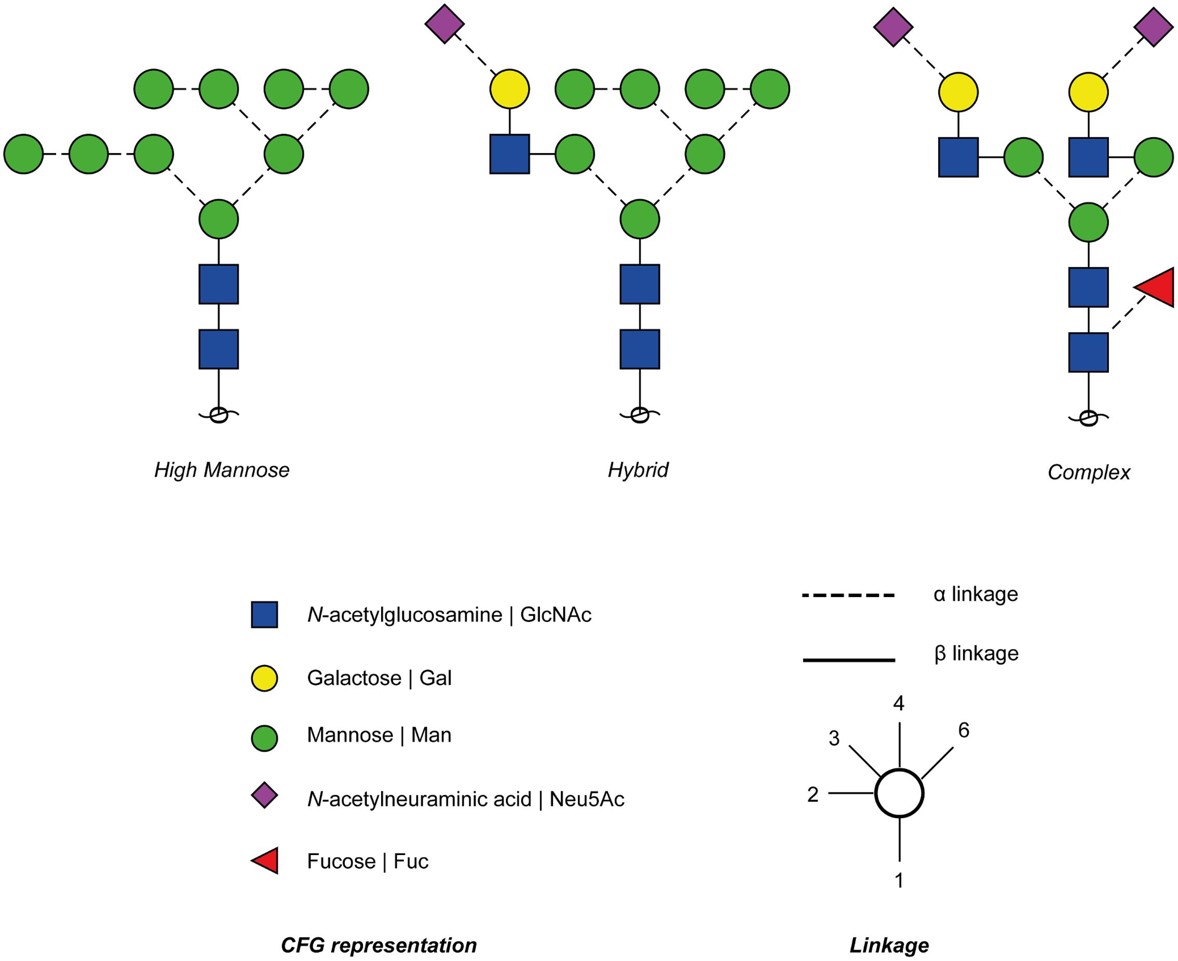 Fig.1 Types of N-glycans.1
Primarily mammalian cell lines have been used for the production of glycoengineered antibodies, but non-mammalian expression hosts such as yeast and plants genetically modified to allow for the production of antibodies with defined carbohydrate structures may be an option. In order to fully understand the different IgG activities, more than protein-protein interactions alone have to be considered. A single N-glycan residue significantly affects the biological activity of the mAb. Due to cost effectiveness, some non-mammalian cell lines have been used to produce therapeutic antibodies and they are highly tolerant of glycosylation engineering.
Creative Biolabs aims to humanize immunogenic glycoforms by eliminating enzymes responsible for the addition of non-mammalian glycans and subsequent introduction of mammalian glycan processing enzymes. Like mammalian cells, N-glycosylation of newly synthesized proteins in insects, yeasts, and plant cells is initiated by the oligosaccharyltransferase complex in the endoplasmic reticulum (ER), which transfers the oligosaccharide precursor Glc3Man9GlcNAc2 onto the growing polypeptide chain, more specifically, onto a suitable asparagine residue within the N-glycosylation consensus sequence (Asn-Xaa-Ser/Thr). Yeast- and plant-derived mAbs exhibit most of the uniform N-glycosylation profiles. Engineering of the respective pathways in non-mammalian expression hosts yielded significant results.
Summary: This research focuses on modifying the N-glycosylation pathway in Nicotiana tabacum to make it more suitable for producing therapeutic proteins. By using knockout technology, the researchers successfully removed two enzymes (XylT and FucT) that add non-human sugar structures to proteins. This modification improves the effectiveness and reduces potential immune reactions to plant-made drugs. The study's findings are a step forward in using N. tabacum for the large-scale production of essential medicines.
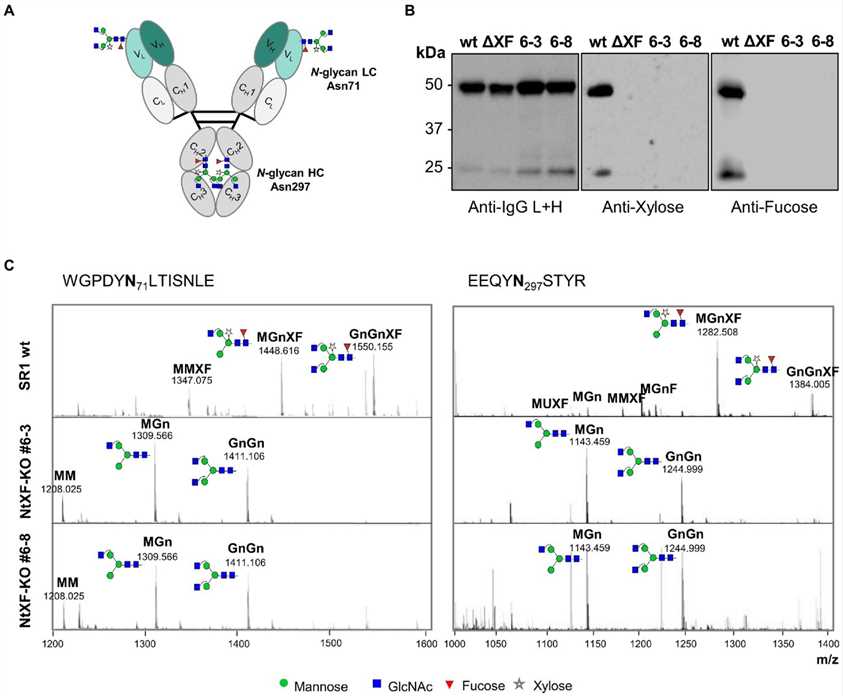 Fig.2 Purified antibody N-glycosylation analysis from transgenic NtFX-KO lines.2
Different host organisms (e.g., bacteria, yeast, insect cells, plant cells, mammalian cells) have distinct glycosylation machinery, resulting in variations in the types and structures of glycans they attach to proteins. For therapeutic proteins, it is often desirable to produce proteins with human-like glycosylation patterns to optimize their efficacy and minimize immunogenicity. In addition to this service, we also provide a wide spectrum of host cell glycoengineering services, including:
For more detailed information, please feel free to contact us or directly send us an inquiry.
References
All listed services and products are For Research Use Only. Do Not use in any diagnostic or therapeutic applications.








